Kirjojen hintavertailu. Mukana 12 169 118 kirjaa ja 12 kauppaa.
Kirjailija
Michaeleen Doucleff
Kirjat ja teokset yhdessä paikassa: 13 kirjaa, julkaisuja vuosilta 2011-2026, suosituimpien joukossa Metsästäjä, keräilijä, kasvattaja. Vertaile teosten hintoja ja tarkista saatavuus suomalaisista kirjakaupoista.
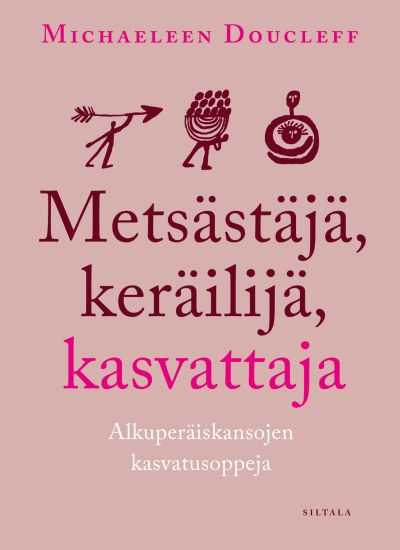
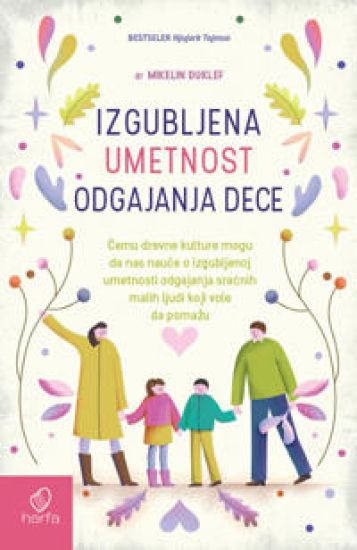
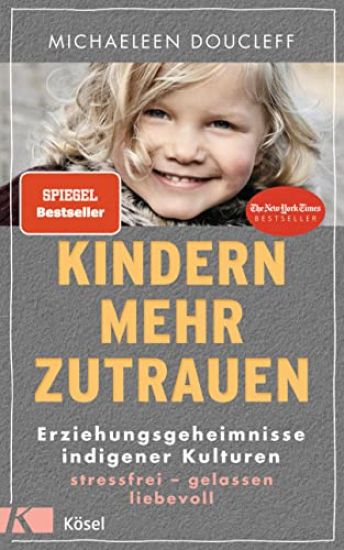
Lastenkasvatusoppeja maailman vanhimmista kulttuureistaKun tri Michaeleen Doucleff tuli äidiksi, hän kahlasi läpi tuhansia sivuja tuoreimpia lastenkasvatusoppaita – löytämättä etsimäänsä. Moderni länsimainen vanhemmuus näytti rajoittuneelta. Mistä löytyisi toisenlaisia keinoja?Doucleff otti kolmivuotiaan tyttärensä kainaloon ja lähti tutkimusmatkalle. Ne veivät hänet kolmeen erilaiseen maailmankolkkaan: Meksikoon maya-perheeseen, napapiirin pohjoispuolelle inuiittien luo, Tansaniaan hadzabe-heimon hoteisiin. Kaikilta hän löysi omanlaisiaan kasvatusoppeja ja -tapoja. Sekä avuliaita, iloisia ja tasapainoisia lapsia.Doucleff kokeili oppeja itse sovittaen niitä länsimaiseen elämäntyyliin. Kirjassa hän kertoo ällistyttävistä tuloksista.Metsästäjä, keräilijä, kasvattaja tarjoaa tuoreita ja yllättäviä näkökulmia lastenkasvatukseen. Kirja on pullollaan toimivia ja helppoja käytännön vinkkejä vanhemmille.
Menestyskirjailija Michaeleen Doucleffin uutuuskirja on opas lastenkasvatukseen ruutuajan ja ultraprosessoidun ruoan dopamiinivyöryssä. Uusimpaan neurotieteeseen ja psykologiaan perustuen kirja neuvoo, kuinka rikkoa riippuvuus ruuduista ja roskaruoasta ja kasvattaa rauhallisempia, onnellisempia ja pitkäjänteisempiä lapsia. Doucleffin viiden askeleen toimintaohje on selkeä ja helppokäyttöinen - sekä ennen kaikkea toimiva. Tohtori Michaeleen Doucleff on Metsästäjä, keräilijä, kasvattaja -bestsellerin (suom. Auri Paajanen ja Susanna Tuomi-Giddings) kirjoittaja ja Yhdysvaltain yleisradio NPR:n palkittu tiedetoimittaja. Metsästäjä, keräilijä, kasvattajaa on myyty yli miljoona kappaletta maailmanlaajuisesti.
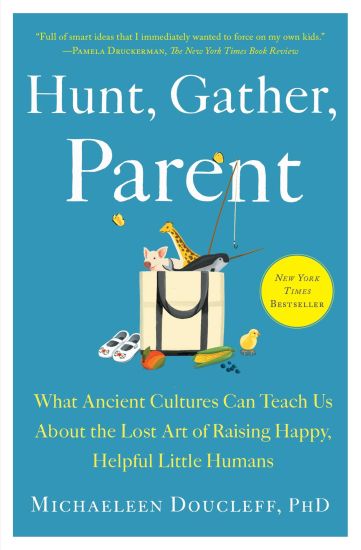
NEW YORK TIMES BESTSELLER The oldest cultures in the world have mastered the art of raising happy, well-adjusted children. What can we learn from them? "Hunt, Gather, Parent is full of smart ideas that I immediately wanted to force on my own kids." --Pamela Druckerman, The New York Times Book Review When Dr. Michaeleen Doucleff becomes a mother, she examines the studies behind modern parenting guidance and finds the evidence frustratingly limited and often ineffective. Curious to learn about more effective parenting approaches, she visits a Maya village in the Yucat n Peninsula. There she encounters moms and dads who parent in a totally different way than we do--and raise extraordinarily kind, generous, and helpful children without yelling, nagging, or issuing timeouts. What else, Doucleff wonders, are Western parents missing out on? In Hunt, Gather, Parent, Doucleff sets out with her three-year-old daughter in tow to learn and practice parenting strategies from families in three of the world's most venerable communities: Maya families in Mexico, Inuit families above the Arctic Circle, and Hadzabe families in Tanzania. She sees that these cultures don't have the same problems with children that Western parents do. Most strikingly, parents build a relationship with young children that is vastly different from the one many Western parents develop--it's built on cooperation instead of control, trust instead of fear, and personalized needs instead of standardized development milestones. Maya parents are masters at raising cooperative children. Without resorting to bribes, threats, or chore charts, Maya parents rear loyal helpers by including kids in household tasks from the time they can walk. Inuit parents have developed a remarkably effective approach for teaching children emotional intelligence. When kids cry, hit, or act out, Inuit parents respond with a calm, gentle demeanor that teaches children how to settle themselves down and think before acting. Hadzabe parents are experts on raising confident, self-driven kids with a simple tool that protects children from stress and anxiety, so common now among American kids. Not only does Doucleff live with families and observe their methods firsthand, she also applies them with her own daughter, with striking results. She learns to discipline without yelling. She talks to psychologists, neuroscientists, anthropologists, and sociologists and explains how these strategies can impact children's mental health and development. Filled with practical takeaways that parents can implement immediately, Hunt, Gather, Parent helps us rethink the ways we relate to our children, and reveals a universal parenting paradigm adapted for American families.
Steering clear of quantum mechanics and product operators, "Pocket Guide to Biomolecular NMR" uses intuitive, concrete analogies to explain the theory required to understand NMR studies on the structure and dynamics of biological macromolecules. For example, instead of explaining nuclear spin with angular momentum equations or Hamiltonians, the books describes nuclei as "bells" in a choir, ringing at specific frequencies depending on the atom type and their surrounding electromagnetic environment.This simple bell analogy, which is employed throughout the book, has never been used to explain NMR and makes it surprisingly easy to learn complex, bewildering NMR concepts, such as dipole-dipole coupling and CPMG pulse sequences. Other topics covered include the basics of multi-dimensional NMR, relaxation theory, and Model Free analysis. The small size and fast pace of “Pocket Guide to Biomolecular NMR” makes the book a perfect companion to traditional biophysics and biochemistry textbooks, but the book's unique perspective will provide even seasoned spectroscopists with new insights and handy “thought” short-cuts.