Kirjojen hintavertailu. Mukana 12 657 676 kirjaa ja 12 kauppaa.

Kirjailija

Michel Delville

Kirjat ja teokset yhdessä paikassa: 10 kirjaa, julkaisuja vuosilta 1998-2025, suosituimpien joukossa J.G.Ballard. Vertaile teosten hintoja ja tarkista saatavuus suomalaisista kirjakaupoista.

10 kirjaa

Kirjojen julkaisuhaarukka 1998-2025.

J.G.Ballard

J.G.Ballard

Michel Delville

Liverpool University Press
1998
pokkari
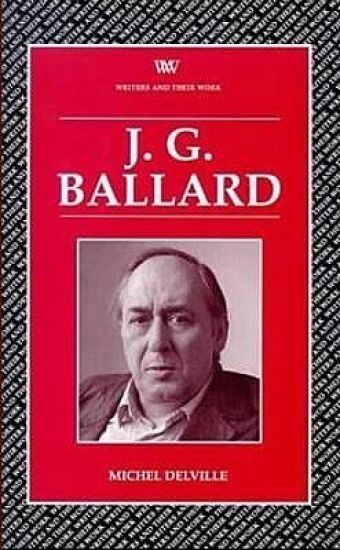
Despite increasing recognition of his unique talents as a novelist and a short story writer, J.G. Ballard (b. 1930) remains one of the most controversial presences in contemporary British fiction. His obsessions with various forms of violence, alienation and sexual perversion have puzzled many readers, critics and publishers. Still, Ballard’s imaginative powers and the originality of his work have also won him the admiration of a broad and international readership. Examining the whole range of Ballard’s writings, from the early science fiction stories to Cocaine Nights (1996), Delville’s study offers a critical and theoretically informed analysis of his achievements as a novelist and a commentator on contemporary culture. It also identifies and clarifies a number of themes which have occupied Ballard throughout his career. These recurrent concerns include the latent and manifest meanings of technological culture, the impact of modern media on the private and collective imagination and the postulate that our personal commitments are necessarily predetermined by our attempts to fictionalize the real.
The French Prose Poem

The French Prose Poem

Mary Ann Caws; Michel Delville

New York Review Books
2025
nidottu
The first English-language collection of its kind, this anthology offers an overview of the past and present history of a long-underappreciated--and now quickly burgeoning--poetic tradition. For decades, the prose poem has variously delighted, confounded, and incensed readers and critics. Until recent years, it had been confined to the margins of literary history as a rather disturbing and elusive oddity. All this is changing. The prose poem, which has long been neglected and underrepresented in mainstream and experimental publications alike, is growing in popularity in the world of contemporary poetry. It is more widely available than ever before, thanks to the joint efforts of an ever-increasing number of imaginative writers, publishers, and editors. And still, this volume is the first anthology of the French prose poem to see the light in the English-speaking world. This anthology gathers a wide range of poets practicing what Michael Riffaterre memorably called "the literary genre with an oxymoron for a name," from the prose poem's official "inventors" (Aloysius Bertrand and Charles Baudelaire) to a younger generation of poets from all over the French-speaking world. The poems in this bilingual collection have been rendered into English by some of the finest translators of French literature, including John Ashbery, Mark Polizzotti, Richard Sieburth, Rosmarie Waldrop, and many others.
The Politics and Aesthetics of Hunger and Disgust

The Politics and Aesthetics of Hunger and Disgust

Michel Delville; Andrew Norris

Routledge
2019
nidottu
This study examines how hunger narratives and performances contribute to a reconsideration of neglected or prohibited domains of thinking which only a full confrontation with the body’s heterogeneity and plasticity can reveal. From literary motif or psychosomatic symptom to revolutionary gesture or existential malady, the double crux of hunger and disgust is a powerful force which can define the experience of embodiment. Kafka’s fable of the "Hunger Artist" offers a matrix for the fast, while its surprising last-page revelation introduces disgust as a correlative of abstinence, conscious or otherwise. Grounded in Kristeva’s theory of abjection, the figure of the fraught body lurking at the heart of the negative grotesque gathers precision throughout this study, where it is employed in a widening series of contexts: suicide through overeating, starvation as self-performance or political resistance, the teratological versus the totalitarian, the anorexic harboring of death. In the process, writers and artists as diverse as Herman Melville, Percy Bysshe Shelley, Christina Rossetti, George Orwell, Knut Hamsun, J.M. Coetzee, Cindy Sherman, Pieter Breughel, Marina Abramovic, David Nebreda, Paul McCarthy, and others are brought into the discussion. By looking at the different acts of visceral, affective, and ideological resistance performed by the starving body, this book intensifies the relationship between hunger and disgust studies while offering insight into the modalities of the "dark grotesque" which inform the aesthetics and politics of hunger. It will be of value to anyone interested in the culture, politics, and subjectivity of embodiment, and scholars working within the fields of disgust studies, food studies, literary studies, cultural theory, and media studies.
Ali e t o lo ss

Ali e t o lo ss

Michel Delville

Trolltrumma AB
2017
muu
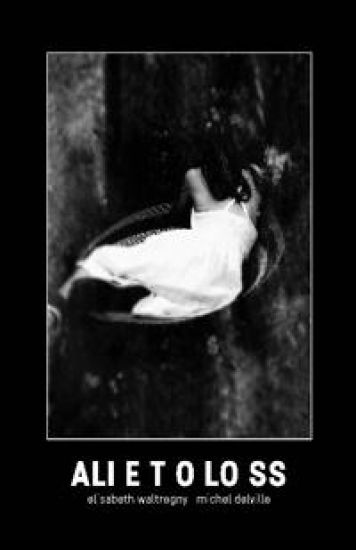
To turn steadily through the pages of this book of photography and words is to wander through a land of strangeness and secrecy, where we are enjoined to follow a figure who occupies and activates a place inside her world and outside ours. Delville and Waltregny introduce us to a fabulous thought, where the interplay of the the textual and textural is quite amazing. Here, they have spun together text and image into a borderless world, of bliss and contagion, of intrigue and loss, of childlike fun and the gravity of time. This is a book of endless wonder, a Victorian curio, an intimate treasure to be pored over. In wider terms, this publication is a seamless continuation of the great, albethey broad spectrum, Belgian Surrealist traditions. Here we have a discursive relation between mediums, umbrellaed by the concept of a nineteenth-century fantastical reality. It is a chimera, sent to us by travellers who have made their way to a new land, an exceptional and thrilling form, a elegantly forged multivalent at which to ponder and delight. —Marc Atkins, London, January 5, 2017 Erasurist art is essentially a kind of rewriting. It is rooted as much in contemporary philosophy’s Deconstructionist turn as in Duchampian found objects and Situationist détournements. One of the earliest examples of textual erasurism in contemporary poetry is Ronald Johnson’s 1977 "RADI OS", a partial obliteration of the first four books of John Milton’s "Paradise Lost" preserving only a few words from each page of the source-text. "Ali e t o lo ss" subjects Lewis Carroll’s "Ali(c)e T(hr) o(ugh the) Lo(oking Gla)ss" to a similar treatment, revealing the lyrical backbone of the source-text, isolating some of its vital semantic «organs» while simultaneously responding to the deep and complex forms of Elisabeth Waltregny’s photographs, which were themselves inspired by Lewis Carroll’s specular worlds. Each poem is composed of words taken from one of the twelve chapters of Alice in the order in which they appear, the line breaks indicating the «gaps» in the source-text. — Michel Delville
The Politics and Aesthetics of Hunger and Disgust

The Politics and Aesthetics of Hunger and Disgust

Michel Delville; Andrew Norris

Routledge
2017
sidottu
This study examines how hunger narratives and performances contribute to a reconsideration of neglected or prohibited domains of thinking which only a full confrontation with the body’s heterogeneity and plasticity can reveal. From literary motif or psychosomatic symptom to revolutionary gesture or existential malady, the double crux of hunger and disgust is a powerful force which can define the experience of embodiment. Kafka’s fable of the "Hunger Artist" offers a matrix for the fast, while its surprising last-page revelation introduces disgust as a correlative of abstinence, conscious or otherwise. Grounded in Kristeva’s theory of abjection, the figure of the fraught body lurking at the heart of the negative grotesque gathers precision throughout this study, where it is employed in a widening series of contexts: suicide through overeating, starvation as self-performance or political resistance, the teratological versus the totalitarian, the anorexic harboring of death. In the process, writers and artists as diverse as Herman Melville, Percy Bysshe Shelley, Christina Rossetti, George Orwell, Knut Hamsun, J.M. Coetzee, Cindy Sherman, Pieter Breughel, Marina Abramovic, David Nebreda, Paul McCarthy, and others are brought into the discussion. By looking at the different acts of visceral, affective, and ideological resistance performed by the starving body, this book intensifies the relationship between hunger and disgust studies while offering insight into the modalities of the "dark grotesque" which inform the aesthetics and politics of hunger. It will be of value to anyone interested in the culture, politics, and subjectivity of embodiment, and scholars working within the fields of disgust studies, food studies, literary studies, cultural theory, and media studies.
Anything & Everything

Anything & Everything

Michel Delville

Quale Press
2016
nidottu
Poetry. Literary Nonfiction. ANYTHING & EVERYTHING is a collection of imaginary portraits of modern and contemporary artists ranging from Montaigne to Erik Satie, Gertrude Stein, David Lynch and Captain Beefheart. While some of these microessays are grounded in the life and works of the artists, others were generated by a more personal, subjective, associational logic that pays tribute to the complex, whimsical and paradoxical legacy of Belgian Surrealism. More often than not, the works and artists considered here are seen through the lens of the conjunction of food and discourse, from a perspective that stresses the need to attend to the movements of a consciousness which is as visceral as it is cerebral.
Food, Poetry, and the Aesthetics of Consumption
From Plato’s dismissal of food as a distraction from thought to Kant’s relegation of the palate to the bottom of the hierarchy of the senses, the sense of taste has consistently been devalued by Western aesthetics. Kant is often invoked as evidence that philosophers consider taste as an inferior sense because it belongs to the realm of the private and subjective and does not seem to be required in the development of higher types of knowledge. From a gastrosophical perspective, however, what Kant perceives as a limitation becomes a new field of enquiry that investigates the dialectics of diet and discourse, self and matter, inside and outside. The essays in this book examine the importance of food as a pivotal element – both materially and conceptually – in the history of the Western avant-garde. From Gertrude Stein to Alain Robbe-Grillet and Samuel Beckett, from F.T. Marinetti to Andy Warhol, from Marcel Duchamp to Eleanor Antin, the examples chosen explore the conjunction of art and foodstuff in ways that interrogate contemporary notions of the body, language, and subjectivity.
Food, Poetry, and the Aesthetics of Consumption
From Plato’s dismissal of food as a distraction from thought to Kant’s relegation of the palate to the bottom of the hierarchy of the senses, the sense of taste has consistently been devalued by Western aesthetics. Kant is often invoked as evidence that philosophers consider taste as an inferior sense because it belongs to the realm of the private and subjective and does not seem to be required in the development of higher types of knowledge. From a gastrosophical perspective, however, what Kant perceives as a limitation becomes a new field of enquiry that investigates the dialectics of diet and discourse, self and matter, inside and outside. The essays in this book examine the importance of food as a pivotal element – both materially and conceptually – in the history of the Western avant-garde. From Gertrude Stein to Alain Robbe-Grillet and Samuel Beckett, from F.T. Marinetti to Andy Warhol, from Marcel Duchamp to Eleanor Antin, the examples chosen explore the conjunction of art and foodstuff in ways that interrogate contemporary notions of the body, language, and subjectivity.
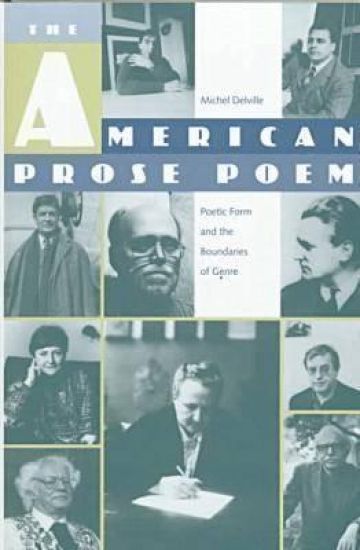
The American Prose Poem

The American Prose Poem

Michel Delville

University Press of Florida
1998
sidottu
A critical and historical survey of the American prose poem from the early years of the 20th century to the 1990s. Delville adds evidence to the prose poem's reputation as a norm-breaking form by writing within, against and across existing genres and traditions.