Kirjojen hintavertailu. Mukana 12 595 353 kirjaa ja 12 kauppaa.

Kirjailija

Michel Foucault

Kirjat ja teokset yhdessä paikassa: 199 kirjaa, julkaisuja vuosilta 1968-2026, suosituimpien joukossa Fronesis 2. Utopier. Vertaile teosten hintoja ja tarkista saatavuus suomalaisista kirjakaupoista.

199 kirjaa

Kirjojen julkaisuhaarukka 1968-2026.

Fronesis 2. Utopier

Fronesis 2. Utopier

Barbara Taylor; Norberto Bobbio; Jean Baudrillard; Michel Foucault; Charlotte Perkins Gilman; Walter Benjamin; William Morris; Frida Stéenhoff

Fronesis
2016
lehtivihko, moniste
Berlinmurens fall tycktes markera slutet för den kommunistiska utopin, men samtidigt bars förändringen fram av en utopisk energi och drömmar om ett pluralistiskt samhälle utan förtryck. Det nya årtusendets inträde har samtidigt setts som inledningen på en ny tid, vilket gett näring till utopiska spekulationer. Fronesis nr 2 befinner sig i skärningspunkten mellan verklighet och utopi. Det handlar om den socialistiska idétraditionens förhållande till det utopiska tänkandet, om feministiska utopier, om det tidiga 1900-talets utopiska tanke om att skapa ”en ny människa” med mera. Innehåll i Fronesis nr 2 (138 sidor): Norberto Bobbio: Den förvridna utopins fall Petra Hall och Sara Winnfors: I glappet mellan möjligt och omöjligt Per Månson: Utopiernas död: Har socialismen någon framtid? Barbara Taylor: Den socialistiska feminismen: utopi eller vetenskap? Jakob Norberg: Inledning till Walter Benjamins ”Program för en proletär barnteater” Walter Benjamin: Program för en proletär barnteater Ulrika Holgersson: Frida Stéenhoffs feministiska utopi Frida Stéenhoff: Feminismens moral Jenny Lindblad: Herland – Den litterära feministiska utopin Charlotte Perkins Gilman: Våra förhållanden och deras Sara Winnfors: Arkitektur och makt Ur Acceptera-manifestet: Staden William Morris: Om den dekorativa konstens ursprung Michel Foucault: Rum, makt och kunskap Richard Saage: Reflektioner över den politiska utopins framtid Jean Baudrillard: I skuggan av millenniet, eller Det ovissa år 2000 Blå Tåget: Nyårsafton
Michel Foucault

Michel Foucault

Hubert L. Dreyfus; Paul Rabinow; Michel Foucault

University of Chicago Press
1983
pokkari
Summarizes the themes and arguments of the French philosopher on madness, medicine, sex, truth, and power, and explains Foucault's moral and historical outlook
Politics, Philosophy, Culture

Politics, Philosophy, Culture

Michel Foucault

TAYLOR FRANCIS LTD
2026
sidottu
Politics, Philosophy, Culture contains a rich selection of interviews and other writings by the late Michel Foucault, many of which are hard to find. Drawing upon his revolutionary concept of power as well as his critique of the institutions that organize social life, Foucault discusses literature, music, and the power of art while also examining concrete issues such as the Left in contemporary France, the social security system, the penal system, homosexuality, madness, and the Iranian Revolution. Taken together, the book provides a perfect companion to Foucault's best-known works, offering a fascinating insight into the mind and work of one of the twentieth century's most influential and controversial thinkers. This Routledge Classics edition includes a new Introduction by Lawrence D. Kritzman.
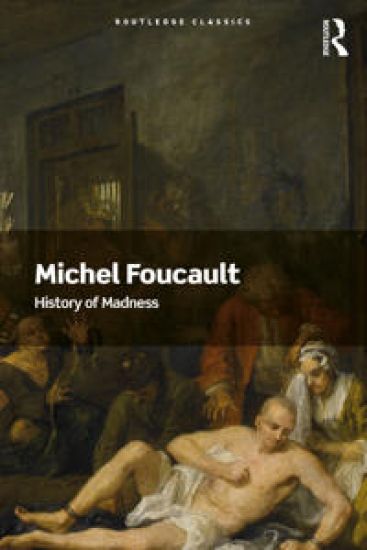
History of Madness

History of Madness

Michel Foucault

TAYLOR FRANCIS LTD
2026
sidottu
When it was first published in France in 1961 as Folie et Déraison: Histoire de la Folie à l'âge Classique, few had heard of a thirty-four year old philosopher by the name of Michel Foucault. By the time an abridged English edition was published in 1967 as Madness and Civilization, Michel Foucault had shaken the intellectual world. This translation is the only English edition of the complete French texts of the first and second edition, including all prefaces and appendices. Shifting deftly from Descartes to the founding of the Hôpital Général in Paris and early psychiatry, Foucault explores not only on scientific and medical analyses of madness, but also the philosophical and cultural values attached to the mad. He also urges us to recognize the creative and liberating forces that madness represents, brilliantly drawing on examples from Goya, Nietzsche, Van Gogh and Artaud. The History of Madness is an inspiring and classic work that challenges us to understand madness, reason and power and the forces that shape them. This Routledge Classics edition includes a new introductory Post scriptum by Jean Khalfa and, published here for the first time in English, a lecture Foucault delivered in 1970 at the University of Tokyo, where he summarizes some of the principal themes in this book. It is translated by Jean Khalfa and Joshua Heath.
Politics, Philosophy, Culture

Politics, Philosophy, Culture

Michel Foucault

TAYLOR FRANCIS LTD
2026
nidottu
Politics, Philosophy, Culture contains a rich selection of interviews and other writings by the late Michel Foucault, many of which are hard to find. Drawing upon his revolutionary concept of power as well as his critique of the institutions that organize social life, Foucault discusses literature, music, and the power of art while also examining concrete issues such as the Left in contemporary France, the social security system, the penal system, homosexuality, madness, and the Iranian Revolution. Taken together, the book provides a perfect companion to Foucault's best-known works, offering a fascinating insight into the mind and work of one of the twentieth century's most influential and controversial thinkers. This Routledge Classics edition includes a new Introduction by Lawrence D. Kritzman.
History of Madness

History of Madness

Michel Foucault

TAYLOR FRANCIS LTD
2026
nidottu
When it was first published in France in 1961 as Folie et Déraison: Histoire de la Folie à l'âge Classique, few had heard of a thirty-four year old philosopher by the name of Michel Foucault. By the time an abridged English edition was published in 1967 as Madness and Civilization, Michel Foucault had shaken the intellectual world. This translation is the only English edition of the complete French texts of the first and second edition, including all prefaces and appendices. Shifting deftly from Descartes to the founding of the Hôpital Général in Paris and early psychiatry, Foucault explores not only on scientific and medical analyses of madness, but also the philosophical and cultural values attached to the mad. He also urges us to recognize the creative and liberating forces that madness represents, brilliantly drawing on examples from Goya, Nietzsche, Van Gogh and Artaud. The History of Madness is an inspiring and classic work that challenges us to understand madness, reason and power and the forces that shape them. This Routledge Classics edition includes a new introductory Post scriptum by Jean Khalfa and, published here for the first time in English, a lecture Foucault delivered in 1970 at the University of Tokyo, where he summarizes some of the principal themes in this book. It is translated by Jean Khalfa and Joshua Heath.
Om sex

Om sex

Michel Foucault

Forlaget Klim
2026
nidottu
Tekstsamlingen dækker de sidste 20 år af hans liv fra 1963 til hans død den 25. juni 1984 og giver et forfriskende ærligt indblik i hans tænkning. Bogens emner spænder fra kulturkritik af personer som Marquis de Sade, Georges Bataille og Pier Paolo Pasolini, over ærlige interview om homokulturens frigørende brug af sex og vigtigheden af mandligt venskab, til den berygtede debat om den seksuelle lavalder, og hvordan fri seksuel identitet bliver set som en trussel i alle sociale relationer, der styres af diskursernes videns- og magtmæssige dominans. I bogen bliver Foucaults særegne tænkning og etik taget ud af hans skrevne værkers uimodsagte enetale og undersøgt gennem dialog og diskussion, så indre modsætninger får lov at stå frem. Mikkel Thorup udfolder i sin grundige efterskrift konteksten for de diskussioner, bogens tekster må forstås som en del af.
Language, Madness, and Desire

Language, Madness, and Desire

Michel Foucault

JOHN WILEY AND SONS LTD
2026
nidottu
As a transformative thinker of the twentieth century, whose work spanned all branches of the humanities, Michel Foucault had a complex and profound relationship with literature. And yet this critical aspect of his thought, because it was largely expressed in speeches and interviews, remains virtually unknown to even his most loyal readers. This book brings together previously unpublished transcripts of oral presentations in which Foucault speaks at length about literature and its links to some of his principal themes: madness, language and criticism, and truth and desire. The associations between madness and language — and madness and silence — preoccupy Foucault in two 1963 radio broadcasts, presented here, in which he ranges among literary examples from Cervantes and Shakespeare to Diderot, before taking up questions about Artaud's literary correspondence, 'lettres de cachet', and the materiality of language. In his lectures on the relations among language, the literary work, and literature, he discusses Joyce, Proust, Chateaubriand, Racine, and Corneille, as well as the linguist Roman Jakobson. What we know as literature, Foucault contends, begins with the Marquis de Sade, to whose writing — particularly La Nouvelle Justine and Juliette — he devotes a full two-part lecture series focusing on notions of literary self-consciousness. This volume makes clear the importance of literature to Foucault's thought and it is an indispensable text for anyone interested in his work and intellectual development.
Language, Madness, and Desire

Language, Madness, and Desire

Michel Foucault

JOHN WILEY AND SONS LTD
2026
sidottu
As a transformative thinker of the twentieth century, whose work spanned all branches of the humanities, Michel Foucault had a complex and profound relationship with literature. And yet this critical aspect of his thought, because it was largely expressed in speeches and interviews, remains virtually unknown to even his most loyal readers. This book brings together previously unpublished transcripts of oral presentations in which Foucault speaks at length about literature and its links to some of his principal themes: madness, language and criticism, and truth and desire. The associations between madness and language — and madness and silence — preoccupy Foucault in two 1963 radio broadcasts, presented here, in which he ranges among literary examples from Cervantes and Shakespeare to Diderot, before taking up questions about Artaud's literary correspondence, 'lettres de cachet', and the materiality of language. In his lectures on the relations among language, the literary work, and literature, he discusses Joyce, Proust, Chateaubriand, Racine, and Corneille, as well as the linguist Roman Jakobson. What we know as literature, Foucault contends, begins with the Marquis de Sade, to whose writing — particularly La Nouvelle Justine and Juliette — he devotes a full two-part lecture series focusing on notions of literary self-consciousness. This volume makes clear the importance of literature to Foucault's thought and it is an indispensable text for anyone interested in his work and intellectual development.
Speech Begins After Death

Speech Begins After Death

Michel Foucault; Philippe Artieres

JOHN WILEY AND SONS LTD
2026
nidottu
In 1968, Michel Foucault agreed to a series of interviews with critic Claude Bonnefoy, which were to be published in book form. Bonnefoy wanted a dialogue with Foucault about his relationship to writing rather than about the content of his books. The project was abandoned, but a transcript of the initial interview survived and is published here. In this brief and lively exchange, Foucault reflects on how he approached the written word throughout his life, from his school days to his discovery of the pleasure of writing. Wide ranging, characteristically insightful, and unexpectedly autobiographical, the discussion sheds light on Foucault's intellectual development, his aims as a writer, his clinical methodology ("let's say I'm a diagnostician"), and his interest in other authors, including Raymond Roussel and Antonin Artaud. Foucault discloses, in ways he never had previously, details about his home life, his family history, and the profound sense of obligation he feels to the act of writing. Speech Begins after Death shows Foucault adopting a new language, an innovative autobiographical communication that is neither conversation nor monologue, and is one of his most personal statements about his life and writing.
Speech Begins After Death

Speech Begins After Death

Michel Foucault; Philippe Artieres

JOHN WILEY AND SONS LTD
2026
sidottu
In 1968, Michel Foucault agreed to a series of interviews with critic Claude Bonnefoy, which were to be published in book form. Bonnefoy wanted a dialogue with Foucault about his relationship to writing rather than about the content of his books. The project was abandoned, but a transcript of the initial interview survived and is published here. In this brief and lively exchange, Foucault reflects on how he approached the written word throughout his life, from his school days to his discovery of the pleasure of writing. Wide ranging, characteristically insightful, and unexpectedly autobiographical, the discussion sheds light on Foucault's intellectual development, his aims as a writer, his clinical methodology ("let's say I'm a diagnostician"), and his interest in other authors, including Raymond Roussel and Antonin Artaud. Foucault discloses, in ways he never had previously, details about his home life, his family history, and the profound sense of obligation he feels to the act of writing. Speech Begins after Death shows Foucault adopting a new language, an innovative autobiographical communication that is neither conversation nor monologue, and is one of his most personal statements about his life and writing.
Binswanger and Existential Analysis

Binswanger and Existential Analysis

Michel Foucault

Columbia University Press
2025
sidottu
In the early 1950s, the young Michel Foucault took a keen interest in the method of existential analysis—Daseinsanalyse—developed by the Swiss psychiatrist Ludwig Binswanger. He gave a lecture course on this topic at the University of Lille in the spring of 1953 and wrote a detailed introduction to the 1954 French translation of Binswanger’s Dream and Existence (1930), in which he promised a forthcoming book that would “situate existential analysis within the development of contemporary reflection on man.” This book presents Foucault’s unpublished manuscript on Binswanger and existential analysis for the first time in English, offering crucial insight into his intellectual development.Foucault carries out a systematic examination of Daseinsanalyse, contrasting it with psychiatry, psychoanalysis, and phenomenology and championing its ambition to understand mental illness. In his critique of existential analysis, Foucault began his turn toward emphasizing the primacy of experience, which would lead to the radically new perspective and genealogical methods of The History of Madness and The History of Sexuality. Revealing a little-known influence on Foucault’s historicist approach, Binswanger and Existential Analysis reminds us of his unparalleled ability to destabilize our conceptions of self.
Binswanger and Existential Analysis

Binswanger and Existential Analysis

Michel Foucault

Columbia University Press
2025
pokkari
In the early 1950s, the young Michel Foucault took a keen interest in the method of existential analysis—Daseinsanalyse—developed by the Swiss psychiatrist Ludwig Binswanger. He gave a lecture course on this topic at the University of Lille in the spring of 1953 and wrote a detailed introduction to the 1954 French translation of Binswanger’s Dream and Existence (1930), in which he promised a forthcoming book that would “situate existential analysis within the development of contemporary reflection on man.” This book presents Foucault’s unpublished manuscript on Binswanger and existential analysis for the first time in English, offering crucial insight into his intellectual development.Foucault carries out a systematic examination of Daseinsanalyse, contrasting it with psychiatry, psychoanalysis, and phenomenology and championing its ambition to understand mental illness. In his critique of existential analysis, Foucault began his turn toward emphasizing the primacy of experience, which would lead to the radically new perspective and genealogical methods of The History of Madness and The History of Sexuality. Revealing a little-known influence on Foucault’s historicist approach, Binswanger and Existential Analysis reminds us of his unparalleled ability to destabilize our conceptions of self.
Turvallisuus, alue, väestö

Turvallisuus, alue, väestö

Michel Foucault

TUTKIJALIITTO
2025
nidottu
Postuumisti julkaistut luentosarjat, joita Michel Foucault piti Collège de Francessa, ovat tarjonneet uusia näkökulmia hänen ajatteluunsa. Lukuvuonna 1977-1978 pidetty luentosarja Turvallisuus, alue, väestö on Foucault'n myöhäistuotannon kannalta yksi keskeisimmistä. Luennoissaan Foucault kehittelee ajatustaan vallan muuntautumisesta biovallaksi, väestönhallinnaksi joka tapahtuu elämää ja terveyttä säätelemällä. Alun perin vuonna 2010 suomennettu Turvallisuus, alue, väestö on edelleen eräs kattavimmista biovallan alkuperien ja historiallisten jatkumoiden analyyseistä: kaupunkitilan kontrolli, poliisin vallankäyttö, huoli kansanterveydestä ja oikeanlaisesta väestöstä, epidemioiden hallinta ja yhteiskunnan eri tasoja leikkaava turvallisuuspuhe eivät ole aiheina menettäneet ajankohtaisuuttaan.