Kirjojen hintavertailu. Mukana 12 595 353 kirjaa ja 12 kauppaa.

Kirjailija

Michele Friend

Kirjat ja teokset yhdessä paikassa: 5 kirjaa, julkaisuja vuosilta 2007-2016, suosituimpien joukossa Salla Tykkä. Vertaile teosten hintoja ja tarkista saatavuus suomalaisista kirjakaupoista.

Mukana myös kirjoitusasut: Michèle Friend

5 kirjaa

Kirjojen julkaisuhaarukka 2007-2016.

Salla Tykkä

Salla Tykkä

Maija Timonen; Michele Friend; Tatiana M. Holway

Galerie Anhava
2015
sidottu
Salla Tykkä’s book The Palace will be published by Galerie Anhava in connection with the exhibition. The book is on the above-mentioned trilogy consisting of Giant (2013), Airs Above the Ground (2010) and Victoria (2008).
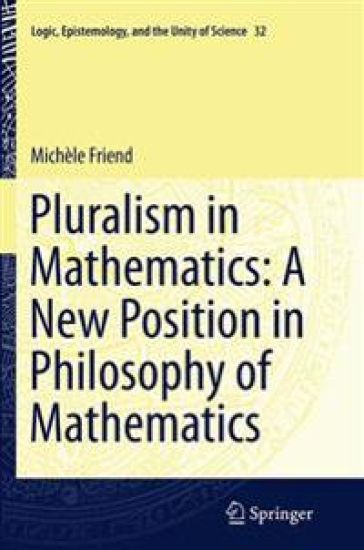
Pluralism in Mathematics: A New Position in Philosophy of Mathematics
This book is about philosophy, mathematics and logic, giving a philosophical account of Pluralism which is a family of positions in the philosophy of mathematics. There are four parts to this book, beginning with a look at motivations for Pluralism by way of Realism, Maddy’s Naturalism, Shapiro’s Structuralism and Formalism. In the second part of this book the author covers: the philosophical presentation of Pluralism; using a formal theory of logic metaphorically; rigour and proof for the Pluralist; and mathematical fixtures. In the third part the author goes on to focus on the transcendental presentation of Pluralism, and in part four looks at applications of Pluralism, such as a Pluralist approach to proof in mathematics and how Pluralism works in regard to together-inconsistent philosophies of mathematics. The book finishes with suggestions for further Pluralist enquiry.In this work the author takes a deeply radical approach in developing a new position that will either convert readers, or act as a strong warning to treat the word ‘pluralism’ with care.
Pluralism in Mathematics: A New Position in Philosophy of Mathematics
This book is about philosophy, mathematics and logic, giving a philosophical account of Pluralism which is a family of positions in the philosophy of mathematics. There are four parts to this book, beginning with a look at motivations for Pluralism by way of Realism, Maddy’s Naturalism, Shapiro’s Structuralism and Formalism. In the second part of this book the author covers: the philosophical presentation of Pluralism; using a formal theory of logic metaphorically; rigour and proof for the Pluralist; and mathematical fixtures. In the third part the author goes on to focus on the transcendental presentation of Pluralism, and in part four looks at applications of Pluralism, such as a Pluralist approach to proof in mathematics and how Pluralism works in regard to together-inconsistent philosophies of mathematics. The book finishes with suggestions for further Pluralist enquiry.In this work the author takes a deeply radical approach in developing a new position that will either convert readers, or act as a strong warning to treat the word ‘pluralism’ with care.
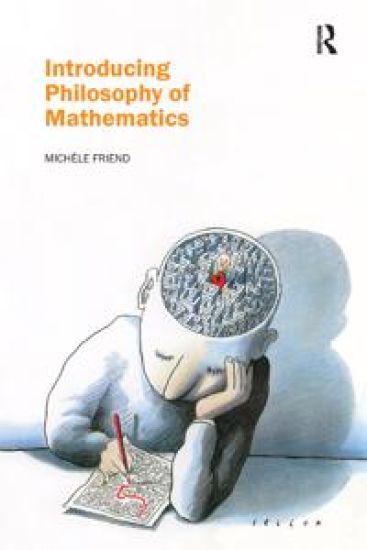
Introducing Philosophy of Mathematics

Introducing Philosophy of Mathematics

Michele Friend

Acumen Publishing Ltd
2007
sidottu
What is mathematics about? Does the subject-matter of mathematics exist independently of the mind or are they mental constructions? How do we know mathematics? Is mathematical knowledge logical knowledge? And how is mathematics applied to the material world? In this introduction to the philosophy of mathematics, Michele Friend examines these and other ontological and epistemological problems raised by the content and practice of mathematics. Aimed at a readership with limited proficiency in mathematics but with some experience of formal logic it seeks to strike a balance between conceptual accessibility and correct representation of the issues. Friend examines the standard theories of mathematics - Platonism, realism, logicism, formalism, constructivism and structuralism - as well as some less standard theories such as psychologism, fictionalism and Meinongian philosophy of mathematics. In each case Friend explains what characterises the position and where the divisions between them lie, including some of the arguments in favour and against each. This book also explores particular questions that occupy present-day philosophers and mathematicians such as the problem of infinity, mathematical intuition and the relationship, if any, between the philosophy of mathematics and the practice of mathematics. Taking in the canonical ideas of Aristotle, Kant, Frege and Whitehead and Russell as well as the challenging and innovative work of recent philosophers like Benacerraf, Hellman, Maddy and Shapiro, Friend provides a balanced and accessible introduction suitable for upper-level undergraduate courses and the non-specialist.
Introducing Philosophy of Mathematics

Introducing Philosophy of Mathematics

Michele Friend

Acumen Publishing Ltd
2007
nidottu
What is mathematics about? Does the subject-matter of mathematics exist independently of the mind or are they mental constructions? How do we know mathematics? Is mathematical knowledge logical knowledge? And how is mathematics applied to the material world? In this introduction to the philosophy of mathematics, Michele Friend examines these and other ontological and epistemological problems raised by the content and practice of mathematics. Aimed at a readership with limited proficiency in mathematics but with some experience of formal logic it seeks to strike a balance between conceptual accessibility and correct representation of the issues. Friend examines the standard theories of mathematics - Platonism, realism, logicism, formalism, constructivism and structuralism - as well as some less standard theories such as psychologism, fictionalism and Meinongian philosophy of mathematics. In each case Friend explains what characterises the position and where the divisions between them lie, including some of the arguments in favour and against each. This book also explores particular questions that occupy present-day philosophers and mathematicians such as the problem of infinity, mathematical intuition and the relationship, if any, between the philosophy of mathematics and the practice of mathematics. Taking in the canonical ideas of Aristotle, Kant, Frege and Whitehead and Russell as well as the challenging and innovative work of recent philosophers like Benacerraf, Hellman, Maddy and Shapiro, Friend provides a balanced and accessible introduction suitable for upper-level undergraduate courses and the non-specialist.