Kirjojen hintavertailu. Mukana 12 390 323 kirjaa ja 12 kauppaa.

Kirjailija

Michele Wallace

Kirjat ja teokset yhdessä paikassa: 8 kirjaa, julkaisuja vuosilta 2003-2023, suosituimpien joukossa Invisibility Blues. Vertaile teosten hintoja ja tarkista saatavuus suomalaisista kirjakaupoista.

8 kirjaa

Kirjojen julkaisuhaarukka 2003-2023.

A Revolution in Three Acts

A Revolution in Three Acts

David Hajdu; John Carey; Michele Wallace

Columbia University Press
2023
pokkari
Winner - 2022 Deems Taylor / Virgil Thomson Book Awards in Pop from the American Society of Composers, Authors, and PublishersBert Williams—a Black man forced to perform in blackface who challenged the stereotypes of minstrelsy. Eva Tanguay—an entertainer with the signature song “I Don’t Care” who flouted the rules of propriety to redefine womanhood for the modern age. Julian Eltinge—a female impersonator who entranced and unnerved audiences by embodying the feminine ideal Tanguay rejected. At the turn of the twentieth century, they became three of the most provocative and popular performers in vaudeville, the form in which American mass entertainment first took shape.A Revolution in Three Acts explores how these vaudeville stars defied the standards of their time to change how their audiences thought about what it meant to be American, to be Black, to be a woman or a man. The writer David Hajdu and the artist John Carey collaborate in this work of graphic nonfiction, crafting powerful portrayals of Williams, Tanguay, and Eltinge to show how they transformed American culture. Hand-drawn images give vivid visual form to the lives and work of the book’s subjects and their world.This book is at once a deft telling of three intricately entwined stories, a lush evocation of a performance milieu with unabashed entertainment value, and an eye-opening account of a key moment in American cultural history with striking parallels to present-day questions of race, gender, and sexual identity.

A Revolution in Three Acts

A Revolution in Three Acts

David Hajdu; John Carey; Michele Wallace

Columbia University Press
2021
sidottu
Winner - 2022 Deems Taylor / Virgil Thomson Book Awards in Pop from the American Society of Composers, Authors, and PublishersBert Williams—a Black man forced to perform in blackface who challenged the stereotypes of minstrelsy. Eva Tanguay—an entertainer with the signature song “I Don’t Care” who flouted the rules of propriety to redefine womanhood for the modern age. Julian Eltinge—a female impersonator who entranced and unnerved audiences by embodying the feminine ideal Tanguay rejected. At the turn of the twentieth century, they became three of the most provocative and popular performers in vaudeville, the form in which American mass entertainment first took shape.A Revolution in Three Acts explores how these vaudeville stars defied the standards of their time to change how their audiences thought about what it meant to be American, to be Black, to be a woman or a man. The writer David Hajdu and the artist John Carey collaborate in this work of graphic nonfiction, crafting powerful portrayals of Williams, Tanguay, and Eltinge to show how they transformed American culture. Hand-drawn images give vivid visual form to the lives and work of the book’s subjects and their world.This book is at once a deft telling of three intricately entwined stories, a lush evocation of a performance milieu with unabashed entertainment value, and an eye-opening account of a key moment in American cultural history with striking parallels to present-day questions of race, gender, and sexual identity.

Invisibility Blues

Invisibility Blues

Michele Wallace

Verso Books
2016
nidottu
First published in 1990, Michele Wallace's Invisibility Blues is widely regarded as a landmark in the history of black feminism. Wallace's considerations of the black experience in America include recollections of her early life in Harlem; a look at the continued underrepresentation of black voices in politics, media, and culture; and the legacy of such figures as Zora Neale Hurston, Toni Cade Bambara, Toni Morrison,and Alice Walker. Wallace addresses the tensions between race, gender, and society, bringing them into the open with a singular mix of literary virtuosity and scholarly rigor. Invisibility Blues challenges and informs with the plain-spoken truth that has made it an acknowledged classic.
Black Macho and the Myth of the Superwoman

Black Macho and the Myth of the Superwoman

Michele Wallace; Jamilah Lemieux

Verso Books
2015
nidottu
Originally published in 1978, Black Macho and the Myth of the Superwoman caused a storm of controversy. Michele Wallace blasted the masculine biases of the black politics that emerged from the sixties. She described how women remained marginalized by the patriarchal culture of Black Power, demonstrating the ways in which a genuine female subjectivity was blocked by the traditional myths of black womanhood. With a foreword that examines the debate the book has sparked between intellectuals and political leaders, as well as what has-and, crucially, has not-changed over the last four decades, Black Macho and the Myth of the Superwoman continues to be deeply relevant to current feminist debates and black theory today.
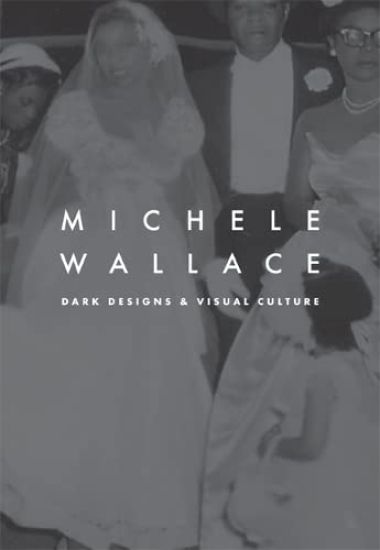
Dark Designs and Visual Culture

Dark Designs and Visual Culture

Michele Wallace

Duke University Press
2004
pokkari
Michele Wallace burst into public consciousness with the 1979 publication of Black Macho and the Myth of the Superwoman, a pioneering critique of the misogyny of the Black Power movement and the effects of racism and sexism on black women. Since then, Wallace has produced an extraordinary body of journalism and criticism engaging with popular culture and gender and racial politics. This collection brings together more than fifty of the articles she has written over the past fifteen years. Included alongside many of her best-known pieces are previously unpublished essays as well as interviews conducted with Wallace about her work. Dark Designs and Visual Culture charts the development of a singular, pathbreaking black feminist consciousness.Beginning with a new introduction in which Wallace reflects on her life and career, this volume includes other autobiographical essays; articles focused on popular culture, the arts, and literary theory; and explorations of issues in black visual culture. Wallace discusses growing up in Harlem; how she dealt with the media attention and criticism she received for Black Macho and the Myth of the Superwoman, which was published when she was just twenty-seven years old; and her relationship with her family, especially her mother, the well-known artist Faith Ringgold. The many articles devoted to black visual culture range from the historical tragedy of the Hottentot Venus, an African woman displayed as a curiosity in nineteenth-century Europe, to films that sexualize the black body-such as Watermelon Woman, Gone with the Wind, and Paris Is Burning. Whether writing about the Anita Hill–Clarence Thomas hearings, rap music, the Million Man March, Toshi Reagon, multiculturalism, Marlon Riggs, or a nativity play in Bedford Stuyvesant, Wallace is a bold, incisive critic. Dark Designs and Visual Culture brings the scope of her career and thought into sharp focus.
Dark Designs and Visual Culture

Dark Designs and Visual Culture

Michele Wallace

Duke University Press
2004
sidottu
Michele Wallace burst into public consciousness with the 1979 publication of Black Macho and the Myth of the Superwoman, a pioneering critique of the misogyny of the Black Power movement and the effects of racism and sexism on black women. Since then, Wallace has produced an extraordinary body of journalism and criticism engaging with popular culture and gender and racial politics. This collection brings together more than fifty of the articles she has written over the past fifteen years. Included alongside many of her best-known pieces are previously unpublished essays as well as interviews conducted with Wallace about her work. Dark Designs and Visual Culture charts the development of a singular, pathbreaking black feminist consciousness.Beginning with a new introduction in which Wallace reflects on her life and career, this volume includes other autobiographical essays; articles focused on popular culture, the arts, and literary theory; and explorations of issues in black visual culture. Wallace discusses growing up in Harlem; how she dealt with the media attention and criticism she received for Black Macho and the Myth of the Superwoman, which was published when she was just twenty-seven years old; and her relationship with her family, especially her mother, the well-known artist Faith Ringgold. The many articles devoted to black visual culture range from the historical tragedy of the Hottentot Venus, an African woman displayed as a curiosity in nineteenth-century Europe, to films that sexualize the black body-such as Watermelon Woman, Gone with the Wind, and Paris Is Burning. Whether writing about the Anita Hill–Clarence Thomas hearings, rap music, the Million Man March, Toshi Reagon, multiculturalism, Marlon Riggs, or a nativity play in Bedford Stuyvesant, Wallace is a bold, incisive critic. Dark Designs and Visual Culture brings the scope of her career and thought into sharp focus.
Witnessing Lynching

Witnessing Lynching

Anne P. Rice; Michele Wallace

Rutgers University Press
2003
nidottu
Witnessing Lynching brings together poetry, essays, drama and fiction from the height of the lynching era (1889-1935). During this time, the torture of a black person drew thousands of local onlookers and was replayed throughout the nation in lurid newspaper reports. The selections gathered in this anthology represent the courageous efforts of American writers to witness the trauma of lynching and to expose the truth about this uniquely American atrocity. Included are well-known authors and activists such as Frederick Douglass, W.E.B. Du Bois, Langston Hughes, Ida B. Wells and Theodore Dreiser, as well as many others. These writers respond to lynching in many different ways, using literature to protest and educate, to create a space of mourning in which to commemorate and rehumanize the dead, and as a cathartic release for personal and collective trauma. Their words provide today's reader with a chance to witness lynching and better understand the current state of race relations in America. An introduction by Anne P. Rice offers a broad historical and thematic framework to ground the selections.