Kirjojen hintavertailu. Mukana 12 591 663 kirjaa ja 12 kauppaa.

Kirjailija

Michelle Caswell

Kirjat ja teokset yhdessä paikassa: 3 kirjaa, julkaisuja vuosilta 2014-2023, suosituimpien joukossa Urgent Archives. Vertaile teosten hintoja ja tarkista saatavuus suomalaisista kirjakaupoista.

3 kirjaa

Kirjojen julkaisuhaarukka 2014-2023.

Urgent Archives

Urgent Archives

Michelle Caswell

TAYLOR FRANCIS LTD
2023
nidottu
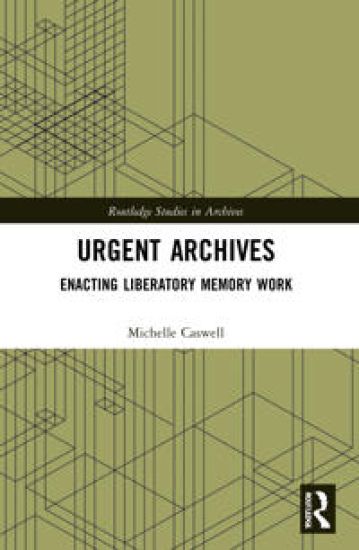
Urgent Archives argues that archivists can and should do more to disrupt white supremacy and hetero-patriarchy beyond the standard liberal archival solutions of more diverse collecting and more inclusive description.Grounded in the emerging field of critical archival studies, this book uncovers how dominant western archival theories and practices are oppressive by design, while looking toward the the radical politics of community archives to envision new liberatory theories and practices. Based on more than a decade of ethnography at community archives sites including the South Asian American Digital Archive (SAADA), the book explores how members of minoritized communities activate records to build solidarities across and within communities, trouble linear progress narratives, and disrupt cycles of oppression. Caswell explores the temporal, representational, and material aspects of liberatory memory work, arguing that archival disruptions in time and space should be neither about the past nor the future, but about the liberatory affects and effects of memory work in the present.Urgent Archives extends the theoretical range of critical archival studies and provides a new framework for archivists looking to transform their practices. The book should also be of interest to scholars of archival studies, museum studies, public history, memory studies, gender and ethnic studies and digital humanities.
Urgent Archives

Urgent Archives

Michelle Caswell

Routledge
2021
sidottu
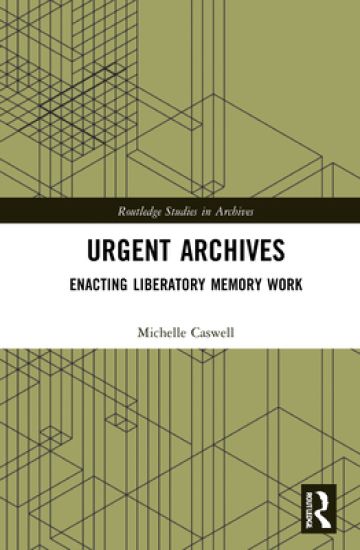
Urgent Archives argues that archivists can and should do more to disrupt white supremacy and hetero-patriarchy beyond the standard liberal archival solutions of more diverse collecting and more inclusive description.Grounded in the emerging field of critical archival studies, this book uncovers how dominant western archival theories and practices are oppressive by design, while looking toward the the radical politics of community archives to envision new liberatory theories and practices. Based on more than a decade of ethnography at community archives sites including the South Asian American Digital Archive (SAADA), the book explores how members of minoritized communities activate records to build solidarities across and within communities, trouble linear progress narratives, and disrupt cycles of oppression. Caswell explores the temporal, representational, and material aspects of liberatory memory work, arguing that archival disruptions in time and space should be neither about the past nor the future, but about the liberatory affects and effects of memory work in the present.Urgent Archives extends the theoretical range of critical archival studies and provides a new framework for archivists looking to transform their practices. The book should also be of interest to scholars of archival studies, museum studies, public history, memory studies, gender and ethnic studies and digital humanities.
Archiving the Unspeakable

Archiving the Unspeakable

Michelle Caswell

University of Wisconsin Press
2014
nidottu
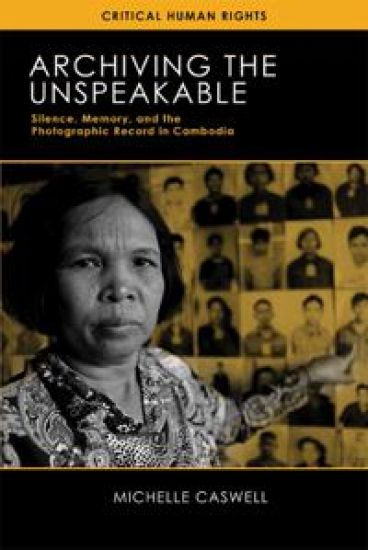
Roughly 1.7 million people died in Cambodia from untreated disease, starvation, and execution during the Khmer Rouge reign of less than four years in the late 1970s. The regime’s brutality has come to be symbolized by the multitude of black-and-white mug shots of prisoners taken at the notorious Tuol Sleng prison, where thousands of “enemies of the state” were tortured before being sent to the Killing Fields. In Archiving the Unspeakable, Michelle Caswell traces the social life of these photographic records through the lens of archival studies and elucidates how, paradoxically, they have become agents of silence and witnessing, human rights and injustice as they are deployed at various moments in time and space. From their creation as Khmer Rouge administrative records to their transformation beginning in 1979 into museum displays, archival collections, and databases, the mug shots are key components in an ongoing drama of unimaginable human suffering.