Kirjojen hintavertailu. Mukana 12 206 374 kirjaa ja 12 kauppaa.

Kirjailija

Michelle Grabner

Kirjat ja teokset yhdessä paikassa: 3 kirjaa, julkaisuja vuosilta 2010-2014, suosituimpien joukossa The Studio Reader – On the Space of Artists. Vertaile teosten hintoja ja tarkista saatavuus suomalaisista kirjakaupoista.

3 kirjaa

Kirjojen julkaisuhaarukka 2010-2014.

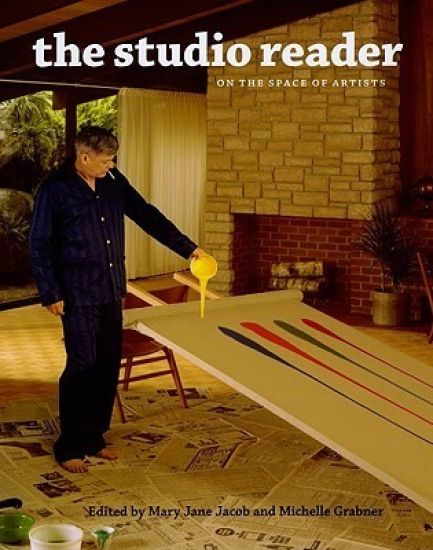
The Studio Reader – On the Space of Artists

The Studio Reader – On the Space of Artists

Mary Jane Jacob; Glenn Adamson; Svetlana Alpers; John Badlessari; Alice Bellony–rewold; Mary Bergstein; Walead Beshty; Andrea Bowers; Daniel Buren; Rochelle Feinstein; David J Getsy; Michelle Grabner; Rodney Graham; Amy Granat; Karl Haendel; Rachel Harrison; Caroline A Jones; Suzanne Lacy; Thomas Lawson; Lynn Lester Hershman; Shana Lutker; Annika Marie; Courtney Martin; Carrie Moyer; Bruce Nauman; Michael Peppiatt; David Reed; Lane Relyea; David Robbins; Judith Rodenbeck; Joe Scanlan; Brenda Schmahmann; Carolee Schneemann

University of Chicago Press
2010
nidottu
The image of a tortured genius working in near isolation has long dominated our conceptions of the artist's studio. Examples are abound: think Jackson Pollock dripping resin on a cicada carcass in his shed in the Hamptons. But times have changed; ever since Andy Warhol declared his art space a 'factory', artists have begun to envision themselves as the leaders of production teams, and their sense of what it means to be in the studio has altered just as dramatically as their practices. "The Studio Reader" pulls back the curtain from the art world to reveal the real activities behind artistic production. What does it mean to be in the studio? What is the space of the studio in the artist's practice? How do studios help artists envision their agency and, beyond that, their own lives? This forward-thinking anthology features an all-star array of contributors, ranging from Svetlana Alpers, Bruce Nauman, and Robert Storr to Daniel Buren, Carolee Schneemann, and Buzz Spector, each of whom locates the studio both spatially and conceptually - at the center of an art world that careens across institutions, markets, and disciplines. A companion for anyone engaged with the spectacular sites of art at its making, "The Studio Reader" reconsiders this crucial space as an actual way of being that illuminates our understanding of both artists and the world they inhabit.
Scott Short

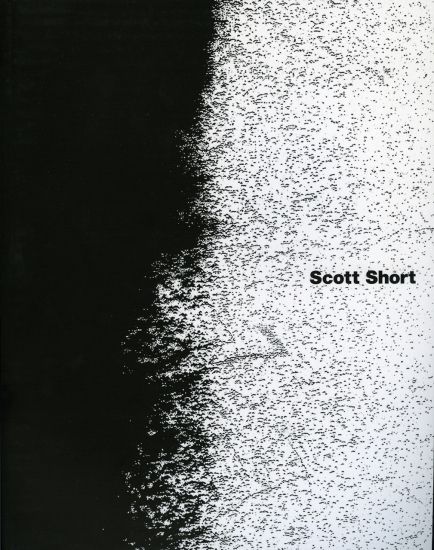
Scott Short

Michelle Grabner; Hamza Walker

Renaissance Society at the University of Chicago
2010
nidottu
This catalogue accompanies the first solo museum exhibition of painter Scott Short. In Short's work notions of color and abstraction are boldly reinterpreted. His method of generating compositions is to make a black and white photocopy of a sheet of colored construction paper, and then makes a copy of a copy of a copy, until the result is hundreds of times removed from the original. Short then selects one of these many copies, enlarges it, and painstakingly copies it in paint on canvas. Despite its labor intensiveness, the procedural aspect of Short's paintings is subordinate to their effect. Visually, Short's paintings are Abstractions with a capital A. Once the photocopies have undergone the shift of scale and material that occurs when Short transcribes them as paintings, they become as a species of abstraction even Greenberg would acknowledge. The fact, however, that Short is dedicated to copying makes his painting the keepers of their own dialectic, in which roles become reversed. Although it is the photocopier that performs the creative role of abstracting, Short's mechanical manual labor allows the copy to become the original and the abstract to lay claim to being strictly representational. Michelle Grabner's essay explores the ideological intersections of copying, repetition, and manual dexterity in art practice. Hamza Walker's essay discusses how Short's practice nullifies the distinction between abstraction and figuration.
I Work from Home

I Work from Home

Michelle Grabner

Mousse Publishing
2014
nidottu
I Work from Home is a survey monograph on American painter Michelle Grabner (born 1962), presenting over 100 works from the past 20 years. The chosen works range from paintings of textile patterns appropriated from household fabrics to her more abstract, metalpoint pieces.