Kirjojen hintavertailu. Mukana 12 390 323 kirjaa ja 12 kauppaa.

Kirjailija

Michiel van Groesen

Kirjat ja teokset yhdessä paikassa: 8 kirjaa, julkaisuja vuosilta 2007-2026, suosituimpien joukossa Theodore de Bry. The New World. 45th Ed.. Vertaile teosten hintoja ja tarkista saatavuus suomalaisista kirjakaupoista.

8 kirjaa

Kirjojen julkaisuhaarukka 2007-2026.

Theodore de Bry. The New World. 45th Ed.

Theodore de Bry. The New World. 45th Ed.

Larry E. Tise; Michiel van Groesen

TASCHEN GMBH
2026
sidottu
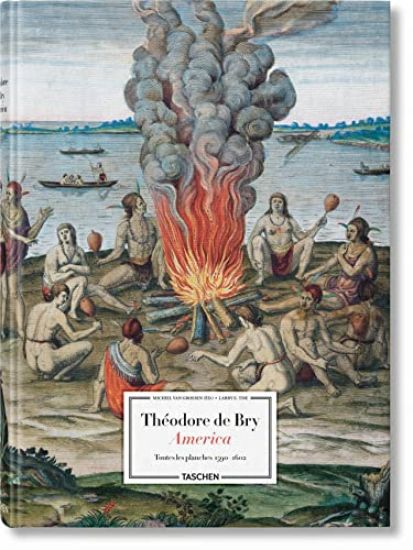
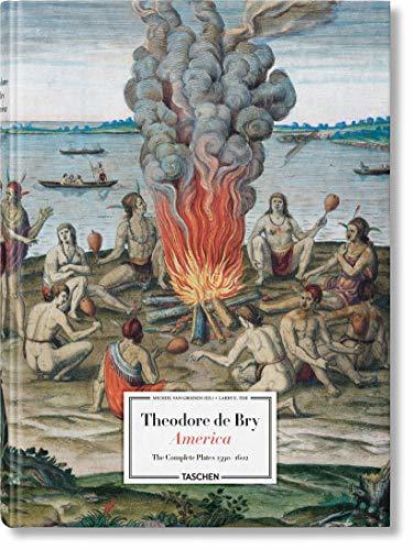
When Flemish engraver and publisher Theodore de Bry issued the first volume of his America series in 1590, the New World was truly novel for most Europeans. Gleaned from the travel accounts of adventurers like Thomas Harriot, Sir Francis Drake, and Sir Walter Raleigh, De Bry’s magnificent engravings brought the new continent and its inhabitants to an enraptured audience across the Atlantic. From “Virginia” (today’s North Carolina) and Florida to Central America and down into Patagonia, the first nine volumes of America depict scenery and encounters between Native Americans and Europeans, revealing the latter’s perceptions of the former. Portrayals of European discovery and Native American customs were based on the explorers’ reports as well as De Bry’s own imagination – he himself never traveled to the New World. Although based in Frankfurt, De Bry laid the foundations of the series while in London, collaborating with artists John White and Jacques Le Moyne, whose original watercolors he adapted for the opening two volumes. With his sons, De Bry formed a family enterprise known for exquisite copper engravings and high-quality illustrations unrivaled in their mastery. The legacy of America is profound, coloring Europe’s earliest visions of the Atlantic world. Throughout the following centuries, countless European illustrations would draw inspiration from the spectacular collection. TASCHEN’s edition pays homage to De Bry’s finesse, reprinting all 218 plates from the first nine volumes alongside their respective frontispieces and continental maps. Volumes I to VI are based on the original hand-colored editions held at the John Hay and John Carter Brown Libraries at Brown University in Providence; volumes VII to IX are from the Staats- und Stadtbibliothek in Augsburg, Germany. Exceptionally rare even at the time of completion, De Bry’s hand-colored America can finally be admired by all.

Theodore de Bry. America

Theodore de Bry. America

Larry E. Tise; Michiel van Groesen

TASCHEN GMBH
2026
sidottu
When Flemish engraver and publisher Theodore de Bry issued the first volume of his America series in 1590, the New World was, for most Europeans, truly novel. Gleaned from the travel accounts of adventurers like Thomas Harriot, Sir Francis Drake, and Sir Walter Raleigh, De Bry’s magnificent engravings brought the new continent and its inhabitants to an enraptured audience across the Atlantic. From “Virginia” (today’s North Carolina) and Florida through Central America and down into Patagonia, the first nine volumes of America depict scenery and encounters between native Americans and Europeans, revealing the latter’s perceptions of the former. Portrayals of European discovery and native American customs were based on the explorers’ reports as well as De Bry’s own imagination, he himself never having traveled to the New World. Although based in Frankfurt, De Bry laid the foundations of the series while in London, collaborating with artists John White and Jacques Le Moyne, whose original watercolors he adapted for the opening two volumes. With his sons, De Bry formed a family enterprise known for exquisite copper engravings and high-quality illustrations unrivaled in their mastery. The legacy of America is profound, coloring Europe’s earliest visions of the Atlantic world. Countless European illustrations would, throughout the following centuries, draw inspiration from the spectacular collection. TASCHEN’s edition pays homage to De Bry’s finesse, reprinting all 218 plates from the first nine volumes alongside their respective frontispieces and continental maps. Volumes I to VI are based on the original hand-colored editions held at the John Hay and John Carter Brown Libraries at Brown University in Providence; volumes VII to IX are from the Staats- und Stadtbibliothek in Augsburg, Germany.Exceptionally rare even at the time of their completion, De Bry’s hand-colored America can finally be admired by all.

An Ocean of Rumours

An Ocean of Rumours

Michiel van Groesen

Cambridge University Press
2026
sidottu
Across the early modern Atlantic world, there were commodities just as valuable as sugar, tobacco or cotton: news and information. However, crossing an ocean beset by wars, pirates and bad weather made transoceanic communications irregular at best, posing significant challenges to the weekly European news cycle. With infrequent access to information, publishers had to navigate between speculation and confirmation, printing everything they could without losing credibility or customers. Michiel van Groesen explores this 'culture of anticipation' across the Atlantic world in Spain, Portugal, France, the Low Countries and England and also in the urban information centres of Renaissance Italy and the Holy Roman Empire. He argues that news from the Atlantic world underpinned all transatlantic exchanges, giving newspapers their rightful place in Atlantic history, and the Atlantic world its place in the history of news.
Théodore de Bry. America

Théodore de Bry. America

Larry E. Tise; Michiel van Groesen

TASCHEN GMBH
2019
nidottu
When Flemish engraver and publisher Theodore de Bry issued the first volume of his America series in 1590, the New World was, for most Europeans, truly novel. Gleaned from the travel accounts of adventurers like Thomas Harriot, Sir Francis Drake, and Sir Walter Raleigh, De Bry’s magnificent engravings brought the new continent and its inhabitants to an enraptured audience across the Atlantic. From “Virginia” (today’s North Carolina) and Florida through Central America and down into Patagonia, the first nine volumes of America depict scenery and encounters between native Americans and Europeans, revealing the latter’s perceptions of the former. Portrayals of European discovery and native American customs were based on the explorers’ reports as well as De Bry’s own imagination, he himself never having traveled to the New World. Although based in Frankfurt, De Bry laid the foundations of the series while in London, collaborating with artists John White and Jacques Le Moyne, whose original watercolors he adapted for the opening two volumes. With his sons, De Bry formed a family enterprise known for exquisite copper engravings and high-quality illustrations unrivaled in their mastery. The legacy of America is profound, coloring Europe’s earliest visions of the Atlantic world. Countless European illustrations would, throughout the following centuries, draw inspiration from the spectacular collection. TASCHEN’s edition pays homage to De Bry’s finesse, reprinting all 218 plates from the first nine volumes alongside their respective frontispieces and continental maps. Volumes I to VI are based on the original hand-colored editions held at the John Hay and John Carter Brown Libraries at Brown University in Providence; volumes VII to IX are from the Staats- und Stadtbibliothek in Augsburg, Germany.Exceptionally rare even at the time of their completion, De Bry’s hand-colored America can finally be admired by all, in XXL resolution.
Theodore de Bry. America

Theodore de Bry. America

Larry E. Tise; Michiel van Groesen

Taschen GmbH
2019
nidottu
When Flemish engraver and publisher Theodore de Bry issued the first volume of his America series in 1590, the New World was, for most Europeans, truly novel. Gleaned from the travel accounts of adventurers like Thomas Harriot, Sir Francis Drake, and Sir Walter Raleigh, De Bry’s magnificent engravings brought the new continent and its inhabitants to an enraptured audience across the Atlantic. From “Virginia” (today’s North Carolina) and Florida through Central America and down into Patagonia, the first nine volumes of America depict scenery and encounters between native Americans and Europeans, revealing the latter’s perceptions of the former. Portrayals of European discovery and native American customs were based on the explorers’ reports as well as De Bry’s own imagination, he himself never having traveled to the New World. Although based in Frankfurt, De Bry laid the foundations of the series while in London, collaborating with artists John White and Jacques Le Moyne, whose original watercolors he adapted for the opening two volumes. With his sons, De Bry formed a family enterprise known for exquisite copper engravings and high-quality illustrations unrivaled in their mastery. The legacy of America is profound, coloring Europe’s earliest visions of the Atlantic world. Countless European illustrations would, throughout the following centuries, draw inspiration from the spectacular collection. TASCHEN’s edition pays homage to De Bry’s finesse, reprinting all 218 plates from the first nine volumes alongside their respective frontispieces and continental maps. Volumes I to VI are based on the original hand-colored editions held at the John Hay and John Carter Brown Libraries at Brown University in Providence; volumes VII to IX are from the Staats- und Stadtbibliothek in Augsburg, Germany.Exceptionally rare even at the time of their completion, De Bry’s hand-colored America can finally be admired by all, in XXL resolution.
Amsterdam's Atlantic

Amsterdam's Atlantic

Michiel van Groesen

University of Pennsylvania Press
2016
sidottu
In 1624 the Dutch West India Company established the colony of Brazil. Only thirty years later, the Dutch Republic handed over the colony to Portugal, never to return to the South Atlantic. Because Dutch Brazil was the first sustained Protestant colony in Iberian America, the events there became major news in early modern Europe and shaped a lively print culture. In Amsterdam's Atlantic, historian Michiel van Groesen shows how the rise and tumultuous fall of Dutch Brazil marked the emergence of a "public Atlantic" centered around Holland's capital city. Amsterdam served as Europe's main hub for news from the Atlantic world, and breaking reports out of Brazil generated great excitement in the city, which reverberated throughout the continent. Initially, the flow of information was successfully managed by the directors of the West India Company. However, when Portuguese sugar planters revolted against the Dutch regime, and tales of corruption among leading administrators in Brazil emerged, they lost their hold on the media landscape, and reports traveled more freely. Fueled by the powerful local print media, popular discussions about Brazil became so bitter that the Amsterdam authorities ultimately withdrew their support for the colony. The self-inflicted demise of Dutch Brazil has been regarded as an anomaly during an otherwise remarkably liberal period in Dutch history, and consequently generations of historians have neglected its significance. Amsterdam's Atlantic puts Dutch Brazil back on the front pages and argues that the way the Amsterdam media constructed Atlantic events was a key element in the transformation of public opinion in Europe.
The Representations of the Overseas World in the De Bry Collection of Voyages, 1590-1634
This book deals with the "De Bry Collection of Voyages", one of the most monumental publications of Early Modern Europe. It analyzes the textual and iconographic changes the De Bry publishing family made to travel accounts describing Asia, Africa and the New World. It discusses this editorial strategy in the context of the publishing industry around 1600, investigating the biography of the De Brys, the publications of the Frankfurt firm, and the making of the collection, as well as its reception by Iberian inquisitors and seventeenth-century readers across the Old World. The book draws on a wide variety of primary sources, and is hence important for historians, book historians, and art historians interested in the development of Europe's overseas empires.
The Expansion of Tolerance

The Expansion of Tolerance

Michiel van Groesen; Israel Jonathan; Stuart Schwartz

Amsterdam University Press
2007
nidottu
This volume about religious tolerance in early modern Brazil comprises two articles. Jonathan Israel, in his contribution, argues that Dutch tolerance in Brazil was unprecedented in the seventeenth century. Catholics and particularly Jews were given freedom of conscience and freedom of private worship in accordance with Dutch guide-lines. Stuart Schwartz, in his article, demonstrates that religious toleration in Dutch Brazil was not exclusively the domain of the Dutch. The Portuguese also widely approved of tolerance at grassroots level, accepting an individual's preference to follow his own path to salvation.