Kirjojen hintavertailu. Mukana 12 381 264 kirjaa ja 12 kauppaa.

Kirjailija

Mieke Bal

Kirjat ja teokset yhdessä paikassa: 39 kirjaa, julkaisuja vuosilta 1988-2026, suosituimpien joukossa Curating Through Signs. Vertaile teosten hintoja ja tarkista saatavuus suomalaisista kirjakaupoista.

39 kirjaa

Kirjojen julkaisuhaarukka 1988-2026.

Of What One Cannot Speak

Of What One Cannot Speak

Mieke Bal

University of Chicago Press
2011
sidottu
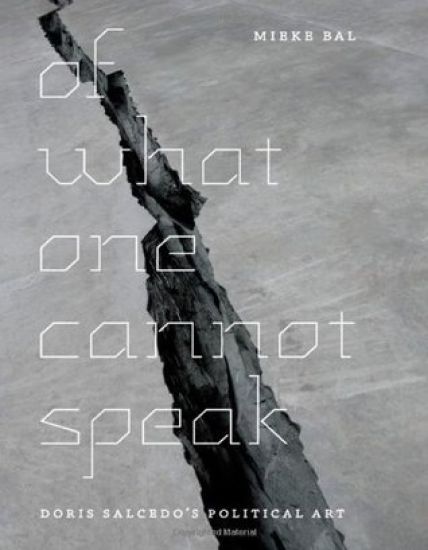
Doris Salcedo, a Colombian-born artist, addresses the politics of memory and forgetting in work that embraces fraught situations in dangerous places. Noted critic and theorist Mieke Bal narrates between the disciplines of contemporary culture in order to boldly reimagine the role of the visual arts. Both women are pathbreaking figures, globally renowned and widely respected. Doris Salcedo, meet Mieke Bal. In "Of What One Cannot Speak", Bal leads us into intimate encounters with Salcedo's art, encouraging us to consider each work as a 'theoretical object' that invites - and demands - certain kinds of considerations about history, death, erasure, and grief. Bal ranges widely through Salcedo's work, from "Salcedo's Atrabiliarios" series - in which the artist uses worn shoes to retrace los desaparecidos ('the disappeared') from nations like Argentina, Chile, and Colombia - to Shibboleth, Salcedo's once-in-a-lifetime commission by the Tate Modern, for which she created a rupture, as if by earthquake, that stretched the length of the museum hall's concrete floor. In each instance, Salcedo's installations speak for themselves, utilizing household items, human bones, and common domestic architecture to explore the silent spaces between violence, trauma, and identity. Yet Bal draws out even deeper responses to the work, questioning the nature of political art altogether and introducing concepts of metaphor, time, and space in order to contend with Salcedo's powerful sculptures and installations. An unforgettable fusion of art and essay, "Of What One Cannot Speak" takes us to the very core of events we are capable of remembering - yet still uncomfortably cannot speak aloud.
Marian ilmestys - The Annunciation

Marian ilmestys - The Annunciation

Eija-Liisa Ahtiala; Mieke Bal

Galleria Heino
2011
nidottu
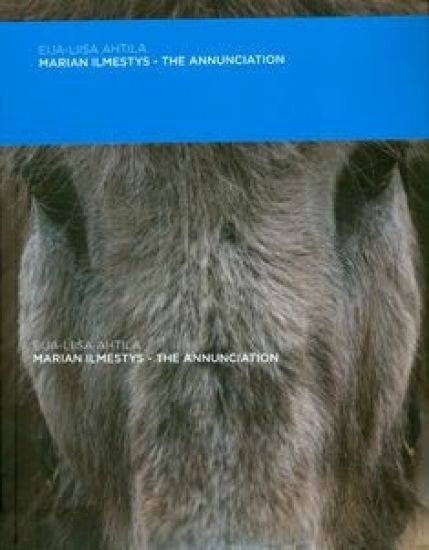
Tämä Marian Ilmestys on kolmen projisoidun kuvan installaatio ja elokuva, jossa rakennetaan ja esitetään uudelleen liikkuvan kuvan avulla kristillisen ikonografian keskeinen maalaus. Se pohjautuu Luukkaan evankeliumin (1:26 - 38) kertomukseen ja Marian Ilmestys maalauksiin, joihin taiteilijat eri aikakausina ovat tallentaneet näkemyksensä evankeliumin tapahtumasta.Tässä Ilmestyksessä tapahtumat on sijoitettu nykyhetkeen. Teos koostuu sekä kuvauksiin valmistautumista esittävästä materiaalista, että varsinaisesta Ilmestys tapahtuman rekonstruktiosta. Materiaali on kuvattu pääosin talven 2010 pakkasissa, lumisessa Aulangon luonnonpuistossa eteläisessä Suomessa sekä taiteilijan työhuonetta ja Ilmestys tapahtumapaikkaa esittävissä lavasteissa. Ihmisnäyttelijät ovat kahta lukuunottamatta amatöörejä. He ovat pääosin Helsingin Diakonissalaitoksen naisten tukipalvelujen asiakkaita. Eläinnäyttelijöitä ovat koulutettu korppi, kaksi tavallista aasia sekä ryhmä kirjekyyhkyjä lintutilalta. Huolimatta käsikirjoituksessa suunnittellusta, on tapahtumat, roolit ja dialogi sovitettu prosessin edetessä näyttelijöiden olemuksen mukaan.Näkökulmana Ilmestykseen on Jacob von Uexküllin ajatus elävien olentojen erilaisten maailmojen yhtäaikaisesta olemassaolosta. Tuon ajatuksen avulla lähestytään ihmeen olemusta sekä havaitsemisen ja tiedon mahdollisuuksia. Esiintyjät rakentavat uudelleen pyhää ja samalla jumalaisen ja eläimellisen avulla määrittelevät uudelleen inhimillistä.
Sleeping Beauty

Sleeping Beauty

John Sparagana; Mieke Bal

University of Chicago Press
2008
sidottu
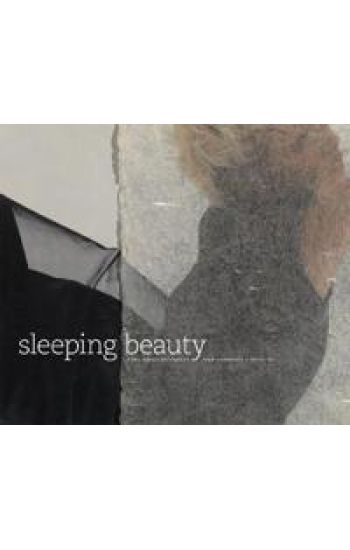
The dictionary. The high-gloss fashion ad. The fraught relationship between artist and critic. "Sleeping Beauty" ties these disparate strands of our everyday lives together, only to strip away everything we thought we knew about each of them. A collaboration by the artist John Sparagana and the critic Mieke Bal, this truly cutting-edge work takes the shape of a conversation between his creations - distressed magazine pages - and her words, imagining anew the relationships of image to text and of art to those who write about it.Bal contributes twenty-six essays, one for each letter of the alphabet, which borrow their organizing principle from the dictionary but reach far beyond the utilitarian purpose of a reference volume. Each one enters deeply into Sparagana's art, illuminating concepts from Abstract to Zestful that inform, underlie, and lend meaning to the exquisitely ruined images he creates by crinkling glossy pictures from fashion magazines until their sheen disappears and they become soft and elastic. Unmooring the magazine page from its familiar context, Sparagana renders these beautiful rags poetic through his unique art of subtraction, which physically rubs away not only ink and material, but also transience and commercial usefulness.Just as Sparagana's work intervenes in existing images, so, too, do Bal's explorations qualify existing concepts. But together, in this inaugural volume in the new series "Project Tango: Artists and Writers Together", they have given rise to something wholly new: a prophetic one-artist dictionary that simultaneously reenvisions the untapped interactions of images with words and the potential forms of the book itself.
Loving Yusuf

Loving Yusuf

Mieke Bal

University of Chicago Press
2008
nidottu
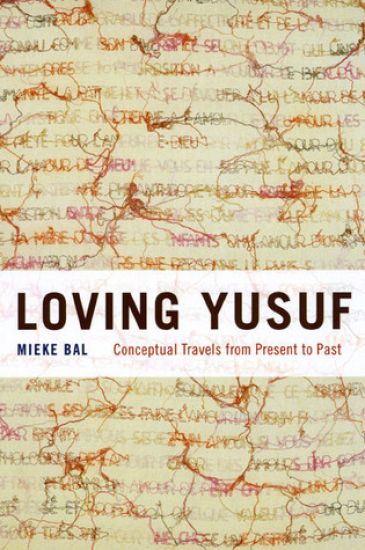
When Mieke Bal reread the story of Joseph and Potiphar's wife as an adult, she was struck by differences between her childhood memories of a moral tale and what she read today. In "Loving Yusuf", Bal seeks to resolve this clash between memory and text, using the same story - in which Joseph spurns the advances of his master's wife, who then falsely accuses him of rape - as her point of departure. She juxtaposes the "Genesis" tale to the rather different version told in the Qur'an and the depictions of it by Rembrandt, and explores how Thomas Mann's great retelling in "Joseph and His Brothers" reworks these versions.Through this inquiry she develops concepts for the analysis of texts that are both strange and overly familiar - culturally remote yet constantly retold. As she puts personal memories in dialogue with scholarly exegesis, Bal asks how all of these different versions complicate her own and others' experience of the story, and how the different truths of these texts in their respective traditions illuminate the process of canonization.
Loving Yusuf

Loving Yusuf

Mieke Bal

University of Chicago Press
2008
sidottu
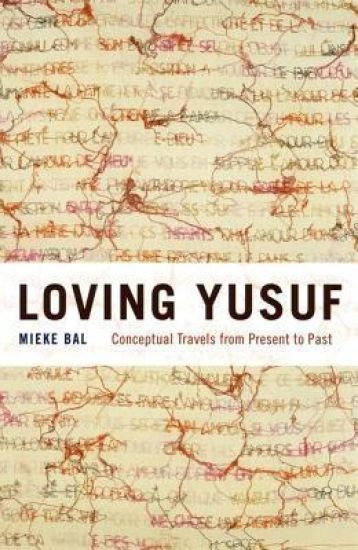
When Mieke Bal reread the story of Joseph and Potiphar's wife as an adult, she was struck by differences between her childhood memories of a moral tale and what she read today. In "Loving Yusuf", Bal seeks to resolve this clash between memory and text, using the same story - in which Joseph spurns the advances of his master's wife, who then falsely accuses him of rape - as her point of departure. She juxtaposes the "Genesis" tale to the rather different version told in the Qur'an and the depictions of it by Rembrandt, and explores how Thomas Mann's great retelling in "Joseph and His Brothers" reworks these versions.Through this inquiry she develops concepts for the analysis of texts that are both strange and overly familiar - culturally remote yet constantly retold. As she puts personal memories in dialogue with scholarly exegesis, Bal asks how all of these different versions complicate her own and others' experience of the story, and how the different truths of these texts in their respective traditions illuminate the process of canonization.
Reading Rembrandt

Reading Rembrandt

Mieke Bal

Amsterdam University Press
2006
nidottu
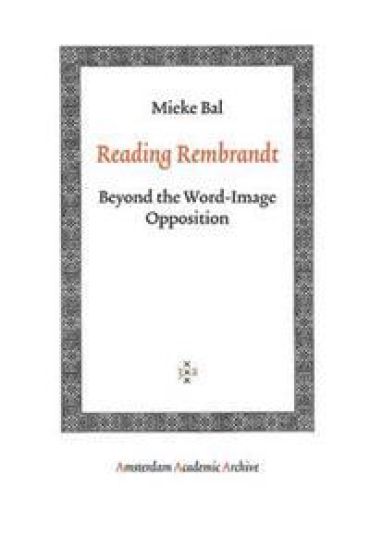
Reading Rembrandt: Beyond the Word-Image Opposition explores the potential for an interdisciplinary methodology between visual art and literature. In a series of close analyses of works by “Rembrandt” – works as we see them today, through all the ways of seeing and commenting that precede – and texts related to those works, Mieke Bal questions the traditional boundaries between literary and visual analysis. Bal also studies Rembrandt’s complex handling of gender and the representation of women in Rembrandt’s painting. The methods used in this study come from both in- and outside the history of art. They demonstrate the author’s sensitivity to the visual aspects of Rembrandt’s work as meaningful. The works by Rembrandt gain in depth and interest, but an original perspective of the role of visuality in our culture also emerges, which ultimately has consequences for our views of gender, the artists, and the act of reading.
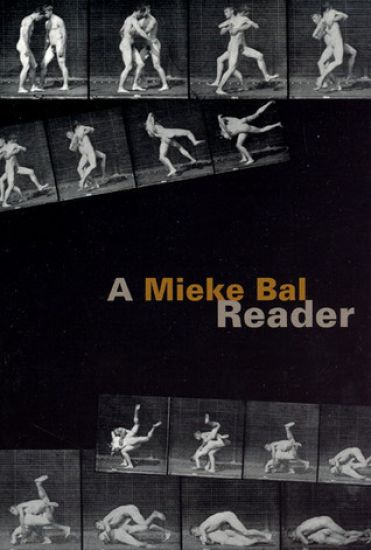
A Mieke Bal Reader

A Mieke Bal Reader

Mieke Bal

University of Chicago Press
2006
sidottu
Mieke Bal has had a significant impact on every field she has touched, from Old Testament scholarship and narratology to critical methods and visual culture. This brilliant and controversial intellectual invariably performs a high-wire act at the point where critical issues and methods intersect - or collide. She is deeply interested in the problems of cultural analysis across a range of disciplines. "A Mieke Bal Reader" brings together for the first time a representative collection of her work that distills her broad interests and areas of expertise. This Reader is organized into four parts, reflecting the fields that Bal has most profoundly influenced: literary study, interdisciplinary methodology, visual analysis, and postmodern theology. The essays include some of Bal's most characteristic and provocative work, capturing her at the top of her form. "Narration and Focalization," for example, provides the groundwork for Bal's ideas on narrative, while "Reading Art?" clearly outlines her concept of reading images. "Religious Canon and Literary Identity" reenvisions Bal's own work at the intersection of theology and cultural analysis, while "Enfolding Feminism" argues for a new feminist rallying cry that is not a position but a metaphor. More than a dozen other essays round out the four sections, each of which is interdisciplinary in its own right: the section devoted to literature, for instance, ranges widely over psychoanalysis, theology, photography, and even autobiography. "A Mieke Bal Reader" is the product of a capacious intellect and a sustained commitment to critical thinking. It will prove to be instructive, maddening, and groundbreaking - in short, all the hallmarks of intellectual inquiry at its best.
A Mieke Bal Reader

A Mieke Bal Reader

Mieke Bal

University of Chicago Press
2006
nidottu
Mieke Bal has had a significant impact on every field she has touched, from Old Testament scholarship and narratology to critical methods and visual culture. This brilliant and controversial intellectual invariably performs a high-wire act at the point where critical issues and methods intersect - or collide. She is deeply interested in the problems of cultural analysis across a range of disciplines. "A Mieke Bal Reader" brings together for the first time a representative collection of her work that distills her broad interests and areas of expertise. This Reader is organized into four parts, reflecting the fields that Bal has most profoundly influenced: literary study, interdisciplinary methodology, visual analysis, and postmodern theology. The essays include some of Bal's most characteristic and provocative work, capturing her at the top of her form. "Narration and Focalization," for example, provides the groundwork for Bal's ideas on narrative, while "Reading Art?" clearly outlines her concept of reading images. "Religious Canon and Literary Identity" reenvisions Bal's own work at the intersection of theology and cultural analysis, while "Enfolding Feminism" argues for a new feminist rallying cry that is not a position but a metaphor. More than a dozen other essays round out the four sections, each of which is interdisciplinary in its own right: the section devoted to literature, for instance, ranges widely over psychoanalysis, theology, photography, and even autobiography. "A Mieke Bal Reader" is the product of a capacious intellect and a sustained commitment to critical thinking. It will prove to be instructive, maddening, and groundbreaking - in short, all the hallmarks of intellectual inquiry at its best.
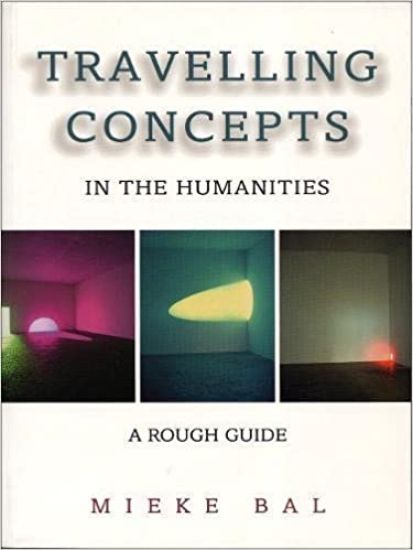
Travelling Concepts in the Humanities

Travelling Concepts in the Humanities

Mieke Bal

University of Toronto Press
2002
pokkari
Attempting to bridge the gap between specialised scholarship in the humanistic disciplines and an interdisciplinary project of cultural analysis, Mieke Bal has written an intellectual travel guide that charts the course 'beyond' cultural studies. As with any guide, it can be used in a number of ways and the reader can follow or willfully ignore any of the paths it maps or signposts. Bal's focus for this book is the idea that interdisciplinarity in the humanities - necessary, exciting, serious - must seek its heuristic and methodological basis in concepts rather than its methods. Concepts are not grids to put over an object. The counterpart of any given concept is the cultural text or work or 'thing' that constitutes the object of analysis. No concept is meaningful for cultural analysis unless it helps us to understand the object better on its own terms. Bal offers the reader a sustained theoretical reflection on how to 'do' cultural analysis through a tentative practice of doing just that. This offers a concrete practice to theoretical constructs, and allows the proposed method more accessibility.
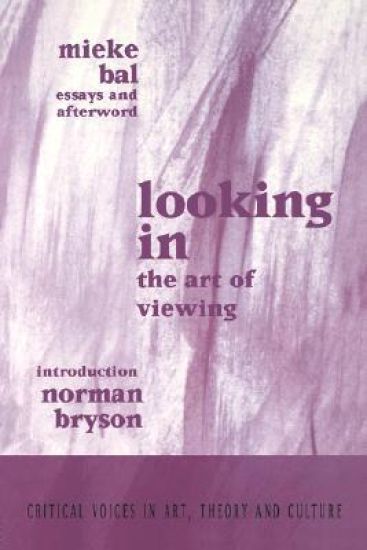
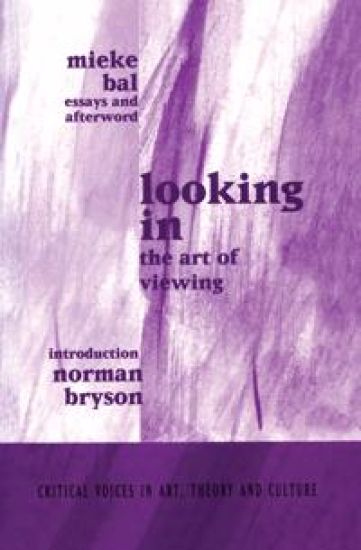
Looking In

Looking In

Mieke Bal; Norman Bryson

GB Arts International
2001
nidottu
In his engaging commentary, eminent art historian Norman Bryson shows how Bal's original approach to the interdisciplinary study of art and visual culture has had wide-reaching influence.
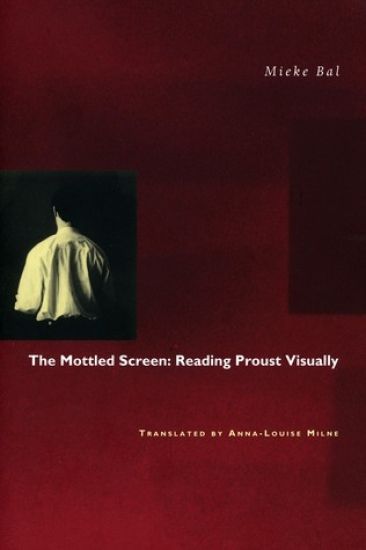
The Mottled Screen

The Mottled Screen

Mieke Bal

Stanford University Press
1997
sidottu
The clear-cut distinction between texts (literature) and images (art) has been challenged by a culture saturated with television and by an increased emphasis on interdisciplinary studies. From the viewpoint of our present culture, the author suggests, we can now see how some of the great writers and artists of the past overstepped the boundaries of the media in which they worked. The Mottled Screen studies as an example of this process a great literary work that cannot be confined to language alone, even though it consists exclusively of words: Proust's Remembrance of Things Past. The author of Reading Rembrandt: Beyond the Word-Image Opposition, a widely acclaimed study of Rembrandt's discursive, rhetorical, and narrative painting, now offers a symmetrical counterpart to that study with this sustained "visual" reading of Proust's masterpiece, pointing out its visual strategies of representation, fantasy, and poetic thought. She focuses on the narrative and descriptive passages, examining how they make us "see," arguing that this visual writing is by no means a derivative writing that uses visual imagery as an inspiration or model. Instead, it is the writing of a true vision. Beginning with the attempts to emulate painting, the book develops a Proust à la Chardin, working around Chardin's painting The Skate, but only after first reading Chardin through Proust. Viewing a Chardin with anxieties and emulation, Proust writes in Chardin's mood when he sets up the mottled screen as the metaphor of reading. Chardin's appeal to a wavering, roving eye is matched by Proust's uncertain perceptions, and the nervous quality of The Skate is matched by the famous passages recording Proust's disgust at the debris of the breakfast table. The second part of the book is devoted to Proust's use of optical instruments—such as the magnifying glass, the eyeglass, the telescope—to produce or enhance the visions that constitute the raw material of his poetic imagination. These optical instruments guide the probing of the paradoxes of seeing close-up or at a distance, the latter flattening out, the former blinding. The final part reads the specifically "photographic" writing that permeates Remembrance as a highly original and astonishing contemporary, almost postmodern, poetics. The photographic shows in the way Proust's narrator frames what he sees, contrasts light and dark, zooms in and out, and represents "contact sheets" of snapshots rapidly taken so as to capture the most fleeting sensations and visions.
Double Exposures

Double Exposures

Mieke Bal

Routledge
1996
sidottu
A feminist literary theorist, specialist in Rembrandt, and a scholar with a knack for reading Old Testament stories, Mieke Bal weaves a tapestry of signs and meanings that enrich our senses. Her subject is the act of showing, the gesture of exposing to view. In a museum, for example, the object is on display, made visually available. "That's how it is," the display proclaims. But who says so?Bal's subjects are displays from the American Museum of Natural History, paintings by such figures as Courbet, Caravaggio, Artemisia Gentileschi, and Rembrandt, as well as works by twentieth-century artists, and such literary texts as Shakespeare's Rape of Lucrece.
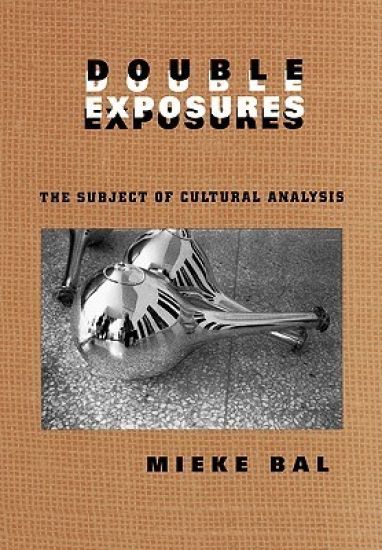
Double Exposures

Double Exposures

Mieke Bal

Routledge
1996
nidottu
A feminist literary theorist, specialist in Rembrandt, and a scholar with a knack for reading Old Testament stories, Mieke Bal weaves a tapestry of signs and meanings that enrich our senses. Her subject is the act of showing, the gesture of exposing to view. In a museum, for example, the object is on display, made visually available. "That's how it is," the display proclaims. But who says so?Bal's subjects are displays from the American Museum of Natural History, paintings by such figures as Courbet, Caravaggio, Artemisia Gentileschi, and Rembrandt, as well as works by twentieth-century artists, and such literary texts as Shakespeare's Rape of Lucrece.
On Meaning-making

On Meaning-making

Mieke Bal

Polebridge Press
1994
nidottu
Bal (theory of literature, U. of Amsterdam) addresses basic questions in semiotics, the theory of signs, in this companion piece to her earlier book, On Story Telling . She explores the continuity between semiotics and narratology, the semioticized subject and its link with visual art, semiotic issu
On Story-Telling: Essays in Narratology
A readable and absorbing volume of annotated essays illustrating the approach of Mieke Bal to story-telling. Essays include reflections and background on methodology, theory of narrative, and examples of how narratology unmasks the meaning behind texts from the world's great story-tellers
Death and Dissymmetry

Death and Dissymmetry

Mieke Bal

University of Chicago Press
1989
sidottu
Combining literary criticism and feminist analysis, Death and Dissymmetry radically reinterprets not only the Book of Judges but also the tradition of its reception and understanding in the West. In Mieke Bal's account, Judges documents the Israelite culture learning to articulate itself in a decisive period of transition. Counter to standard readings of Judges, Bal's interpretation demonstrates that the book has a political and ideological coherence in which the treatment of women plays a pivotal role. Bal concentrates here not on the assassinations and battles that rage through Judges but on the violence in the domestic lives of individual characters, particularly sexual violence directed at women. Her skillful reading reveals that murder, in this text, relates to gender and reflects a social structure that is inherently contradictory. By foregrounding the stories of women and subjecting them to subtle narrative analysis, she is able to expose a set of preoccupations that are essential to the sense of these stories but are not articulated in them. Bal thereby develops a "countercoherence" in conflict with the apparent emphases of Judges—the politics, wars, and historiography that have been the constant focus of commentators on the book. Death and Dissymmetry makes an important contribution to the development of a feminist method of interpreting ancient texts, with consequences for religious studies, ancient history, literary theory, and gender studies.
Death and Dissymmetry

Death and Dissymmetry

Mieke Bal

University of Chicago Press
1988
nidottu
Combining literary criticism and feminist analysis, Death and Dissymmetry radically reinterprets not only the Book of Judges but also the tradition of its reception and understanding in the West. In Mieke Bal's account, Judges documents the Israelite culture learning to articulate itself in a decisive period of transition. Counter to standard readings of Judges, Bal's interpretation demonstrates that the book has a political and ideological coherence in which the treatment of women plays a pivotal role. Bal concentrates here not on the assassinations and battles that rage through Judges but on the violence in the domestic lives of individual characters, particularly sexual violence directed at women. Her skillful reading reveals that murder, in this text, relates to gender and reflects a social structure that is inherently contradictory. By foregrounding the stories of women and subjecting them to subtle narrative analysis, she is able to expose a set of preoccupations that are essential to the sense of these stories but are not articulated in them. Bal thereby develops a "countercoherence" in conflict with the apparent emphases of Judges—the politics, wars, and historiography that have been the constant focus of commentators on the book. Death and Dissymmetry makes an important contribution to the development of a feminist method of interpreting ancient texts, with consequences for religious studies, ancient history, literary theory, and gender studies.
Murder and Difference

Murder and Difference

Mieke Bal

Indiana University Press
1988
pokkari
" . . . an important contribution to current literary concerns with the ideologies of texts . . . " —Society of Old Testament Study Book List " . . . she points the way into as yet little-explored territory, broadly engaging literary theory as well as ideological criticism . . . she moves beyond both narrowly historical and exclusively text-centered criticism . . . " —Theology Today " . . . Bal has given us both a coruscating feminist critique of biblical scholarship and a fund of provocative exegetical insights . . . required reading for anyone who wants to know where serious biblical scholarship is heading." —Shofar