Kirjojen hintavertailu. Mukana 12 595 353 kirjaa ja 12 kauppaa.

Kirjailija

Mierzejewski Alfred C.

Kirjat ja teokset yhdessä paikassa: 4 kirjaa, julkaisuja vuosilta 2007-2014, suosituimpien joukossa The Most Valuable Asset of the Reich. Vertaile teosten hintoja ja tarkista saatavuus suomalaisista kirjakaupoista.

4 kirjaa

Kirjojen julkaisuhaarukka 2007-2014.

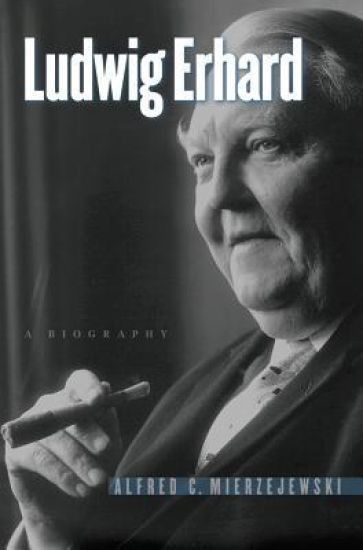
Ludwig Erhard

Ludwig Erhard

Mierzejewski Alfred C.

The University of North Carolina Press
2014
nidottu
In the first English-language biography of one of the most important figures in postwar German history, Alfred C. Mierzejewski examines the life and service of Ludwig Erhard (1897-1977), West Germany's first minister of economics and second chancellor. Erhard liberalized the German economy in 1948 and is generally considered the father of West Germany's ""economic miracle""--the period of extraordinary growth in jobs and improvement in the standard of living in the 1950s that helped stabilize Germany's first successful democracy. While recent scholarship has dismissed Erhard's influence on Germany's economic recovery, Mierzejewski returns to little-cited German analyses and Erhard's own record and concludes that Allied currency reform and Erhard's liberalization of the economy were crucial triggers for Germany's unprecedented economic boom. Mierzejewski provides insight into Erhard's policies, his ideas, his character, and his relationships with Konrad Adenauer and Charles de Gaulle. By offering a fresh account of Erhard's career as a leader in postwar West Germany, Mierzejewski provides a deeper understanding of Germany's economy as well as its democracy.
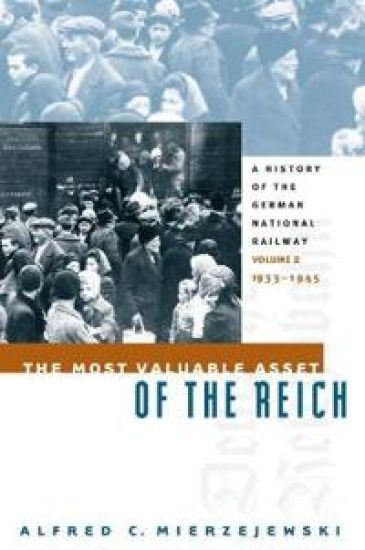
The Most Valuable Asset of the Reich

The Most Valuable Asset of the Reich

Mierzejewski Alfred C.

The University of North Carolina Press
2014
nidottu
The largest enterprise in the capitalist world between 1920 and 1945, the Deutsche Reichsbahn (German National Railway) was at the center of events in a period of great turmoil in Germany. In this, the second volume of his comprehensive history of the Reichsbahn, Alfred Mierzejewski offers the first complete account of the national railway under Hitler's regime. Mierzejewski uses sources that include Nazi Party membership records and Reichsbahn internal memoranda to explore the railway's operations, finances, and political and social roles from 1933 to 1945. He examines the Reichsbahn's role in German rearmament, its own lack of preparations for war, and its participation in Germany's military operations. He shows that despite successfully resisting Nazi efforts to politicize its internal functions, the Reichsbahn cooperated with the government's anti-Semitic policies. Indeed, the railway played a crucial role in the Holocaust by supporting the construction and operation of the Nazi death camps and by transporting Jews and other victims to them.
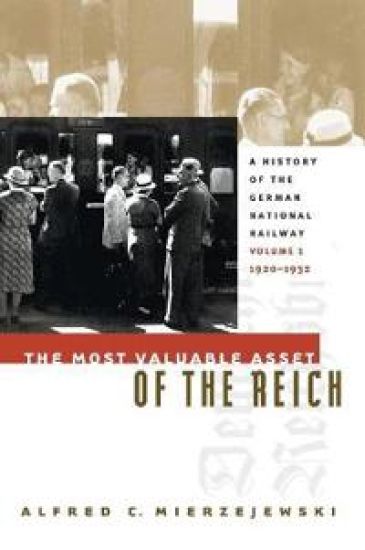
The Most Valuable Asset of the Reich

The Most Valuable Asset of the Reich

Mierzejewski Alfred C.

The University of North Carolina Press
2013
nidottu
The largest enterprise in the capitalist world between 1920 and 1932, the Deutsche Reichsbahn (German National Railway) was at the center of events in a period of great turmoil in Germany. In the first detailed history of this important organization, Alfred Mierzejewski presents a sophisticated analysis of the Reichsbahn's operations, finances, and political and social roles. In addition, he uses the story of the Reichsbahn to gain new perspectives on modern German economic and political history. Mierzejewski describes and analyzes the beginnings of the national railway in Germany and the problems that it faced. He examines the Reichsbahn's noncapitalistic, ""commonweal"" approach to economic management and shows how the railway was used to hold Germany together, especially in the face of Bavarian particularism. Mierzejewski's account also provides unparalleled insight into Germany's reparations policies, demonstrating that Germany was fully capable of paying the Dawes annuities and that the government's claims that reparations paid by the Reichsbahn hurt both the railway and Germany were groundless. A second volume will cover the period from 1933 to 1945.
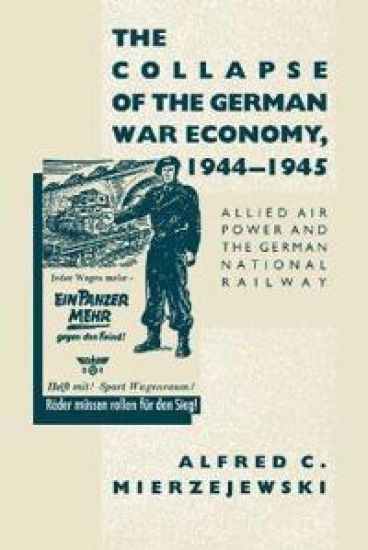
The Collapse of the German War Economy, 1944-1945

The Collapse of the German War Economy, 1944-1945

Mierzejewski Alfred C.

The University of North Carolina Press
2007
nidottu
In this book, Alfred Mierzejewski describes how the German economy collapsed under Allied bombing in the last year of World War II. He presents a broad-based, original study of German wartime industry and transportation, and of Allied air force planning and intelligence, including the first complete analysis in English of the German National Railway.The German industrial economy was extraordinarily dependent on the timely, adequate distribution of coal by railroad and inland waterway. The German National Railway in particular was the pivot of the finely balanced armaments production and distribution system created by Albert Speer. But Allied strategists did not immediately recognize this. Only in late 1944, when Deputy Supreme Allied Commander Sir Arthur Tedder built a new strategic consensus, was this vital coal/transport nexus severed. The result was the rapid paralysis of the Nazi war economy.Mierzejewski measures the economic consequences of the bombing by considering broad indices such as armaments and coal production, railway performance, and weapons deliveries to the armed forces. In addition, he shows how individual companies in each of Germany's major economic regions fared. By drawing on previously unexamined filed of private German manufacturing companies, the Reich Transportation Ministry, and Allied air intelligence agencies, Mierzejewski creates a rare combination of economic analysis and military history that provides new perspectives on the German war economy and Allied air intelligence.