Kirjojen hintavertailu. Mukana 12 595 353 kirjaa ja 12 kauppaa.

Kirjailija

Miguel M. Gonçalves

Kirjat ja teokset yhdessä paikassa: 4 kirjaa, julkaisuja vuosilta 2012-2015, suosituimpien joukossa Dialogic Formations. Vertaile teosten hintoja ja tarkista saatavuus suomalaisista kirjakaupoista.

4 kirjaa

Kirjojen julkaisuhaarukka 2012-2015.

Human Development in the Life Course

Human Development in the Life Course

Zittoun Tania; Valsiner Jaan; Vedeler Dankert; João Salgado; Miguel M. Gonçalves; Ferring Dieter

Cambridge University Press
2015
pokkari
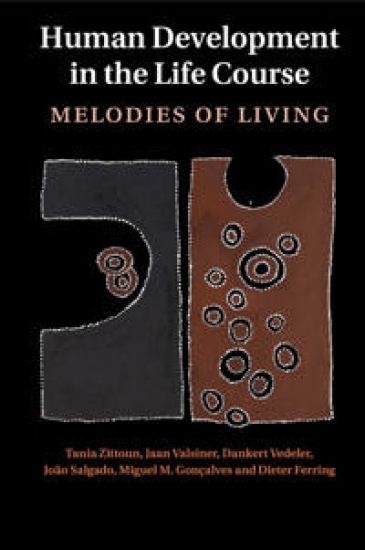
Drawing on philosophy, the history of psychology and the natural sciences, this book proposes a new theoretical foundation for the psychology of the life course. It features the study of unique individual life courses in their social and cultural environment, combining the perspectives of developmental and sociocultural psychology, psychotherapy, learning sciences and geronto-psychology. In particular, the book highlights semiotic processes, specific to human development, that allow us to draw upon past experiences, to choose among alternatives and to plan our futures. Imagination is an important outcome of semiotic processes and enables us to deal with daily constraints and transitions, and promotes the transformation of social representation and symbolic systems - giving each person a unique style, or 'melody', of living. The book concludes by questioning the methodology and epistemology of current life course studies.
Human Development in the Life Course

Human Development in the Life Course

Tania Zittoun; Jaan Valsiner; Dankert Vedeler; João Salgado; Miguel M. Gonçalves; Dieter Ferring

Cambridge University Press
2013
sidottu
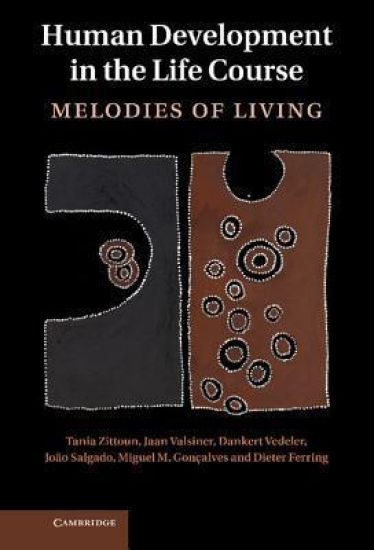
Drawing on philosophy, the history of psychology and the natural sciences, this book proposes a new theoretical foundation for the psychology of the life course. It features the study of unique individual life courses in their social and cultural environment, combining the perspectives of developmental and sociocultural psychology, psychotherapy, learning sciences and geronto-psychology. In particular, the book highlights semiotic processes, specific to human development, that allow us to draw upon past experiences, to choose among alternatives and to plan our futures. Imagination is an important outcome of semiotic processes and enables us to deal with daily constraints and transitions, and promotes the transformation of social representation and symbolic systems - giving each person a unique style, or 'melody', of living. The book concludes by questioning the methodology and epistemology of current life course studies.
Dialogic Formations

Dialogic Formations

Marie-Cécile Cervellon; Peter T. F. Raggatt; Miguel M. Gonçalves

Information Age Publishing
2012
sidottu
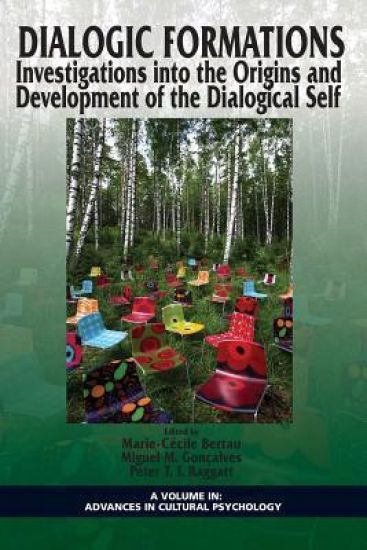
This volume understands itself as an invitation to follow a fundamental shift in perspective, away from the self-contained ‘I’ of Western conventions, and towards a relational self, where development and change are contingent on otherness. In the framework of ‘Dialogical Self Theory’ (Hermans & Hermans-Konopka, 2010; Hermans & Gieser, 2012), it is precisely the forms of interaction and exchange with others and with the world that determine the course of the self’s development.The volume hence addresses dialogical processes in human interaction from a psychological perspective, bringing together previously separate theoretical traditions about the ‘self’ and about ‘dialogue’ within the innovative framework of Dialogical Self Theory. The book is devoted to developmental questions, and so broaches one of the more difficult and challenging topics for models of a pluralist self: the question of how the dynamics of multiplicity emerge and change over time. This question is explored by addressing ontogenetic questions, directed at the emergence of the dialogical self in early infancy, as well as microgenetic questions, addressed to later developmental dynamics in adulthood. Additionally, development and change in a range of culture-specific settings and practices is also examined, including the practices of mothering, of migration and cross-cultural assimilation, and of ‘doing psychotherapy’.
Dialogic Formations

Dialogic Formations

Marie-Cécile Cervellon; Peter T. F. Raggatt; Miguel M. Gonçalves

Information Age Publishing
2012
nidottu
This volume understands itself as an invitation to follow a fundamental shift in perspective, away from the self-contained ‘I’ of Western conventions, and towards a relational self, where development and change are contingent on otherness. In the framework of ‘Dialogical Self Theory’ (Hermans & Hermans-Konopka, 2010; Hermans & Gieser, 2012), it is precisely the forms of interaction and exchange with others and with the world that determine the course of the self’s development.The volume hence addresses dialogical processes in human interaction from a psychological perspective, bringing together previously separate theoretical traditions about the ‘self’ and about ‘dialogue’ within the innovative framework of Dialogical Self Theory. The book is devoted to developmental questions, and so broaches one of the more difficult and challenging topics for models of a pluralist self: the question of how the dynamics of multiplicity emerge and change over time. This question is explored by addressing ontogenetic questions, directed at the emergence of the dialogical self in early infancy, as well as microgenetic questions, addressed to later developmental dynamics in adulthood. Additionally, development and change in a range of culture-specific settings and practices is also examined, including the practices of mothering, of migration and cross-cultural assimilation, and of ‘doing psychotherapy’.