Kirjojen hintavertailu. Mukana 12 595 353 kirjaa ja 12 kauppaa.

Kirjailija

Mike Parker Pearson

Kirjat ja teokset yhdessä paikassa: 15 kirjaa, julkaisuja vuosilta 2002-2025, suosituimpien joukossa South Uist. Vertaile teosten hintoja ja tarkista saatavuus suomalaisista kirjakaupoista.

15 kirjaa

Kirjojen julkaisuhaarukka 2002-2025.
Cladh Hallan

Cladh Hallan

Mike Parker Pearson; Jacqui Mulville; Helen Smith; Peter Marshall

Oxbow Books
2021
sidottu
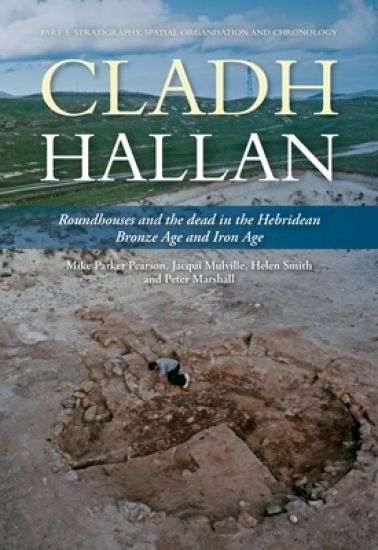
This first of two volumes presents the archaeological evidence of a long sequence of settlement and funerary activity from the Beaker period (Early Bronze Age c. 2000 BC) to the Early Iron Age (c. 500 BC) at the unusually long-occupied site of Cladh Hallan on South Uist in the Western Isles of Scotland. Particular highlights of its sequence are a cremation burial ground and pyre site of the 18th–16th centuries BC and a row of three Late Bronze Age sunken-floored roundhouses constructed in the 10th century BC. Beneath these roundhouses, four inhumation graves contained skeletons, two of which were remains of composite collections of body parts with evidence for post-mortem soft tissue preservation prior to burial. They have proved to be the first evidence for mummification in Bronze Age Britain.Cladh Hallan's remarkable stratigraphic sequence, preserved in the machair sand of South Uist, includes a unique 500-year sequence of roundhouse life in Late Bronze Age and Iron Age Britain. One of the most important results of the excavation has come from intensive environmental and micro-debris sampling of house floors and outdoor areas to recover patterns of discard and to interpret the spatial use of 15 domestic interiors from the Late Bronze Age to the Early Iron Age. From Cladh Hallan’s roundhouse floors we gain intimate insights into how daily life was organized within the house - where people cooked, ate, worked and slept. Such evidence rarely survives from prehistoric houses in Britain or Europe, and the results make a profound contribution to long-running debates about the sunwise organisation of roundhouse activities. Activity at Cladh Hallan ended with the construction and abandonment of two unusual double-roundhouses in the Early Iron Age. One appears to have been a smokery and steam room, and the other was used for metalworking.
Stonehenge for the Ancestors

Stonehenge for the Ancestors

Mike Parker Pearson; Joshua Pollard; Colin Richards; Julian Thomas; Kate Welham

Sidestone Press
2020
sidottu
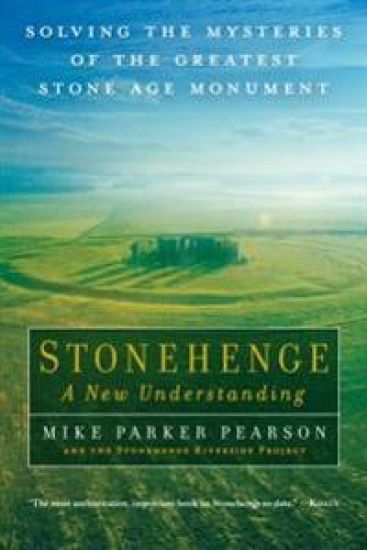
For many centuries, scholars and enthusiasts have been fascinated by Stonehenge, the world’s most famous stone circle. In 2003 a team of archaeologists commenced a long-term fieldwork project for the first time in decades. The Stonehenge Riverside Project (2003-2009) aimed to investigate the purpose of this unique prehistoric monument by considering it within its wider archaeological context.This is the first of four volumes which present the results of that campaign. It includes investigations of the monuments and landscape that pre-dated Stonehenge on Salisbury Plain as well as of excavation at Stonehenge itself. The main discovery at Stonehenge was of cremated human remains from many individuals, allowing their demography, health and dating to be established. With a revised radiocarbon-dated chronology for Stonehenge’s five stages of construction, these burials can now be considered within the context of the monument’s development. The different types of stone from which Stonehenge is formed – bluestones from Wales and sarsen silcretes from more local sources – are investigated both at Stonehenge and in its surroundings. These surrounding monuments include single standing stones, the Cuckoo Stone and the Tor Stone, as well as the newly discovered circle of Bluestonehenge at West Amesbury beside the River Avon. The ceremonial Stonehenge Avenue, linking Stonehenge to Bluestonehenge, is also included, based on a series of excavations along its length.The working hypothesis behind the Stonehenge Riverside Project links Stonehenge with a complex of timber monuments upstream at the great henge of Durrington Walls and neighbouring Woodhenge. Whilst these other sites are covered in a later volume (Volume 3), this volume explores the role of the River Avon and its topographic and environmental evidence.With contributions by:Umberto Albarella, Michael Allen, Olaf Bayer, Wayne Bennett, Richard Bevins, Christopher Bronk Ramsey, Chris Casswell, Andrew Chamberlain, Benjamin Chan, Rosamund Cleal, Gordon Cook, Glyn Davies, David Field, Charles French, Robert Ixer, Neil Linford, Peter Marshall, Louise Martin, Claudia Minniti, Doug Mitcham, Bob Nunn, Andy Payne, Mike Pitts, Rebecca Pullen, Julian Richards, David Robinson, Clive Ruggles, Jim Rylatt, Rob Scaife, Ellen Simmons, Charlene Steele, James Sugrue, Anne Teather, Sarah Viner, Tony Waldron, Katy Whitaker and Christie Willis
Stonehenge

Stonehenge

Mike Parker Pearson; Joshua Pollard; Colin Richards; Julian Thomas; Kate Welham

Council for British Archaeology
2015
nidottu
Stonehenge is an iconic monument for people all around the world. Built around 5000 years ago, it stands for mystery and forgotten secrets waiting to be decoded. In this latest book in the Council for British Archaeology’s ‘Archaeology for All’ series, Professor Mike Parker Pearson presents an up-to-date interpretation of Stonehenge and its landscape. Drawing on his years of research and excavation, the author presents a highly readable account that is lavishly illustrated with images by the renowned photographer Adam Stanford and the reconstruction artist Peter Dunn.
Cladh Hallan: Roundhouses and the Dead in the Hebridean Bronze Age and Iron Age

Cladh Hallan: Roundhouses and the Dead in the Hebridean Bronze Age and Iron Age

Mike Parker Pearson; Jacqui Mulville; Helen Smith; Peter Marshall
Casemate Publishers
2025
sidottu
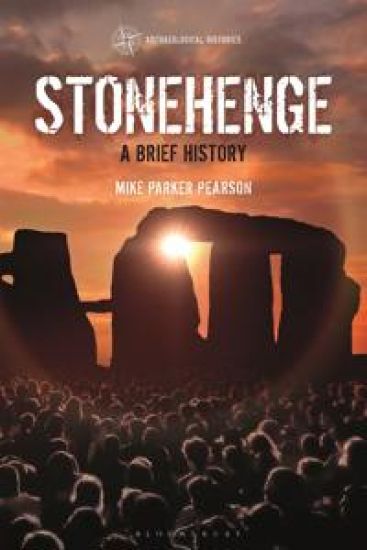
This second of two volumes presents archaeological and scientific studies of a wide range of materials from the unusually long-occupied Bronze Age and Iron Age site of Cladh Hallan on South Uist in the Western Isles of Scotland. These include metalworking debris, copper-alloy, gold and iron artifacts, bone and antler tools and ornaments, flint and quartz tools, coarse stone tools, pumice, shale ornaments and fuel ash slag. The metalworking assemblage, from casting weapons, tools and ornaments, is exceptional in its size and in its being stratified within a domestic context of production. Metal tools and ornaments, some placed as special deposits on house floors, include a gold-plated penannular ring and an iron object stratified within an 11th-century BC house floor, among the earliest finds of iron artefacts in Britain. The enormous and well-preserved environmental assemblage includes faunal remains of land mammals, whales, fish, birds and marine and terrestrial molluscs. Sheep were the most numerous domestic species within an assemblage of over 150,000 land mammalian remains, and Cladh Hallan has the largest collection of canine remains for any settlement in British later prehistory. Carbonized plant remains derive principally from cultivation of barley and associated weeds of cultivation. The site’s assemblage provides extensive material for chemical analysis of food residues, isotopic analysis of animal and human remains, osteological analysis of human remains, histological analysis of their processes of diagenesis, and genetic analysis of ancient DNA from animal and human remains. These analyses include full investigation of the human remains from two composite inhumations that had formerly been mummified, the first discovery of this mortuary practice in prehistoric Britain. The book concludes with a synthesis of results presented in the two volumes, presenting the rich insights provided by research on Cladh Hallan into life and death in the 2nd and early 1st millennia BC.
Stonehenge

Stonehenge

Mike Parker Pearson

BLOOMSBURY PUBLISHING PLC
2023
nidottu
Stonehenge is one of the world’s most famous monuments. Who built it, how and why are questions that have endured for at least 900 years, but modern methods of investigation are now able to offer up a completely new understanding of this iconic stone circle.Stonehenge’s history straddles the transition from the Stone Age to the Bronze Age, though its story began long before it was built. Serving initially as a burial ground, it evolved over time into a sacred place for gathering, feasting and building, and was remodelled several times as different peoples arrived in the area along with new technologies and customs. In more recent centuries it has found itself the centre of excavations, political protests and even conspiracy theories, embedding itself in the consciousness of the modern world.In this book Mike Parker Pearson draws on two decades of research, the results of recent excavations and cutting-edge scientific analyses to uncover many of the secrets that this prehistoric stone circle has kept for 5,000 years. In doing so, he paints the most comprehensive picture yet of the history of Stonehenge, from its origins up to the 21st century, and reveals how in some ways trying to explain its power of attraction in the present is harder than explaining its purpose in the ancient past.
Stonehenge

Stonehenge

Mike Parker Pearson

BLOOMSBURY PUBLISHING PLC
2023
sidottu
Stonehenge is one of the world’s most famous monuments. Who built it, how and why are questions that have endured for at least 900 years, but modern methods of investigation are now able to offer up a completely new understanding of this iconic stone circle.Stonehenge’s history straddles the transition from the Stone Age to the Bronze Age, though its story began long before it was built. Serving initially as a burial ground, it evolved over time into a sacred place for gathering, feasting and building, and was remodelled several times as different peoples arrived in the area along with new technologies and customs. In more recent centuries it has found itself the centre of excavations, political protests and even conspiracy theories, embedding itself in the consciousness of the modern world.In this book Mike Parker Pearson draws on two decades of research, the results of recent excavations and cutting-edge scientific analyses to uncover many of the secrets that this prehistoric stone circle has kept for 5,000 years. In doing so, he paints the most comprehensive picture yet of the history of Stonehenge, from its origins up to the 21st century, and reveals how in some ways trying to explain its power of attraction in the present is harder than explaining its purpose in the ancient past.
Stonehenge for the Ancestors

Stonehenge for the Ancestors

Mike Parker Pearson; Joshua Pollard; Colin Richards; Julian Thomas; Kate Welham
Sidestone Press
2022
nidottu
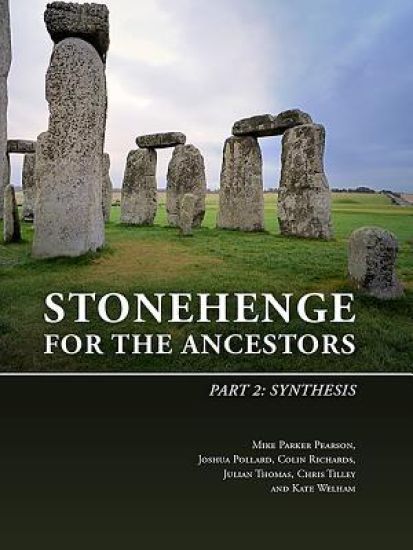
For many centuries, scholars and enthusiasts have been fascinated by Stonehenge, the world’s most famous stone circle. In 2003 a team of archaeologists commenced a long-term fieldwork project for the first time in decades. The Stonehenge Riverside Project (2003-2009) aimed to investigate the purpose of this unique prehistoric monument by considering it within its wider archaeological context.This is the second of four volumes which present the results of that campaign. It includes studies of the lithics from excavations, both from topsoil sampling and from excavated features, as well as of the petrography of the famous bluestones, as identified from chippings recovered during excavations. Other specialist syntheses are those of the land mollusca. The volume provides an overview of Stonehenge in its landscape over millennia from before the monument was built to the last of its five constructional stages. It concludes with a chapter placing Stonehenge in its full context within Britain and western Europe during the third millennium BC.With contributions by:Umberto Albarella, Michael Allen, Richard Bevins, Benjamin Chan, Robert Ixer, Claudia Minniti, Doug Mitcham and Sarah Viner-Daniels
Stonehenge for the Ancestors

Stonehenge for the Ancestors

Mike Parker Pearson; Joshua Pollard; Colin Richards; Julian Thomas; Kate Welham

Sidestone Press
2022
sidottu
For many centuries, scholars and enthusiasts have been fascinated by Stonehenge, the world’s most famous stone circle. In 2003 a team of archaeologists commenced a long-term fieldwork project for the first time in decades. The Stonehenge Riverside Project (2003-2009) aimed to investigate the purpose of this unique prehistoric monument by considering it within its wider archaeological context.This is the second of four volumes which present the results of that campaign. It includes studies of the lithics from excavations, both from topsoil sampling and from excavated features, as well as of the petrography of the famous bluestones, as identified from chippings recovered during excavations. Other specialist syntheses are those of the land mollusca. The volume provides an overview of Stonehenge in its landscape over millennia from before the monument was built to the last of its five constructional stages. It concludes with a chapter placing Stonehenge in its full context within Britain and western Europe during the third millennium BC.With contributions by:Umberto Albarella, Michael Allen, Richard Bevins, Benjamin Chan, Robert Ixer, Claudia Minniti, Doug Mitcham and Sarah Viner-Daniels
Stonehenge for the Ancestors

Stonehenge for the Ancestors

Mike Parker Pearson; Joshua Pollard; Colin Richards; Julian Thomas; Kate Welham
Sidestone Press
2020
nidottu
For many centuries, scholars and enthusiasts have been fascinated by Stonehenge, the world’s most famous stone circle. In 2003 a team of archaeologists commenced a long-term fieldwork project for the first time in decades. The Stonehenge Riverside Project (2003-2009) aimed to investigate the purpose of this unique prehistoric monument by considering it within its wider archaeological context.This is the first of four volumes which present the results of that campaign. It includes investigations of the monuments and landscape that pre-dated Stonehenge on Salisbury Plain as well as of excavation at Stonehenge itself. The main discovery at Stonehenge was of cremated human remains from many individuals, allowing their demography, health and dating to be established. With a revised radiocarbon-dated chronology for Stonehenge’s five stages of construction, these burials can now be considered within the context of the monument’s development. The different types of stone from which Stonehenge is formed – bluestones from Wales and sarsen silcretes from more local sources – are investigated both at Stonehenge and in its surroundings. These surrounding monuments include single standing stones, the Cuckoo Stone and the Tor Stone, as well as the newly discovered circle of Bluestonehenge at West Amesbury beside the River Avon. The ceremonial Stonehenge Avenue, linking Stonehenge to Bluestonehenge, is also included, based on a series of excavations along its length.The working hypothesis behind the Stonehenge Riverside Project links Stonehenge with a complex of timber monuments upstream at the great henge of Durrington Walls and neighbouring Woodhenge. Whilst these other sites are covered in a later volume (Volume 3), this volume explores the role of the River Avon and its topographic and environmental evidence.With contributions by:Umberto Albarella, Michael Allen, Olaf Bayer, Wayne Bennett, Richard Bevins, Christopher Bronk Ramsey, Chris Casswell, Andrew Chamberlain, Benjamin Chan, Rosamund Cleal, Gordon Cook, Glyn Davies, David Field, Charles French, Robert Ixer, Neil Linford, Peter Marshall, Louise Martin, Claudia Minniti, Doug Mitcham, Bob Nunn, Andy Payne, Mike Pitts, Rebecca Pullen, Julian Richards, David Robinson, Clive Ruggles, Jim Rylatt, Rob Scaife, Ellen Simmons, Charlene Steele, James Sugrue, Anne Teather, Sarah Viner, Tony Waldron, Katy Whitaker and Christie Willis
Stonehenge - A New Understanding: Solving the Mysteries of the Greatest Stone Age Monument
Stonehenge stands as an enduring link to our prehistoric ancestors, yet the secrets it has guarded for thousands of years have long eluded us. Until now, the millions of enthusiasts who flock to the iconic site have made do with mere speculation--about Stonehenge's celestial significance, human sacrifice, and even aliens and druids. One would think that the numerous research expeditions at Stonehenge had left no stone unturned. Yet, before the Stonehenge Riverside Project--a hugely ambitious, seven-year dig by today's top archaeologists--all previous digs combined had only investigated a fraction of the monument, and many records from those earlier expeditions are either inaccurate or incomplete.Stonehenge--A New Understanding rewrites the story. From 2003 to 2009, author Mike Parker Pearson led the Stonehenge Riverside Project, the most comprehensive excavation ever conducted around Stonehenge. The project unearthed a wealth of fresh evidence that had gone untouched since prehistory. Parker Pearson uses that evidence to present a paradigm-shifting theory of the true significance that Stonehenge held for its builders--and mines his field notes to give you a you-are-there view of the dirt, drama, and thrilling discoveries of this history-changing archaeological dig.
Pastoralists Warriors and Colonists: The Archaeology of Southern Madagascar

Pastoralists Warriors and Colonists: The Archaeology of Southern Madagascar

David Barker; Karen Godden; Georges Heurtebize; Mike Parker Pearson; Seth Priestman; Chantal Radimilahy; Jean-Luc Schwenninger; Helen Smith
BAR Publishing
2010
nidottu
This book presents the results of archaeological research in the extreme south of Madagascar between 1991 and 2003, and provides a synthesis of the regions archaeology. Madagascar is an island with many unique species of fauna and flora; its extreme south is a semi-arid region with remarkable vegetational adaptations. The project began as an ethnoarchaeological and ethnohistorical study of the origins and development of the monumental stone tombs which are built throughout the south, but expanded into a far wider archaeological study. The contributors trace the phases of the region's history from the first human colonisation and the extinction of much of the island's megafauna to the growth and collapse of the Manda civilization, contact with Europeans and right up to the present day.
The Archaeology of Death and Burial

The Archaeology of Death and Burial

Mike Parker Pearson

The History Press Ltd
2003
nidottu
The archaeology of death and burial is central to our attempts to understand vanished societies. Through the remains of funerary rituals we can learn not only about the attitudes of prehistoric people to death and the afterlife, but also about their way of life, their social organisation and their view of the world. This ambitious book reviews the latest research in this huge and important field, and describes the sometimes controversial interpretations that have led to rapid advances in our understanding of life and death in the distant past. A unique overview and synthesis of one of the most revealing fields of research into the past, it covers archaeology's most breathtaking discoveries, from Tutankhamen to the Ice Man, and will find a keen market among archaeologists, historians and others who have a professional interest in, or general curiosity about, death and burial.
In Search of the Red Slave

In Search of the Red Slave

Mike Parker Pearson; Karen Godden

The History Press Ltd
2002
nidottu
Pirates, shipwreck and slavery - these are the key themes in this story of an Englishman who spent 14 years of his life in captivity in Madagascar. Although Robert Drury wrote a book about his adventures in 1729, it has long been out of print. This book aims to track down the truth of his story.