Kirjojen hintavertailu. Mukana 12 246 815 kirjaa ja 12 kauppaa.

Kirjailija

Mike Savage

Kirjat ja teokset yhdessä paikassa: 12 kirjaa, julkaisuja vuosilta 1994-2023, suosituimpien joukossa The Remaking of the British Working Class, 1840-1940. Vertaile teosten hintoja ja tarkista saatavuus suomalaisista kirjakaupoista.

12 kirjaa

Kirjojen julkaisuhaarukka 1994-2023.

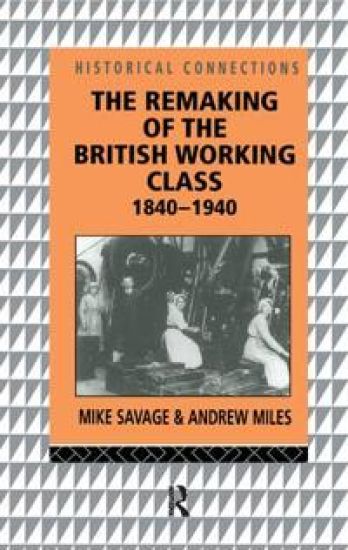
The Remaking of the British Working Class, 1840-1940

The Remaking of the British Working Class, 1840-1940

Andrew Miles; Mike Savage

Routledge
2017
sidottu
Mike Savage and Andrew Miles provide a comprehensive introduction to the working class in Britain in the years after 1840. This textbook: * Includes a provocative, timely and clear defence of class analysis * Breaks new ground in showing how social mobility and urban change affected working class formation * Demonstrates how the history of the working class is politically reconstructed * Shows how class and gender interact in mediating social and political change
The Remaking of the British Working Class, 1840-1940

The Remaking of the British Working Class, 1840-1940

Andrew Miles; Mike Savage

Routledge
1994
nidottu
Mike Savage and Andrew Miles provide a comprehensive introduction to the working class in Britain in the years after 1840. This textbook: * Includes a provocative, timely and clear defence of class analysis * Breaks new ground in showing how social mobility and urban change affected working class formation * Demonstrates how the history of the working class is politically reconstructed * Shows how class and gender interact in mediating social and political change
The Return of Inequality

The Return of Inequality

Mike Savage

Harvard University Press
2021
sidottu
A pioneering book that takes us beyond economic debate to show how inequality is returning us to a past dominated by empires, dynastic elites, and ethnic divisions.The economic facts of inequality are clear. The rich have been pulling away from the rest of us for years, and the super-rich have been pulling away from the rich. More and more assets are concentrated in fewer and fewer hands. Mainstream economists say we need not worry; what matters is growth, not distribution. In The Return of Inequality, acclaimed sociologist Mike Savage pushes back, explaining inequality’s profound deleterious effects on the shape of societies.Savage shows how economic inequality aggravates cultural, social, and political conflicts, challenging the coherence of liberal democratic nation-states. Put simply, severe inequality returns us to the past. By fracturing social bonds and harnessing the democratic process to the strategies of a resurgent aristocracy of the wealthy, inequality revives political conditions we thought we had moved beyond: empires and dynastic elites, explosive ethnic division, and metropolitan dominance that consigns all but a few cities to irrelevance. Inequality, in short, threatens to return us to the very history we have been trying to escape since the Age of Revolution.Westerners have been slow to appreciate that inequality undermines the very foundations of liberal democracy: faith in progress and trust in the political community’s concern for all its members. Savage guides us through the ideas of leading theorists of inequality, including Marx, Bourdieu, and Piketty, revealing how inequality reimposes the burdens of the past. At once analytically rigorous and passionately argued, The Return of Inequality is a vital addition to one of our most important public debates.
Everyday Europe

Everyday Europe

Ettore Recchi; Adrian Favell; Fulya Apaydin; Roxana Barbulescu; Michael Braun; Irina Ciornei; Niall Cunningham; Juan Diez Medrano; Deniz Neriman Duru; Laurie Hanquinet; Janne Solgaard Jensen; Steffen Pötzschke; David Reimer; Justyna Salamonska; Mike Savage; Albert Varela

Policy Press
2019
sidottu
This book offers an empirically-based view on Europeans’ interconnections in everyday life. It looks at the ways in which EU residents have been getting closer across national frontiers: in their everyday experiences of foreign countries – work, travel, personal networks – but also their knowledge, consumption of foreign products, and attitudes towards foreign culture. The book considers how people reconcile their increasing cross-border interconnections and a politically separating Europe of nation states and national interests.
Social Class in the 21st Century
A fresh take on social class from the experts behind the BBC's 'Great British Class Survey'.Why does social class matter more than ever in Britain today?How has the meaning of class changed?What does this mean for social mobility and inequality?In this book Mike Savage and the team of sociologists responsible for the Great British Class Survey look beyond the labels to explore how and why our society is changing and what this means for the people who find themselves in the margins as well as in the centre.Their new conceptualization of class is based on the distribution of three kinds of capital - economic (inequalities in income and wealth), social (the different kinds of people we know) and cultural (the ways in which our leisure and cultural preferences are exclusive) - and provides incontrovertible evidence that class is as powerful and relevant today as it's ever been.
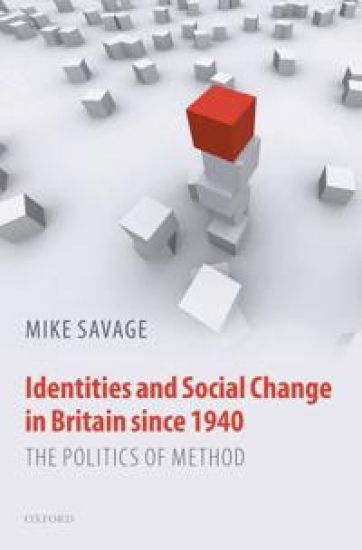
Identities and Social Change in Britain since 1940

Identities and Social Change in Britain since 1940

Mike Savage

Oxford University Press
2010
nidottu
Identities and Social Change in Britain since 1940 examines how, between 1940 and 1970 British society was marked by the imprint of the academic social sciences in profound ways which have an enduring legacy on how we see ourselves. It focuses on how interview methods and sample surveys eclipsed literature and the community study as a means of understanding ordinary life. The book shows that these methods were part of a wider remaking of British national identity in the aftermath of decolonisation in which measures of the rational, managed nation eclipsed literary and romantic ones. It also links the emergence of social science methods to the strengthening of technocratic and scientific identities amongst the educated middle classes, and to the rise in masculine authority which challenged feminine expertise. This book is the first to draw extensively on archived qualitative social science data from the 1930s to the 1960s, which it uses to offer a unique, personal and challenging account of post war social change in Britain. It also uses this data to conduct a new kind of historical sociology of the social sciences, one that emphasises the discontinuities in knowledge forms and which stresses how disciplines and institutions competed with each other for reputation. Its emphasis on how social scientific forms of knowing eclipsed those from the arts and humanities during this period offers a radical re-thinking of the role of expertise today which will provoke social scientists, scholars in the humanities, and the general reader alike.
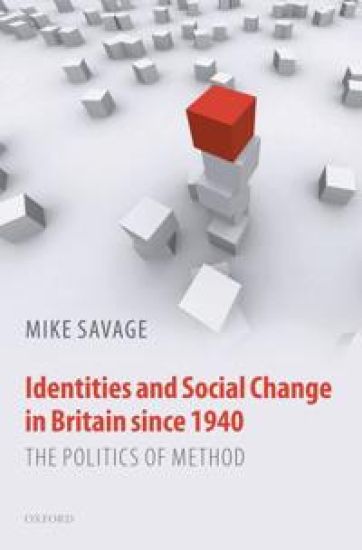
Identities and Social Change in Britain since 1940

Identities and Social Change in Britain since 1940

Mike Savage

Oxford University Press
2010
sidottu
Identities and Social Change in Britain since 1940 examines how, between 1940 and 1970 British society was marked by the imprint of the academic social sciences in profound ways which have an enduring legacy on how we see ourselves. It focuses on how interview methods and sample surveys eclipsed literature and the community study as a means of understanding ordinary life. The book shows that these methods were part of a wider remaking of British national identity in the aftermath of decolonisation in which measures of the rational, managed nation eclipsed literary and romantic ones. It also links the emergence of social science methods to the strengthening of technocratic and scientific identities amongst the educated middle classes, and to the rise in masculine authority which challenged feminine expertise. This book is the first to draw extensively on archived qualitative social science data from the 1930s to the 1960s, which it uses to offer a unique, personal and challenging account of post war social change in Britain. It also uses this data to conduct a new kind of historical sociology of the social sciences, one that emphasises the discontinuities in knowledge forms and which stresses how disciplines and institutions competed with each other for reputation. Its emphasis on how social scientific forms of knowing eclipsed those from the arts and humanities during this period offers a radical re-thinking of the role of expertise today which will provoke social scientists, scholars in the humanities, and the general reader alike.
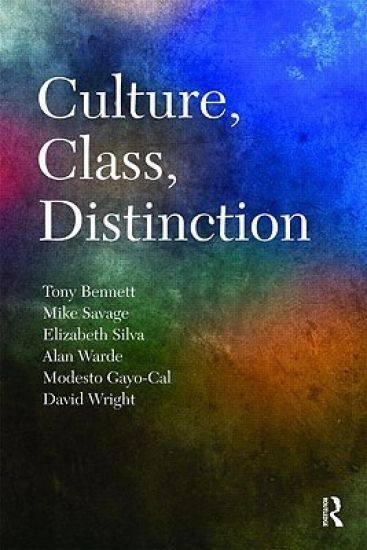
Culture, Class, Distinction

Culture, Class, Distinction

Tony Bennett; Mike Savage; Elizabeth Bortolaia Silva; Alan Warde; Modesto Gayo-Cal; David Wright

Routledge
2009
nidottu
Culture, Class, Distinction is major contribution to international debates regarding the role of cultural capital in relation to modern forms of inequality. Drawing on a national study of the organisation of cultural practices in contemporary Britain, the authors review Bourdieu’s classic study of the relationships between culture and class in the light of subsequent debates. In doing so they re-appraise the relationships between class, gender and ethnicity, music, film, television, literary, and arts consumption, the organisation of sporting and culinary practices, and practices of bodily and self maintenance. As the most comprehensive account to date of the varied interpretations of cultural capital that have been developed in the wake of Bourdieu’s work, Culture, Class, Distinction offers the first systematic assessment of the relationships between cultural practice and the social divisions of class, gender and ethnicity in contemporary Britain. It is essential reading for anyone interested in the relationships between culture and society.
Culture, Class, Distinction

Culture, Class, Distinction

Tony Bennett; Mike Savage; Elizabeth Bortolaia Silva; Alan Warde; Modesto Gayo-Cal; David Wright

Routledge
2008
sidottu
Choice Recommended Title, February 2010Culture, Class, Distinction is major contribution to international debates regarding the role of cultural capital in relation to modern forms of inequality. Drawing on a national study of the organisation of cultural practices in contemporary Britain, the authors review Bourdieu’s classic study of the relationships between culture and class in the light of subsequent debates. In doing so they re-appraise the relationships between class, gender and ethnicity, music, film, television, literary, and arts consumption, the organisation of sporting and culinary practices, and practices of bodily and self maintenance. As the most comprehensive account to date of the varied interpretations of cultural capital that have been developed in the wake of Bourdieu’s work, Culture, Class, Distinction offers the first systematic assessment of the relationships between cultural practice and the social divisions of class, gender and ethnicity in contemporary Britain. It is essential reading for anyone interested in the relationships between culture and society.
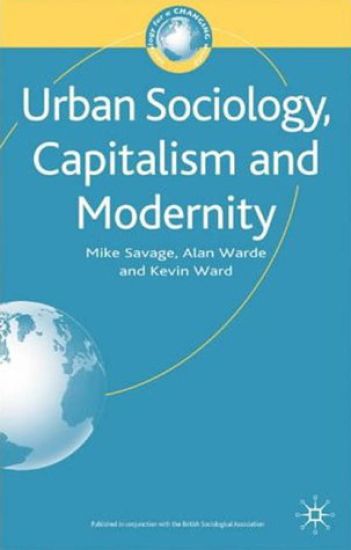
Urban Sociology, Capitalism and Modernity

Urban Sociology, Capitalism and Modernity

Mike Savage; A. Warde; Kevin Ward

Red Globe Press
2002
nidottu
This second edition incorporates developments in the literature on urban inequality, urban culture, urban politics and globalization. It offers a comprehensive and up-to-the-minute account of its subject, ideal for study purposes at undergraduate level and beyond.