Kirjojen hintavertailu. Mukana 12 595 353 kirjaa ja 12 kauppaa.
Kirjailija
Mikhail Bakhtin
Kirjat ja teokset yhdessä paikassa: 10 kirjaa, julkaisuja vuosilta 1984-2025, suosituimpien joukossa Rum, tid & historie KKK. Vertaile teosten hintoja ja tarkista saatavuus suomalaisista kirjakaupoista.
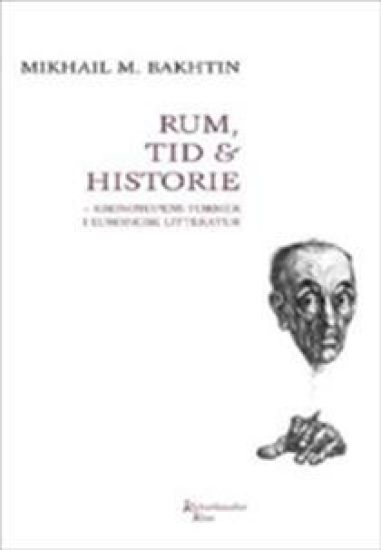
Mikhail M. Bakhtin er en af det 20. århundredes mest visionære tænkere inden for kulturanalyse og litteraturteori. Med oversættelsen af »Tidens og kronopotens former i romanen - essay om historisk poetik« foreligger et af hans hovedværker for første gang på dansk. Bogen bringer også et andet centralt Bakhtin-essay: »Dannelsesromanen og dens betydning i realismens historie - bidrag til en historisk typologi af romanen« - ofte kaldet ´Goethe-fragmentet´.
A new and improved translation of Mikhail Bakhtin's classic and celebrated study of carnival. Mikhail Bakhtin's classic study of carnival, laughter, the grotesque, and medieval and renaissance folk culture has been the inspiration for countless new ideas in the humanities, in literature and the arts, and throughout human culture over the last half-century. Rabelais and His World is a study devoted to French renaissance writer Fran ois Rabelais, author of Gargantua and Pantagruel. Rabelais, Bakhtin argues, can only be properly understood against the backdrop of a millennia-old tradition of festivity and laughter, a tradition that included the Roman saturnalia, medieval carnivals and feasts of fools, Greek satyr plays and symposia from antiquity, as well as countless medieval works belonging to various smaller genres, circus shows, foul language and gesture, and much more. Bakhtin claims this tradition is united by the imagery it uses and the worldview it expresses. Its imagery is ambivalent. It effaces the boundaries between bodies, connects in one image birth with death, praise with invective. Its worldview is optimistic, defeating all fears and all official seriousness with laughter. The book's new translation is informed by recent scholarship on Bakhtin and contains the most extensive scholarly apparatus this book has received to date.
Mikhail Mikhajlovich Bakhtin (1895-1975) - filosof, literaturoved, teoretik evropejskoj kultury i iskusstva. Avtor ponjatij "polifonizm", "smekhovaja kultura", "khronotop", "karnavalizatsija", "dukhovnyj verkh" i "telesnyj niz".Vpervye kniga "Problemy poetiki Dostoevskogo" vyshla v 1963 godu. Do Bakhtina issledovateli obraschali vnimanie v osnovnom na ideologicheskuju storonu tvorchestva Dostoevskogo, Bakhtin zhe uvidel v Fedore Mikhajloviche khudozhnika, a ne filosofa i publitsista, i nagljadno pokazal, kak Dostoevskij sozdal sovershenno novyj tip khudozhestvennogo myshlenija. Dlja opisanija etogo unikalnogo romannogo sloga Bakhtin vvel termin p o l i f o n i ch e s k i j, kotoryj sejchas primenjajut vo vsem mire.Polifonicheskij tip khudozhestvennogo vyrazhenija suschestvuet ne tolko v romanakh Dostoevskogo, no i kasaetsja osnovnykh printsipov obscheevropejskoj estetiki. Fedor Mikhajlovich sozdal novuju khudozhestvennuju model mira, v kotoroj prezhnjaja khudozhestvennaja forma preterpela korennye izmenenija. V knige putem teoretiko-literaturnogo analiza Bakhtin raskryl eto printsipialnoe novatorstvo Dostoevskogo.
Mikhail Mikhajlovich Bakhtin (1895-1975) - vydajuschijsja russkij myslitel, znachenie trudov kotorogo vykhodit daleko za ramki literaturovedenija i estetiki. Pervaja redaktsija issledovanija Bakhtina o Dostoevskom ("Problemy tvorchestva Dostoevskogo") uvidela svet v 1929 godu. Okazavshis v svoe vremja v tsentre burnykh diskussij, etot trud ne poterjal aktualnosti do nashikh dnej. V 1963 godu byla opublikovana vtoraja, pererabotannaja i rasshirennaja redaktsija knigi o Dostoevskom pod izmenennym nazvaniem - "Problemy poetiki Dostoevskogo". Krome togo, v nastojaschee izdanie voshli stati i chernovye zapisi statej o L. N. Tolstom; vazhnejshij trud filosofskoj kontseptsii Bakhtina "Avtor i geroj v esteticheskoj dejatelnosti"; v svoe vremja revoljutsionnaja, a v nashi dni klassicheskaja rabota "Problema rechevykh zhanrov"; statja "Epos i roman (O metodologii issledovanija romana)"; a takzhe statja "Problema teksta", nazvannaja avtorom "opytom filosofskogo analiza problemy teksta v lingvistike, filologii i drugikh gumanitarnykh naukakh".
Bakhtin v svoem issledovanii nagljadno pokazal, kak Dostoevskij, otojdja ot staroj khudozhestvennoj formy, rasshiril vozmozhnosti romannogo slova. Fedor Mikhajlovich ispolzoval v svoikh proizvedenijakh sovershenno novoe literaturnoe myshlenie, pri kotorom slova geroev stali zvuchat budto iz raznykh, nezavisimykh drug ot druga istochnikov, sozdavaja opredelennuju polifoniju teksta.Issledovanie proizvelo nastojaschuju revoljutsiju v kulturologicheskom mire i ne utratilo aktualnosti i v nashe vremja - ono daet chitateljam vozmozhnost luchshe ponjat tvorchestvo i istinnyj smysl proizvedenij velikogo russkogo pisatelja.
"My schitaem Dostoevskogo odnim iz velichajshikh novatorov v oblasti khudozhestvennoj formy. On sozdal, po nashemu ubezhdeniju, sovershenno novyj tip khudozhestvennogo myshlenija, kotoryj my uslovno nazvali polifonicheskim. Etot tip khudozhestvennogo myshlenija nashelsvoe vyrazhenie v romanakh Dostoevskogo, no ego znachenie vykhodit za predely tolko romannogo tvorchestva i kasaetsja nekotorykh osnovnykh printsipov evropejskoj estetiki. Dostoevskij sozdal kak by novuju khudozhestvennuju model mira, v kotoroj mnogie iz osnovnykh momentovstaroj khudozhestvennoj formy podverglis korennomu preobrazovaniju. Zadacha predlagaemoj raboty i zakljuchaetsja v tom, chtoby putem teoretiko-literaturnogo analiza raskryt eto printsipialnoe novatorstvo Dostoevskogo.V obshirnoj literature o Dostoevskom osnovnye osobennosti ego poetiki ne mogli, konechno, ostatsja nezamechennymi (v pervoj glave etoj raboty daetsja obzor naibolee suschestvennykh vyskazyvanij po etomu voprosu), no ikh printsipialnaja novizna i ikh organicheskoeedinstvo v tselom khudozhestvennogo mira Dostoevskogo raskryty i osvescheny esche daleko nedostatochno. Literatura o Dostoevskom byla po preimuschestvu posvjaschena ideologicheskoj problematike ego tvorchestva. Prekhodjaschaja ostrota etoj problematiki zaslonjala boleeglubinnye i ustojchivye strukturnye momenty ego khudozhestvennogo videnija. Chasto pochti vovse zabyvali, chto Dostoevskij prezhde vsego khudozhnik (pravda, osobogo tipa), a ne filosof i ne publitsist.Spetsialnoe izuchenie poetiki Dostoevskogo ostaetsja aktualnoj zadachej literaturovedenija".
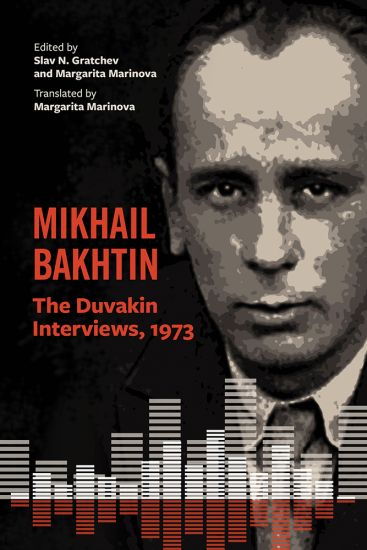
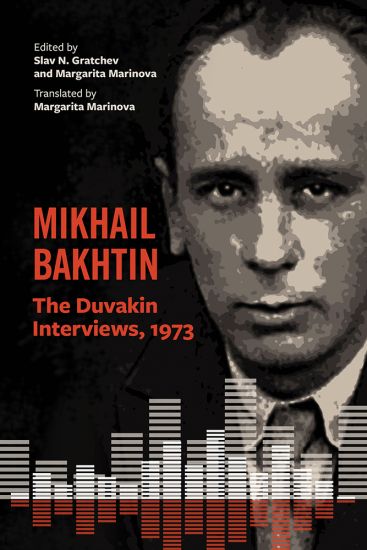
Whenever Bakhtin, in his final decade, was queried about writing his memoirs, he shrugged it off. Unlike many of his Symbolist generation, Bakhtin was not fascinated by his own self-image. This reticence to tell his own story was the point of access for Viktor Duvakin, Mayakovsky scholar, fellow academic, and head of an oral history project, who in 1973 taped six interviews with Bakhtin over twelve hours. They remain our primary source of Bakhtin’s personal views: on formative moments in his education and exile, his reaction to the Revolution, his impressions of political, intellectual, and theatrical figures during the first two decades of the twentieth century, and his non-conformist opinions on Russian and Soviet poets and musicians. Bakhtin's passion for poetic language and his insights into music also come as a surprise to readers of his essays on the novel. One remarkable thread running through the conversations is Bakhtin's love of poetry, masses of which he knew by heart in several languages. Mikhail Bakhtin: The Duvakin Interviews, 1973, translated and annotated here from the complete transcript of the tapes, offers a fuller, more flexible image of Bakhtin than we could have imagined beneath his now famous texts. Published by Bucknell University Press. Distributed worldwide by Rutgers University Press.
Whenever Bakhtin, in his final decade, was queried about writing his memoirs, he shrugged it off. Unlike many of his Symbolist generation, Bakhtin was not fascinated by his own self-image. This reticence to tell his own story was the point of access for Viktor Duvakin, Mayakovsky scholar, fellow academic, and head of an oral history project, who in 1973 taped six interviews with Bakhtin over twelve hours. They remain our primary source of Bakhtin’s personal views: on formative moments in his education and exile, his reaction to the Revolution, his impressions of political, intellectual, and theatrical figures during the first two decades of the twentieth century, and his non-conformist opinions on Russian and Soviet poets and musicians. Bakhtin's passion for poetic language and his insights into music also come as a surprise to readers of his essays on the novel. One remarkable thread running through the conversations is Bakhtin's love of poetry, masses of which he knew by heart in several languages. Mikhail Bakhtin: The Duvakin Interviews, 1973, translated and annotated here from the complete transcript of the tapes, offers a fuller, more flexible image of Bakhtin than we could have imagined beneath his now famous texts. Published by Bucknell University Press. Distributed worldwide by Rutgers University Press.
Det, vi kalder den kulturelle udvikling og helst ser som rene fremskridt, indebærer imidlertid, at visse erfaringer, udtryk og forståelsesformer enten går tabt eller degenererer og trivialiseres. Det gælder om noget den folkelige latterkultur, der fra antikken til renæssancen kunne dyrke en materielt-kropslig lyst, der både ville liv og død, begravelse og fornyelse, men gjorde det i latterens og overdrivelsens regi. Et højdepunkt var de middelalderlige karnevalsfester, hvor alting for en stund blev vendt på hovedet og lod en revolutionær kraft danse sanseligt på bordet, og det stærkeste litterære udtryk for denne kropslige latterkultur blev Rabelais’ vildtvoksende fortælling om Gargantua og Pantagruel fra begyndelsen af 1500-tallet. For at forstå dette univers af mad og lort, druk og sex, lyst og overflod indledte den russiske litteraturforsker Mikhail Bakhtin (1895-1975) sin store Rabelais-bog fra 1940/65 med en grundig og epokegørende redegørelse for den næsten glemte tradition for det at kunne le dybt og universelt livsbekræftende ved at lade kroppens nedre regioner komme til orde. Karneval og latterkultur udkom første gang på dansk i 2001, og Jørgen Bruhn og Jan Lundquist har skrevet forord. Bogen genudgives nu i Hans Reitzels Forlags serie Klassikere.
This book is not only a major twentieth-century contribution to Dostoevsky's studies, but also one of the most important theories of the novel produced in our century. As a modern reinterpretation of poetics, it bears comparison with Aristotle."Bakhtin's statement on the dialogical nature of artistic creation, and his differentiation of this from a history of monological commentary, is profoundly original and illuminating. This is a classic work on Dostoevsky and a statement of importance to critical theory." Edward Wasiolek"Concentrating on the particular features of 'Dostoevskian discourse,' how Dostoevsky structures a hero and a plot, and what it means to write dialogically, Bakhtin concludes with a major theoretical statement on dialogue as a category of language. One of the most important theories of the novel in this century." The Bloomsbury Review