Kirjailija
Miklós Szentkuthy
Kirjat ja teokset yhdessä paikassa: 8 kirjaa, julkaisuja vuosilta 2013-2025, suosituimpien joukossa Prae, Vol. 1. Vertaile teosten hintoja ja tarkista saatavuus suomalaisista kirjakaupoista.
Mukana myös kirjoitusasut: Miklos Szentkuthy
8 kirjaa
Kirjojen julkaisuhaarukka 2013-2025.


Considered an eerie attack on realism, when published in 1934, Mikl s Szentkuthy's debut novel Prae so astonished Hungarian critics that many deemed it monstrous, derogatorily referred to Szentkuthy as cosmopolitan, and classified him alien to Hungarian culture.Incomparable & unprecedented in Hungarian literature, Prae compels recognition as a serious contribution to modernist fiction, as ambitious in its aspirations as Ulysses or la recherche du temps perdu. With no traditional narration & no psychologically motivated characters, in playing with voices, temporality, and events, while fiction, Prae is more what Northrop Frye calls an anatomy or satire: the basic concern of the book is intellectual, its pervading mood is that of a comedy of ideas.As a virtual novel that preempts every possibility for its realization, it is a novel but only virtually so, a book which is actually a prae-paration for an unwritten novel. In this, it maintains the freedom & openness of its potentialities, indicative for instance in the Non-Prae diagonals, a series of passages that intercut the novel & continually fracture space & time to engage in what one of the figures of the book calls the culture of wordplay or dogmatic accidentalism. "The book's title," said Szentkuthy, "alludes to it being an overture. A multitude of thoughts, emotions, ideas, fantasies, and motifs that mill and churn as chimes, an overture to my subsequent oeuvre." By challenging the then prevailing dogmas and conventions of prose writing, Szentkuthy was said to have created a new canon.Largely unread at the time, Prae eventually gained cult status. To some critics, the book is not only one of the representative experimental works of the early 20th century, but in its attempt to bring 'impossible literature' into being, it also presages the nouveau roman by almost 30 years. And in its rejection of sequentiality and celebration of narrative shuffling, Prae enacts what is conceptually akin to the cut-up. Few of Szentkuthy's contemporaries would reveal with equal bravura and audacity the new horizons that were opened up for narrative forms after the era of realism.In Frivolities & Confessions, Szentkuthy said that his goal with Prae was "to absorb the problems of modern philosophy and mathematics into modern fashion, love, and every manifestation of life." Translated for the first time since its original publication in 1934, Vol. II of this legendary and controversial Hungarian modernist novel is now at last available in English.

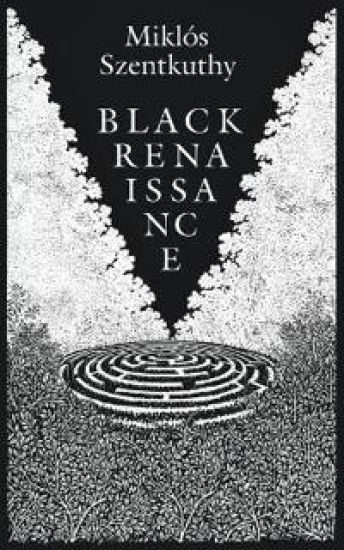
Black Renaissance, the second volume of the St. Orpheus Breviary, is the continuation of Miklos Szentkuthy's synthesis of 2,000 years of European culture. St. Orpheus is Szentkuthy's Virgil, an omniscient poet who guides us not through hell, but through all of recorded history, myth, religion, and literature, albeit reimagined as St. Orpheus metamorphosizes himself into kings, popes, saints, tyrants, and artists. At once pagan and Christian, Greek and Hebrew, Asian and European, St. Orpheus is a mosaic of history and mankind in one supra-person and veil, an endless series of masks and personae, humanity in its protean, futural shape, an always changing function of discourse, text, myth, & mentalite. Through St. Orpheus' method, disparate moments of history become synchronic, are juggled to reveal, paradoxically, their mutual difference and essential similarity. "Orpheus wandering in the infernal regions," says Szentkuthy, "is the perennial symbol of the mind lost amid the enigmas of reality. The aim of the work is, on the one hand, to represent the reality of history with the utmost possible precision, and on the other, to show, through the mutations of the European spirit, all the uncertainties of contemplative man, the transiency of emotions and the sterility of philosophical systems." In Black Renaissance, the dramatic scenes and philosophical passages (never a fog of abstractions, more the world and tone of Nietzsche's Zarathustra) parade before the reader ostensibly as three characters, by way of three Orphean masks: Renaissance and baroque composer Claudio Monteverdi, architect and engineer Filippo Brunelleschi, and a tutor to the young Elizabeth Tudor. From Monteverdi's impassioned search for an opera subject in the works of Tacitus to his meditations on divinities, to Brunelleschi's diving into the works of Herodotus so as to illustrate Greek history, Szentkuthy veers through the Renaissance, sounding a pessimistic 'basso continuo' on psychology, sin, metaphysics, truth and relativism. Through Orpheus' final mask, that of the tutor of Elizabeth, it is eros and theology, two of Szentkuthy's fundamental concerns, that receive yet another complex and engrossing dramatization. Metaphysics, Rationalism, and existentialist despair all spin through the author-narrator's kaleidoscope as he closes his Black Renaissance by discoursing on the Revelation of St. John the Divine. A thousand attempts at defining physical and spiritual, heavenly and earthly love all fail.