

Kirjailija
Mikulas Teich
Kirjat ja teokset yhdessä paikassa: 4 kirjaa, julkaisuja vuosilta 1991-2015, suosituimpien joukossa The Scientific Revolution Revisited. Vertaile teosten hintoja ja tarkista saatavuus suomalaisista kirjakaupoista.
Mukana myös kirjoitusasut: Mikulás Teich
4 kirjaa
Kirjojen julkaisuhaarukka 1991-2015.

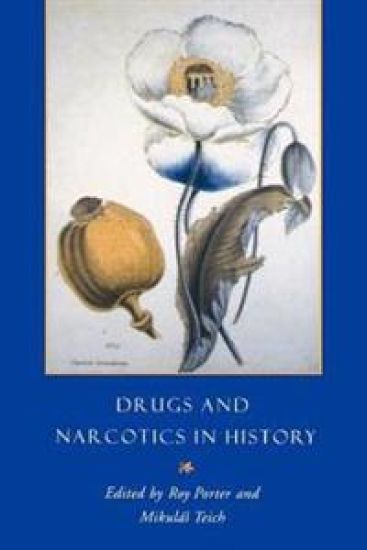
This collection of essays explores the complex and contested histories of drugs and narcotics in societies from ancient Greece to the present day. The Greek term pharmakon means both medicament and poison. The book shows how this verbal ambivalence encapsulates the ambiguity of man’s use of chemically-active substances over the centuries to diminish pain, fight disease, and correct behaviour. It shows that the major substances so used, from herbs of the field to laboratory-produced synthetic medicines, have a healing potential, and have been widely employed both within and outside the medical profession. The boundary lines between use and abuse in society have been powerfully contested, while ‘alternative’ medicine has often sought to develop milder, purer, or more natural drugs. Clearly, these issues remain unresolved today: some highly addictive and dangerous substances such as cigarettes remain freely available, others are available only on prescription, while others are illegal and the objects of international contraband trade and the targets of ‘drugs wars’.

The Renaissance in National Context
Roy Porter; Mikulas Teich
Cambridge University Press
1991
sidottu
The Renaissance in National Context aims to dispel the commonly-held view that the great efflorescence of art, learning and culture in the period from c. 1350 to 1550 was solely or even primarily an Italian phenomenon. These essays address the development of art, literacy and humanism across the length and breadth of Europe, showing that the Renaissance had many sources independent of Italy, meeting numerous local needs, and serving diverse local functions, specific to the political, economic, social and religious climates of various regions and principalities. The authors show that though the Renaissance was in a fashion backward-looking, recovering the culture of antiquity, it nevertheless served as the springboard for many specifically modern developments, including the rise of diplomacy, education, printing, nationalism, and the "new science."