Kirjojen hintavertailu. Mukana 12 595 353 kirjaa ja 12 kauppaa.

Kirjailija

Miles Hollingworth

Kirjat ja teokset yhdessä paikassa: 8 kirjaa, julkaisuja vuosilta 2010-2025, suosituimpien joukossa Ludwig Wittgenstein. Vertaile teosten hintoja ja tarkista saatavuus suomalaisista kirjakaupoista.

8 kirjaa

Kirjojen julkaisuhaarukka 2010-2025.

Ludwig Wittgenstein

Ludwig Wittgenstein

Miles Hollingworth

Oxford University Press Inc
2018
sidottu
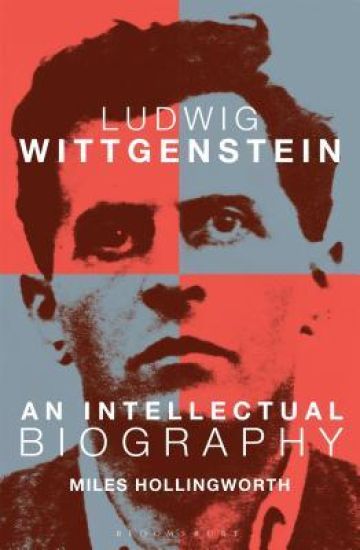
After his intellectual biography of Saint Augustine of Hippo, Miles Hollingworth now turns his attention to one of Augustine's greatest modern admirers: The Austrian philosopher Ludwig Wittgenstein. Wittgenstein's influence on post-war philosophical investigation has been pervasive, while his eccentric personal life has entered folklore. Yet his religious mysticism has remained elusive and undisturbed. In Ludwig Wittgenstein, Hollingworth continues to pioneer a new kind of biographical writing. It stands at the intersection of philosophy, theology, and literary criticism, and is as much concerned with the secret agendas of life writing as it is with its subjects. Here, Wittgenstein is allowed to become the ultimate test case. From first to last, his philosophy sought to demonstrate that intellectual certainty is a function of the method it employs, rather than a knowledge of the existence or non-existence of its objectsa devastating insight that appears to make the natural and the supernatural into equally useless examples of each other. Scattered in every direction by this challenge to meaning, this biography attempts to retrieve itself around the spirit of the man who could say such things. This act of recovery thus performs what could not otherwise be explained, which is something like Wittgenstein's private conversation with God.
Ludwig Wittgenstein

Ludwig Wittgenstein

Miles Hollingworth

Bloomsbury Publishing Ltd.
2016
sidottu
After the triumph of his intellectual biography, Saint Augustine of Hippo, Miles Hollingworth now turns his attention to one of Augustine's greatest contemporary admirers: the philosopher Ludwig Wittgenstein. Wittgenstein has had more influence on post-war philosophical investigation than almost any other and was the de facto founder of logical positivism, a major movement in the philosophical thinking of the Anglo-Saxon world. Yet he was also an Austrian Jewish refugee and a heedless ascetic, who lived a tortured existence in his final years as a Fellow of Trinity College Cambridge.Hollingworth continues to pioneer a new kind of biographical writing; here the ingredients are the hypersensitivities of Viennese society in the last part of the 19th Century, Carnegie-like wealth, the aesthetic edifice of Teutonic Ordnung, Wittgenstein's mother's tightrope between hysteria and sentimentality, his brothers' suicides - all compounded with the academic disciplines of mathematical ,linguistic and historical philosophy. This combination created a trajectory of genius and eccentricity. The eccentricity speaks for itself. The genius is more difficult to define. There is no way to describe the genesis of genius except to say that it is inborn.His family, the buns he took to the cinema, his ability to whistle whole concertos note perfect and his Spartan existence - all these form part of the picture - but Wittgenstein lived his life precisely - and note perfectly - so that there should be no story to tell after its finish. He was in a real sense in control of the narrative, which is what makes this book so compellingly interesting.
The Pure Theory of Religion

The Pure Theory of Religion

Miles Hollingworth

OXFORD UNIVERSITY PRESS INC
2025
sidottu
“What if academic theology were to move beyond the methods of the natural and historical sciences and beyond the question of what does or does not exist?” This book develops a “pure theory” of religion comparable to the pure theory of mathematics. It does so by focusing on the miracle of Christ's Resurrection from the dead on the Third Day; either outright and explicitly, or implicitly, in reflections and thought experiments made with historical thinkers, like Saint Augustine of Hippo and Ludwig Wittgenstein, for whom this miracle was central and true. Working with thinkers such as these is essential, because the miracle of the Third Day is simply not conceivable apart from those “for whom it is central and true.” Conventional wisdom has said that this makes it untrustworthy, as though it were a figment of the imagination, and as though it were more important that something happened, or not, than that people believe it to have happened. The focus in this book is on the latter, and it is in this sense that the treatment of religion offered here moves within the realm of the “purely theoretical.” What may surprise some readers is that for all of this the results turn out to be decidedly real. Hollingworth first sketched out the possibility of such a pure theory of religion in a special lecture delivered to the European Academy on Religion & Society, in Lund, Sweden. This book presents that pure theory of religion in full, as well as the full text of the original lecture for the first time in print.
Inventing Socrates

Inventing Socrates

Miles Hollingworth

Bloomsbury Academic USA
2015
nidottu
Inventing Socrates is a book about the consequences of knowledge and the coming of age. It is written in knowledge’s Western setting, making allegorical as well as literal use of the event known as the ‘birth of philosophy’ – an event that began in ancient Greece in the 6th-century B.C., when a handful of thinkers first looked at the natural world through the critical eyes of fledgling science.Very little of concrete fact is known about this first philosophy and its protagonists. Only scant fragments of their writings have survived; and these are nearly always poetical and esoteric, some no more than a single line. They are freighted with meanings that might take one in two different directions at once; and this ambidexterity between ancient and modern has always been their beguiling feature. Altogether these thinkers are known as the Presocratics, because they pioneered the rational methods that Socrates would take to the question of the good life. If Socrates stands today as an icon of Western self-esteem, these pioneers are said to show the emergence of that poise from the fug of myth and religion. Apparently they prove the evolution of Western intelligence and the value of living today – in the secular maturity of its latest, greatest hour. But what if their continuing readability and tactility were actually to become the demonstration against that?This is not just, then, a book about the foundations of Western thought. It is a book about all that we invest in the ideas of ancient and modern. Left to right is the Western way of learning and growing, but, as Miles Hollingworth shows, the truths of the human condition are subterranean corridors running psychologically and eternally.
Inventing Socrates

Inventing Socrates

Miles Hollingworth

Bloomsbury Academic USA
2015
sidottu
Inventing Socrates is a book about the consequences of knowledge and the coming of age. It is written in knowledge’s Western setting, making allegorical as well as literal use of the event known as the ‘birth of philosophy’ – an event that began in ancient Greece in the 6th-century B.C., when a handful of thinkers first looked at the natural world through the critical eyes of fledgling science.Very little of concrete fact is known about this first philosophy and its protagonists. Only scant fragments of their writings have survived; and these are nearly always poetical and esoteric, some no more than a single line. They are freighted with meanings that might take one in two different directions at once; and this ambidexterity between ancient and modern has always been their beguiling feature. Altogether these thinkers are known as the Presocratics, because they pioneered the rational methods that Socrates would take to the question of the good life. If Socrates stands today as an icon of Western self-esteem, these pioneers are said to show the emergence of that poise from the fug of myth and religion. Apparently they prove the evolution of Western intelligence and the value of living today – in the secular maturity of its latest, greatest hour. But what if their continuing readability and tactility were actually to become the demonstration against that?This is not just, then, a book about the foundations of Western thought. It is a book about all that we invest in the ideas of ancient and modern. Left to right is the Western way of learning and growing, but, as Miles Hollingworth shows, the truths of the human condition are subterranean corridors running psychologically and eternally.
Saint Augustine of Hippo: An Intellectual Biography

Saint Augustine of Hippo: An Intellectual Biography

Miles Hollingworth

Oxford University Press
2013
sidottu
St. Augustine was undoubtedly one of the great thinkers of the early church. Yet it has long been assumed--and not without reason--that the main lines of Augustine's thought have been more or less fixed since his death. That insofar as we should be aware of him in the twenty-first century, he is a figure described-if not circumscribed--by his times.A major revisionist treatment of Augustine's life and thought, Saint Augustine of Hippo overturns this assumption. In a stimulating and provocative reinterpretation of Augustine's ideas and their position in the Western intellectual tradition, Miles Hollingworth, though well versed in the latest scholarship, draws his inspiration largely from the actual narrative of Augustine's life. By this means he reintroduces a cardinal but long-neglected fact to the center of Augustinian studies: that there is a direct line from Augustine's own early experiences of life to his later commentaries on humanity. Augustine's new Christianity did not--in blunt assaults of dogma and doctrine--obliterate what had gone before. Instead, it actually caught a subtle and reflective mind at the point when it was despairing of finding the truth. Christianity vindicated a disquiet that Augustine had been feeling all along: he felt that it alone had spoken to his serious rage about man, abandoned to the world and dislocated from all real understanding by haunting glimpses of the Divine.A major new treatment of Augustine on all fronts, this superb intellectual biography shines a bright light on a genuinely neglected element in his writings. In so doing it introduces us to Augustine as he emerges from the unique circumstances of his early life, struggling with ironies and inconsistencies that we might just find in our own lives as well.
The Pilgrim City

The Pilgrim City

Miles Hollingworth

T. T.Clark Ltd
2010
sidottu
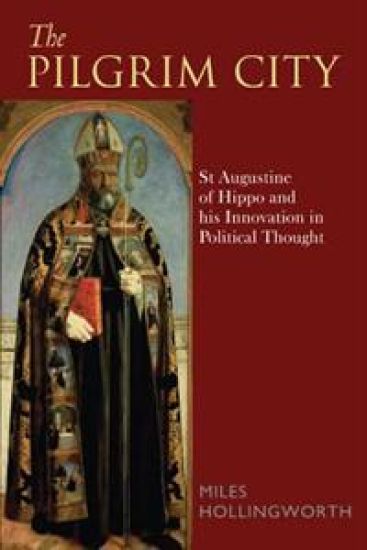
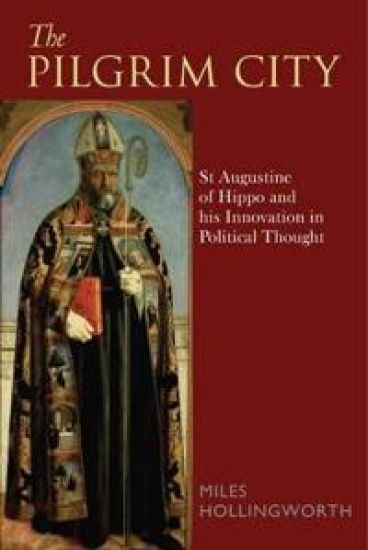
In this book Miles Hollingworth investigates how Augustine's understanding of discipleship causes him to resist the normal tendencies of Western political thinkers. On the one hand, he does not attempt to delineate an ideal state in the classical fashion: to his mind, the Garden of Eden can be an archetype for nothing on earth. And on the other hand, he does not seek to achieve an ideological perspective on the proper relations between Church and State. In fact his Pilgrim City is shown to lie beyond utopianism, realism and the normal terms of political discourse. It stands, instead, as a singular challenge to the aspirations of politics in the West; and so standing it calls for a reassessment of his position in the history of political thought. This book will be of interest to theologians as well as historians of political thought. It will also appeal to anyone with an interest in the history of ideas.
The Pilgrim City

The Pilgrim City

Miles Hollingworth

T. T.Clark Ltd
2010
nidottu
In this book Miles Hollingworth investigates how Augustine's understanding of discipleship causes him to resist the normal tendencies of Western political thinkers. On the one hand, he does not attempt to delineate an ideal state in the classical fashion: to his mind, the Garden of Eden can be an archetype for nothing on earth. And on the other hand, he does not seek to achieve an ideological perspective on the proper relations between Church and State. In fact his Pilgrim City is shown to lie beyond utopianism, realism and the normal terms of political discourse. It stands, instead, as a singular challenge to the aspirations of politics in the West; and so standing it calls for a reassessment of his position in the history of political thought. This book will be of interest to theologians as well as historians of political thought. It will also appeal to anyone with an interest in the history of ideas.