Kirjojen hintavertailu. Mukana 12 595 353 kirjaa ja 12 kauppaa.

Kirjailija

Mimi Khalvati

Kirjat ja teokset yhdessä paikassa: 10 kirjaa, julkaisuja vuosilta 1995-2024, suosituimpien joukossa Quartet. Vertaile teosten hintoja ja tarkista saatavuus suomalaisista kirjakaupoista.

10 kirjaa

Kirjojen julkaisuhaarukka 1995-2024.

Quartet

Quartet

Chris Tutton; Michael Schmit; Moniza Alvi; Mimi Khalvati; Lawrence Sail; Alison Brackenbury; Matt Harvey; Martyn Crucefix; Linda France; Katrina Porteous; Roselle Angwin

Avalanche Books
2018
nidottu
Quartet is an anthology of contemporary poetry inspired by the four seasons.and featuring many of our leading poets.
Collected Poems

Collected Poems

Mimi Khalvati

CARCANET PRESS LTD
2024
nidottu
King's Gold Medal for PoetryA London Review Bookshop Book of the Year 2024Mimi Khalvati, one of our best-loved poets, was born in Tehran, Iran, and sent away to boarding school on the Isle of Wight at the age of six, only returning to her family in Iran when she was seventeen. The loss of her native country, culture and mother tongue formed the bedrock of her adoptive love of the English language and its lyric tradition. 'But,' she says, 'whether drawing on my few memories of Iran, my long years in London and travelling in the Mediterranean, or on that central void always facing me, I have celebrated the richness of a life that can be lived without a clear sense of heritage, family history or personal biography.'That wealth is reflected in the wide variety of style, tone and architecture in her Carcanet poetry collections over thirty-three years - free and metrical verse, ranging from short, fixed forms to extended lyrical sequences, from ghazals to the heroic corona or book-length series of sonnets. 'I hope', she writes, 'the poems speak especially to those who have made their homes wherever the tide has brought them, sometimes in language itself, and to those who have no story but place their trust in the flux and flow, the vision of the lyric moment.'
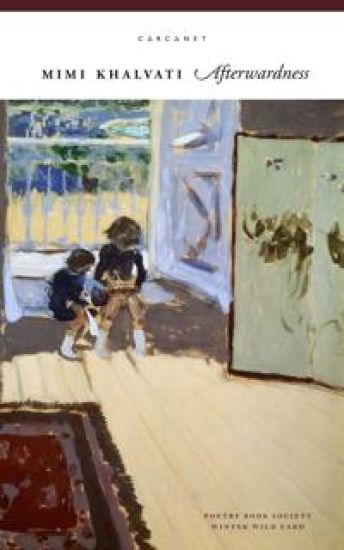
Afterwardness

Afterwardness

Mimi Khalvati

Carcanet Press Ltd
2019
nidottu
A 2019 Poetry Book Society Winter Wild Card. A Sunday Times Book of the Year 2019. Ever since her first Carcanet book, In White Ink (1991), Mimi Khalvati has been drawn to the sonnet form. In Afterwardness its pull became irresistible. She has created in this unprogrammatic series, mixing memory, history, daily life, all her intersecting geographies and cultures, a self-portrait in all her moods, anxieties and delights. The sonnet form is stretched in all sorts of fruitful directions. Just as she adapted the ghazal form to English use, here she puts the Petrarchan sonnet to striking, unfamiliar use, widening the possibilities of the form. The poems are rich with Khalvati's personal history, her Iranian origins, her long years in Great Britain. The poems play between cultures, ancestral and acquired.
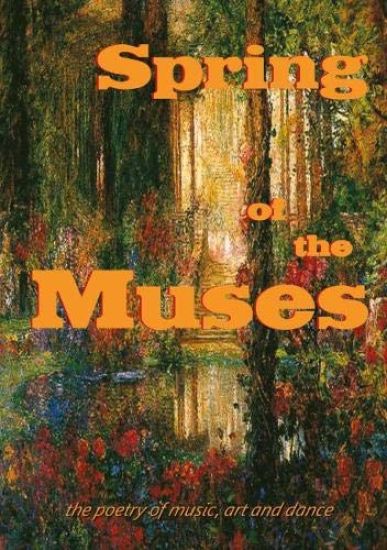
Spring of the Muses

Spring of the Muses

Chris Tutton; Mimi Khalvati; Moniza Alvi; Lawrence Sail; Martyn Crucefix; Alison Brackenbury; Neil Powell; Debjani Hhatterjee; Ian Seed

Avalanche Books
2019
nidottu
A poetry anthology comprising poems inspired by art, music and dance, featuring Chris Tutton, Mimi Khalvati, Moniza Alvi, Martyn Crucefix, Alison Brackenbury, Neil Powell, Lawrence Sail and many more.
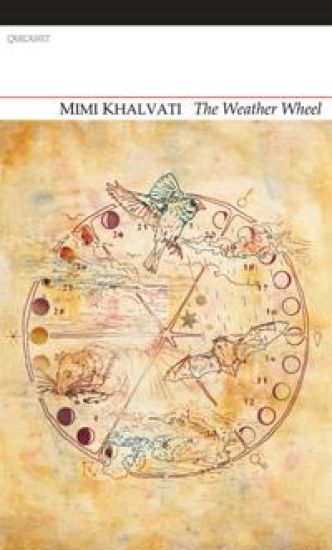
Weather Wheel

Weather Wheel

Mimi Khalvati

Carcanet Press Ltd
2014
nidottu
In these new poems, each of them written in couplets and contained within the space of sixteen lines, Mimi Khalvati takes the weather, the seasons and the passage of night and day as the ground on which she draws her emblems of human life and love. An extended elegy for her mother, the book is also a series of meditations on the small details of animals' lives, and on the vulnerable animal within the human being.
Child

Child

Mimi Khalvati

Carcanet Press Ltd
2011
nidottu
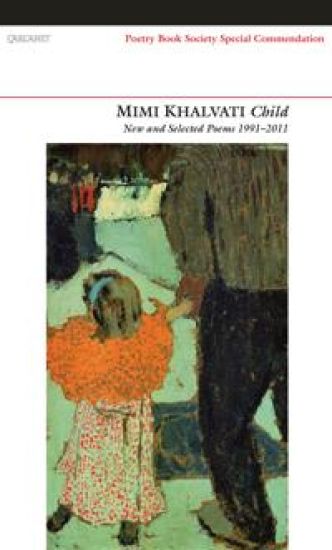
"Child: New and Selected Poems" 1991-2011 combines a generous collation of poems from Mimi Khalvati's five Carcanet volumes with previously uncollected sequences. She orders her work autobiographically, telling the stories of her life in four sections: childhood and early adulthood; motherhood; meditations on light; and love and art, circling back to childhood in her celebrated final sequence ("The Meanest Flower"). The figure of the child stands at the centre of the book, appearing in many guises: the poet as a schoolgirl on the Isle of Wight, or in half-remembered later years living with her grandmother in Tehran; her two children, now grown up; children in art; and, an enduring sense of oneself as a child that is never left behind. Here is the essential Khalvati: exquisitely nuanced, formally accomplished, Romantic in sensibility; rapturous and tender in response to nature, family and love. Her poems, David Constantine writes, "say what it feels like being human, the good and the ill of it, with passion, tact and lightness".
Meanest Flower

Meanest Flower

Mimi Khalvati

Carcanet Press Ltd
2007
nidottu
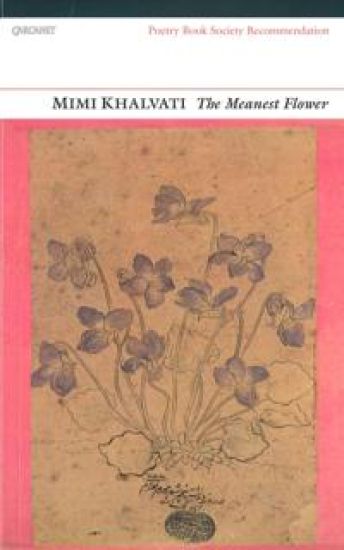
Inspired by Shakespeare's songs, the short poems of Emily Dickinson, and Wordsworth's "Lucy" poems, this collection of songlike poetry is based on the ubiquitous spread of weeds - like the shallow rooting plants, small poems can grow anywhere. In her seventh collection, Khalvati demonstrates a dazzling mastery of traditional forms and experiments with the Ghazal, an ancient Persian form comprised of an unrhymed couplet. Evoking three generations and geographies of women, "The Meanest Flower" reinstates the joyful, audible aspect of the lyric.
Mirrorwork

Mirrorwork

Mimi Khalvati

Carcanet Press Ltd
1995
nidottu
In Mirrorwork, her second collection, Mimi Khalvati takes the Islamic art of mirror-mosaic – found in palaces, barber shops, kebab houses – as metaphor. The shorter poems refract one another, the three long sequences act as a mirror triptych, their themes – of art, nature, domestic life and memory, east and west – drawing the other poems together. In a mirror-mosaic you search for your reflection but can't find it whole, only flickering, variegated, fragmented, as on television when a pattern is played across a face to preserve anonymity, while the voice discloses what the picture conceals. In Mirrorwork Khalvati at once establishes a voice and questions its integrity. It is a book about becoming, as the poet's children leave home and she must find a changed self and purpose, a new space.