Kirjojen hintavertailu. Mukana 12 595 353 kirjaa ja 12 kauppaa.

Kirjailija

Min Zhang

Kirjat ja teokset yhdessä paikassa: 12 kirjaa, julkaisuja vuosilta 2012-2025, suosituimpien joukossa Foreign Aid in China. Vertaile teosten hintoja ja tarkista saatavuus suomalaisista kirjakaupoista.

12 kirjaa

Kirjojen julkaisuhaarukka 2012-2025.

Foreign Aid in China

Foreign Aid in China

Hong Zhou; Jun Zhang; Min Zhang

Springer-Verlag Berlin and Heidelberg GmbH Co. K
2016
nidottu
Foreign aid has connected China and the international community through many channels, and created new types of strong partnerships throughout the world. As a recipient country, China and donors have engaged in an unprecedentedly deep level of cooperation on development-related issues. China’s development experience has resulted in key changes to the relationships and partnerships between China and donors, from receiving foreign aid to entering into development cooperation. China has provided valuable experiences for other developing countries, experiences that are all the more relevant because they have revealed key factors at work in developing recipient countries. This has also led China to form closer cooperative relationships with other developing countries with regard to development issues. In short, foreign aid has changed China.

The Environment and Landscape in Motorway Design

The Environment and Landscape in Motorway Design

Guochao Qian; Shuyu Tang; Min Zhang; Chun Jing

John Wiley Sons Inc
2014
sidottu
The construction and operation of highways has a significant impact on the environment. While such impact is impossible to avoid, modern highways are constructed and landscaped to minimise these impacts as far as possible. Good landscaping minimises the impact on those living or working close to the highway, while at the same time regenerating the natural landscape disturbed during construction. Using as its background the successful landscape design of the Nanjing-Hangzhou Expressway in Jiangsu Province, China, which opened to traffic in 2007, Highway Landscape Design includes reference to all aspects of the landscaping of highways, including interchanges, embankments, central reservations, bridges, service and toll station areas, and drainage systems. Appropriate consideration is given to the negative impact on the surrounding environment during the process of construction and it discusses the ecological evaluation and conservation strategy for the highway route. China is in some respects at the forefront of highway landscape design as a result of rapid growth and development coupled with the financial resources to implement major infrastructure works, and the concepts, technologies and methods developed for this Expressway provide valuable experience for sustainable development strategies for such infrastructure.
Nano-Bio Probe Design and Its Application for Biochemical Analysis

Nano-Bio Probe Design and Its Application for Biochemical Analysis

Bang-Ce Ye; Min Zhang; Bin-Cheng Yin

Springer-Verlag Berlin and Heidelberg GmbH Co. K
2012
nidottu
In this volume, Prof. Ye and his coworkers propose and review the concept of nano-bio probe design for biochemical analysis on the basis of their recent published works. A unique biochemical analysis technology based on fluorescence polarization enhanced by nanoparticles is described here with successful applications in environmental monitoring, rapid and sensitive sensing protease activity and high-throughput screening of inhibitors. Furthermore, they introduce a versatile molecular beacon (MB)-like probe for the multiplex sensing of targets such as sequence-specific DNA, protein, metal ions and small molecule compounds based on the self-assembled biomolecule-graphene conjugates. Besides, some colorimetric and luminescence probes utilizing metal nanoparticles for biochemical applications are also presented, such as chiral enantiomer discrimination and separation, environmental monitoring, clinic diagnosis and etc.
3D Point Cloud Analysis

3D Point Cloud Analysis

Shan Liu; Min Zhang; Pranav Kadam; C.-C. Jay Kuo

Springer Nature Switzerland AG
2022
nidottu
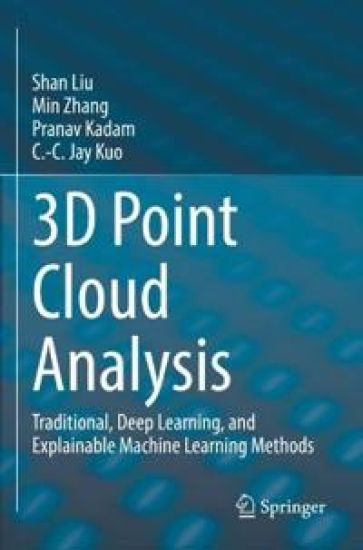
This book introduces the point cloud; its applications in industry, and the most frequently used datasets. It mainly focuses on three computer vision tasks -- point cloud classification, segmentation, and registration -- which are fundamental to any point cloud-based system. An overview of traditional point cloud processing methods helps readers build background knowledge quickly, while the deep learning on point clouds methods include comprehensive analysis of the breakthroughs from the past few years. Brand-new explainable machine learning methods for point cloud learning, which are lightweight and easy to train, are then thoroughly introduced. Quantitative and qualitative performance evaluations are provided. The comparison and analysis between the three types of methods are given to help readers have a deeper understanding. With the rich deep learning literature in 2D vision, a natural inclination for 3D vision researchers is to develop deep learning methods for point cloud processing. Deep learning on point clouds has gained popularity since 2017, and the number of conference papers in this area continue to increase. Unlike 2D images, point clouds do not have a specific order, which makes point cloud processing by deep learning quite challenging. In addition, due to the geometric nature of point clouds, traditional methods are still widely used in industry. Therefore, this book aims to make readers familiar with this area by providing comprehensive overview of the traditional methods and the state-of-the-art deep learning methods. A major portion of this book focuses on explainable machine learning as a different approach to deep learning. The explainable machine learning methods offer a series of advantages over traditional methods and deep learning methods. This is a main highlight and novelty of the book. By tackling three research tasks -- 3D object recognition, segmentation, and registration using our methodology -- readers will have a sense of how to solve problems in a different way and can apply the frameworks to other 3D computer vision tasks, thus give them inspiration for their own future research. Numerous experiments, analysis and comparisons on three 3D computer vision tasks (object recognition, segmentation, detection and registration) are provided so that readers can learn how to solve difficult Computer Vision problems.
3D Point Cloud Analysis

3D Point Cloud Analysis

Shan Liu; Min Zhang; Pranav Kadam; C.-C. Jay Kuo

Springer Nature Switzerland AG
2021
sidottu
This book introduces the point cloud; its applications in industry, and the most frequently used datasets. It mainly focuses on three computer vision tasks -- point cloud classification, segmentation, and registration -- which are fundamental to any point cloud-based system. An overview of traditional point cloud processing methods helps readers build background knowledge quickly, while the deep learning on point clouds methods include comprehensive analysis of the breakthroughs from the past few years. Brand-new explainable machine learning methods for point cloud learning, which are lightweight and easy to train, are then thoroughly introduced. Quantitative and qualitative performance evaluations are provided. The comparison and analysis between the three types of methods are given to help readers have a deeper understanding. With the rich deep learning literature in 2D vision, a natural inclination for 3D vision researchers is to develop deep learning methods for point cloud processing. Deep learning on point clouds has gained popularity since 2017, and the number of conference papers in this area continue to increase. Unlike 2D images, point clouds do not have a specific order, which makes point cloud processing by deep learning quite challenging. In addition, due to the geometric nature of point clouds, traditional methods are still widely used in industry. Therefore, this book aims to make readers familiar with this area by providing comprehensive overview of the traditional methods and the state-of-the-art deep learning methods. A major portion of this book focuses on explainable machine learning as a different approach to deep learning. The explainable machine learning methods offer a series of advantages over traditional methods and deep learning methods. This is a main highlight and novelty of the book. By tackling three research tasks -- 3D object recognition, segmentation, and registration using our methodology -- readers will have a sense of how to solve problems in a different way and can apply the frameworks to other 3D computer vision tasks, thus give them inspiration for their own future research. Numerous experiments, analysis and comparisons on three 3D computer vision tasks (object recognition, segmentation, detection and registration) are provided so that readers can learn how to solve difficult Computer Vision problems.
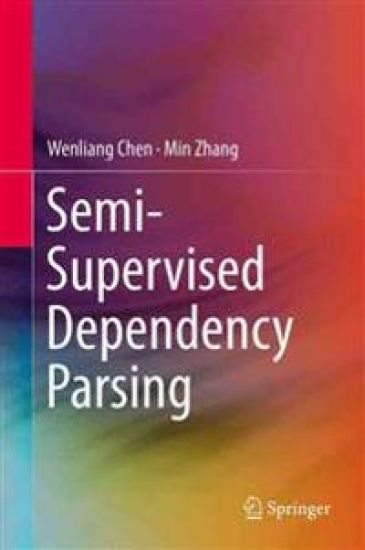
Semi-Supervised Dependency Parsing

Semi-Supervised Dependency Parsing

Wenliang Chen; Min Zhang

Springer Verlag, Singapore
2016
nidottu
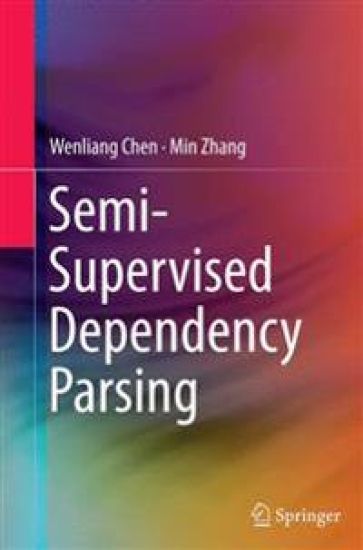
This book presents a comprehensive overview of semi-supervised approaches to dependency parsing. Having become increasingly popular in recent years, one of the main reasons for their success is that they can make use of large unlabeled data together with relatively small labeled data and have shown their advantages in the context of dependency parsing for many languages. Various semi-supervised dependency parsing approaches have been proposed in recent works which utilize different types of information gleaned from unlabeled data. The book offers readers a comprehensive introduction to these approaches, making it ideally suited as a textbook for advanced undergraduate and graduate students and researchers in the fields of syntactic parsing and natural language processing.
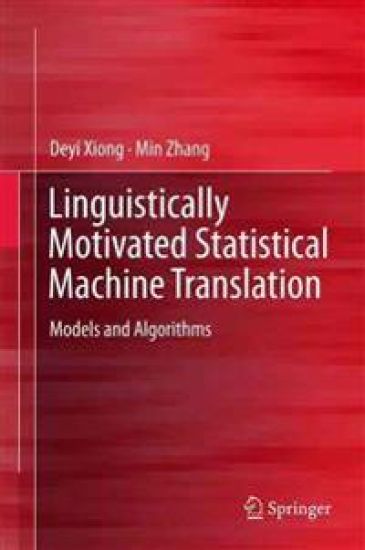
Linguistically Motivated Statistical Machine Translation

Linguistically Motivated Statistical Machine Translation

Deyi Xiong; Min Zhang

Springer Verlag, Singapore
2016
nidottu
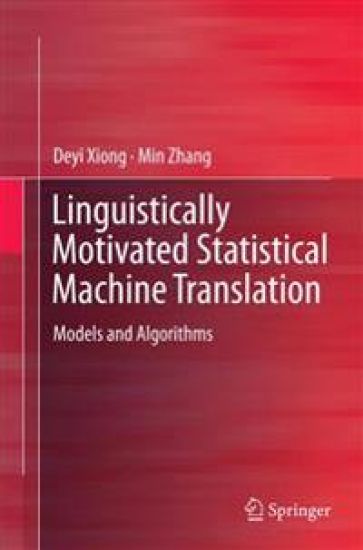
This book provides a wide variety of algorithms and models to integrate linguistic knowledge into Statistical Machine Translation (SMT). It helps advance conventional SMT to linguistically motivated SMT by enhancing the following three essential components: translation, reordering and bracketing models. It also serves the purpose of promoting the in-depth study of the impacts of linguistic knowledge on machine translation. Finally it provides a systematic introduction of Bracketing Transduction Grammar (BTG) based SMT, one of the state-of-the-art SMT formalisms, as well as a case study of linguistically motivated SMT on a BTG-based platform.
Semi-Supervised Dependency Parsing

Semi-Supervised Dependency Parsing

Wenliang Chen; Min Zhang

Springer Verlag, Singapore
2015
sidottu
This book presents a comprehensive overview of semi-supervised approaches to dependency parsing. Having become increasingly popular in recent years, one of the main reasons for their success is that they can make use of large unlabeled data together with relatively small labeled data and have shown their advantages in the context of dependency parsing for many languages. Various semi-supervised dependency parsing approaches have been proposed in recent works which utilize different types of information gleaned from unlabeled data. The book offers readers a comprehensive introduction to these approaches, making it ideally suited as a textbook for advanced undergraduate and graduate students and researchers in the fields of syntactic parsing and natural language processing.
Linguistically Motivated Statistical Machine Translation

Linguistically Motivated Statistical Machine Translation

Deyi Xiong; Min Zhang

Springer Verlag, Singapore
2015
sidottu
This book provides a wide variety of algorithms and models to integrate linguistic knowledge into Statistical Machine Translation (SMT). It helps advance conventional SMT to linguistically motivated SMT by enhancing the following three essential components: translation, reordering and bracketing models. It also serves the purpose of promoting the in-depth study of the impacts of linguistic knowledge on machine translation. Finally it provides a systematic introduction of Bracketing Transduction Grammar (BTG) based SMT, one of the state-of-the-art SMT formalisms, as well as a case study of linguistically motivated SMT on a BTG-based platform.