Kirjojen hintavertailu. Mukana 12 289 114 kirjaa ja 12 kauppaa.
Kirjailija
Minsoo Kang
Kirjat ja teokset yhdessä paikassa: 17 kirjaa, julkaisuja vuosilta 2006-2025, suosituimpien joukossa New Suns. Vertaile teosten hintoja ja tarkista saatavuus suomalaisista kirjakaupoista.
Daniel H. Wilson; K. Tempest Bradford; Darcie Little Badger; Geetanjali Vandemark; John Chu; Nghi Vo; Tananarive Due; Alex Jennings; Karin Lowachee; Saad Hossain; Hiromi Goto; Minsoo Kang; Tlotlo Tsamaase; Rochita Loenen-Ruiz; Malka Older; Kathleen Alcalá; Christopher Caldwell; Jaymee Goh; Walter Mosley; Grace Dillon
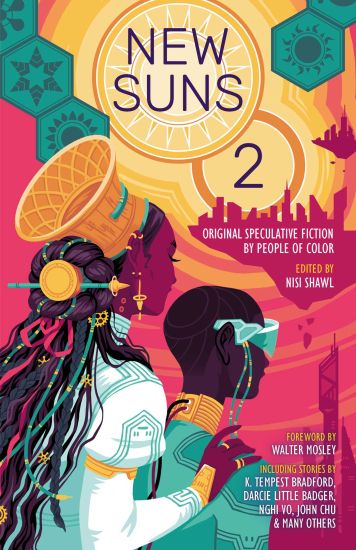
Octavia E. Butler said, “There’s nothing new under the sun, but there are new suns.”New Suns 2 brings you fresh visions of the strange, the unexpected, the shocking—breakthrough stories, stories shining with emerging truths, stories that pierce stale preconceptions with their beauty and bravery. Like the first New Suns anthology (winner of the World Fantasy, Locus, IGNYTE, and British Fantasy awards), this book liberates writers of many races to tell us tales no one has ever told.Many things come in twos: dualities, binaries, halves, and alternates. Twos are found throughout New Suns 2, in eighteen science fiction, fantasy, and horror stories revealing daring futures, hidden pasts, and present-day worlds filled with unmapped wonders.Including stories by Daniel H. Wilson, K. Tempest Bradford, Darcie Little Badger, Geetanjali Vandemark, John Chu, Nghi Vo, Tananarive Due, Alex Jennings, Karin Lowachee, Saad Hossain, Hiromi Goto, Minsoo Kang, Tlotlo Tsamaase, Rochita Loenen-Ruiz, Malka Older, Kathleen Alcalá, Christopher Caldwell and Jaymee Goh with a foreword by Walter Mosley and an afterword by Dr. Grace Dillon.
Rebecca Roanhorse; Silvia Moreno-Garcia; Darcie Little Badger; Tobias S Buckell; Minsoo Kang; Jaymee Goh; Indrapramit Das; E. Lily Yu; Karin Lowachee; LeVar Burton; Kathleen Alcalá; Steven Barnes; Chinelo Onwual; Alex Jennings; Alberto Yáñez; Anil Menon; Andrea Hairston; Hiromi Goto
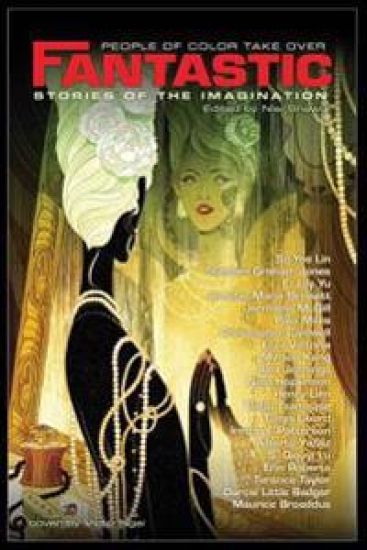
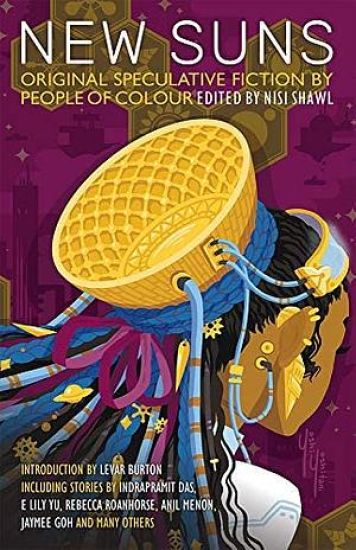
Winner of the 2020 Locus, World Fantasy, British Fantasy, Ignyte, and Brave New Words Awards.“There’s nothing new under the sun, but there are new suns,” proclaimed Octavia E. Butler.New Suns: Original Speculative Fiction by People of Color showcases emerging and seasoned writers of many races telling stories filled with shocking delights, powerful visions of the familiar made strange. Between this book’s covers burn tales of science fiction, fantasy, horror, and their indefinable overlappings. These are authors aware of our many possible pasts and futures, authors freed of stereotypes and clichés, ready to dazzle you with their daring genius.Unexpected brilliance shines forth from every page.Includes stories by Kathleen Alcala, Minsoo Kang, Anil Menon, Silvia Moreno-Garcia, Alex Jennings, Alberto Yanez, Steven Barnes, Jaymee Goh, Karin Lowachee, E. Lily Yu, Andrea Hairston, Tobias Buckell, Hiromi Goto, Rebecca Roanhorse, Indrapramit Das, Chinelo Onwualu and Darcie Little Badger.
A beautifully crafted, enriching saga inspired by East Asian mythology, The Melancholy of Untold History is Minsoo Kang’s debut novel, steeped in history like R.F. Kuang’s Babel, epic in scope like Anthony Doerr’s Cloud Cuckoo Land, and lyrically exciting like David Mitchell’s Cloud Atlas, interweaving four complex yet entertaining stories as they shape and create a nation’s literary narrative through the themes of love and grief.A history professor mourning his wife. His young protégé’s search for a path forward. Four witty mountain gods with much to say and not enough time to listen. A gifted storyteller bringing a world into being out of thin air...Famous for his dispelling of the national myth, the Historian understands the power of narrative. He has inspired another young professor to search for her own truths, while trying to understand the way fiction creates fact and how sometimes the past can only be understood by filling in holes with a new narrative. Which is exactly what he needs when his wife passes away to parse meaning out of a world that no longer makes sense. Together the protégé and the Historian find comfort in each other. Yet they know their time together is fleeting, as time usually is. Only the gods have an abundance of time, and yet—the two discover—even that might not be so clear cut. Part of their homeland’s myth tells of four gods who squabbled and argued and destroyed and rebuilt time and again. Or did they?Because, of course, even the gods need mouthpieces on earth. And the one the Historian knows of—the elusive Storyteller—may have just been spinning tales for his own amusement and, ultimately, revenge. By fabricating the exploits of the gods, he could have set a course for certain events to unfold and a particular story to survive today. Spanning 3,000 years and multiple voices—with tales within tales woven expertly together—The Melancholy of Untold History reveals a people and its individuals who seek to confront the hardships of life through storytelling. Mixing the East Asian mythos with a postmodern approach to standard sci-fi/fantasy narrative tropes, Minsoo Kang has created a challenging, beautiful, sad, humorous, and ultimately unforgettable novel of love, grief, and myth-making.
This book is a beginner-friendly guide to artificial intelligence (AI), ideal for those with no technical background. It introduces AI, machine learning, and deep learning basics, focusing on no-code methods for easy understanding. The book also covers data science, data mining, and big data processing, maintaining a no-code approach throughout. Practical applications are explored using no-code platforms like Microsoft Azure Machine Learning and AWS SageMaker. Readers are guided through step-by-step instructions and real-data examples to apply learning algorithms without coding. Additionally, it includes the integration of business intelligence tools like Power BI and AWS QuickSight into machine learning projects.This guide bridges the gap between AI theory and practice, making it a valuable resource for beginners in the field.
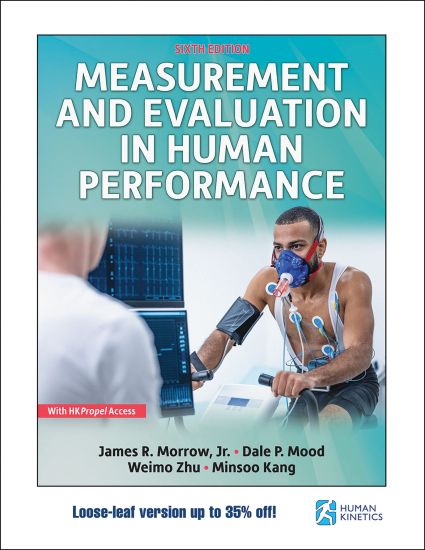
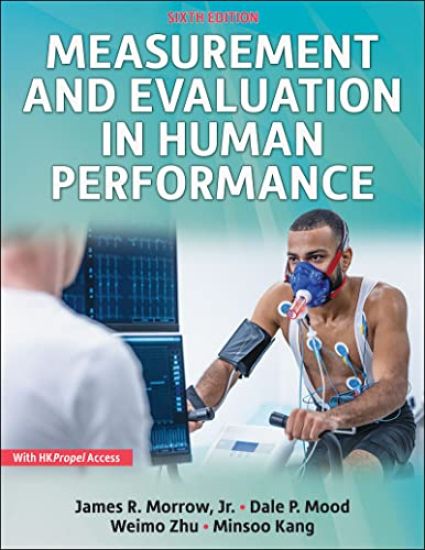
This is the loose-leaf version of Measurement and Evaluation in Human Performance, Sixth Edition With HKPropel Access, which offers students a less expensive, printed version of the text.Measurement and Evaluation in Human Performance, Sixth Edition With HKPropel Access, guides students through the essentials of collecting and analyzing data of human performance and using that data in practical application. Introductory algebraic concepts are combined with the technological capabilities of Microsoft Excel and IBM’s SPSS software to aid students in calculations and data analysis. Focusing on the core concepts of reliability and validity of data, the text provides all the necessary tools for evidence-based decision making to apply in kinesiology, sport and exercise science, physical therapy, allied health, physical education, health, and fitness.The sixth edition of Measurement and Evaluation in Human Performance has been reorganized to offer a logical progression of information that makes it easy for instructors and students to apply the content to their specific courses and career goals. It is enhanced with added expertise from new coauthor Weimo Zhu, who served as the chair of the Measurement and Evaluation Council of SHAPE America. The amount of information on physical activity assessment has been increased across all chapters, and the text includes new content about sport video analysis apps, employment-related testing, and more.The text is divided into four parts. Part I introduces the concepts of measurement and evaluation and their importance for decision making in human performance. Part II explores statistics as core tools and resources for these evaluations and explains the various forms of statistical procedures often used in measurement. Part III presents reliability and validity from theoretical, comprehensive, and criterion-referenced perspectives. Skills gained through previous sections are applied to human performance issues such as evaluating a person’s aerobic capacity or muscular strength. Part IV applies all of the content from the previous sections to practical settings where students will use the knowledge gained in the text, covering topics like fitness assessment, performance assessment, motor behavior, and sport and exercise psychology.To enhance student comprehension and retention, related online learning aids are delivered through HKPropel. Sample data sets allow students to practice data analysis, as do a wide range of study and practice activities. Chapter quizzes may be assigned to students by instructors and are automatically graded within HKPropel. In addition, Mastery Item sidebars throughout the text include problems and activities that test student knowledge, while Measurement and Evaluation Challenge sidebars provide scenarios that can be tackled with the information from the chapter.Measurement and Evaluation in Human Performance, Sixth Edition, continues to provide students with the tools and confidence they will need to gather reliable data, analyze it, and apply it in their work with clients.Note: A code for accessing HKPropel is included with all new print books.
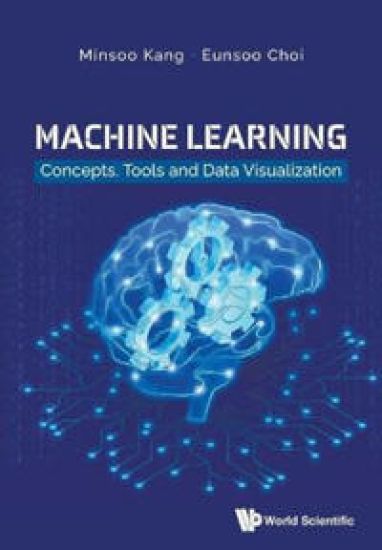
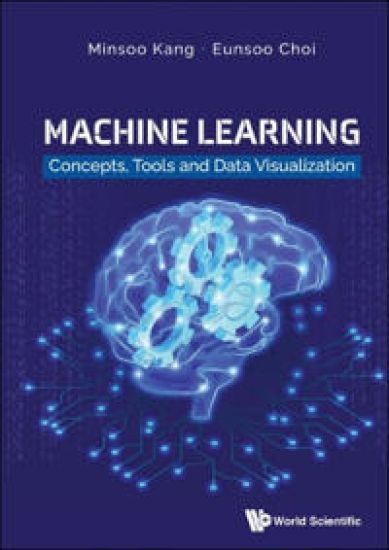
This set of lecture notes, written for those who are unfamiliar with mathematics and programming, introduces the reader to important concepts in the field of machine learning. It consists of three parts. The first is an overview of the history of artificial intelligence, machine learning, and data science, and also includes case studies of well-known AI systems. The second is a step-by-step introduction to Azure Machine Learning, with examples provided. The third is an explanation of the techniques and methods used in data visualization with R, which can be used to communicate the results collected by the AI systems when they are analyzed statistically. Practice questions are provided throughout the book.
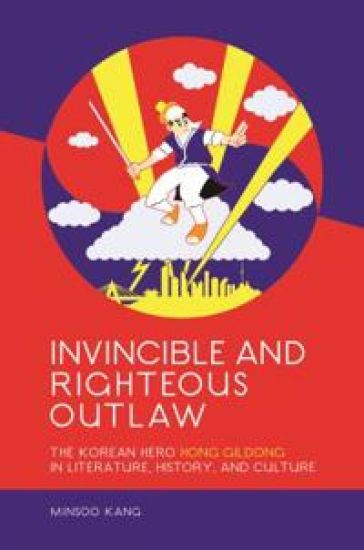
One of the most important and popular premodern Korean novels, The Story of Hong Gildong is a fast-paced adventure story about the illegitimate son of a nobleman who becomes the leader of a band of honest outlaws who take from the rich and punish the corrupt. Despite the importance of the work to Korean culture - it is often described as the story of the Korean Robin Hood - studies of the novel have been hindered by a number of myths, namely that it was authored in the early sixteenth century by statesman Heo Gyun, who wrote it not only in protest of Joseon-dynasty laws on the rights of illegitimate children, but also as a manifesto of his own radical political ideas. In Invincible and Righteous Outlaw, the first book-length study of the novel in English, Minsoo Kang reveals that The Story of Hong Gildong was most likely written by an anonymous mid-nineteenth-century writer whose primary concern was appealing to the increasing number of readers in the late Joseon looking to be entertained and that the myth of Heo's authorship can be traced to the writing of literary scholar Kim Taejun in the 1930s. Following a detailed examination of the history and literary significance of the novel - including analysis based on Eric Hobsbawm's work on the universal figure of the noble robber - Kang surveys the many afterlives of the hero Hong Gildong, who throughout the decades has appeared and reappeared in countless revisionist novels, films, television dramas, and comics, even inspiring the creation of a Hong Gildong theme park in South Korea. He shows how the story was altered, distorted, and reinvigorated during and after the Japanese colonial period in both the North and the South for political, social, and literary purposes. While demonstrating the continued relevance of the novel and its hero in Korean culture up to the present day, Kang makes it clear that such narratives have served mostly to distance readers from a better understanding of this classic work.
One of the most important and popular premodern Korean novels, The Story of Hong Gildong is a fast-paced adventure story about the illegitimate son of a nobleman who becomes the leader of a band of honest outlaws who take from the rich and punish the corrupt. Despite the importance of the work to Korean culture—it is often described as the story of the Korean Robin Hood—studies of the novel have been hindered by a number of myths, namely that it was authored in the early sixteenth century by statesman Heo Gyun, who wrote it not only in protest of Joseon-dynasty laws on the rights of illegitimate children, but also as a manifesto of his own radical political ideas. In Invincible and Righteous Outlaw, the first book-length study of the novel in English, Minsoo Kang reveals that The Story of Hong Gildong was most likely written by an anonymous mid-nineteenth-century writer whose primary concern was appealing to the increasing number of readers in the late Joseon looking to be entertained and that the myth of Heo's authorship can be traced to the writing of literary scholar Kim Taejun in the 1930s. Following a detailed examination of the history and literary significance of the novel—including analysis based on Eric Hobsbawm's work on the universal figure of the noble robber—Kang surveys the many afterlives of the hero Hong Gildong, who throughout the decades has appeared and reappeared in countless revisionist novels, films, television dramas, and comics, even inspiring the creation of a Hong Gildong theme park in South Korea. He shows how the story was altered, distorted, and reinvigorated during and after the Japanese colonial period in both the North and the South for political, social, and literary purposes. While demonstrating the continued relevance of the novel and its hero in Korean culture up to the present day, Kang makes it clear that such narratives have served mostly to distance readers from a better understanding of this classic work.
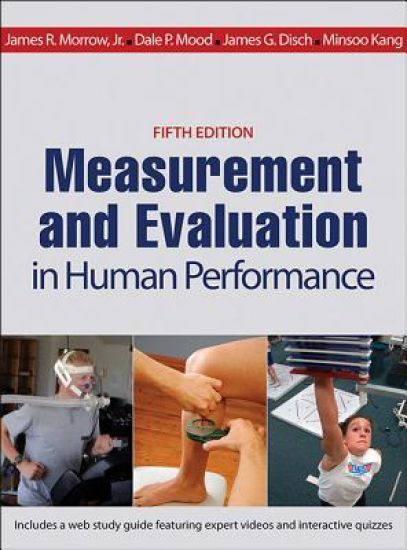
Measurement and Evaluation in Human Performance, Fifth Edition With Web Study Guide, leads students through the fundamentals of collecting and analyzing data of human performance and applying their results to real-life situations. Focusing on the core concepts of reliability and validity of data, the text provides all the necessary tools for evidence-based decision making that can be applied to physical therapy, allied health professions, kinesiology, sport and exercise science, physical education, health, and fitness. The fifth edition of Measurement and Evaluation in Human Performance provides students with a logical progression of information in a straightforward manner. Introductory algebraic concepts are combined with the technological capabilities of Microsoft Excel and IBM’s Statistical Package for the Social Sciences (SPSS) to aid students in calculations and data analysis. The text expands on previous editions and includes the following enhancements: • Additional sport-specific and exercise examples, as well as physical education examples focusing on motor skill abilities and psychological skills, that provide real-world application of the material • Updated examples for use and practice with Excel and SPSS calculations and techniques that illustrate data analyses • Expanded emphasis on evidence-based decision making to guide students in making appropriate decisions • 52 video interviews of top researchers who offer greater insight into the field as students work through the text The text is divided into four easy-to-follow parts. Part I introduces the concepts of measurement and evaluation and their importance to decision making in human performance with specific attention to applications of measurement, testing, and evaluation. Part II explores statistics as core tools and resources for these evaluations and decisions and explains the various forms of statistical procedures often used in measurement. Part III takes the skills gained from parts I and II and extends them into applied issues in human performance, such as evaluating a person’s aerobic capacity or muscular strength. The importance of reliability and validity in data is also covered in detail. Part IV provides information on practical applications that apply all of the information from the previous sections. Learning aids for this text, including a robust and newly updated web study guide with activities and questions for active learning and engagement, enhance student comprehension and retention. Chapter objectives highlight main points that students should focus on throughout the chapters, and key terms are highlighted and defined in the glossary. Mastery Items include problems and activities that test student knowledge, while Measurement and Evaluation Challenge sidebars provide scenarios that can be tackled with the information gathered throughout the chapter. Additional data sets for each chapter are also provided in the web study guide for practice and mastery of techniques in Excel and SPSS. To aid instructors, Measurement and Evaluation in Human Performance, Fifth Edition, includes a suite of ancillary materials: instructor guide, presentation package plus image bank, test package, chapter quizzes, and instructor videos. Measurement and Evaluation in Human Performance, Fifth Edition, continues to providee students with the tools and confidence they will need to gather reliable data, analyze it, and apply it in their work with clients. With its emphasis on understanding and applying sound measurement techniques, this fifth edition prepares students and professionals to identify problems and make solid decisions in the realm of human performance.
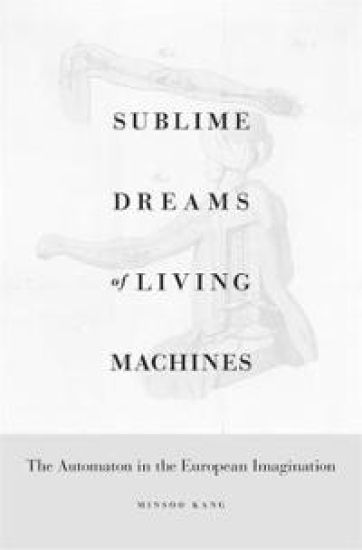
From the dawn of European civilization to the twentieth century, the automaton—better known today as the robot—has captured the Western imagination and provided a vital lens into the nature of humanity.Historian Minsoo Kang argues that to properly understand the human-as-machine and the human-as-fundamentally-different-from-machine, we must trace the origins of these ideas and examine how they were transformed by intellectual, cultural, and artistic appearances of the automaton throughout the history of the West. Kang tracks the first appearance of the automaton in ancient myths through the medieval and Renaissance periods, marks the proliferation of the automaton as a central intellectual concept in the Scientific Revolution and the subsequent backlash during the Enlightenment, and details appearances in Romantic literature and the introduction of the living machine in the Industrial Age. He concludes with a reflection on the destructive confrontation between humanity and machinery in the modern era and the reverberations of the humanity-machinery theme today.Sublime Dreams of Living Machines is an ambitious historical exploration and, at heart, an attempt to fully elucidate the rich and varied ways we have utilized our most uncanny creations to explore essential questions about ourselves.