
Kirjailija
Miranda Vickers
Kirjat ja teokset yhdessä paikassa: 11 kirjaa, julkaisuja vuosilta 1997-2026, suosituimpien joukossa Enver Hoxha's Long Shadow. Vertaile teosten hintoja ja tarkista saatavuus suomalaisista kirjakaupoista.
11 kirjaa
Kirjojen julkaisuhaarukka 1997-2026.

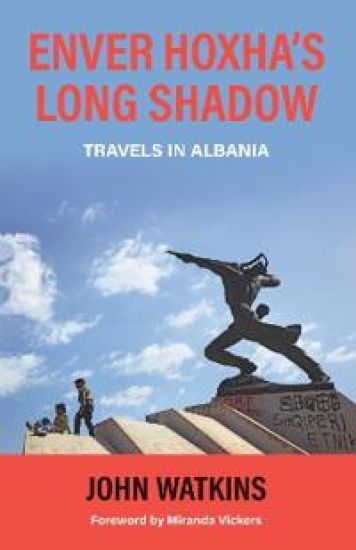
Communist Albania was unlike any other European nation. It was a 'hermit state' ruled by a dictator, Enver Hoxha, who presided over a repressive Stalinist regime. When John Watkins visited Albania in the late 1980s, he saw peasants toiling in the fields and enormous state-owned factories scarred the landscape. In 1991, the old regime was overthrown. Hoxha's statues were pulled down and his books burned. But reminders of his Albania were everywhere: in the monotonous apartment blocks and derelict factories; in the old collective farms and irrigation channels; in the thousands of bunkers that still dotted the landscape. But how much deeper did Hoxha's influence go? What marks had he left on the political system and on the nation's psyche? To answer these questions, the author returned to the places he had visited in the 1980s. He started in Shkoder and travelled south through Durres and Tirana to Sarande. He had taken photos on those first tours. He wanted to find the exact spots where he had taken them, so he could use them as a barometer of change. But the real power of the images lay not just in their evocation of the past, but in the connections they allowed him to make in the present. Through the photos, he was able to talk to Albanians from different generations and walks of life. For those born after 1991, they were revelatory, images of a world they knew little about. For older people, they were a key that unlocked memories, both good and bad. These exchanges, together with eyewitness research over thirty years, have given the author an in-depth insight into how Albanians are coping with the transition from dictatorship to an often-chaotic free market economy. As Albania emerges as a modern democratic state, this book reveals that it is still struggling with the legacy of its traumatic past. 'Enver Hoxha's Long Shadow,' a colourful account of this enigmatic country's landscapes and people, is essential reading for anyone wanting a fuller understanding of contemporary Albania.
Lakes and Empires in Macedonian History
James Pettifer; Miranda Vickers
BLOOMSBURY PUBLISHING PLC
2023
nidottu
Lakes and Empires in Macedonian History: Contesting the Waters tells the story of Psarades, a lakeside village in Macedonian Greece on the shores of the Prespa lake. This village, which is in many ways a completely typical Greek settlement and yet remains unconventional in its way of life, embodies the many contradictions of modern history and in exploring its roots James Pettifer and Miranda Vickers skilfully uncover the wider social, cultural and political history of this lake region.Drawing from oral testimonies and attentive to the construction of national histories, this book considers how the development of international borders, movement of people and role of national identities within imperial borderlands shaped Macedonia today. What is more, by centering the lakes and making use of an innovative environmental historical methodology, Pettifer and Vickers offer the first environmental history of this multi-ethnic borderland region shared by Greece, North Macedonia and Albania. The result is a nuanced and sophisticated transnational account of Macedonia from prehistory to the 21st century which will be essential reading for all Balkan scholars.
Lakes and Empires in Macedonian History
James Pettifer; Miranda Vickers
Bloomsbury Academic
2021
sidottu
Lakes and Empires in Macedonian History: Contesting the Waters tells the story of Psarades, a lakeside village in Macedonian Greece on the shores of the Prespa lake. This village, which is in many ways a completely typical Greek settlement and yet remains unconventional in its way of life, embodies the many contradictions of modern history and in exploring its roots James Pettifer and Miranda Vickers skilfully uncover the wider social, cultural and political history of this lake region.Drawing from oral testimonies and attentive to the construction of national histories, this book considers how the development of international borders, movement of people and role of national identities within imperial borderlands shaped Macedonia today. What is more, by centering the lakes and making use of an innovative environmental historical methodology, Pettifer and Vickers offer the first environmental history of this multi-ethnic borderland region shared by Greece, North Macedonia and Albania. The result is a nuanced and sophisticated transnational account of Macedonia from prehistory to the 21st century which will be essential reading for all Balkan scholars.
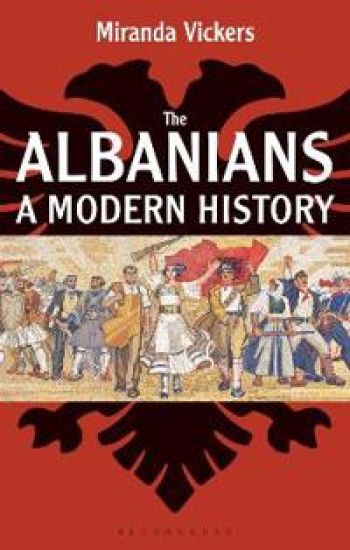
This is the first full account of a country that, following decades of isolation, has undergone unprecedented changes to its political system: the collapse of communism, the progression to multi-party elections and the upheaval that followed the March 1997 uprising. Miranda Vickers traces the history of the Albanian people from the Ottoman period to the formation of the Albanian Communist Party. She considers the charismatic leadership of Enver Hoxha; Albania's relationship with Tito and the alliance with the Soviet Union and then China; and the long period of isolation. Newly revised for this paperback edition, The Albanians considers the gradual process of reform and the fragility of the Albanian experiment with democracy, and includes a dramatic account of the days leading up to Sali Berisha's resignation of the presidency. It has now been updated to cover the fight for independence in Kosovo and the progress of Albania's application to join the EU.

For 10,000 years the River Thames meandered from source to sea, periodically throwing up mudbanks or carving parallel channels on the bends and creating islands along much of its length. There are around 180 islands altogether, some accessible by footbridge, some by road and others, like Pharaoh's Island and Garrick’s Ait, only by boat. Thirty are inhabited by small settlements, single houses or houseboats, all highly sought-after locations today. Many are important nature reserves; others directly connected to major historical events or famous personalities. Oliver’s Eyot was a refuge for Oliver Cromwell during the English Civil War, whilst Lot’s Ait was the unlikely setting for Humphrey Bogart’s 1951 film The African Queen, and the legendry Eel Pie Island played a key role in the development of British popular music. These islands, known as Eyots or Aits, form the skeletal backbone of the Thames. In this fascinating and detailed book, Miranda Vickers considers their history and role in helping us understand how the river evolved.
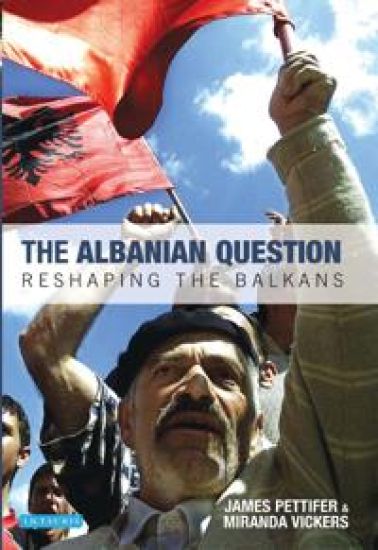
Kosovoa's declaration of independence in 2008 and the overt manipulation of this precedent by Russia in its war with Georgia and South Ossetia shortly afterwards has focused the worlda's attention once again on the Balkans. But Albaniaa's role within the region remains little known and less understood. In this revised edition of a major work of contemporary history, two well-known and internationally-respected authorities elucidate Albania's place in the Balkans, from the explosion of violence in the 1990s, which brought the country to the brink of civil war, to the present day. The future of the Albanians in the Balkans is the most pressing issue in the region today, a fact which the West must pay close heed to if this long neglected nation is to become a European partner. Indeed, the authors argue, in this rapidly evolving political climate, failure to come to terms with the importance of the Albanian question could return the region as a whole to armed conflict.
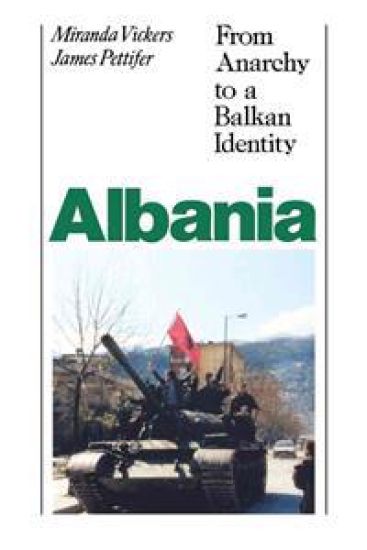
WITH A NEW POSTSCRIPT Situated between Greece on the south, the former Yugoslavia on the north and east, and the Adriatic Sea on the west, Albania is the country the world forgot. Throughout this century, Albania has been perceived as primitive and isolationist by its neighbors to the west. When the country ended fifty years of communist rule in 1992, few outsiders took interest. Deemed unworthy of membership in the European Union and overlooked by multinational corporations, Albania stands today as one of the poorest and most ignored countries in Europe. Miranda Vickers and James Pettifer take us behind the veil of former President Enver Hoxha's isolationist policies to examine the historic events leading up to Albania's transition to a parliamentary government. Beginning with Hoxha's death in 1985, Albania traces the last decade of Albania's shaky existence, from the anarchy and chaos of the early nineties to the victory of the Democratic Alliance in 1992 and the programs of the current government.The authors provide us with an analysis of how the moral, religious, economic, political and cultural identity of the Albanian people is being redefined, and leave no question that the future of Albania is inextricably linked to the future of the Balkans as a whole. In short, they tell us why Albania matters.

Situated between Greece on the south, the former Yugoslavia on the north and east, and the Adriatic Sea on the west, Albania is the country the world forgot. Throughout this century, Albania has been perceived as primitive and isolationist by its neighbors to the west. When the country ended fifty years of communist rule in 1992, few outsiders took interest. Deemed unworthy of membership in the European Union and overlooked by multinational corporations, Albania stands today as one of the poorest and most ignored countries in Europe. Miranda Vickers and James Pettifer take us behind the veil of former President Enver Hoxha's isolationist policies to examine the historic events leading up to Albania's transition to a parliamentary government. Beginning with Hoxha's death in 1985, Albania traces the last decade of Albania's shaky existence, from the anarchy and chaos of the early nineties to the victory of the Democratic Alliance in 1992 and the programs of the current government.The authors provide us with an analysis of how the moral, religious, economic, political and cultural identity of the Albanian people is being redefined, and leave no question that the future of Albania is inextricably linked to the future of the Balkans as a whole. In short, they tell us why Albania matters.

This work analyzes the events leading to the overthrow of the one-party state in Albania, the end of communism and the transistion to democracy. It is divided into historical sections which trace the disintegration of the communist system, culminating in the "Winter of Anarchy" of 1990-91 and the fortunes of the National Unity and Democratic Party governments after 1991. It also analyzes the cultural and social impact of these changes and explores the emerging crises facing the Albanian peoples in neighbouring Kosova and Macedonia. Special attention is paid to the problems of the significant Greek minority, the crucial question of religion, the military and national security and Albania's foreign relations. The book is based on interviews, research in Albania's newly opened archives and the author's personal participation in the events they describe.

This work analyzes the events leading to the overthrow of the one-party state in Albania, the end of communism and the transistion to democracy. It is divided into historical sections which trace the disintegration of the communist system, culminating in the "Winter of Anarchy" of 1990-91 and the fortunes of the National Unity and Democratic Party governments after 1991. It also analyzes the cultural and social impact of these changes and explores the emerging crises facing the Albanian peoples in neighbouring Kosova and Macedonia. Special attention is paid to the problems of the significant Greek minority, the crucial question of religion, the military and national security and Albania's foreign relations. The book is based on interviews, research in Albania's newly opened archives and the author's personal participation in the events they describe.