Kirjojen hintavertailu. Mukana 12 199 085 kirjaa ja 12 kauppaa.

Kirjailija

Miri Rubin

Kirjat ja teokset yhdessä paikassa: 12 kirjaa, julkaisuja vuosilta 1992-2024, suosituimpien joukossa Mother of God: A History of the Virgin Mary. Vertaile teosten hintoja ja tarkista saatavuus suomalaisista kirjakaupoista.

12 kirjaa

Kirjojen julkaisuhaarukka 1992-2024.

Religious Conversion

Religious Conversion

Ira Katznelson; Miri Rubin

TAYLOR FRANCIS LTD
2024
nidottu
Religious conversion - a shift in membership from one community of faith to another - can take diverse forms in radically different circumstances. As the essays in this volume demonstrate, conversion can be protracted or sudden, voluntary or coerced, small-scale or large. It may be the result of active missionary efforts, instrumental decisions, or intellectual or spiritual attraction to a different doctrine and practices. In order to investigate these multiple meanings, and how they may differ across time and space, this collection ranges far and wide across medieval and early modern Europe and beyond. From early Christian pilgrims to fifteenth-century Ethiopia; from the Islamisation of the eastern Mediterranean to Reformation Germany, the volume highlights salient features and key concepts that define religious conversion, particular the Jewish, Muslim and Christian experiences. By probing similarities and variations, continuities and fissures, the volume also extends the range of conversion to focus on matters less commonly examined, such as competition for the meaning of sacred space, changes to bodies, patterns of gender, and the ways conversion has been understood and narrated by actors and observers. In so doing, it promotes a layered approach that deepens inquiry by identifying and suggesting constellations of elements that both compose particular instances of conversion and help make systematic comparisons possible by indicating how to ask comparable questions of often vastly different situations.
Cities of Strangers

Cities of Strangers

Miri Rubin

Cambridge University Press
2020
pokkari
Cities of Strangers illuminates life in European towns and cities as it was for the settled, and for the 'strangers' or newcomers who joined them between 1000 and 1500. Some city-states enjoyed considerable autonomy which allowed them to legislate on how newcomers might settle and become citizens in support of a common good. Such communities invited bankers, merchants, physicians, notaries and judges to settle and help produce good urban living. Dynastic rulers also shaped immigration, often inviting groups from afar to settle and help their cities flourish. All cities accommodated a great deal of difference - of language, religion, occupation - in shared spaces, regulated by law. But when, from around 1350, plague began regularly to occur within European cities, this benign cycle began to break down. High mortality rates led eventually to demographic crises and, as a result, less tolerant and more authoritarian attitudes emerged, resulting in violent expulsions of even long-settled groups. Tracing the development of urban institutions and using a wide range of sources from across Europe, Miri Rubin recreates a complex picture of urban life for settled and migrant communities over the course of five centuries and offers an innovative vantage point on Europe's past with insights for its present.
Cities of Strangers

Cities of Strangers

Miri Rubin

Cambridge University Press
2020
sidottu
Cities of Strangers illuminates life in European towns and cities as it was for the settled, and for the 'strangers' or newcomers who joined them between 1000 and 1500. Some city-states enjoyed considerable autonomy which allowed them to legislate on how newcomers might settle and become citizens in support of a common good. Such communities invited bankers, merchants, physicians, notaries and judges to settle and help produce good urban living. Dynastic rulers also shaped immigration, often inviting groups from afar to settle and help their cities flourish. All cities accommodated a great deal of difference - of language, religion, occupation - in shared spaces, regulated by law. But when, from around 1350, plague began regularly to occur within European cities, this benign cycle began to break down. High mortality rates led eventually to demographic crises and, as a result, less tolerant and more authoritarian attitudes emerged, resulting in violent expulsions of even long-settled groups. Tracing the development of urban institutions and using a wide range of sources from across Europe, Miri Rubin recreates a complex picture of urban life for settled and migrant communities over the course of five centuries and offers an innovative vantage point on Europe's past with insights for its present.
The Middle Ages

The Middle Ages

Miri Rubin

Oxford University Press
2014
nidottu
The Middle Ages is a term coined around 1450 to describe a thousand years of European History. In this Very Short Introduction, Miri Rubin provides an exploration of the variety, change, dynamism, and sheer complexity that the period covers. From the provinces of the Roman Empire, which became Barbarian kingdoms after c.450-650, to the northern and eastern regions that became increasingly integrated into Europe, Rubin explores the emergence of a truly global system of communication, conquest, and trade by the end of the era. Presenting an insight into the challenges of life in Europe between 500-1500 -- at all levels of society -- Rubin looks at kingship and family, agriculture and trade, groups and individuals. Conveying the variety of European experiences, while providing a sense of the communication, cooperation, and shared values of the pervasive Christian culture, Rubin looks at the legacies they left behind. ABOUT THE SERIES: The Very Short Introductions series from Oxford University Press contains hundreds of titles in almost every subject area. These pocket-sized books are the perfect way to get ahead in a new subject quickly. Our expert authors combine facts, analysis, perspective, new ideas, and enthusiasm to make interesting and challenging topics highly readable.
Religious Conversion

Religious Conversion

Ira Katznelson; Miri Rubin

Routledge
2014
sidottu
Religious conversion - a shift in membership from one community of faith to another - can take diverse forms in radically different circumstances. As the essays in this volume demonstrate, conversion can be protracted or sudden, voluntary or coerced, small-scale or large. It may be the result of active missionary efforts, instrumental decisions, or intellectual or spiritual attraction to a different doctrine and practices. In order to investigate these multiple meanings, and how they may differ across time and space, this collection ranges far and wide across medieval and early modern Europe and beyond. From early Christian pilgrims to fifteenth-century Ethiopia; from the Islamisation of the eastern Mediterranean to Reformation Germany, the volume highlights salient features and key concepts that define religious conversion, particular the Jewish, Muslim and Christian experiences. By probing similarities and variations, continuities and fissures, the volume also extends the range of conversion to focus on matters less commonly examined, such as competition for the meaning of sacred space, changes to bodies, patterns of gender, and the ways conversion has been understood and narrated by actors and observers. In so doing, it promotes a layered approach that deepens inquiry by identifying and suggesting constellations of elements that both compose particular instances of conversion and help make systematic comparisons possible by indicating how to ask comparable questions of often vastly different situations.
Mother of God: A History of the Virgin Mary

Mother of God: A History of the Virgin Mary

Miri Rubin

YALE UNIVERSITY PRESS
2010
nidottu
A sweeping, ambitious study of the Virgin Mary's emergence and role throughout Western history How did the Virgin Mary, about whom very little is said in the Gospels, become one of the most powerful and complex religious figures in the world? To arrive at the answers to this far-reaching question, one of our foremost medieval historians, Miri Rubin, investigates the ideas, practices, and images that have developed around the figure of Mary from the earliest decades of Christianity to around the year 1600. Drawing on an extraordinarily wide range of sources--including music, poetry, theology, art, scripture, and miracle tales--Rubin reveals how Mary became so embedded in our culture that it is impossible to conceive of Western history without her. In her rise to global prominence, Mary was continually remade and reimagined by wave after wave of devotees. Rubin shows how early Christians endowed Mary with a fine ancestry; why in early medieval Europe her roles as mother, bride, and companion came to the fore; and how the focus later shifted to her humanity and unparalleled purity. She also explores how indigenous people in Central America, Africa, and Asia remade Mary and so fit her into their own cultures. Beautifully written and finely illustrated, this book is a triumph of sympathy and intelligence. It demonstrates Mary's endless capacity to inspire and her profound presence in Christian cultures and beyond.
Mother of God

Mother of God

Miri Rubin

Penguin Books Ltd
2010
pokkari
Mary, the mother of Jesus, is one of the most powerful, influential and complex of all religious figures. The focus for women, the inspiration of faith, the subject of innumerable paintings, sculptures, pieces of music and churches, Mary is so entangled in our world that it is impossible to conceive of the history of Western culture and religion without her. Mother of God is the story of that presence and a book that raises profound questions about the human experience.
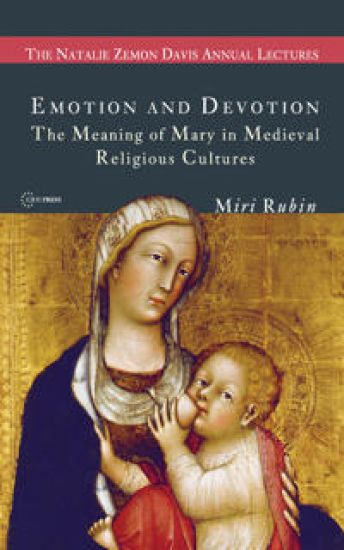
Emotion and Devotion

Emotion and Devotion

Miri Rubin

Central European University Press
2009
nidottu
In Emotion and Devotion Miri Rubin explores the craft of the historian through a series of studies of medieval religious cultures. In three original chapters she approaches the medieval figure of the Virgin Mary with the aim of unravelling meaning and experience. Hymns and miracle tales, altarpieces and sermons – a wide range of sources from many European regions – are made to reveal the creativity and richness which they elicited in medieval people, women and men, clergy and laity, people of status and riches as well as those of modest means.
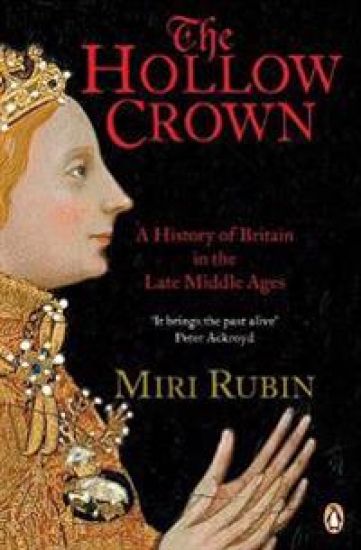
The Hollow Crown

The Hollow Crown

Miri Rubin

Penguin Books Ltd
2006
pokkari
There is no more haunting, compelling period in Britain's history than the later middle ages. The extraordinary kings - Edward III and Henry V, the great warriors, Richard II and Henry VI, tragic inadequates killed by their failure to use their power, and Richard III, the demon king. The extraordinary events - the Black Death that destroyed a third of the population, the Peasants' Revolt, the Wars of the Roses, the Battle of Agincourt. The extraordinary artistic achievements - the great churches, castles and tombs that still dominate the landscape, the birth of the English language in The Canterbury Tales. For the first time in a generation, a historian has had the vision and confidence to write a spell-binding account of the era immortalised by Shakespeare's history plays. The Hollow Crown brilliantly brings to life for the reader a world we have long lost - a strange, Catholic, rural country of monks, peasants, knights and merchants, almost perpetually at war - but continues to define so much of England's national myth.
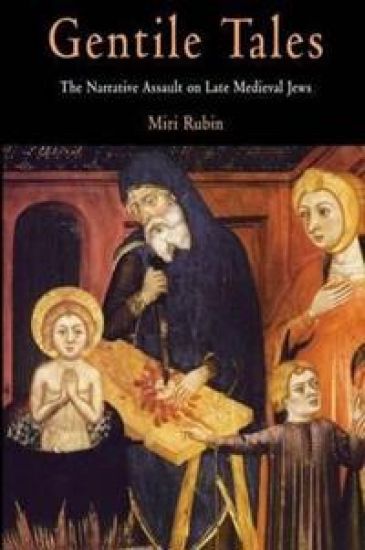
Gentile Tales

Gentile Tales

Miri Rubin

University of Pennsylvania Press
2004
pokkari
Beginning in Paris in the year 1290, Jews were accused of abusing Christ by desecrating the eucharist-the manifestation of Christ's body in the communion service. Over the next two centuries this tale of desecration spread throughout Europe and led to violent anti-Jewish activity in areas from Catalonia to Bohemia, particularly in some German-speaking regions, where at times it produced regionwide massacres and "cleansings." Drawing on sources ranging from religious tales and poems to Jews' confessions made under torture, Miri Rubin explores the frightening power of one of the most persistent anti-Jewish stories of the Middle Ages and the violence that it bred. She looks not just at the occasions on which massacres occurred but also at those times when the story failed to set off violence. She investigates as well the ways these tales were commemorated in rituals, altarpieces, and legends and were enshrined in local traditions. In exploring the character, nature, development, and eventual decay of this fantasy of host desecration, Rubin presents a vivid picture of the mental world of late medieval Europe and of the culture of anti-Judaism.
Charity and Community in Medieval Cambridge

Charity and Community in Medieval Cambridge

Miri Rubin

Cambridge University Press
2002
pokkari
This study develops our understanding of medieval society through an examination of its charitable activities. In a detailed study of the forms in which relief was organised in medieval Cambridge and Cambridgeshire, the book unravels the economic and demographic factors which created the need for relief as well as the forms in which the community offered it. With continual reference to the religious teachings of priests and friars and the changing ideas of lay piety, Dr Rubin relates the changing forms of charitable giving to the shift in attitudes towards community and social order, towards relations between laity and clergy, and towards the poor. A local study is thus set in a wide comparative context, drawing together contributions in the fields of social, religious, economic and urban history.
Corpus Christi

Corpus Christi

Miri Rubin

Cambridge University Press
1992
pokkari
This book studies later medieval culture [c. 1150–1500] through its central symbol: the eucharist. From the twelfth century onwards the eucharist was designed by the Church as the foremost sacrament. The claim that this ritual brought into presence Christ's own body, and offered it to believers, underpinned the sacramental system and the clerical mediation upon which it depended. The book explores the context in which the sacramental world was created and the cultural processes through which it was disseminated, interpreted and used. With attention to the variety of eucharistic meanings and practices - in procession on the feast of Corpus Christi, devotions, prayers, drama, in dissent, abuse and doubt - the author reveals and considers ways in which a religious culture is used as a language for the articulation of order and power, as well as for the most private explorations. The book moves from the 'design' of the eucharist in the twelfth century to its re-design in the sixteenth - a story of the emergence of a symbol, its use and interpretation and final transformation.