Kirjojen hintavertailu. Mukana 12 390 323 kirjaa ja 12 kauppaa.

Kirjailija

Miriam Glucksmann

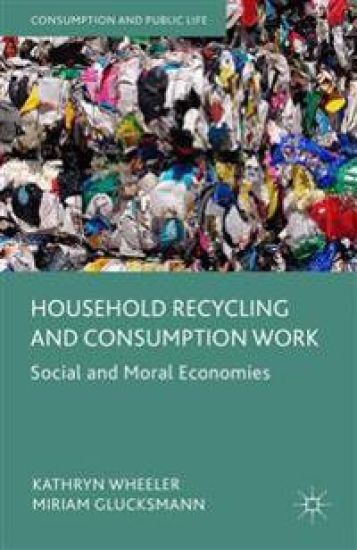
Kirjat ja teokset yhdessä paikassa: 8 kirjaa, julkaisuja vuosilta 2000-2024, suosituimpien joukossa Household Recycling and Consumption Work. Vertaile teosten hintoja ja tarkista saatavuus suomalaisista kirjakaupoista.

8 kirjaa

Kirjojen julkaisuhaarukka 2000-2024.

Women Assemble

Women Assemble

Miriam Glucksmann

TAYLOR FRANCIS LTD
2024
nidottu
Why did working-class women become the central labour force on assembly lines in the new consumer goods’ industries of the inter-war period? What was the long-term significance of this for the pattern of women’s work, both in paid employment and in the home?Originally published in 1990, Women Assemble fills a major gap in the history of women and work, and develops a theory of women’s class relations, and of course gender and class more generally, by means of an original case-study. Taken from a wide variety of sources, it uses a multidisciplinary approach and is brought to life by interviews with people who worked in assembly-line industries during the inter-war period.This extremely readable study is important to feminists, historians, and sociologists, as well as to all those concerned with issues of gender, class, and the labour process.
Women Assemble

Women Assemble

Miriam Glucksmann

TAYLOR FRANCIS LTD
2022
sidottu
Why did working-class women become the central labour force on assembly lines in the new consumer goods’ industries of the inter-war period? What was the long-term significance of this for the pattern of women’s work, both in paid employment and in the home?Originally published in 1990, Women Assemble fills a major gap in the history of women and work, and develops a theory of women’s class relations, and of course gender and class more generally, by means of an original case-study. Taken from a wide variety of sources, it uses a multidisciplinary approach and is brought to life by interviews with people who worked in assembly-line industries during the inter-war period.This extremely readable study is important to feminists, historians, and sociologists, as well as to all those concerned with issues of gender, class, and the labour process.
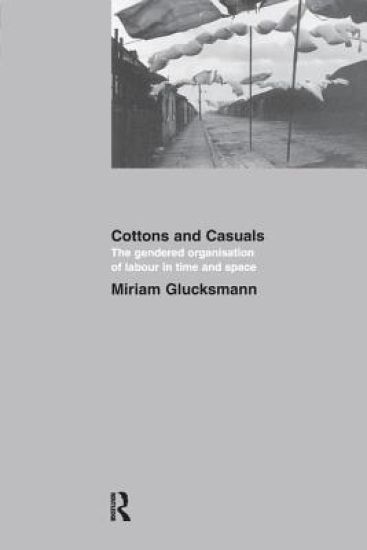
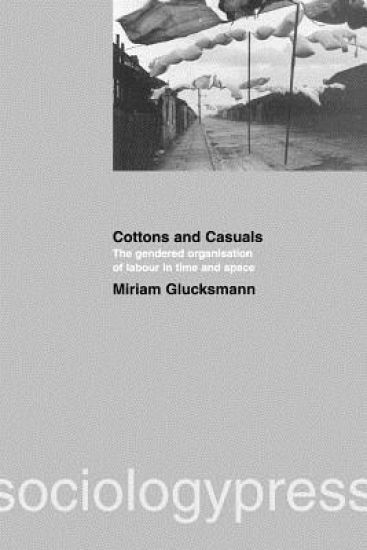
Cottons and Casuals: The Gendered Organisation of Labour in Time and Space
Cottons and Casuals explores the connections between women's work in different spheres since the 1930s: paid employment, at home, and in the community. Women's own testimony and an array of other source materials are used to develop new ways of looking at their changing patterns of living and working.The book examines changes in the organisation and commodification of domestic production and consumption, the use of technology, housing, family structures, gender relations and inter-generational mother-daughter relations. Differing temporalities of work are highlighted, as are their far-reaching effects for the organisation of peoples' lives and life courses.The significance of varying locations and spatial organisations of work for communities, streets, families and gender relations provides another important focus. In the process, Glucksmann addresses the nature of the research process, reflecting on her sources and her own work in the production of knowledge
Structuralist Analysis in Contemporary Social Thought (RLE Social Theory)
The primary concern of this book is to investigate whether or not structuralism constitutes a distinctive framework in the social sciences. The author focuses on two major structuralist thinkers, Louis Althusser and Claude Lévi-Strauss. She analyses and compares the structure of their theory, and places them within the context of their respective disciplines. Dr Glucksmann began working on this book at a time when structuralism was at the height of its popularity in France, and was thought to be a homogenous alternative to bourgeois sociology. The progress of her study implicitly reflects the developments and divergences within structuralist thought that have emerged since then. In particular, she examines the differences between the political and philosophical thought of Althusser and Lévi-Strauss, which have become increasingly manifest.
Structuralist Analysis in Contemporary Social Thought (RLE Social Theory)
The primary concern of this book is to investigate whether or not structuralism constitutes a distinctive framework in the social sciences. The author focuses on two major structuralist thinkers, Louis Althusser and Claude Lévi-Strauss. She analyses and compares the structure of their theory, and places them within the context of their respective disciplines. Dr Glucksmann began working on this book at a time when structuralism was at the height of its popularity in France, and was thought to be a homogenous alternative to bourgeois sociology. The progress of her study implicitly reflects the developments and divergences within structuralist thought that have emerged since then. In particular, she examines the differences between the political and philosophical thought of Althusser and Lévi-Strauss, which have become increasingly manifest.
Cottons and Casuals: The Gendered Organisation of Labour in Time and Space
Cottons and Casuals explores the connections between women's work in different spheres since the 1930s: paid employment, at home, and in the community. Women's own testimony and an array of other source materials are used to develop new ways of looking at their changing patterns of living and working. The book examines changes in the organisation and commodification of domestic production and consumption, the use of technology, housing, family structures, gender relations and inter-generational mother-daughter relations. Differing temporalities of work are highlighted, as are their far-reaching effects for the organisation of peoples' lives and life courses. The significance of varying locations and spatial organisations of work for communities, streets, families and gender relations provides another important focus. In the process, Glucksmann addresses the nature of the research process, reflecting on her sources and her own work in the production of knowledge