Kirjojen hintavertailu. Mukana 12 493 529 kirjaa ja 12 kauppaa.

Kirjailija

Mirko Bagaric

Kirjat ja teokset yhdessä paikassa: 7 kirjaa, julkaisuja vuosilta 2002-2026, suosituimpien joukossa Punishment and Sentencing. Vertaile teosten hintoja ja tarkista saatavuus suomalaisista kirjakaupoista.

7 kirjaa

Kirjojen julkaisuhaarukka 2002-2026.

Punishment and Sentencing

Punishment and Sentencing

Mirko Bagaric

TAYLOR FRANCIS LTD
2026
nidottu
First published in 2001, Punishment and Sentencing providesa way of introducing principle into sentencing. This is done by bridging the gap between the philosophical justification for punishment and sentencing law and practice. In terms of the interests it deals with, sentencing is the most important area of law. Ironically it is also arguably the least coherent. Nearly three decades ago sentencing was described as a wasteland in the law. Unfortunately, little has changed in that time. Sentencing decisions are often made in accordance with the idiosyncratic sentiments of sentencers, rather than on the basis of binding rules and principles. Part A of the book provides an overview of current sentencing law and practice. Part B critically examines the main contemporary theories of punishment. Part C discusses the implications that this has for the sentencing process. It is a useful text for students of criminology, law and philosophy courses, as well as a valuable resource for criminal law practitioners.
Punishment and Sentencing

Punishment and Sentencing

Mirko Bagaric

TAYLOR FRANCIS LTD
2025
sidottu
First published in 2001, Punishment and Sentencing provides a way of introducing principle into sentencing. This is done by bridging the gap between the philosophical justification for punishment and sentencing law and practice. In terms of the interests it deals with, sentencing is the most important area of law. Ironically it is also arguably the least coherent. Nearly three decades ago sentencing was described as a wasteland in the law. Unfortunately, little has changed in that time. Sentencing decisions are often made in accordance with the idiosyncratic sentiments of sentencers, rather than on the basis of binding rules and principles.Part A of the book provides an overview of current sentencing law and practice. Part B critically examines the main contemporary theories of punishment. Part C discusses the implications that this has for the sentencing process. It is a useful text for students of criminology, law and philosophy courses, as well as a valuable resource for criminal law practitioners.
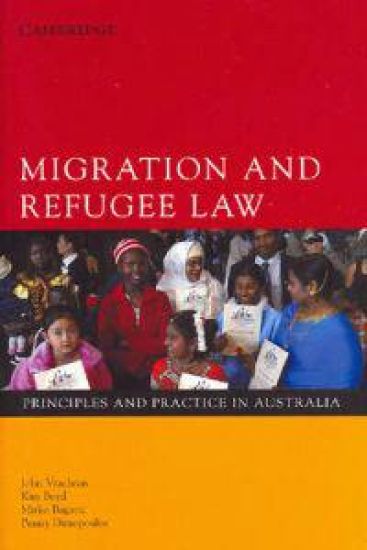
Migration and Refugee Law

Migration and Refugee Law

John Vrachnas; Mirko Bagaric; Penny Dimopoulos; Athula Pathinayake

Cambridge University Press
2011
pokkari
Migration and Refugee Law: Principles and Practice in Australia is a comprehensive overview of the legal principles governing the entry of people into Australia. This fully revised third edition provides an accessible analysis of the theory and practice of this complex and controversial area of the law. It considers the social and political context of migration and refugee law in devising innovative policies aimed at creating an equitable and rational immigration system. Migration and Refugee Law: Principles and Practice in Australia combines an astute consideration of theory with the creation of practical policy solutions, and is therefore an essential resource for migration lawyers and agents, government employees, students, judicial officers and policymakers.
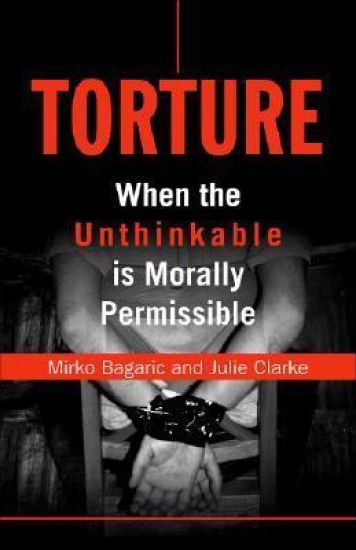
Torture

Torture

Mirko Bagaric; Julie Clarke

State University of New York Press
2007
pokkari
Argues that there are moral grounds to use torture where the lives of the innocent are at stake.The "war on terror" has brought the subject of torture to the forefront of public attention. In contrast to other discussions that focus narrowly on the practice of torture, and condemn it under any and all circumstances, Mirko Bagaric and Julie Clarke argue that to take this position is to live in a moral vacuum. The subject of torture causes our emotions to conflict with our reason. When we have a choice between saving the life of an innocent person, and not harming a terrorist or other wrongdoer, it is indecent to absolutely prefer the interests of the wrongdoer. In contrast, they propose a moral standard where each individual's interest counts equally. Within this standard, the ostensibly brutal act of torture may be permissible if it has the potential to achieve compassionate outcomes in the form of saving innocent lives.
How to Live

How to Live

Mirko Bagaric

University Press of America
2006
nidottu
This work provides clear answers to difficult moral and social issues that we face in our personal lives-that governments need to address when balancing the interests of the community. By demystifying moral discourse, How to Live provides a clear moral pathway for students of philosophy, medicine, and law, as well as the general reader. The moral framework of How to Live is developed from an interdisciplinary perspective. The culmination presents a forward-thinking theory that will maximize the success and happiness of the individual and the community within a society.
Migration and Refugee Law: Principles and Practice in Australia

Migration and Refugee Law: Principles and Practice in Australia

John Vrachnas; Kim Boyd; Mirko Bagaric

Cambridge University Press
2005
nidottu
Fundamentally concerned with the choices that a nation makes regarding the people to allow into its community and share its resources, this volume provides an overview of the legal principles governing the entry of people into Australia. As well as dealing with migration and refugee law today, the book analyzes the policy and moral considerations of this area of law, especially in relation to refugee law, which is one of the most divisive social issues of our time. It suggests proposals for change and how this area of law can be made more coherent and principled.
Euthanasia, Morality and the Law

Euthanasia, Morality and the Law

Kumar Amarasekara; Mirko Bagaric

Peter Lang Publishing Inc
2002
nidottu
This book assesses the desirability of legalising euthanasia. From the ethical perspective, euthanasia raises many important issues including the right to life, the right to liberty, the avoidance of unnecessary pain, the appropriate allocation of medical resources, and the rights and duties of doctors. Other relevant considerations include the improving standard of palliative care and the slippery slope argument. The central arguments for and against euthanasia are evaluated against the background of the leading contemporary moral theories. This book seeks to cut through the rhetoric that has become a feature of the debate and asks whether there is a sound reason for denying the wishes of individuals who express their wish to die.