

Kirjailija
Mitch Epstein
Kirjat ja teokset yhdessä paikassa: 11 kirjaa, julkaisuja vuosilta 1997-2025, suosituimpien joukossa Mitch Epstein. Vertaile teosten hintoja ja tarkista saatavuus suomalaisista kirjakaupoista.
11 kirjaa
Kirjojen julkaisuhaarukka 1997-2025.


Epstein's classic portrayal of boredom and excess, alienation and possibility in late 20th-century America--massively expanded in a reworked editionBetween the 1970s and '90s, Mitch Epstein (born 1952) photographed the rituals of excess and alienation, jubilance and desire that defined late 20th-century America. These pictures marked the beginning of his photographic inquiry into the American psyche and landscape that has now lasted half a century. Recreation captures the vitality of modern America in a pre-smartphone, less self-conscious time. In these early works, Epstein's wit reigns, along with his singular way of making the mundane startle and the extraordinary appear to perfectly fit in.This new edition expands on the original Recreation book published by Steidl in 2005. More than a third of these photographs have never been published, and all of them have been reworked with fidelity to the pictorial quality of the films of the era.

An exuberant chromatic dialogue depicting 1970s America in crisis and liberationBetween 1973 and '76, Mitch Epstein (born 1952) photographed in American cities--New York, Los Angeles and New Orleans, among others. He was initially shooting in black and white as a student of Garry Winogrand, when he asked his teacher, "Why not color?" With Winogrand's blessing, Epstein shot his first rolls of Kodachrome. Silver + Chrome is a chronicle of his three years alternating between color and black and white, before eventually committing to color.This book contains Epstein's earliest work, virtually none of which has been seen before. In these kinetic tableaux, the artist's exuberance is tamed, just barely, by his formal intelligence. He depicts American city life as it undergoes taboo-shattering sexual liberation, economic crises and the repercussions of a boondoggle war in Vietnam, immersing us in the urban chaos of this complicated time.

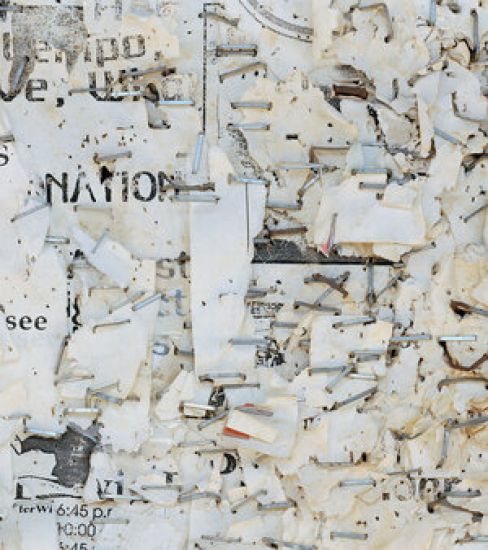
Who owns the land, by whose authority, and with what rights? Mitch Epstein examines the American government's ongoing legacy of property confiscation, and how communities gather to resistEpstein began his latest series in 2017 at Standing Rock, where thousands protested the installation of the Dakota Access Pipeline on Sioux land. Over four years, he charted other contested lands from Pennsylvania and Hawaii to the Mexican border, as well as land loss through wildfires and flooding due to egregious environmental negligence. In keeping with Epstein's 50-year exploration of American life, Property Rights questions the relationship between institutions, civil rights and the rights of nature itself. Acknowledging our bodies and lives as our most fundamental property, the book examines other forms of trespass and destruction in an elegy to the Tree of Life Synagogue massacre, and in photographs of Black Lives Matter protests during COVID-19. Property Rights includes the voices of activists Epstein interviewed while making this deeply personal and political work. In a time of alarming division, the book describes diverse communities in a common fight against politicians and plutocrats willing to sacrifice the people's well-being. A pioneer of 1970s art photography, Mitch Epstein (born 1952) has photographed the landscape and psyche of America for half a century. Numerous collections hold his work, including the Museum of Modern Art and Tate Modern; in 2013, the Walker Art Center commissioned a theatrical rendition of his American Power series. Epstein has described the cultural and physical evolution of the United States from 1973 to 2019 in his Steidl books Family Business (2003), Recreation (2005), American Power (2011), New York Arbor (2013), Rocks and Clouds (2017) and Sunshine Hotel (2019).

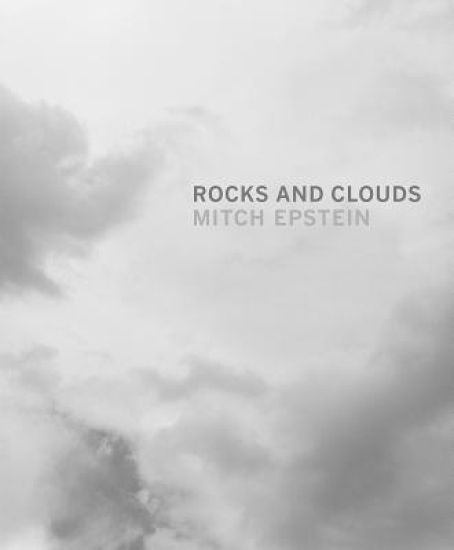
In his newest series, Mitch Epstein investigates permanence and impermanence by photographing rocks that last millions of years and clouds that evaporate before our eyes. These large-format black-and-white pictures, taken in New York City, examine society's complex relationship to nature, a theme Epstein has explored in previous work, such as his acclaimed tree pictures. "While laid up with a ruptured Achilles tendon, I wrestled with the passage of time, which suddenly felt palpable; read Robert Smithson; and reconsidered the inextricability of nature and human society," Epstein notes. "All this led me to photograph rocks and clouds in the city."The way the sky and ground can mirror one another intrigued ancient Chinese painters, as well as Smithson and the Surrealists, all of whom inspired this project. Here, Epstein draws attention to the sculptural quality of New York City's clouds, bedrock and architecture--which, at its most elemental, is made from rock. Cloud wedges engulf a cargo ship, buildings recall Constructivist paintings and boulders are imposing elders in the middle of a park or sidewalk. Rocks and Clouds suggests society's inability to control time and tame nature. While it seems impossible to make a fresh picture of New York, Epstein gives us a surprising portrait of it.A pioneer of 1970s color photography, Mitch Epstein has photographed the human engagement with the landscape for the past 40 years. Epstein has won numerous awards including the Prix Pictet, the Berlin Prize and a Guggenheim Fellowship. He has recorded the cultural and physical evolution of the United States from 1973 to the present in his Steidl books Family Business (2003), Recreation (2005) and American Power (2011).

Berliners have chosen to leave traces of the worst of themselves in their architecture and landscape. They have understood what a largely amnesiac America has not: reform relies on memory. Mitch Epstein: In 2008, Mitch Epstein won the Berlin Prize in Arts and Letters and was awarded a six-month residency at the American Academy in Berlin. Epstein proudly accepted the offer and initially planned to read and reflect in the academy's comfortable surroundings. But he could not ignore the call of contemporary Berlin for long. As a Jewish-American whose relatives died in the Holocaust, Germany has since held an uneasy resonance for Epstein and his family. Epstein set out to confront this past by photographing the remnants of Berlins war and postwar histories. The resulting images including the Sachsenhausen concentration camp, fashion billboards at Checkpoint Charlie, the Jewish Memorial at Potsdammer Platz and the Dalai Lama speaking at the Brandenburg Gate reveal Berlins present to be a fraught accumulation of the layers of its past. Mitch Epstein, born in 1952 in Holyoke, Massachusetts, is one of Americas most influential contemporary photographers.Epstein's books at Steidl include "Family Business" (2003), "Recreation: American Photographs" 19731988 (2005), and "American Power" (2009) which won a Deutscher Fotobuchpreis gold medal in 2010.
Mitch Epstein's evocative pictures reveal a complex Vietnam that few Americans have ever seen.This is not a document about the war; nor is it the pastoral idyll other photographers have portrayed. Vietnam, through Epstein's eyes, is a sometimes disturbing and sometimes sublime palimpsest. Vietnam: A Book of Changes interprets a culture and landscape largely cut off from the West for the last thirty years, and now open to a market economy and a new relationship to America. The photographs are suffused with the rawness of Vietnamese life lived on the economic and political edge. Under the layer of friendship lies the tension of politics; under beauty lies violence; under the stark faces of remote villagers is the entrepreneurial momentum drawing them to the city; and under the remnants of war is an artistic bohemia grappling with new freedoms and continued censorship.