Kirjojen hintavertailu. Mukana 12 132 717 kirjaa ja 12 kauppaa.
Kirjailija
Mitchel A. Sollenberger
Kirjat ja teokset yhdessä paikassa: 9 kirjaa, julkaisuja vuosilta 2003-2026, suosituimpien joukossa Executive Privilege: Presidential Power, Secrecy, and Accountability. Vertaile teosten hintoja ja tarkista saatavuus suomalaisista kirjakaupoista.
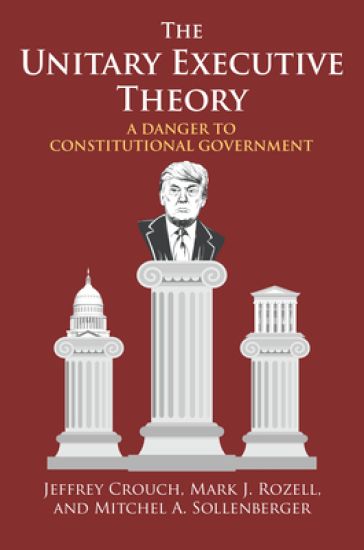
I have an Article II,' Donald Trump has announced, citing the US Constitution, 'where I have the right to do whatever I want as president.' Though this statement would have come as a shock to the framers of the Constitution, it fairly sums up the essence of 'the unitary executive theory.' This theory, which emerged during the Reagan administration and gathered strength with every subsequent presidency, counters the system of checks and balances that constrains a president's executive impulses. It also, the authors of this book contend, counters the letter and spirit of the Constitution.In their account of the rise of unitary executive theory over the last several decades, the authors refute the notion that this overweening view of executive power has been a common feature of the presidency from the beginning of the Republic. Rather, they show, it was invented under the Reagan Administration, got a boost during the George W. Bush administration, and has found its logical extension in the Trump administration. This critique of the unitary executive theory reveals it as a misguided model for understanding presidential powers. While its adherents argue that greater presidential power makes government more efficient, the results have shown otherwise. Dismantling the myth that presidents enjoy unchecked plenary powers, the authors advocate for principles of separation of powers - of checks and balances - that honor the Constitution and support the republican government its framers envisioned.A much-needed primer on presidential power, from the nation's founding through Donald Trump's impeachment, The Unitary Executive Theory: A Danger to Constitutional Government makes a robust and persuasive case for a return to our constitutional limits.
I have an Article II,' Donald Trump has announced, citing the US Constitution, 'where I have the right to do whatever I want as president.' Though this statement would have come as a shock to the framers of the Constitution, it fairly sums up the essence of 'the unitary executive theory.' This theory, which emerged during the Reagan administration and gathered strength with every subsequent presidency, counters the system of checks and balances that constrains a president's executive impulses. It also, the authors of this book contend, counters the letter and spirit of the Constitution.In their account of the rise of unitary executive theory over the last several decades, the authors refute the notion that this overweening view of executive power has been a common feature of the presidency from the beginning of the Republic. Rather, they show, it was invented under the Reagan Administration, got a boost during the George W. Bush administration, and has found its logical extension in the Trump administration. This critique of the unitary executive theory reveals it as a misguided model for understanding presidential powers. While its adherents argue that greater presidential power makes government more efficient, the results have shown otherwise. Dismantling the myth that presidents enjoy unchecked plenary powers, the authors advocate for principles of separation of powers - of checks and balances - that honor the Constitution and support the republican government its framers envisioned.A much-needed primer on presidential power, from the nation's founding through Donald Trump's impeachment, The Unitary Executive Theory: A Danger to Constitutional Government makes a robust and persuasive case for a return to our constitutional limits.
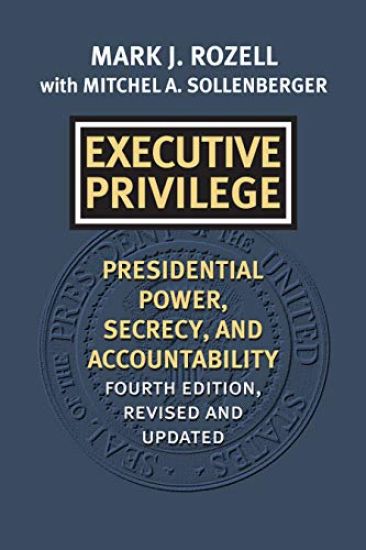
Executive Privilege - called 'the definitive contemporary work on the subject' by the Journal of Politics - is widely considered the best in-depth history and analysis of executive privilege and its relation to the proper scope and limits of presidential power.This fourth edition is revised and updated to include the two Obama administrations and the first three years of the Trump administration. The new edition includes President Obama's failure to live up to the high expectations of his campaign promises, and, President Trump's controversies, including the investigations into Russian meddling in the 2016 election, the proposed addition of a citizenship question on the 2020 Census, and the ongoing inquiry into White House security clearances.'For an American people who (apparently) must be their president's keeper, this book is essential reading."" - Rhetoric & Public Affairs
Executive Privilege - called 'the definitive contemporary work on the subject' by the Journal of Politics - is widely considered the best in-depth history and analysis of executive privilege and its relation to the proper scope and limits of presidential power.This fourth edition is revised and updated to include the two Obama administrations and the first three years of the Trump administration. The new edition includes President Obama's failure to live up to the high expectations of his campaign promises, and, President Trump's controversies, including the investigations into Russian meddling in the 2016 election, the proposed addition of a citizenship question on the 2020 Census, and the ongoing inquiry into White House security clearances.'For an American people who (apparently) must be their president's keeper, this book is essential reading."" - Rhetoric & Public Affairs
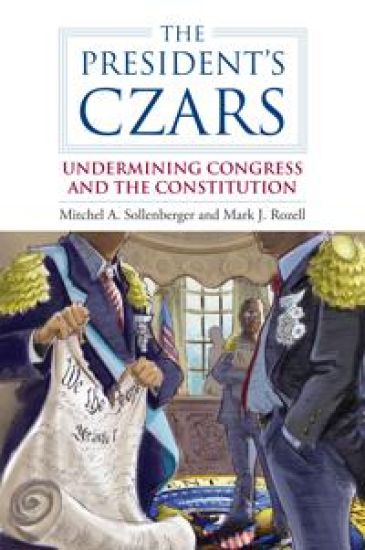
Faced with crises that would challenge any president, Barack Obama authorised “pay czar” Kenneth Feinberg to oversee the $20 billion fund for victims of the BP oil spill and to establish—and enforce—executive pay guidelines for companies that received $700 billion in federal bailout money. Feinberg’s office comes with vastly expansive policy powers along with seemingly deep pockets; yet his position does not formally fit anywhere within our government’s constitutional framework. The very word “czar” seems inappropriate in a constitutional republic, but it has come to describe any executive branch official who has significant authority over a policy area, works independently of agency or Department heads, and is not confirmed by the Senate—or subject to congressional oversight. Mitchel Sollenberger and Mark Rozell provide the first comprehensive overview of presidential czars, tracing the history of the position from its origins through its initial expansion under FDR and its dramatic growth during the presidencies of George W. Bush and Barack Obama. The President’s Czars shows how, under pressure to act on the policy front, modern presidents have increasingly turned to these appointed officials, even though by doing so they violate the Appointments Clause and can also run into conflict with the non-delegation doctrine and the principle that a president cannot unilaterally establish offices without legislative support. Further, Sollenberger and Rozell contend that czars not only are ill-conceived but also disrupt a governing system based on democratic accountability. A sobering overview solidly grounded in public law analysis, this study serves as a counter-argument to those who would embrace an excessively powerful presidency, one with relatively limited constraints. Among other things, it proposes the restoration of accountability—starting with significant changes to Title 3 of the U.S. Code, which authorises the president to appoint White House employees “without regard to any other provision of law.” Ultimately, the authors argue that czars have generally not done a good job of making the executive branch bureaucracy more effective and efficient. Whatever utility presidents may see in appointing czars, Sollenberger and Rozell make a strong case that the overall damage to our constitutional system is great—and that this runaway practice has to stop. This book is part of the Studies in Government and Public Policy series.
Faced with crises that would challenge any president, Barack Obama authorised “pay czar” Kenneth Feinberg to oversee the $20 billion fund for victims of the BP oil spill and to establish—and enforce—executive pay guidelines for companies that received $700 billion in federal bailout money. Feinberg’s office comes with vastly expansive policy powers along with seemingly deep pockets; yet his position does not formally fit anywhere within our government’s constitutional framework. The very word “czar” seems inappropriate in a constitutional republic, but it has come to describe any executive branch official who has significant authority over a policy area, works independently of agency or Department heads, and is not confirmed by the Senate—or subject to congressional oversight. Mitchel Sollenberger and Mark Rozell provide the first comprehensive overview of presidential czars, tracing the history of the position from its origins through its initial expansion under FDR and its dramatic growth during the presidencies of George W. Bush and Barack Obama. The President’s Czars shows how, under pressure to act on the policy front, modern presidents have increasingly turned to these appointed officials, even though by doing so they violate the Appointments Clause and can also run into conflict with the non-delegation doctrine and the principle that a president cannot unilaterally establish offices without legislative support. Further, Sollenberger and Rozell contend that czars not only are ill-conceived but also disrupt a governing system based on democratic accountability. A sobering overview solidly grounded in public law analysis, this study serves as a counter-argument to those who would embrace an excessively powerful presidency, one with relatively limited constraints. Among other things, it proposes the restoration of accountability—starting with significant changes to Title 3 of the U.S. Code, which authorises the president to appoint White House employees “without regard to any other provision of law.” Ultimately, the authors argue that czars have generally not done a good job of making the executive branch bureaucracy more effective and efficient. Whatever utility presidents may see in appointing czars, Sollenberger and Rozell make a strong case that the overall damage to our constitutional system is great—and that this runaway practice has to stop. This book is part of the Studies in Government and Public Policy series.
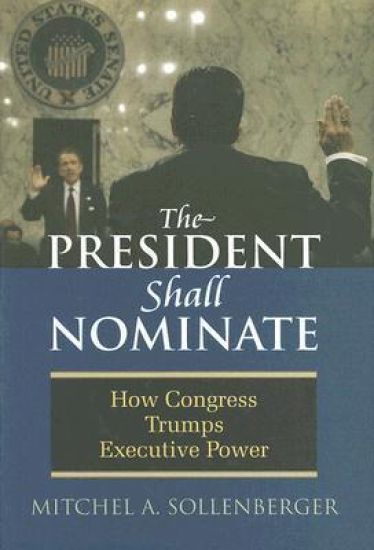
The Constitution clearly states that the president ""shall nominate, and by and with the advice and consent of the Senate, shall appoint"" individuals to positions in the executive and judicial branches; yet the process may sometimes seem murky. While much has been written about the confirmation phase of those appointments, far less attention has been paid to the pre-nomination process - until now.In this groundbreaking book, Mitchel Sollenberger takes readers behind the scenes to explain what happens before presidents publicly announce their nominees. A comprehensive history of this process, his book shows how political practice has shaped the use of a power that the Constitution declared must be shared by the executive and legislative branches.Drawing on unpublished letters and papers of presidents, senators, and other public figures, Sollenberger unravels the way this struggle has been viewed and resolved from George Washington's day to the present. He reveals the extent to which the political process has shaped the outcomes of particular appointments and how these outcomes have reflected the fundamental principle of shared power. Along the way, he sheds new light on issues related to express and implied power, the validity of the unitary executive model, the tension between politics and professionalism, and the limits of originalism and textualism in interpreting the appointment process.Sollenberger documents how the president and Senate have worked with or against each other in managing the prenomination process, examining both the tradition of the president's consulting with senators and the Senate's numerous ways of killing a nomination. He also shows how the two branches have often sought compromise rather than test public patience, yet another testament to the genius of our system of checks and balances. And while past observers of the process have looked most closely at judicial appointments, Sollenberger casts a much wider net, while critiquing the ""spoils era,"" civil service reform, and implications of the Pendleton Act before concluding with George W. Bush and his appointment of Michael Brown to FEMA.The first major study of the prenomination phase, Sollenberger's work asks important questions about our constitutional balance of powers and shows us how the appointments clause should ideally operate in a republican form of government.
This book presents statistics regarding procedural actions taken on US district and circuit court nominations for the period January 4, 1977 through 2002. Among other things, the statistics for the 1977-2002 period show: Over the course of five successive presidencies, the senate confirmation percentage for circuit court nominations has declined. The great majority of each President's nominations have either been confirmed or returned. An average of seven nominations per President have been withdrawn. One nomination has been disapproved by a senate vote. The confirmation percentage for district and circuit court nominations combined was greater than 60% for every congressional session from 1977 through 1990, whereas the district and circuit combined confirmation rate has been less than 60% for eight of the last 12 congressional session. The average number of days elapsing between nominations date and final action has been higher for most Congresses in the post-1990 period than for prior Congresses. Starting with the 100th Congress (1987-1988), and in five of the seven Congresses since, an average of more than 100 days has elapsed between nomination dates and committee votes on either district or circuit court nominations, or on both. For almost every Congress in the post-1990 period, the percentages of district and circuit court nominations left pending at the end of the congress were higher than corresponding percentages for the pre-1990 Congresses. The Senate returned substantially more nominations during the 102nd, 106th, and 107th Congresses than during any other Congresses in the 1977-2002 period. The average number of days between nomination date and final action increased in Congresses ending in presidential election years. The vast majority of judicial nominations submitted during the 1977-2002 period received committee hearings and votes, as well as full Senate votes. However, during the 102nd, 106th, and 107th Congresses, there were reductions in the share of nominations receiving committee and Senate action.