Kirjailija
Mitchel P. Roth
Kirjat ja teokset yhdessä paikassa: 20 kirjaa, julkaisuja vuosilta 2000-2026, suosituimpien joukossa Global Organized Crime. Vertaile teosten hintoja ja tarkista saatavuus suomalaisista kirjakaupoista.
20 kirjaa
Kirjojen julkaisuhaarukka 2000-2026.
In the maelstrom of globalization and cyberspace, organized crime continues to defy definition. A diverse array of activities is perpetuated by criminal organizations, criminal groups and associations, and gangs, and it is clear that one specific label is no longer adequate. This book offers a uniquely global approach to organized crime and the multitude of forces that shape it in the 21st century. The new edition has been revised and reorganized to include even more global and comparative coverage of various forms of organized crime, spanning the US, Mexico, Latin America and the Caribbean, Russia and Europe, Asia and Africa. Some of the topics included are: Global definitions of organized crime The evolution of maritime piracy Female participation in organized crime and the overlap of victim-offender binary Discussions on contemporary drug crisis: opium and the Taliban, fentanyl crisis and the role played by China and Mexico, Myanmar and the Golden Triangle, the impact of Covid on Latin American cannabis production Forms of environmental crime and the “ecomafia” Rise in cyber and technology driven crime across Asia and Africa, including discussions on Dark Net, deep web, TOR Reorganization of the Latin American criminal economies Updated coverage on terrorist groups Discussions on new international cooperation frameworks, the use of AI, case studies of Interpol and Europol cases in the 2020s, including Operation Lionfish Hurricane (2025) and Greenlight/Trojan Shield (2021) This book is essential reading for students engaged in the study of global and transnational organized crime, with features including chapter overviews, key terms, critical thinking questions, and case studies.

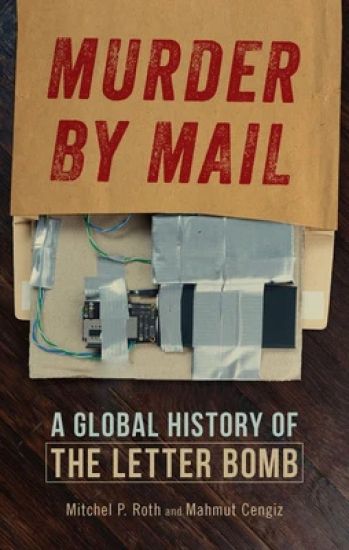
This book unfolds the gripping history of weaponized mail, offering the first-ever comprehensive exploration of this sinister phenomenon. Spanning two centuries, the book unveils the history of postal bombs, describing the evolution of both explosives and the postal services that facilitated their deadly use. From an eighteenth-century incident involving Jonathan Swift to modern acts of terror by groups like the IRA and the Suffragettes and lone wolves such as the Unabomber, it uncovers the surprising ubiquity of mail bombs. This chronological account meticulously covers each decade, from early anarchists and world wars through the Cold War to the rise of the serial bomber. Astounding in scope, this book sheds light on the psychopathy, motivations and political implications behind murder by mail.
Judicial Corporal Punishment as an Alternative to Incarceration in the United States
Sanaz Alasti; Mitchel P. Roth
BLOOMSBURY PUBLISHING PLC
2023
sidottu
Sanaz Alasti leaves the mainstream alternatives to incarceration to examine a different, seemingly archaic approach, physical (but non-carceral) punishment—corporal punishment. This book ignites debates about the history, persistence, and use of corporal punishment in criminal justice systems. Alasti compares penological practices in in Western societies, represented by the United States, and Islamic societies, represented by Iran, to analyze which practices are more deterrent, less costly, and most humane. While Alasti does not suggest this should be the norm, she does present intriguing questions. Which is more barbaric? Is judicial corporal punishment a more humane and effective form of punishment compared to incarceration? Is corporal punishment a less cruel alternative to spending years behind bars in primitive and punitive jails and prisons? This book would be of interest to those studying criminology, criminal justice, history, law, and sociology.
Man with the Killer Smile Volume 13
Mitchel P. Roth
UNIVERSITY OF NORTH TEXAS PRESS,U.S.
2022
sidottu
On a cold, windy December night in 1926, hell was unleashed on a tenant farm near Farwell, the last Texas town before the New Mexico border. Prone to the bottle and fits of rage, the burly man with the smiling blue eyes was in no mood to quarrel with his third wife over his bootleg whisky and sexual abuse of his stepdaughter. He went from room to room in the house, killing his wife and each child with primitive cutting tools and his bare hands. By the time he concluded his bloody work, he had taken the lives of nine family members ranging in age from 2 to 41, committing what one local reporter called “the blackest crime” in the history of the West Texas Panhandle. Husband, father, uncle, embezzler, serial mass murderer, philanderer, child molester, convict, and military deserter, George Jefferson Hassell was many things to many people, most of them bad. His pattern of familicide crime had begun in 1917, when he slaughtered his common-law wife and her three kids in Whittier, California. Later, in Texas, he married his brother’s wife and became stepfather to her eight children. Using Hassell’s confessions and his many interviews with reporters as well as the trial transcripts and reminiscences of those who crossed paths with him in Texas, Oklahoma, and California, Mitchel P. Roth presents the first comprehensive account of the life and crimes of one of the least known multiple murderers in Texas, let alone American, history. Roth situates Hassell’s saga within the 1920s Texas criminal justice system, including the death penalty, which Hassell ultimately received from Old Sparky, the electric chair at Huntsville.
This book offers a rare insight into the transnational expansion and various corners of the illicit economy in Turkey including the smuggling of pharmaceuticals, oil, antiquities, drugs, nuclear materials and cigarettes. Mahmut Cengiz and Mitchel P. Roth provide an in depth analysis of the criminals, terrorists, money launderers, and corrupt politicians at the highest levels of the Turkish government. They analyze the unintended consequences of corruption scandals which have resulted in the purging of important law enforcement and intelligence entities formerly responsible for countering terrorism and organized crime threats as well as growing political tensions with the United States.
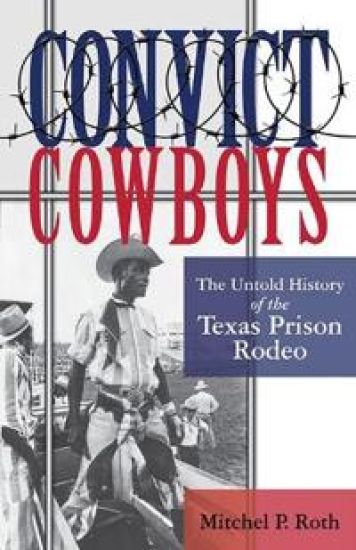
Convict Cowboys is the first book on the nation’s first prison rodeo, which ran from 1931 to 1986. At its apogee the Texas Prison Rodeo drew 30,000 spectators on October Sundays. Mitchel P. Roth portrays the Texas Prison Rodeo against a backdrop of Texas history, covering the history of rodeo, the prison system, and convict leasing, as well as important figures in Texas penology.
Hiding the Guillotine examines the question of state involvement in violence by tracing the evolution of public executions in France. Why did the state move executions from the bloody and public stage of the guillotine to behind prison doors? In a fascinating exploration of a grim subject, Emmanuel Taïeb exposes the rituals and theatrical form of the death penalty and tells us who watched, who participated in, and who criticized (and ultimately brought an end to) a spectacle that the state called "punishment." France's abolition of the death penalty in 1981 has long overshadowed its suppression of public executions over forty years earlier. Since the Revolution, executions attracted tens of thousands of curious onlookers. But, gradually, there was a shift in attitude and the public no longer saw this as a civilized pastime. Why? Combining material from legal archives, police files, an executioner's notebooks, newspaper clippings, and documents relating to 566 executions, Hiding the Guillotine answers this question. Taïeb demonstrates the ways in which the media was at the vanguard of putting an end to the publicity surrounding the death penalty. The press had ample reason to be critical: cities were increasingly being used for leisure activity and prisons for those accused of criminal activity. The agitation surrounding each execution, coupled with a growing identification with the condemned, would blur these boundaries. Ranked among the top hundred history books by the website, Café du Web Historizo, Hiding the Guillotine has much to impart to students of legal history, human rights, and criminology, as well as to American historians.
Power on the Inside is the first book to examine the historical development of prison gangs worldwide, from those that emerged inside mid-nineteenth-century Neapolitan prisons to the new generation of younger inmates challenging the status quo within gang subcultures today. Historian-criminologist Mitchel P. Roth examines prison gangs throughout the world, from the Americas, Oceania, and South Africa to Southeast Asia, Europe, and beyond. The book examines the many variables that influence the evolution of prison subcultures, from colonialism and population demographics to prison architecture and staff-prisoner relations. Power on the Inside features eighty historical and contemporary images and will inform professionals in the field as well as general readers who want to know more about the realities of prison gangs today.
On April 21, 1930—Easter Monday—some rags caught fire under the Ohio Penitentiary's dry and aging wooden roof, shortly after inmates had returned to their locked cells after supper. In less than an hour, 320 men who came from all corners of Prohibition-era America and from as far away as Russia had succumbed to fire and smoke in what remains the deadliest prison disaster in United States history. Within 24 hours, moviegoers were watching Pathé's newsreel of the fire, and in less than a week, the first iteration of the weepy ballad "Ohio Prison Fire" was released. The deaths brought urgent national and international focus to the horrifying conditions of America's prisons (at the time of the fire, the Ohio Penitentiary was at almost three times its capacity). Yet, amid darkening world politics and the first years of the Great Depression, the fire receded from public concern. In Fire in the Big House, Mitchel P. Roth does justice to the lives of convicts and guards and puts the conflagration in the context of the rise of the Big House prison model, local and state political machinations, and American penal history and reform efforts. The result is the first comprehensive account of a tragedy whose circumstances—violent unrest, overcrowding, poorly trained and underpaid guards, unsanitary conditions, inadequate food—will be familiar to prison watchdogs today.
This book offers a rare insight into the transnational expansion and various corners of the illicit economy in Turkey including the smuggling of pharmaceuticals, oil, antiquities, drugs, nuclear materials and cigarettes. Mahmut Cengiz and Mitchel P. Roth provide an in depth analysis of the criminals, terrorists, money launderers, and corrupt politicians at the highest levels of the Turkish government. They analyze the unintended consequences of corruption scandals which have resulted in the purging of important law enforcement and intelligence entities formerly responsible for countering terrorism and organized crime threats as well as growing political tensions with the United States.
This book offers a history of crime and the criminal justice system in America, written particularly for students of criminal justice and those interested in the history of crime and punishment. It follows the evolution of the criminal justice system chronologically and, when necessary, offers parallels between related criminal justice issues in different historical eras. From its antecedents in England to revolutionary times, to the American Civil War, right through the twentieth century to the age of terrorism, this book combines a wealth of resources with keen historical judgement to offer a fascinating account of the development of criminal justice in America. A new chapter brings the story up to date, looking at criminal justice through the Obama era and the early days of the Trump administration.Each chapter is broken down into four crucial components related to the American criminal justice system from the historical perspective: lawmakers and the judiciary; law enforcement; corrections; and crime and punishment. A range of pedagogical features, including timelines of key events, learning objectives, critical thinking questions and sources, as well as a full glossary of key terms and a Who’s Who in Criminal Justice History, ensures that readers are well-equipped to navigate the immense body of knowledge related to criminal justice history.Essential reading for Criminal Justice majors and historians alike, this book will be a fascinating text for anyone interested in the development of the American criminal justice system from ancient times to the present day.
In the maelstrom of globalization and cyberspace, organized crime continues to defy definition. A diverse array of activities is perpetuated by criminal organizations, criminal groups and associations, and gangs, and it is clear that one specific label is no longer adequate. This book offers a uniquely global approach to organized crime and the multitude of forces that shape it in the 21st century.As well as discussing definitions of and the historical roots of organized crime, this book examines various forms of organized crime around the world in the US, Mexico, Latin America and the Caribbean, Russia and Europe, Asia and Africa. This revised and updated new edition includes coverage of:the rise of the ’Ndrangheta in Italy and their global expansion;the impact of drug legalization on organized crime and the problem of methamphetamine;organ trading, money laundering, and animal poaching;changes in gang traditions and gangland penitentiaries;the decentralization of Mexican cartels, the growth of opium production in Myanmar, and the drug war in Africa; andthe advancement of ISIS and the emergence of the Silk Road and the Dark Net.This book is essential reading for students engaged in the study of global and transnational organized crime, with features including chapter overviews, key terms, critical thinking questions, and case studies.


Houston Blue
Mitchel P. Roth; Tom Kennedy; Ray Hunt
University of North Texas Press,U.S.
2012
sidottu
Houston Blue offers the first comprehensive history of one of the nation’s largest police forces, the Houston Police Department. Through extensive archival research and more than one hundred interviews with prominent Houston police figures, politicians, news reporters, attorneys, and others, authors Mitchel P. Roth and Tom Kennedy chronicle the development of policing in the Bayou City from its days as a grimy trading post in the 1830s to its current status as the nation’s fourth largest city. Combining the skills of historian, criminologist, and journalist, Roth and Kennedy reconstruct the history of a police force that has been both innovative and controversial.Readers will be introduced to a colorful and unforgettable cast of police chiefs and officers who have made their mark on the department. Prominent historical figures who have brushed shoulders with Houston’s Finest over the past 175 years are also featured, including Houdini, Teddy Roosevelt and his Rough Riders, O. Henry, former Texas Ranger Frank Hamer, hatchet wielding temperance leader Carrie Nation, the Hilton Siamese Twins, blues musician Leadbelly, oilman Silver Dollar Jim West, and many others.The Houston Police Department has been at the cutting edge of police innovation. It was one of the first departments in the South to adopt fingerprinting as an identification system and use the polygraph test, and under the leadership of its first African American police chief, Lee Brown, put the theory of neighborhood oriented policing into practice in the 1980s. The force has been embroiled in controversy and high profile criminal cases as well. Among the cases chronicled in the book are the Dean Corll, Dr. John Hill, and Sanford Radinsky murders; controversial cases involving the department’s crime lab; the killings of Randy Webster and Joe Campos Torres; and the Camp Logan, Texas Southern University, and Moody Park Riots.Roth and Kennedy reveal that most of modern Houston’s issues and problems are rooted in many of the challenges that faced police officers in the nineteenth century. Anyone who drives in Houston will not be surprised that the city’s reputation for poor drivers was already cemented in the 1860s, when ordinances were passed to protect pedestrians from horse-drawn carriages. Likewise, the department’s efforts to overcome funding and manpower shortages, and political patronage, are a continuing battle that began a century ago. In the end it is a story about the men and women in blue and the role played by the Houston Police Officers Union in creating a modern 21st-century police force from its frontier roots.
This book offers a comprehensive, multidimensional look into the major activities, groups, causes, and policing strategies related to global organized crime. Global Organized Crime: A Reference Handbook examines global organized crime dating back to its 17th-century roots. Unlike most works on the subject, which take a parochial approach by concentrating on individual countries or regions, this book uniquely details the impact of 21st-century globalization on such groups and their activities. Exploring the continuum of international organized crime and related developments from its early beginnings to the present era, the book also looks at the complicated issues that continue to influence its growth. It covers the impact of the end of the Cold War, immigration, the global drug trade, weapons sales, human smuggling and trafficking, the convergence of funding sources, and the effects of technology. What especially distinguishes this book is the connections it makes between organized crime activities and failed states, civil wars, political transitions, regional conflicts, and terrorist groups.
Prisons have undoubtedly changed over the years, as have penal practices in general, though more so in some countries than others. Prisons and prison systems have long been an overlooked part of criminal justice research, and as a result, limited material is available on many institutions. This comprehensive encyclopedia provides a historical overview of institutions and systems around the world, as well as penal theories, prisoner culture and life, and notable prisoners and personnel. Readers will find a plethora of information including material on such famous prisons as the Tower of London and Alcatraz, as well as on such topics as boot camps and parole. Other entries include Devil's Island, supermaximum prisons, Nelson Mandela, Pennsylvania system, and Amnesty International. Numerous appendixes list famous prisoners, prison museums, prison slang, and more.
Speeches, letters, editorials, and first-person accounts provide different views on the issues of Western expansion, including Lewis and Clark's expedition, the Homestead Act, and the Battle of Little Big Horn.
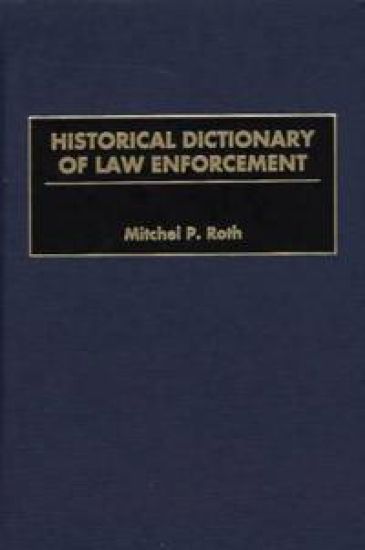
Viewing policing from an international perspective, this volume covers the history of law enforcement from early accounts of policing under Caesar Augustus to such present-day events as Rodney King and the LAPD. American policing dominates the book, but it also covers such items as the 1829 London Metropolitan police model and Continental innovations stemming from Napoleonic France. While including such well-known Americans as Police Commissioner Theodore Roosevelt, the book also covers important policewomen, forgotten but exceptional African American policemen, and Indian Police forces that ranged the Oklahoma Territory. The book will be a useful resource for all those interested in the history of law enforcement. Unlike existing reference works that try to cover both lawmen and criminals, this book focuses on the police diaspora. In addition to traditional police officers, it also includes nontraditional examples of law enforcement, such as private detectives, vigilante groups, and organizations such as Wells Fargo and the Pinkertons. The book provides an instructive blend of history, criminology, and police science.