Kirjojen hintavertailu. Mukana 12 516 239 kirjaa ja 12 kauppaa.

Kirjailija

Mitchel Resnick

Kirjat ja teokset yhdessä paikassa: 6 kirjaa, julkaisuja vuosilta 1997-2020, suosituimpien joukossa Start Making. Vertaile teosten hintoja ja tarkista saatavuus suomalaisista kirjakaupoista.

6 kirjaa

Kirjojen julkaisuhaarukka 1997-2020.

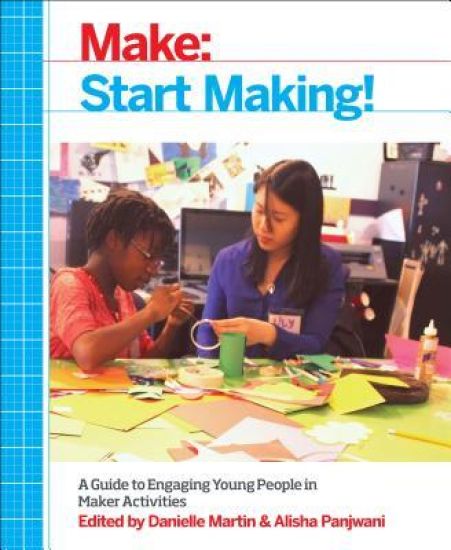
Start Making

Start Making

Museum Martin; Alisha Panjwani; Natalie Rusk; Mitchel Resnick

Make Community, LLC
2016
nidottu
Start Making! is a program developed by the Clubhouse Network to engage young people all over the world in Maker-inspired activities. With this guide, you will discover how to plan and coordinate Start Making! projects in your home, school, library, community center, after-school club, or makerspace. You'll learn strategies for engaging young people in creative thinking, developing individual and team projects, and sharing and reflecting on their creations. Each session includes a list of the supplies you'll need, step-by-step instructions for completing the projects, and prompts for stimulating discussion, curiosity, and confidence. These fun do-it-yourself (and do-it-together) projects teach fundamental STEAM concepts -- science, technology, engineering, art, and math -- while introducing young people to the basics of circuitry, design, coding, crafting, and construction. They'll make paper cards and creations that light up, play music using a MaKey MaKey keyboard and Scratch programming, join together to make paintings with light, design and construct 3D sculptures, build a vibrating art-bot that makes drawings, and sew fabric creations with wearable circuits. Dip into the activities once a week, run them as a week-long summer activity, or go through the guide in any way that works for you. By offering your own Start Making! program, you can inspire young people in your community to develop creative ideas, learn new skills, and share their creations. The Clubhouse Network is a global network of community-based centers led by Boston's Museum of Science in collaboration with the MIT Media Lab.

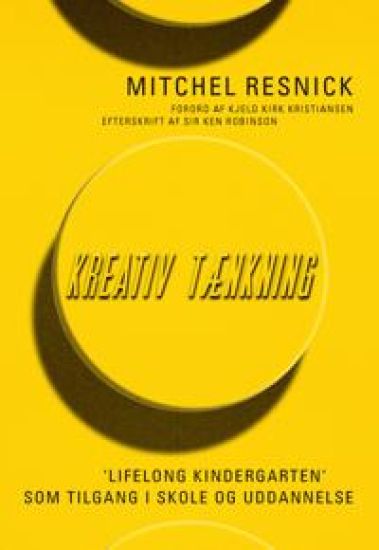
Kreativ tænkning

Kreativ tænkning

Mitchel Resnick

Forlaget Klim
2019
nidottu
Der er i stigende grad fokus på skoleparathed, bogstav- og tal­aktiviteter i børnehaven, og der synes at være sket en læring­gørelse af børnehaven som rum for leg og kreativitet. I ‘Kreativ tænkning – ’Lifelong Kindergarten’’ som tilgang i skole og uddannelse argumenterer Mitchel Resnick for den stik modsatte vending: Vi skal lære af børnehaven og lade dens karakteristiske tilgang til leg og eksperimenter indtage skolen og resten af uddannelsessystemet.Evnen til at tænke og handle kreativt er vigtigere end nogen­sinde. Børn og unge vil hele livet komme til at stå i nye og uventede situationer, og de skal lære at håndtere usikkerhed og forandring på en kreativ måde. Den bedste måde at gøre dette på er ved at arbejde med evnen til at forestille sig, skabe, lege, dele og reflektere – præcis som i børnehaven.Mitchel Resnick har mere end 30 års erfaring fra MIT's Media Lab at trække på, når han giver sit bud på den kreative tænknings hvorfor og hvordan. I bogen diskuterer han nye teknologier og aktiviteters bidrag til udvikling af børn og unges kreative tænkning. Den er fuld af konkrete eksempler på børn, der programmerer egne spil, historier og opfindelser, og som indgår i store online arbejdsfælleskaber. Ved at give børn og unge mulighed for at arbejde på projekter i fællesskab med jævnaldrende og med en legende, eksperimenterende tilgang, kan vi hjælpe dem med at udvikle sig som kreative tænkere.Forord afKjeld Kirk Kristiansen
Lifelong Kindergarten

Lifelong Kindergarten

Mitchel Resnick; Ken Robinson

MIT Press
2018
pokkari
How lessons from kindergarten can help everyone develop the creative thinking skills needed to thrive in today's society.In kindergartens these days, children spend more time with math worksheets and phonics flashcards than building blocks and finger paint. Kindergarten is becoming more like the rest of school. In Lifelong Kindergarten, learning expert Mitchel Resnick argues for exactly the opposite: the rest of school (even the rest of life) should be more like kindergarten. To thrive in today's fast-changing world, people of all ages must learn to think and act creatively —and the best way to do that is by focusing more on imagining, creating, playing, sharing, and reflecting, just as children do in traditional kindergartens.Drawing on experiences from more than thirty years at MIT's Media Lab, Resnick discusses new technologies and strategies for engaging young people in creative learning experiences. He tells stories of how children are programming their own games, stories, and inventions (for example, a diary security system, created by a twelve-year-old girl), and collaborating through remixing, crowdsourcing, and large-scale group projects (such as a Halloween-themed game called Night at Dreary Castle, produced by more than twenty kids scattered around the world). By providing young people with opportunities to work on projects, based on their passions, in collaboration with peers, in a playful spirit, we can help them prepare for a world where creative thinking is more important than ever before.
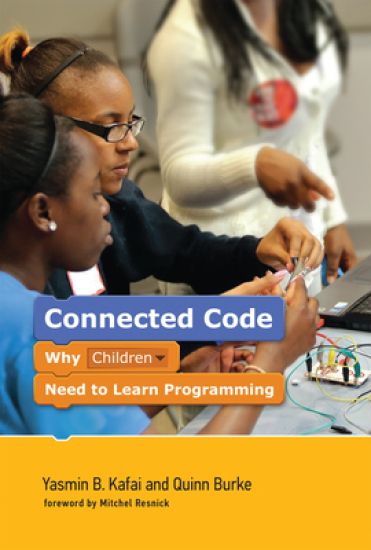
Connected Code

Connected Code

Yasmin B. Kafai; Quinn Burke; Mitchel Resnick

MIT Press
2016
pokkari
Why every child needs to learn to code: the shift from "computational thinking" to computational participation.Coding, once considered an arcane craft practiced by solitary techies, is now recognized by educators and theorists as a crucial skill, even a new literacy, for all children. Programming is often promoted in K-12 schools as a way to encourage "computational thinking"-which has now become the umbrella term for understanding what computer science has to contribute to reasoning and communicating in an ever-increasingly digital world.In Connected Code, Yasmin Kafai and Quinn Burke argue that although computational thinking represents an excellent starting point, the broader conception of "computational participation" better captures the twenty-first-century reality. Computational participation moves beyond the individual to focus on wider social networks and a DIY culture of digital "making."Kafai and Burke describe contemporary examples of computational participation: students who code not for the sake of coding but to create games, stories, and animations to share; the emergence of youth programming communities; the practices and ethical challenges of remixing (rather than starting from scratch); and the move beyond stationary screens to programmable toys, tools, and textiles.
Turtles, Termites, and Traffic Jams

Turtles, Termites, and Traffic Jams

Mitchel Resnick

Bradford Books
1997
pokkari
How does a bird flock keep its movements so graceful and synchronized? Most people assume that the bird in front leads and the others follow. In fact, bird flocks don't have leaders: they are organized without an organizer, coordinated without a coordinator. And a surprising number of other systems, from termite colonies to traffic jams to economic systems, work the same decentralized way. Turtles, Termites, and Traffic Jams describes innovative new computational tools that can qhelp people (even young children) explore the workings of such systems-and help them move beyond the centralized mindset.