Kirjojen hintavertailu. Mukana 12 595 353 kirjaa ja 12 kauppaa.

Kirjailija

Mohammad Ali Amir-Moezzi

Kirjat ja teokset yhdessä paikassa: 7 kirjaa, julkaisuja vuosilta 1994-2023, suosituimpien joukossa Ali.The Well-Guarded Secret: Figures of the First Master in Shi‘i Spirituality. Vertaile teosten hintoja ja tarkista saatavuus suomalaisista kirjakaupoista.

7 kirjaa

Kirjojen julkaisuhaarukka 1994-2023.

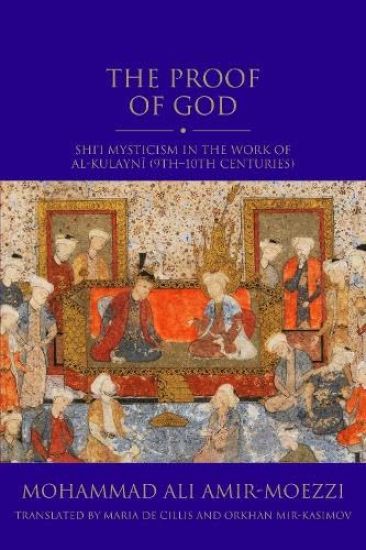
The Proof of God

The Proof of God

Mohammad Ali Amir-Moezzi

BLOOMSBURY PUBLISHING PLC
2023
sidottu
This book is an English translation of the award-winning book by Mohammad Ali Amir-Moezzi on the Book of the Proof (Kitab al-Hujja) part of the Sufficient Book (Kitab al-Kafi), authored by one of the most celebrated religious authorities and a foundational figure of Shi’i Islam, Muhammad ibn Ya'qub al-Kulayni (d. ca. 940 CE). The significance of this source for the formation and development of Shi’i beliefs and doctrines cannot be overestimated. Whilst the field of Shi’i studies is still dominated by works focused on legal, political, or theological aspects of Sh’i Islam, Amir-Moezzi’s approach to the study of the early Shi’i traditions in this work is characterised by a keen interest in its esoteric, mystical aspects. Complemented by detailed analytical comments, Amir-Moezzi’s book demonstrates how al-Kulayni was able to set out an extraordinarily wide-ranging and coherent set of doctrinal and legal traditions derived from the Imams, thus playing a leading role in the unification and, consequently, the consolidation of the Imami faith. More specifically, by elaborating on the nature of the ‘Proof’, which in Shi’i terminology identifies the central figure, i.e., the guide (imam) of mystical spirituality, Amir-Moezzi’s study portrays Shi’i Islam as multifaceted, not merely as the politico-religious ideology of its ‘clergy’, but above all as an inspirational religion. As Amir-Moezzi himself puts it, ‘enriching Muslim thought and spirituality, sometimes with unusual finesse and sophistication’.
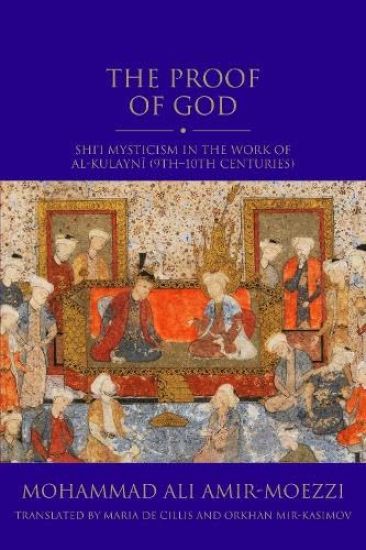
The Proof of God

The Proof of God

Mohammad Ali Amir-Moezzi

BLOOMSBURY PUBLISHING PLC
2023
nidottu
This book is an English translation of the award-winning book by Mohammad Ali Amir-Moezzi on the Book of the Proof (Kitab al-Hujja) part of the Sufficient Book (Kitab al-Kafi), authored by one of the most celebrated religious authorities and a foundational figure of Shi’i Islam, Muhammad ibn Ya'qub al-Kulayni (d. ca. 940 CE). The significance of this source for the formation and development of Shi’i beliefs and doctrines cannot be overestimated. Whilst the field of Shi’i studies is still dominated by works focused on legal, political, or theological aspects of Sh’i Islam, Amir-Moezzi’s approach to the study of the early Shi’i traditions in this work is characterised by a keen interest in its esoteric, mystical aspects. Complemented by detailed analytical comments, Amir-Moezzi’s book demonstrates how al-Kulayni was able to set out an extraordinarily wide-ranging and coherent set of doctrinal and legal traditions derived from the Imams, thus playing a leading role in the unification and, consequently, the consolidation of the Imami faith. More specifically, by elaborating on the nature of the ‘Proof’, which in Shi’i terminology identifies the central figure, i.e., the guide (imam) of mystical spirituality, Amir-Moezzi’s study portrays Shi’i Islam as multifaceted, not merely as the politico-religious ideology of its ‘clergy’, but above all as an inspirational religion. As Amir-Moezzi himself puts it, ‘enriching Muslim thought and spirituality, sometimes with unusual finesse and sophistication’.
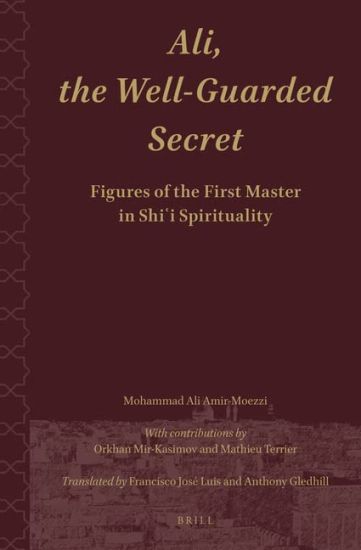
Ali.The Well-Guarded Secret: Figures of the First Master in Shi‘i Spirituality
‘Ali, son of Abi ?alib, Muhammad’s son-in-law and cousin, is the only Companion of the Prophet who has remained to this day the object of fervent devotion of hundreds of millions of followers in the lands of Islam, especially in the East. Based on a detailed analysis of several categories of sources, this book demonstrates that Shi‘ism is the religion of the Imam, of the Master of Wisdom, just like Christianity is that of Christ, and that ‘Ali is the first Master and Imam par excellence. Shi‘ism can therefore be defined, in its most specific religious aspects, as the absolute faith in ‘Ali: the divine Man, the most perfect manifestation of God’s attributes, simultaneously spiritual refuge, model and horizon. With contributions by Orkhan Mir-Kasimov & Mathieu Terrier Translated from French by Francisco José Luis & Anthony Gledhill
What is Shi'i Islam?

What is Shi'i Islam?

Mohammad Ali Amir-Moezzi; Christian Jambet

Routledge
2018
nidottu
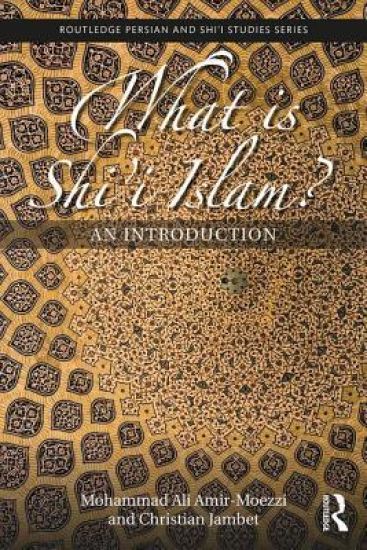
For the public at large Shi’ism often implies a host of confused representations, suggesting more often than not obscurantism, intolerance, political violence and other ignominies running hot or cold in response to world events. In fact for many people, Shi’ism stands for "radical Islam", or – worse – "Islamic terrorism". In some respects, nothing is more familiar than Shi’ism, and yet nothing is more misunderstood. For some twenty years the media have increased their coverage of the phenomenon. Never, or only rarely, do they formulate the question we ask here: what is Shi’ism? What is this belief that inspires millions of people dispersed throughout the world? This book provides a broad based introduction to Shi’i Islam. It examines what the Shi’i believe, how they see themselves and how they view the world. It includes a thorough examination of doctrine, philosophy, the Shi’i approach to the Qur’an and the historical evolution of Shi’ism as a branch of Islam. Too often, and too quickly, the conclusion is drawn that Shi’ism is a marginal heretical sect, fundamentally alien to the deeper truth of the great religion of Islam, thrust by historical accident onto the political stage. Shi’ism either speaks the truth of Islam, meaning that it is a truth of terror, or it is entirely foreign to Islam and, therefore, merits outright rejection, as Islamic fundamentalists and some individuals repeatedly claim. This book intends to explain why such common misunderstandings of Shi’ism have taken root.Written in an accessible format and providing a thorough overview of Shi’ism, this book will be an essential text for students and scholars of Islamic Studies or Iranian Studies.
What is Shi'i Islam?

What is Shi'i Islam?

Mohammad Ali Amir-Moezzi; Christian Jambet

Routledge
2018
sidottu
For the public at large Shi’ism often implies a host of confused representations, suggesting more often than not obscurantism, intolerance, political violence and other ignominies running hot or cold in response to world events. In fact for many people, Shi’ism stands for "radical Islam", or – worse – "Islamic terrorism". In some respects, nothing is more familiar than Shi’ism, and yet nothing is more misunderstood. For some twenty years the media have increased their coverage of the phenomenon. Never, or only rarely, do they formulate the question we ask here: what is Shi’ism? What is this belief that inspires millions of people dispersed throughout the world? This book provides a broad based introduction to Shi’i Islam. It examines what the Shi’i believe, how they see themselves and how they view the world. It includes a thorough examination of doctrine, philosophy, the Shi’i approach to the Qur’an and the historical evolution of Shi’ism as a branch of Islam. Too often, and too quickly, the conclusion is drawn that Shi’ism is a marginal heretical sect, fundamentally alien to the deeper truth of the great religion of Islam, thrust by historical accident onto the political stage. Shi’ism either speaks the truth of Islam, meaning that it is a truth of terror, or it is entirely foreign to Islam and, therefore, merits outright rejection, as Islamic fundamentalists and some individuals repeatedly claim. This book intends to explain why such common misunderstandings of Shi’ism have taken root.Written in an accessible format and providing a thorough overview of Shi’ism, this book will be an essential text for students and scholars of Islamic Studies or Iranian Studies.
The Silent Qur'an and the Speaking Qur'an

The Silent Qur'an and the Speaking Qur'an

Mohammad Ali Amir-Moezzi

Columbia University Press
2015
sidottu
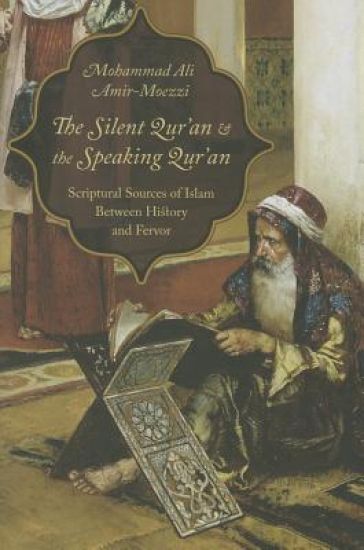
Two major events occurred in the early centuries of Islam that determined its historical and spiritual development in the centuries that followed: the formation of the sacred scriptures, namely the Qur'an and the Hadith, and the chronic violence that surrounded the succession of the Prophet, manifesting in repression, revolution, massacre, and civil war. This is the first book to evaluate the writing of Islam's major scriptural sources within the context of these bloody, brutal conflicts. Conducting a philological and historical study of little-known though significant ancient texts, Mohammad Ali Amir-Moezzi rebuilds a Shi'ite understanding of Islam's early history and the genesis of its holy scriptures. At the same time, he proposes a fresh interpretative framework and a new data set for theorizing the early history of Islam, isolating the contradictions between Shi'ite and Sunni sources and their contribution to the tensions that rile these groups today.
The Divine Guide in Early Shi'ism

The Divine Guide in Early Shi'ism

Mohammad Ali Amir-Moezzi

State University of New York Press
1994
pokkari
The Imam, the Divine Guide, is the central point around which the Shi'ite religion turns. The power of Shi'ism comes from the actions of the Imam. This title is reserved exclusively for the sucessors of the prophets in their mission. The author shows that from the beginning of Shi'ite Islam until the tenth century, the Imam was primarily a master of knowledge with supernatural powers, not a jurist theologian. The Imam is the threshold through which God and the creatures communicate. He is thus a cosmic necessity, the key and the center of the universal economy of the sacred.The author presents Shi'ism as a religion founded on double dimensions where the role of the leader remains constantly central: perpetual initiation into divine secrets and continued confrontation with anti-initiation forces. Without esotericism, exotericism loses its meaning. Early Imamism is an esoteric doctrine. Historically, then, at the beginning of esotericism in Islam, we find an initiatory, mystical, and occultist doctrine. This is the first book to systematically explore the immense literature attributed to the Imams themselves in order to recover the authentic original vision. It restores an essential source of esotericism in the world of Islam.