Kirjojen hintavertailu. Mukana 12 085 250 kirjaa ja 12 kauppaa.

Kirjailija

Mohammad Bagherbandi

Kirjat ja teokset yhdessä paikassa: 3 kirjaa, julkaisuja vuosilta 2011-2018, suosituimpien joukossa Gravity Inversion and Integration. Vertaile teosten hintoja ja tarkista saatavuus suomalaisista kirjakaupoista.

3 kirjaa

Kirjojen julkaisuhaarukka 2011-2018.

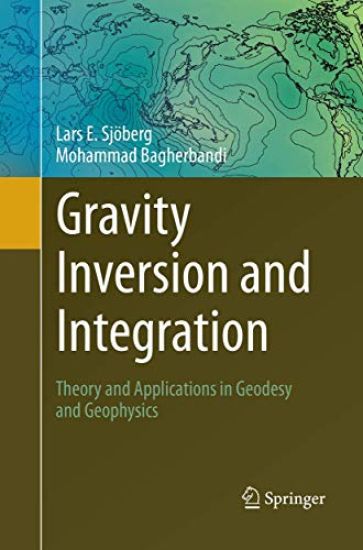
Gravity Inversion and Integration

Gravity Inversion and Integration

Lars E. Sjöberg; Mohammad Bagherbandi

Springer International Publishing AG
2018
nidottu
This book contains theory and applications of gravity both for physical geodesy and geophysics. It identifies classical and modern topics for studying the Earth. Worked-out examples illustrate basic but important concepts of the Earth’s gravity field. In addition, coverage details the Geodetic Reference System 1980, a versatile tool in most applications of gravity data.The authors first introduce the necessary mathematics. They then review classic physical geodesy, including its integral formulas, height systems and their determinations. The next chapter presents modern physical geodesy starting with the original concepts of M.S. Molodensky. A major part of this chapter is a variety of modifying Stokes’ formula for geoid computation by combining terrestrial gravity data and an Earth Gravitational Model.Coverage continues with a discussion that compares today’s methods for modifying Stokes’ formulas for geoid and quasigeoid determination, a description of several modern tools in physical geodesy, and a review of methods for gravity inversion as well as analyses for temporal changes of the gravity field.This book aims to broaden the view of scientists and students in geodesy and geophysics. With a focus on theory, it provides basic and some in-depth knowledge about the field from a geodesist’s perspective.
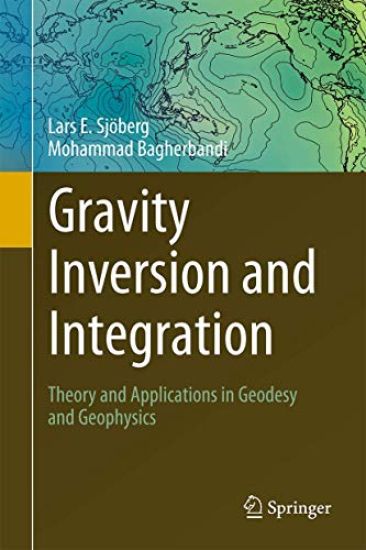
Gravity Inversion and Integration

Gravity Inversion and Integration

Lars E. Sjöberg; Mohammad Bagherbandi

Springer International Publishing AG
2017
sidottu
This book contains theory and applications of gravity both for physical geodesy and geophysics. It identifies classical and modern topics for studying the Earth. Worked-out examples illustrate basic but important concepts of the Earth’s gravity field. In addition, coverage details the Geodetic Reference System 1980, a versatile tool in most applications of gravity data.The authors first introduce the necessary mathematics. They then review classic physical geodesy, including its integral formulas, height systems and their determinations. The next chapter presents modern physical geodesy starting with the original concepts of M.S. Molodensky. A major part of this chapter is a variety of modifying Stokes’ formula for geoid computation by combining terrestrial gravity data and an Earth Gravitational Model.Coverage continues with a discussion that compares today’s methods for modifying Stokes’ formulas for geoid and quasigeoid determination, a description of several modern tools in physical geodesy, and a review of methods for gravity inversion as well as analyses for temporal changes of the gravity field.This book aims to broaden the view of scientists and students in geodesy and geophysics. With a focus on theory, it provides basic and some in-depth knowledge about the field from a geodesist’s perspective.