Kirjojen hintavertailu. Mukana 12 595 353 kirjaa ja 12 kauppaa.
Kirjailija
Mohammad Yaseen Mir
Kirjat ja teokset yhdessä paikassa: 10 kirjaa, julkaisuja vuosilta 2019-2026, suosituimpien joukossa Nanoenergy Production. Vertaile teosten hintoja ja tarkista saatavuus suomalaisista kirjakaupoista.
The ongoing energy transition emphasizes the advancement of zero-carbon fuels and low-carbon fuels, including biofuels and alcohol-based fuels, to achieve energy and environmental sustainability. However, it is crucial to assess the emissions and potential environmental impacts associated with these alternative energy sources. This book explores the role of sustainable fuels in reducing environmental pollution, with particular focus on second and third generation biofuels. It describes advances in sustainable fuel production technologies, examines the challenges posed by pollutants generated during their use, and presents strategies for managing these issues. Additionally, it discusses the importance of proper system operation and maintenance to ensure optimal performance.
Patterns, Function and Application of Seed Microbiome: Bacteria, Fungi and Viruses presents the current understanding of seed and microbiota associations, emphasizing recent findings that highlight the latest insights into these interactions, and how they may ultimately influence plant ecology, health and productivity in both natural and agricultural systems. The development and dispersal of seeds and their transition to seedlings are among the most critical stages of the life cycle of plants and seed health is of crucial global importance for producing both quantity and high quality crops to feed world’s population. It is important for seeds to be produced that contain the best hybrid embryo so that it is free of diseases, includes beneficial endophytes and ensures a healthy start of a seedling. Focusing on the role of seed microbiota, their transmission and implications for producing healthier seeds as well as the relationship between the seed microbiome and primed plant resistance this book reveals the targeted use of the seed microbiome to enrich the soil biodiversity and its resilience and its resulting impact on plant health and yield. also explores the importance of nanotechnology in the development and production of crops for both improved plant production, and plant protection. It explores the different microbes that are vectored onto and within the seeds of both cultivated and non-cultivated plants, with an emphasis on the importance and roles of seed microbiomes in sustainable agriculture. It explains how to change seeds to increase microbiome vectoring; repairing damaged ones, and conserves seed microbiota. It also present seed microbiome roles for plant health and design effective microbiome engineering.
Ozone is a powerful disinfectant with many applications. This book describes the unique advantages of using ozone technology for food decontamination. Food contamination, especially microbial contamination of fresh produce, is a serious concern in many parts of the world. Ozone decontamination can contribute to food safety and quality retention while avoiding the concerns associated with the use of pesticides. The book begins with an introduction about ozone properties and ozone technology followed by a detailed description of applications of ozone for preservation of grain, fruits, and vegetables, as well as meat and seafood. Possible effects on product quality and shelf life are discussed, and potential research directions for the future are also suggested.
Enzymes can help break down plastic waste and make it less harmful to the environment. They can also be used to treat various types of waste, including agricultural and food waste, and wastewater. Enzyme engineering is an important part of chemical biotechnology and helps to keep the environment clean. Making clean and renewable fuels is a priority, and many strategies are being developed to achieve this goal. However, food waste is still a major problem that can harm the environment because most disposal methods are not eco-friendly. This volume aims to inform readers about the latest developments in the use of enzymes for environmental management. This comprehensive resource provides a detailed overview of how enzymes can be used in various sectors to promote ecological sustainability. It covers the composition, properties, characterization, chemistry, and applications of different enzymes in emerging and eco-friendly approaches to waste treatment. It also highlights the latest advancements in sustainable technology and biotechnology enzymes. The book is divided into sections that feature various enzymes used for treating resistant pollutants in wastewater, enzymatically degrading synthetic plastics, and engineering enzymes to impact environmental sustainability positively. It also covers enzymes used in the valorization of waste, enzyme technology in biofuel production, and the recovery of enzymes from food waste. Each chapter presents the enzymes' chemical, physical, and biological attributes and reviews the recent research conducted in this emerging field. The authors hope this document will inspire scientists to explore novel chemical, material, and energy sources in the future and to continue developing innovative applications for enzymes in environmental management.
Microbiomics and Sustainable Crop Production Microbiomics and Sustainable Crop Production presents an overview of the current state of the art in microbiome research, discussing many new technologies and approaches in order to bridge knowledge gaps between field and lab experimental systems. New and emerging strategies to improve the survival and activity of microbial inoculants are covered, including the use of selected indigenous microbes, optimizing microbial delivery methods, and taking advantage of modern gene editing tools to engineer microbial inoculants. The two highly qualified authors address new molecular tools and powerful biotechnological advances, providing readers with knowledge of the complex chemical and biological interactions that occur in the rhizosphere and ensuring that strategies to engineer the rhizosphere are safe, beneficial to productivity, and result in improvements to the sustainability of agricultural systems. The relationship between phyllosphere microbial communities and functional traits of plants is also explored. Finally, approaches and priority areas for future research on phyllosphere microbiology are suggested. Topics covered in this comprehensive resource include: Transmission modes of bacteria and fungi and the nature of their interactions in the endosphere Characteristics of ‘core microbiomes’, which may be deployed to organize otherwise uncontrollable dynamics of resident microbiomes Model microbiome-plant systems, as well as the stability, resilience, and assembly of agricultural microbiomes Engineering and management of agricultural microbiomes for improving crop health, including reasons to modify plant microbiomes Microbiome research in the omics era and new efforts and challenges in assigning functions to microbes For students of plant biotechnology, agricultural sciences, and agricultural engineering, along with researchers working in related fields, Microbiomics and Sustainable Crop Production is an important resource to understand many complex modern ideas related to the subject and how they can be applied to practical applications.
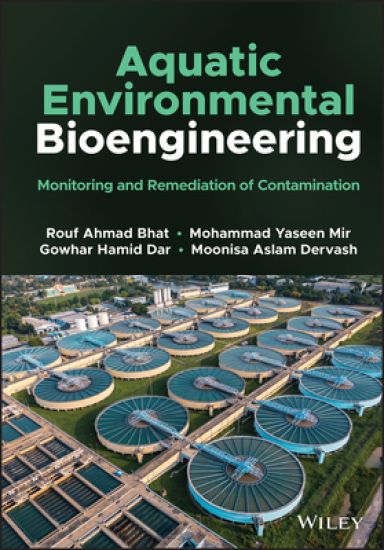
Aquatic Environmental Bioengineering Discover the importance of remediation efforts for aquatic ecosystems Most contamination of water bodies stem from human activity, and the pollution in our water is one of the most important environmental concerns facing future generations. The most significant of these pollutants are halogenated organic compounds, petroleum hydrocarbons, radionuclides, metal and metalloids, pharmaceutical drugs, microbial toxins, and flame retardants. With such a vast array of potential contaminants and dangerously cumulating contamination levels in fragile marine environments, reparative action is more essential than ever. Aquatic Environmental Bioengineering: Monitoring and Remediation of Contamination provides the reader with a map towards environmentally safe and economically feasible technologies to intervene in polluted aquatic ecosystems. The authors suggest a phased approach consisting of site classification and risk assessment, followed by remediation technology selection and implementation. Effective methods for surveying bodies of water are particularly emphasized, and advancements in the development of novel transgenic plants and microbial fuel cells are put forward as effective tools against environmental contamination and industrial wastewater pollution. Readers will also find: A focus on the most recent and cutting-edge research on the topic: photocatalysis, the use of genetically modified organisms, and the use of nanomaterialsA simple compendium of fundamental concepts in environmental engineering of aquatic ecosystemsA detailed discussion of the advancement in remote sensing and geographic information (GIS), methodologies that make it possible to conduct large-scale water remediation studies at reasonable cost The ideal resource for researchers and students of environmental science, plant biotechnology, agricultural science, environmental engineering, and plant sciences, Aquatic Environmental Bioengineering will be a crucial resource for the remediation of contaminants in our aquatic ecosystems.
Provides detailed information about the use of nanotechnology in remediating waste and pollution in agriculture Nano-Technological Intervention in Agricultural Productivity explores sustainable, eco-friendly technologies for remediating wastes and contaminated areas in both water and land ecosystems. Focusing on nano-technological innovations that use microbes and microbial agents to improve the quality and pollutant discharge of contaminated sites, this comprehensive volume also discusses molecular approaches for the characterization of nanoparticles, the biosynthetic pathways of microbes, gene and protein expression studies for bio-deterioration techniques, and more. Organized into nine chapters, the book opens with a thorough overview of the functions, classification, properties, synthesis, and applications of nanoparticles. Following a discussion of the environmental and agricultural implications of nanotechnology, the authors examine the current role and future prospects of nanotechnology in managing plant diseases, improving agri-food production, and increasing agricultural productivity. Subsequent chapters cover lignin nanoparticles, various applications of nanotechnology in agriculture, and nano-based advances in plant and microbial science. Offering an up-to-date account of the role of nanotechnologies in agricultural bioremediation, this book: Explores biotechnological advances in the development of sophisticated green technologies for waste minimization and waste control Emphasizes the use of microbes for degradation and removal of various xenobiotic substances Discusses bioremediation approaches in relation to the impact of increased urbanization and industrialization on the environment Covers a variety of applications of nanotechnology in agriculture, including nano-fertilizers, nano-biosensors, nano-pesticides, and nanoparticle protection in plants Nano-Technological Intervention in Agricultural Productivity is a valuable resource for students in plant biotechnology and agricultural science and engineering, as well as an important reference for researchers in plant biotechnology and agricultural sciences, particularly those with interest in the use of nanomaterials for pollution remediation and sustainable development.
This book will be of immense helpful to the students of plant biotechnology, Agricultural sciences, Microbiology of both undergraduate and postgraduate levels in universities, colleges, and Research institutes. Besides the book will be quite supportive researchers who work in the field of plant biotechnology and agricultural sciences. In this book, the main focus will be on advanced genome editing approaches for the production of GM crops besides their socioeconomic, ethical and risk-biosafety assessments. Nanotechnology is the new emerging and fascinating field of science finds its application in almost all the major research areas and its uses in agriculture and food sectors are incipient.The books seems to be first in summarizing the two way interactive approach in the field of plant biotechnology and setting of a new arena in shaping the new bio techniques towards the sustainable cause.
This book will be of immense helpful to the students of plant biotechnology, Agricultural sciences, Microbiology of both undergraduate and postgraduate levels in universities, colleges, and Research institutes. Besides the book will be quite supportive researchers who work in the field of plant biotechnology and agricultural sciences. In this book, the main focus will be on advanced genome editing approaches for the production of GM crops besides their socioeconomic, ethical and risk-biosafety assessments. Nanotechnology is the new emerging and fascinating field of science finds its application in almost all the major research areas and its uses in agriculture and food sectors are incipient.The books seems to be first in summarizing the two way interactive approach in the field of plant biotechnology and setting of a new arena in shaping the new bio techniques towards the sustainable cause.