Kirjailija
Monika Maron
Kirjat ja teokset yhdessä paikassa: 28 kirjaa, julkaisuja vuosilta 1986-2026, suosituimpien joukossa Bonnie Propeller. Vertaile teosten hintoja ja tarkista saatavuus suomalaisista kirjakaupoista.
28 kirjaa
Kirjojen julkaisuhaarukka 1986-2026.







Teasing her family's past out of the fog of oblivion and lies, one of Germany's greatest writers asks about the secrets families keep, about the fortitude of ordinary people in extraordinary circumstances, and about what becomes of the individual mind when the powers that be turn against it.Born in a working-class suburb of wartime Berlin, Monika Maron grew up a daughter of the East German nomenklatura, despairing of the system her mother, Hella, helped create. Haunted by the ghosts of her Baptist grandparents, she questions her mother, whose selective memory throws up obstacles to Maron's understanding of her grandparents' horrifying denouement in Polish exile. Maron reconstructs their lives from fragments of memory and a forgotten box of letters. In telling her family's powerful and heroic story, she has written a memoir that has the force of a great novel and also stands both as an elaborate metaphor for the shame of the twentieth century and a life-affirming monument to her ancestors.
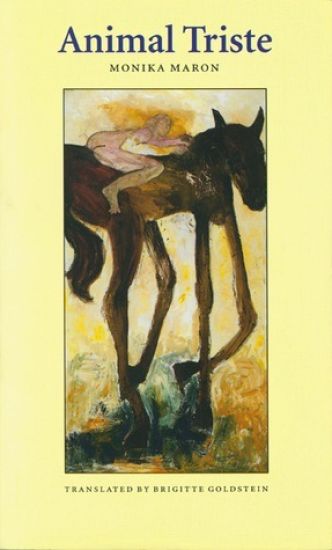
In an autumnal love story of erotic obsession, possessiveness, remembrance, oblivion, and time, an elderly woman dwells upon a failed love affair of some time past, when she was no longer young but not yet old. The narrator relives meeting her lover, Franz, at the natural history museum, when, for the first time in her life, she experiences all-consuming love and absolute happiness. Ultimately the affair founders because of her inability to believe that Franz will actually leave his wife. After he disappears from her life, she withdraws from the world, waiting for his return and revisiting their time together over and over in a never-ending cycle of obsession. Her love for Franz becomes a compulsive suffering from which she can neither free herself nor withhold anything.
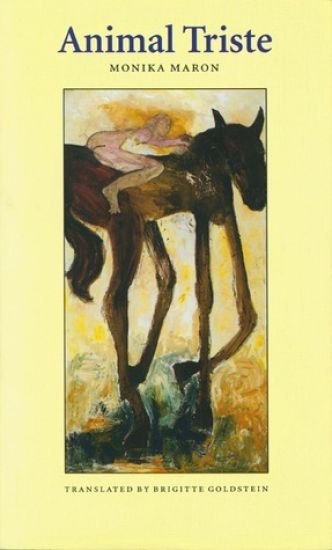
'When I was young, I was certain, as most young people are, that I would die young. I was filled with such youthfulness, such promise, the end could only be imagined as violent and beautiful. No, I certainly wasn't destined for gradual decay. Now I'm a hundred years old and I'm still alive. Maybe I'm only ninety, I don't know for sure.' In an autumnal love story of erotic obsession, possessiveness, remembrance, oblivion, and time, an elderly woman dwells upon a failed love affair of some time past, when she was no longer young but not yet old. The narrator relives meeting her lover, Franz, at the natural history museum, when, for the first time in her life, she experiences all-consuming love and absolute happiness.Ultimately the affair founders because of her inability to believe that Franz will actually leave his wife. After he disappears from her life, she withdraws from the world, waiting for his return and revisiting their time together over and over in a never-ending cycle of obsession. Her love for Franz becomes a compulsive suffering from which she can neither free herself nor withhold anything. Monika Maron was born in Berlin in 1941. Raised in the German Democratic Republic, she immigrated to West Germany in 1988. Brigitte Goldstein, a production editor at Rutgers University Press, has numerous translations to her credit, including Gertrud Kolmar's "A Jewish Mother from Berlin" and "Susanna".


This daughter of East Germany's elite exploded into print with her first angry novel mixing a cry against industrial pollution with the longing and alienation of women in a workers' state -- now a classic feminist text finding a new readership in today's world where nature is still under attack, homogenized news still fills the airwaves, and women's lives still don't seem to matter.

»Immer noch freundlich, aber kaum noch geduldig«
Monika Maron
Hoffmann und Campe Verlag GmbH
2026
sidottu