Kirjojen hintavertailu. Mukana 12 595 353 kirjaa ja 12 kauppaa.

Kirjailija

Moritz Föllmer

Kirjat ja teokset yhdessä paikassa: 5 kirjaa, julkaisuja vuosilta 2013-2025, suosituimpien joukossa 'Ein Leben wie im Traum'. Vertaile teosten hintoja ja tarkista saatavuus suomalaisista kirjakaupoista.

Mukana myös kirjoitusasut: Moritz Follmer

5 kirjaa

Kirjojen julkaisuhaarukka 2013-2025.

The Quest for Individual Freedom

The Quest for Individual Freedom

Moritz Föllmer

Cambridge University Press
2025
sidottu
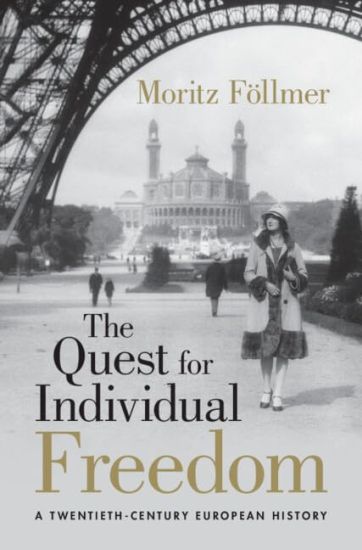
What does it mean to see oneself as free? And how can this freedom be attained in times of conflict and social upheaval? In this ambitious study, Moritz Föllmer explores what twentieth-century Europeans understood by individual freedom and how they endeavoured to achieve it. Combining cultural, social, and political history, this book highlights the tension between ordinary people's efforts to secure personal independence and the ambitious attempts of thinkers and activists to embed notions of freedom in political and cultural agendas. The quest to be a free individual was multi-faceted; no single concept predominated. Men and women articulated and pursued it against the backdrop of two world wars, the expanding power of the state, the constraints of working life, pre-established moral norms, the growing influence of America, and uncertain futures of colonial rule. But although claims to individual freedom could be steered and stymied, they could not, ultimately, be suppressed.
Culture in the Third Reich

Culture in the Third Reich

Moritz Follmer

Oxford University Press
2020
sidottu
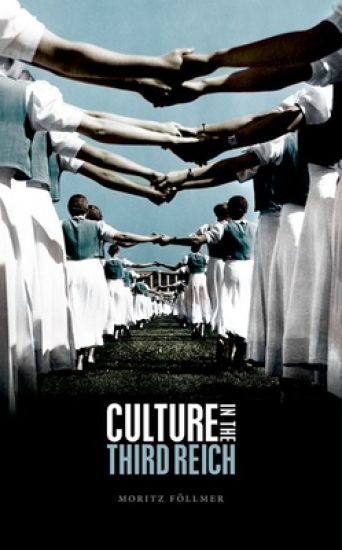
'It's like being in a dream', commented Joseph Goebbels when he visited Nazi-occupied Paris in the summer of 1940. Dream and reality did indeed intermingle in the culture of the Third Reich, racialist fantasies and spectacular propaganda set-pieces contributing to this atmosphere alongside more benign cultural offerings such as performances of classical music or popular film comedies. A cultural palette that catered to the tastes of the majority helped encourage acceptance of the regime. The Third Reich was therefore eager to associate itself with comfortable middle-brow conventionality, while at the same time exploiting the latest trends that modern mass culture had to offer. And it was precisely because the culture of the Nazi period accommodated such a range of different needs and aspirations that it was so successfully able to legitimize war, imperial domination, and destruction. Moritz Föllmer turns the spotlight on this fundamental aspect of the Third Reich's successful cultural appeal in this ground-breaking new study, investigating what 'culture' meant for people in the years between 1933 and 1945: for convinced National Socialists at one end of the spectrum, via the legions of the apparently 'unpolitical', right through to anti-fascist activists, Jewish people, and other victims of the regime at the other end of the spectrum. Relating the everyday experience of people living under Nazism, he is able to give us a privileged insight into the question of why so many Germans enthusiastically embraced the regime and identified so closely with it.
Individuality and Modernity in Berlin

Individuality and Modernity in Berlin

Moritz Föllmer

Cambridge University Press
2015
pokkari
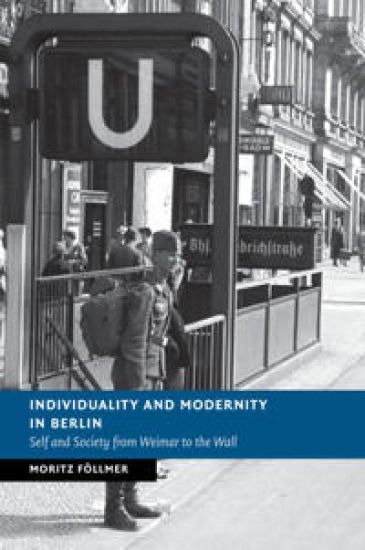
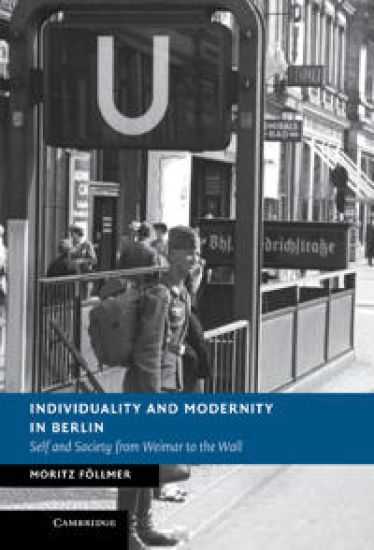
Moritz Föllmer traces the history of individuality in Berlin from the late 1920s to the construction of the Berlin Wall in August 1961. The demand to be recognised as an individual was central to metropolitan society, as were the spectres of risk, isolation and loss of agency. This was true under all five regimes of the period, through economic depression, war, occupation and reconstruction. The quest for individuality could put democracy under pressure, as in the Weimar years, and could be satisfied by a dictatorship, as was the case in the Third Reich. It was only in the course of the 1950s, when liberal democracy was able to offer superior opportunities for consumerism, that individuality finally claimed the mantle. Individuality and Modernity in Berlin proposes a fresh perspective on twentieth-century Berlin that will engage readers with an interest in the German metropolis as well as European urban history more broadly.
Individuality and Modernity in Berlin

Individuality and Modernity in Berlin

Moritz Föllmer

Cambridge University Press
2013
sidottu
Moritz Föllmer traces the history of individuality in Berlin from the late 1920s to the construction of the Berlin Wall in August 1961. The demand to be recognised as an individual was central to metropolitan society, as were the spectres of risk, isolation and loss of agency. This was true under all five regimes of the period, through economic depression, war, occupation and reconstruction. The quest for individuality could put democracy under pressure, as in the Weimar years, and could be satisfied by a dictatorship, as was the case in the Third Reich. It was only in the course of the 1950s, when liberal democracy was able to offer superior opportunities for consumerism, that individuality finally claimed the mantle. Individuality and Modernity in Berlin proposes a fresh perspective on twentieth-century Berlin that will engage readers with an interest in the German metropolis as well as European urban history more broadly.