Kirjojen hintavertailu. Mukana 12 328 030 kirjaa ja 12 kauppaa.

Kirjailija

Morley D. Glicken

Kirjat ja teokset yhdessä paikassa: 13 kirjaa, julkaisuja vuosilta 2004-2026, suosituimpien joukossa Treating Worker Dissatisfaction During Economic Change. Vertaile teosten hintoja ja tarkista saatavuus suomalaisista kirjakaupoista.

13 kirjaa

Kirjojen julkaisuhaarukka 2004-2026.

A Guide to Writing for Human Service Professionals

A Guide to Writing for Human Service Professionals

Morley D. Glicken

Rowman Littlefield
2017
sidottu
Straightforward and concise, the second edition of A Guide to Writing for Human Service Professionals offers students and professionals practical tools to improve their writing. In his animated and highly accessible teaching voice, Glicken presents the rules of punctuation, grammar, and APA style in jargon-free language that’s easy to understand. Chapters include detailed, real-world examples on how to write academic papers, client assessments and evaluations, business letters, research proposals and reports, papers for mass audiences, requests for funding, and much more. Glicken provides the most comprehensive writing guide available in an engaging and digestible format, including end-of-chapter exercises that allow readers to further practice their writing and critical thinking skills. A Guide to Writing for Human Service Professionals is an invaluable resource for current and future human service professionals across social work, psychology, and counseling. Updates to the Second Edition include: ·New writing exercises in every chapter to help current and future human service professionals improve critical thinking and expository writing skills ·New discussion on social media writing, cyberslang, and writing articles for the mass media on issues related to the human services ·A greater emphasis on the difference between politically correct writing and writing that shows sensitivity to diversity ·Expanded coverage of critical thinking and writing, conducting research, and plagiarism ·New examples of resume writing, business letters, and reference letters ·Expanded discussion of the importance of writing clear mission statements and agency goals
A Guide to Writing for Human Service Professionals

A Guide to Writing for Human Service Professionals

Morley D. Glicken

Rowman Littlefield
2017
nidottu
Straightforward and concise, the second edition of A Guide to Writing for Human Service Professionals offers students and professionals practical tools to improve their writing. In his animated and highly accessible teaching voice, Glicken presents the rules of punctuation, grammar, and APA style in jargon-free language that’s easy to understand. Chapters include detailed, real-world examples on how to write academic papers, client assessments and evaluations, business letters, research proposals and reports, papers for mass audiences, requests for funding, and much more. Glicken provides the most comprehensive writing guide available in an engaging and digestible format, including end-of-chapter exercises that allow readers to further practice their writing and critical thinking skills. A Guide to Writing for Human Service Professionals is an invaluable resource for current and future human service professionals across social work, psychology, and counseling. Updates to the Second Edition include: ·New writing exercises in every chapter to help current and future human service professionals improve critical thinking and expository writing skills ·New discussion on social media writing, cyberslang, and writing articles for the mass media on issues related to the human services ·A greater emphasis on the difference between politically correct writing and writing that shows sensitivity to diversity ·Expanded coverage of critical thinking and writing, conducting research, and plagiarism ·New examples of resume writing, business letters, and reference letters ·Expanded discussion of the importance of writing clear mission statements and agency goals
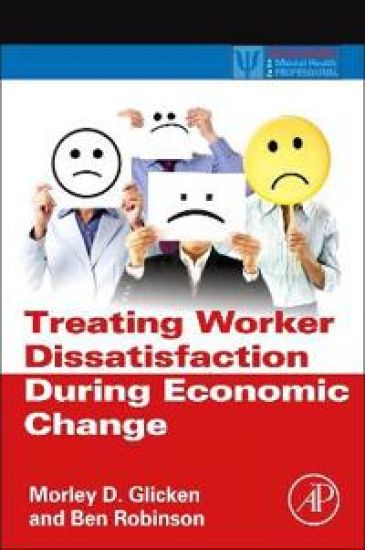
Treating Worker Dissatisfaction During Economic Change

Treating Worker Dissatisfaction During Economic Change

Morley D. Glicken; Ben Robinson

Academic Press Inc
2013
sidottu
In the current economy, companies are expected to turn on a dime in response to changing market needs to stay vibrant. What that means is that companies are constantly reorganizing. Employees are living in a constant state of change. This dynamic in the workplace has affected worker satisfaction, morale, and burnout. This is the first treatment manual to focus on treating job-related issues, whether it's conflict in the workplace, stress, burnout, performance, and more. Divided into two parts, Part One sets the stage with a discussion of the economic climate and how it impacts businesses, how business reacts to it, and how the new business climate affects employees. Part Two lays out the most current research on effectively treating work-related client issues. Individual, group, and organizational interventions are included, along with case examples, practical treatment exercises, checklists, and outlines for treatment.
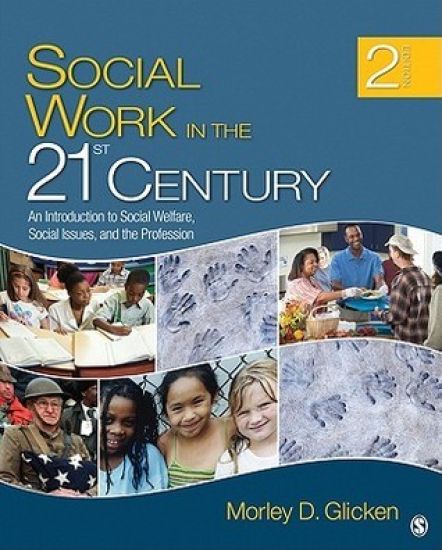
Social Work in the 21st Century

Social Work in the 21st Century

Morley D. Glicken

SAGE Publications Inc
2011
sidottu
A student-friendly introduction to the field of social work, social welfare, and the profession of social work, social issues, and social welfareDesigned to get students excited about the profession and thinking critically about what social workers do and how they operate within the larger system, this Second Edition explores social issues in the United States, looks at how the social welfare system attempts to resolve these issues, and considers the many roles assumed by professional social workers within the social welfare system. This edition offers new and revised coverage throughout and reflects recent current events, including the historic 2008 presidential election, catastrophes such as Hurricane Katrina and the Haiti earthquake, and government responses.
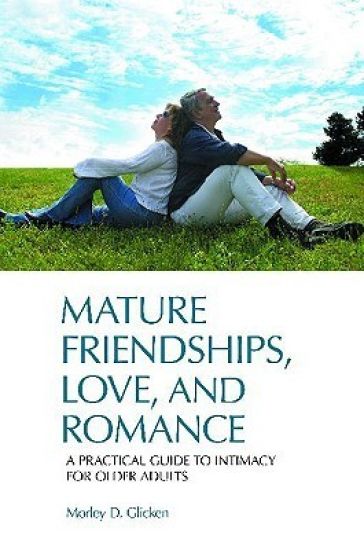
Mature Friendships, Love, and Romance

Mature Friendships, Love, and Romance

Morley D. Glicken

Praeger Publishers Inc
2010
sidottu
This insightful, research-driven book offers practical advice to older adults seeking new intimate relationships, lasting friendships, and better relationships with family members and children.Written to appeal to men as well as women, Mature Friendships, Love, and Romance: A Practical Guide to Intimacy for Older Adults is a serious book about love, romance, intimacy, and sexuality, as well as friendship and family. It is about what happens when older adults lack close relationships and about practical ways to address that isolation and loneliness. Through personal stories and vignettes, readers will see how notions of friendship, intimacy, and love change as we age, what mature love is, and what factors can make it challenging. Among the topics discussed are late-life divorces and breakups of long-term relationships; finding new and intimate friendships; resolving problems with adult children that can emerge when you enter a new, loving relationship; and choosing activities to increase your pool of potential friends and mates. Internet dating is addressed, as are the general thoughts and actions of happy people who agree life can start at 60.Presents powerful personal stories about mature love and intimacy Includes case studies of mature adults experiencing love and intimacy problems, offering explanations of the problems and effective and realistic solutionsDiscusses current research on love and intimacy problems of older adults
Retirement for Workaholics

Retirement for Workaholics

Morley D. Glicken

Praeger Publishers Inc
2010
sidottu
An expert in retirement issues, aging, and social work shows how workaholics who have been downsized, forced into retirement, or burned out on their current jobs can remain actively engaged in meaningful projects and maintain their happiness. A practical guide for workers who have been downsized or forced to take retirement before they're ready, Retirement for Workaholics: Life after Work in a Downsized Economy explains workaholic behavior, why it develops, and what can be done about it. Rather than taking a negative approach to work addictions, the book provides a sympathetic and logical way of understanding and coping. Organized around research explaining work addictions and the problems workaholics have coping with retirement, the book also includes numerous personal stories from workaholics and case studies of work-addicted individuals. These stories illustrate the effects of work addiction on self, friends, and loved ones, as well as how people have dealt with the overwhelming need to work. More positively, it offers concrete suggestions for dealing with postretirement issues, such as loneliness, boredom, and substance abuse, and for finding satisfaction and fulfillment whether through volunteer activities, a new career, or the pursuit of previously shelved passions.
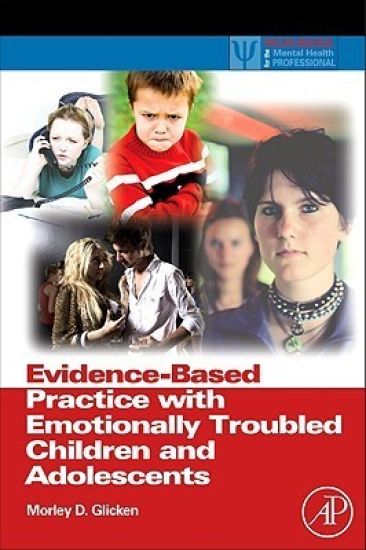
Evidence-Based Practice with Emotionally Troubled Children and Adolescents
This book on evidence-based practice with children and adolescents focuses on best evidence regarding assessment, diagnosis, and treatment of children and adolescents with a range of emotional problems including ADHD; Bi-Polar Disorder; anxiety and depression; eating disorders; Autism; Asperger’s Syndrome; substance abuse; loneliness and social isolation; school related problems including underachievement; sexual acting out; Oppositional Defiant and Conduct Disorders; Childhood Schizophrenia; gender issues; prolonged grief; school violence; cyber bullying; gang involvement, and a number of other problems experienced by children and adolescents. The psychosocial interventions discussed in the book provide practitioners and educators with a range of effective treatments that serve as an alternative to the use of unproven medications with unknown but potentially harmful side effects. Interesting case studies demonstrating the use of evidence-based practice with a number of common childhood disorders and integrative questions at the end of each chapter make this book uniquely helpful to graduate and undergraduate courses in social work, counseling, psychology, guidance, behavioral classroom teaching, and psychiatric nursing.
A Simple Guide to Retirement

A Simple Guide to Retirement

Morley D. Glicken; Brian R. Haas

Praeger Publishers Inc
2009
sidottu
This affirming, positive, and practical book will better prepare retirees and their families for the changes and challenges of retirement in an uncertain economic, social, and political climate.A Simple Guide to Retirement: How to Make Retirement Work for You is a book for older Americans planning for retirement. It is also for people who have left work before they were ready and are now experiencing anxiety, depression, and/or financial weakness in their new role as retirees. Written to be at once affirming, positive, and practical, the book covers all of the many topics that will help retirees better prepare themselves for a positive, fulfilling, and satisfying retirement—beginning with financial security. These topics include saving for retirement, working part time, staying healthy and fit, dealing with the emotional and financial burden of health care, cultivating optimism, and much more. Case examples and vignettes will help readers apply the principles to their own lives.10 illustrations
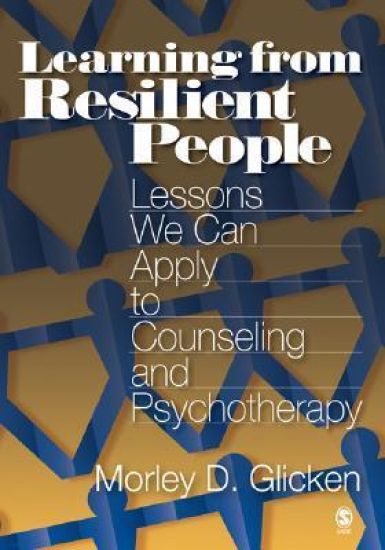
Learning from Resilient People

Learning from Resilient People

Morley D. Glicken

SAGE Publications Inc
2006
sidottu
This comprehensive core textbook analyzes how resilient people navigate the troubled waters of life’s traumas and identifies how learning about resilience may help cultivate this quality in other, less resilient, people. Author Morley D. Glicken explains the inner self-healing processes of resilient people and helps individuals training in the helping professions to learn to use these processes in working with their clients. Key Features: Presents Current Research on Resilience: The most current data is provided on a variety of common physical, social, and emotional problems experienced by people and the way in which resilient people cope with those problems. In addition, an entire chapter summarizes what we know about resilience and how it can be applied to clinical practice. Provides Engaging Case Examples: Wonderful and honestly written stories from resilient people about how they cope so well with their traumas illustrate how therapy using resilience can work. From this perspective, therapy draws from strength rather than deficit or psychopathology. There is also a chapter on resilient communities, not often discussed in literature, which supports the idea that communities can help people increase their resilience. Examines Resilience Across the Life Cycle: The meaning and definitions of resilience is discussed as well as how it functions throughout the life cycle and through multiple life events. This book also clarifies the erroneous notion that resilient people are endlessly resilient and helps recognize resilience as an actual and real attribute, and not one that makes people seem super human. Intended Audience: This is an ideal textbook for undergraduate and graduate courses in Psychology, Counseling, Social Work, Psychiatric Nursing, Marriage and Family Counseling, and Criminal Justice that teach direct practice techniques, approaches, and theories. It is also a valuable resource for practitioners, administrators, teachers, mental health workers, and family service agencies.?
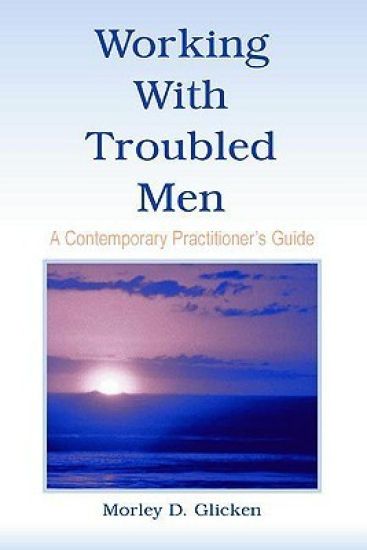
Working With Troubled Men

Working With Troubled Men

Morley D. Glicken

Routledge Member of the Taylor and Francis Group
2005
nidottu
This book offers a concise, readable, research-grounded synthesis of the special concerns mental health and other helping professionals need to address when working with men today, and explains a wealth of effective gender-specific approaches to assessment and intervention that result in more successful outcomes for male clients.Many more women than men seek counseling and therapy, and to some extent standard services have evolved in response to female styles of communicating and problem-solving. Practitioners frequently feel frustrated and baffled by their male clients because they seem unresponsive to treatment approaches that work so well for women. But many men benefit from therapy when practitioners understand male socialization and the ways men communicate and problem-solve.Too many men today are doing badly and are in real need of help. Almost half of America's male children grow up in single parent homes headed by mothers, where they seldom have male mentors or role models. Fewer men than women attend or graduate from college, and increasing levels of binge drinking and date rape on campuses paint a discouraging picture of men on campus. Male violence continues to be a serious problem in many American communities, with male youth violence continuing at epidemic levels. Men die younger than women overall and in much higher proportions from suicide, homicide, and cirrhosis of the liver.
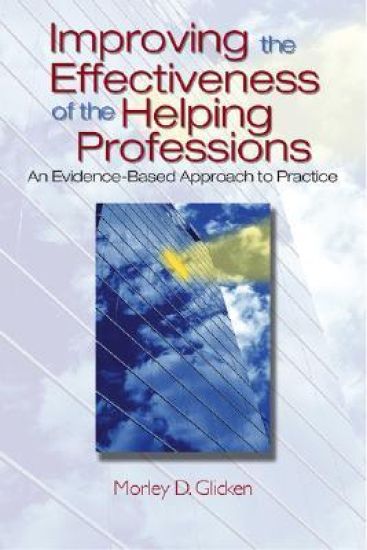
Improving the Effectiveness of the Helping Professions

Improving the Effectiveness of the Helping Professions

Morley D. Glicken

SAGE Publications Inc
2004
sidottu
The current practice of counseling, psychotherapy, and most helping professions often relies on clinical wisdom with little evidence of what actually works. Clinical wisdom is often a justification for beliefs and values that bond people together as professionals but often fails to serve clients since many of those beliefs and values may be comforting, but they may also be inherently incorrect. Improving the Effectiveness of the Helping Professions: An Evidence-Based Approach to Practice covers the use of research and critical thinking to assist helping professionals make the most effective choices in treating clients with social and emotional problems. The use of evidence-based practice (EBP) comes at a time when managed care and concerns over health care costs coincide with growing concerns that psychotherapy, case management, and counseling may not be sufficiently effective ways of helping people in social and emotional difficulty. Improving the Effectiveness of the Helping Professions provides an easy-to-read, inclusive approach covering EBP with posttraumatic stress disorder (PTSD) and terrorism, bereavement, substance abuse, mental illness, and problems experienced by older adults, among others. This text critically reviews the literature on self-help groups, religious involvement, and spirituality. It also includes sources to find best evidence, a simple overview of research concepts, a chapter on critical thinking, and numerous relevant case studies showing the application of EBP.Improving the Effectiveness of the Helping Professions is ideally suited for undergraduate and graduate students in social work, psychology, counseling, criminal justice, psychiatric nursing, and psychiatry. This book should also prove beneficial to all practitioners and specialists in the helping professions.