Kirjojen hintavertailu. Mukana 12 595 353 kirjaa ja 12 kauppaa.

Kirjailija

Morris Goodman

Kirjat ja teokset yhdessä paikassa: 3 kirjaa, julkaisuja vuosilta 2012-2015, suosituimpien joukossa Macromolecular Sequences in Systematic and Evolutionary Biology. Vertaile teosten hintoja ja tarkista saatavuus suomalaisista kirjakaupoista.

3 kirjaa

Kirjojen julkaisuhaarukka 2012-2015.

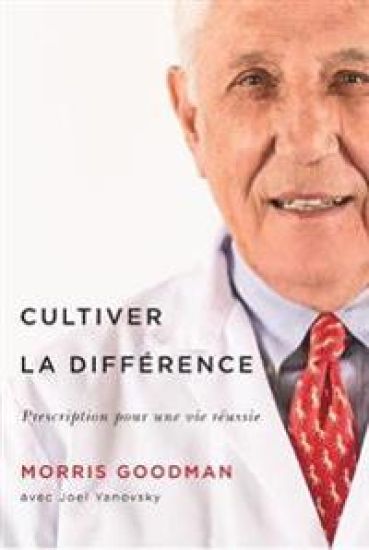
Cultiver la différence

Cultiver la différence

Morris Goodman; Joel Yanofsky

McGill-Queen's University Press
2015
sidottu
What goes into making a life successful and what does success mean? If you think about a life as a chemical equation, then the elements are obvious: family, work, purpose. The key is discovering how to get the balance just right. In Cultiver la difference, Montreal entrepreneur and philanthropist Morris Goodman shares his personal and professional prescription for success and enduring happiness. Born in 1931 in Montreal to Ukrainian immigrants during the worst days of the Great Depression, Goodman recounts the events, strategies, and lucky breaks that led to a thriving company and a life of philanthropic accomplishments. From his first job as a pharmacy delivery boy to his graduation from the University of Montreal's Faculty of Pharmacy - when he had already started his own pharmaceutical company - through the crucial moments that created an international business, Goodman depicts stirring accounts of Montreal's Jewish community and the development of the global pharmaceutical industry. Along the way, he presents vivid, generous portraits of colleagues and business collaborators. Cultiver la difference is a powerful rags-to-riches story but it is also much more - it is a heartfelt, candid, and inspiring exploration of what makes our lives rich, what we value, and why.
To Make a Difference

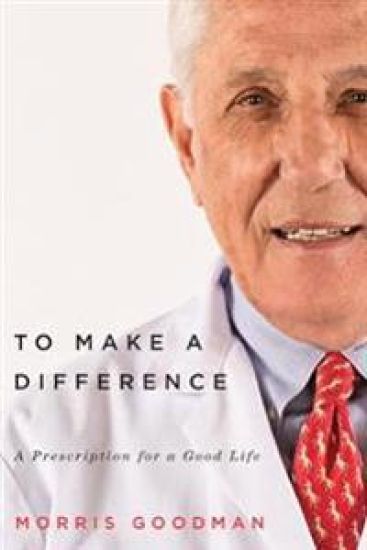
To Make a Difference

Morris Goodman; Joel Yanofsky

McGill-Queen's University Press
2014
sidottu
What goes into making a life successful and what does success mean? If you think about a life as a chemical equation, then the elements are obvious: family, work, purpose. The key is discovering how to get the balance just right. In To Make a Difference, Montreal entrepreneur and philanthropist Morris Goodman shares his personal and professional prescription for success and enduring happiness. Born in 1931 in Montreal to Ukrainian immigrants during the worst days of the Great Depression, Goodman recounts the events, strategies, and lucky breaks that led to a thriving company and a life of philanthropic accomplishments. From his first job as a pharmacy delivery boy to his graduation from the University of Montreal's Faculty of Pharmacy - when he had already started his own pharmaceutical company - through the crucial moments that created an international business, Goodman depicts stirring accounts of Montreal's Jewish community and the development of the global pharmaceutical industry. Along the way, he presents vivid, generous portraits of colleagues and business collaborators. To Make a Difference is a powerful rags-to-riches story but it is also much more - it is a heartfelt, candid, and inspiring exploration of what makes our lives rich, what we value, and why.
Macromolecular Sequences in Systematic and Evolutionary Biology

Macromolecular Sequences in Systematic and Evolutionary Biology

Morris Goodman

Springer-Verlag New York Inc.
2012
nidottu
George H. F. Nuttall pioneered the study of phylogeny through the ge- netically encoded sequence structures of proteins. His classic monograph, Blood Immllnity and Blood Relationship, was published in 1904. The findings described in this monograph testified that immunologic compar- isons of serum proteins could help reveal the phyletic relationships of primates and other animals. Although Nuttall had no way of knowing that a correspondence between the nucleotide sequences of genes and the amino acid sequences of proteins was the genetic basis for the immuno- logic specificities of animal sera, he clearly saw the implications of his findings. Thus he wrote in the introduction of his monograph, "The per- sistence of the chemical blood-relationship between the various groups of animals serves to carry us back into geological times, and I believe we have but begun the work along these lines, and that it will lead to valuable results in the study of various problems of evolution. " Nuttall's prophecy is being fulfilled. Through the first two-thirds of the 20th century immu- nology led the way in the molecular analysis of the phyletic relationships of animal taxa above the species level. Amino acid sequencing of proteins began in earnest during the 1960s. It overtook immunology during the 1970s and provided more exact molecular data for investigating the history of life and the forces of chance and selection which drive evolution.