Kirjojen hintavertailu. Mukana 12 657 676 kirjaa ja 12 kauppaa.

Kirjailija

Morten Axel Pedersen

Kirjat ja teokset yhdessä paikassa: 8 kirjaa, julkaisuja vuosilta 2004-2022, suosituimpien joukossa Urban Hunters. Vertaile teosten hintoja ja tarkista saatavuus suomalaisista kirjakaupoista.

8 kirjaa

Kirjojen julkaisuhaarukka 2004-2022.

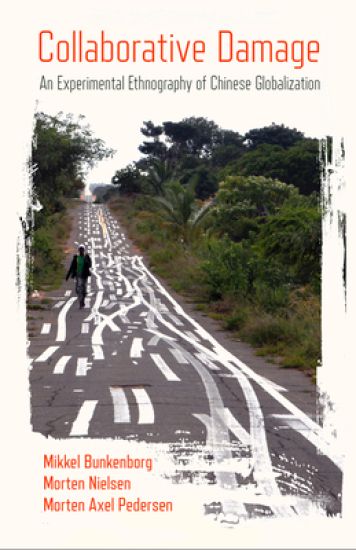
Collaborative Damage

Collaborative Damage

Mikkel Bunkenborg; Morten Nielsen; Morten Axel Pedersen

Cornell University Press
2022
pokkari
Collaborative Damage is an experimental ethnography of Chinese globalization that compares data from two frontlines of China's global intervention—sub-Saharan Africa and Inner/Central Asia. Based on their fieldwork on Chinese infrastructure and resource-extraction projects in Mozambique and Mongolia, Mikkel Bunkenborg, Morten Nielsen, and Morten Axel Pedersen provide new empirical insights into neocolonialism and Sinophobia in the Global South. The core argument in Collaborative Damage is that the different participants studied in the globalization processes—local workers and cadres; Chinese managers and entrepreneurs; and the authors themselves, three Danish anthropologists—are intimately linked in paradoxical partnerships of mutual incomprehension. The authors call this "collaborative damage," which crucially refers not only to the misunderstandings and conflicts they observed in the field, but also to their own failure to agree about how to interpret the data. Via in-depth case studies and tragicomical tales of friendship, antagonism, irresolvable differences, and carefully maintained indifferences across disparate Sino-local worlds in Africa and Asia, Collaborative Damage tells a wide-ranging story of Chinese globalization in the twenty-first century.
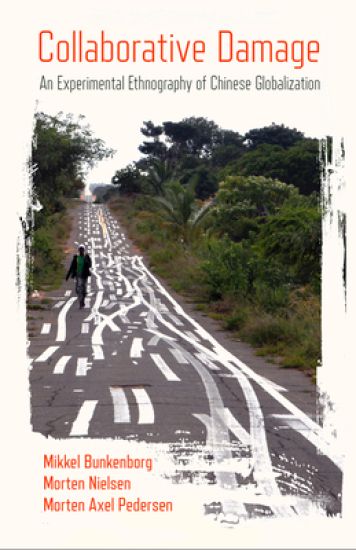
Collaborative Damage

Collaborative Damage

Mikkel Bunkenborg; Morten Nielsen; Morten Axel Pedersen

Cornell University Press
2022
sidottu
Collaborative Damage is an experimental ethnography of Chinese globalization that compares data from two frontlines of China's global intervention—sub-Saharan Africa and Inner/Central Asia. Based on their fieldwork on Chinese infrastructure and resource-extraction projects in Mozambique and Mongolia, Mikkel Bunkenborg, Morten Nielsen, and Morten Axel Pedersen provide new empirical insights into neocolonialism and Sinophobia in the Global South. The core argument in Collaborative Damage is that the different participants studied in the globalization processes—local workers and cadres; Chinese managers and entrepreneurs; and the authors themselves, three Danish anthropologists—are intimately linked in paradoxical partnerships of mutual incomprehension. The authors call this "collaborative damage," which crucially refers not only to the misunderstandings and conflicts they observed in the field, but also to their own failure to agree about how to interpret the data. Via in-depth case studies and tragicomical tales of friendship, antagonism, irresolvable differences, and carefully maintained indifferences across disparate Sino-local worlds in Africa and Asia, Collaborative Damage tells a wide-ranging story of Chinese globalization in the twenty-first century.
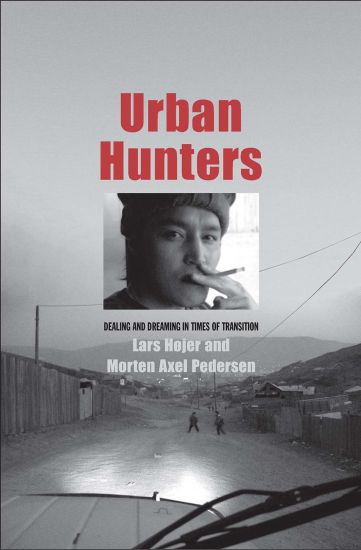
Urban Hunters

Urban Hunters

Lars Hojer; Morten Axel Pedersen

Yale University Press
2020
sidottu
An ethnography of the Mongolian capital city of Ulaanbaatar during the nation’s transition from socialism to a market-based economic systemUrban Hunters is an ethnography of the Mongolian capital city, Ulaanbaatar, during the nation’s transition from socialism to a market-based economic system. Following the Soviet Union’s collapse in 1991, Mongolia entered a period of economic chaos characterized by wild inflation, disappearing banks, and closing farms, factories, and schools. During this time of widespread poverty, a generation of young adults came of age. In exploring the social, cultural, and existential ramifications of a transition that has become permanent and acquired a logic of its own, Lars Højer and Morten Axel Pedersen present a new theorization of social agency in postsocialist as well as postcolonial contexts.
The Ontological Turn

The Ontological Turn

Martin Holbraad; Morten Axel Pedersen

Cambridge University Press
2017
sidottu
A new and often controversial theoretical orientation that resonates strongly with wider developments in contemporary philosophy and social theory, the so-called 'ontological turn' is receiving a great deal of attention in anthropology and cognate disciplines at present. This book provides the first anthropological exposition of this recent intellectual development. It traces the roots of the ontological turn in the history of anthropology and elucidates its emergence as a distinct theoretical orientation over the past few decades, showing how it has emerged in the work of Roy Wagner, Marilyn Strathern and Viveiros de Castro, as well a number of younger scholars. Distinguishing this trajectory of thinking from related attempts to put questions of ontology at the heart of anthropological research, the book articulates critically the key methodological and theoretical tenets of the ontological turn, its prime epistemological and political implications, and locates it in the broader intellectual landscape of contemporary social theory.
The Ontological Turn

The Ontological Turn

Martin Holbraad; Morten Axel Pedersen

Cambridge University Press
2017
pokkari
A new and often controversial theoretical orientation that resonates strongly with wider developments in contemporary philosophy and social theory, the so-called 'ontological turn' is receiving a great deal of attention in anthropology and cognate disciplines at present. This book provides the first anthropological exposition of this recent intellectual development. It traces the roots of the ontological turn in the history of anthropology and elucidates its emergence as a distinct theoretical orientation over the past few decades, showing how it has emerged in the work of Roy Wagner, Marilyn Strathern and Viveiros de Castro, as well a number of younger scholars. Distinguishing this trajectory of thinking from related attempts to put questions of ontology at the heart of anthropological research, the book articulates critically the key methodological and theoretical tenets of the ontological turn, its prime epistemological and political implications, and locates it in the broader intellectual landscape of contemporary social theory.
Not Quite Shamans

Not Quite Shamans

Morten Axel Pedersen

Cornell University Press
2011
pokkari
The forms of contemporary society and politics are often understood to be diametrically opposed to any expression of the supernatural; what happens when those forms are themselves regarded as manifestations of spirits and other occult phenomena? In Not Quite Shamans, Morten Axel Pedersen explores how the Darhad people of Northern Mongolia's remote Shishged Valley have understood and responded to the disruptive transition to postsocialism by engaging with shamanic beliefs and practices associated with the past. For much of the twentieth century, Mongolia's communist rulers attempted to eradicate shamanism and the shamans who once served as spiritual guides and community leaders. With the transition from a collectivized economy and a one-party state to a global capitalist market and liberal democracy in the 1990s, the people of the Shishged were plunged into a new and harsh world that seemed beyond their control. "Not-quite-shamans"—young, unemployed men whose undirected energies erupted in unpredictable, frightening bouts of violence and drunkenness that seemed occult in their excess— became a serious threat to the fabric of community life. Drawing on long-term fieldwork in Northern Mongolia, Pedersen details how, for many Darhads, the postsocialist state itself has become shamanic in nature. In the ideal version of traditional Darhad shamanism, shamans can control when and for what purpose their souls travel, whether to other bodies, landscapes, or worlds. Conversely, caught between uncontrollable spiritual powers and an excessive display of physical force, the "not-quite-shamans" embody the chaotic forms—the free market, neoliberal reform, and government corruption—that have created such upheaval in peoples' lives. As an experimental ethnography of recent political and economic transformations in Mongolia through the defamiliarizing prism of shamans and their lack, Not Quite Shamans is an attempt to write about as well as theorize postsocialism, and shamanism, in a new way.
Not Quite Shamans

Not Quite Shamans

Morten Axel Pedersen

Cornell University Press
2011
sidottu
The forms of contemporary society and politics are often understood to be diametrically opposed to any expression of the supernatural; what happens when those forms are themselves regarded as manifestations of spirits and other occult phenomena? In Not Quite Shamans, Morten Axel Pedersen explores how the Darhad people of Northern Mongolia's remote Shishged Valley have understood and responded to the disruptive transition to postsocialism by engaging with shamanic beliefs and practices associated with the past. For much of the twentieth century, Mongolia's communist rulers attempted to eradicate shamanism and the shamans who once served as spiritual guides and community leaders. With the transition from a collectivized economy and a one-party state to a global capitalist market and liberal democracy in the 1990s, the people of the Shishged were plunged into a new and harsh world that seemed beyond their control. "Not-quite-shamans"—young, unemployed men whose undirected energies erupted in unpredictable, frightening bouts of violence and drunkenness that seemed occult in their excess— became a serious threat to the fabric of community life. Drawing on long-term fieldwork in Northern Mongolia, Pedersen details how, for many Darhads, the postsocialist state itself has become shamanic in nature. In the ideal version of traditional Darhad shamanism, shamans can control when and for what purpose their souls travel, whether to other bodies, landscapes, or worlds. Conversely, caught between uncontrollable spiritual powers and an excessive display of physical force, the "not-quite-shamans" embody the chaotic forms—the free market, neoliberal reform, and government corruption—that have created such upheaval in peoples' lives. As an experimental ethnography of recent political and economic transformations in Mongolia through the defamiliarizing prism of shamans and their lack, Not Quite Shamans is an attempt to write about as well as theorize postsocialism, and shamanism, in a new way.
Viden om verden

Viden om verden

Andreas Roepstorff; Cecilie Rubow; Charlotte Andreas Baarts; Christian Kordt Højbjerg; Francine Lorimer; Hanne Overgaard Mogensen; Helle Bundgaard; Henrik Vigh; Jacqueline Ryle; Karen Fog Olwig; Karsten Pærregaard; Katja Kvaale; Kirsten Hastrup; Kåre Jansbøl; Mark Vacher; Mette Nordahl Svendsen; Morten Axel Pedersen; Pia Lundberg; Sally Anderson; Steffen Jöhncke; Tine Gammeltoft; Tine Tjørnhøj-Thomsen; Vibeke Steffen; Susan Reynolds Whyte

Gyldendal
2004
sidottu
Antropologien har i mange år været centralt placeret i udviklingen og brugen af nye teorier og metoder inden for human- og samfundsvidenskaberne. I Viden om verden demonstrerer en række danske forskere, hvordan generel antropologisk viden bliver til gennem en analyse af konkrete sociale forhold. Viden om verden kompletterer den stærkt roste Ind i verden (2003) - også redigeret af Kirsten Hastrup - der viser, hvordan afsættet for den antropologiske viden er et konkret personligt engagement i andre menneskers liv i form af det etnografiske feltarbejde. I Viden om verden er tyngdepunktet forskudt fra metoden til resultaterne, og dermed fra det personlige engagement i felten til det almene vidensudbytte. Den proces, hvormed man kommer fra det empiriske materiale til en egentlig videnskabelig viden, er en analytisk proces. Bogen viser, hvordan denne foregår i praksis i et teoretisk ræsonnement over det konkrete empiriske materiale. Resultatet af analysen er en viden af almen karakter om f.eks. socialitet, solidaritet, handling, intentionalitet, modernitet - for blot at nævne enkelte overskrifter på bogens kapitler. Bogen afsluttes med en diskussion af selve det vidensbegreb, der driver den antropologiske forskning, og det vises, hvordan viden om verden også er en viden i verden - dvs. en virkningsfuld del af samfundet. Viden om verden er redigeret af Kirsten Hastrup, professor ved Institut for Antropologi, Københavns Universitet. Bogens 20 bidrag er alle skrevet af antropologer tilknyttet danske universiteter og forskningsinstitutioner.