

Kirjailija
Moses Maimonides
Kirjat ja teokset yhdessä paikassa: 50 kirjaa, julkaisuja vuosilta 1910-2026, suosituimpien joukossa Le Guide Des Ã?garÃ(c)s. Vertaile teosten hintoja ja tarkista saatavuus suomalaisista kirjakaupoista.
50 kirjaa
Kirjojen julkaisuhaarukka 1910-2026.

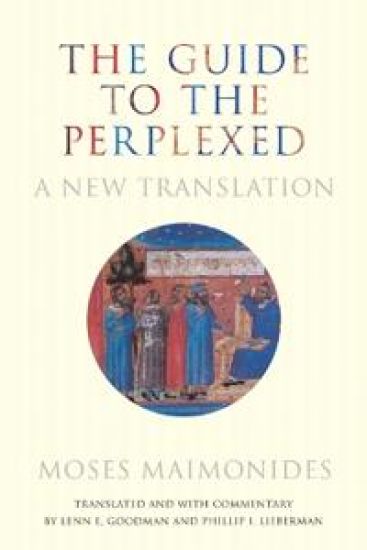
A landmark new translation of the most significant text in medieval Jewish thought. Written in Arabic and completed around 1190, the Guide to the Perplexed is among the most powerful and influential living texts in Jewish philosophy, a masterwork navigating the straits between religion and science, logic and revelation. The author, Rabbi Moses ben Maimon, commonly known as Maimonides or as Rambam, was a Sephardi Jewish philosopher, jurist, and physician. He wrote his Guide in the form of a letter to a disciple. But the perplexity it aimed to cure might strike anyone who sought to square logic, mathematics, and the sciences with biblical and rabbinic traditions. In this new translation by philosopher Lenn E. Goodman and historian Phillip I. Lieberman, Maimonides' warm, conversational voice and clear explanatory language come through as never before in English. Maimonides knew well the challenges facing serious inquirers at the confluence of the two great streams of thought and learning that Arabic writers labeled 'aql and naql, reason and tradition. The aim of the Guide, he wrote, is to probe the mysteries of physics and metaphysics. But mysteries, to Maimonides, were not conundrums to be celebrated for their obscurity. They were problems to be solved. Maimonides' methods and insights resonate throughout the work of later Jewish thinkers, rationalists, and mystics, and in the work of philosophers like Thomas Aquinas, Spinoza, Leibniz, and Newton. The Guide continues to inspire inquiry, discovery, and vigorous debate among philosophers, theologians, and lay readers today. Goodman and Lieberman's extensive and detailed commentary provides readers with historical context and philosophical enlightenment, giving generous access to the nuances, complexities, and profundities of what is widely agreed to be the most significant textual monument of medieval Jewish thought, a work that still offers a key to those who hope to harmonize religious commitments and scientific understanding.
The classic translation of this most important medieval Jewish text, presented in one volume for the first time. The twelfth-century Judeo-Arabic text The Guide of the Perplexed is a monument of rabbinical exegesis and one of the most important works in the history of Jewish thought. Written by Moses ben Maimon,commonly known as Maimonides, the Guide aims to liberate people from the perplexities that arise from an understanding of the Bible based only on its literal meaning. Shlomo Pines’s translation has served students and scholars for decades, and it is presented here, with Leo Strauss’s influential introduction, in one volume for the first time.


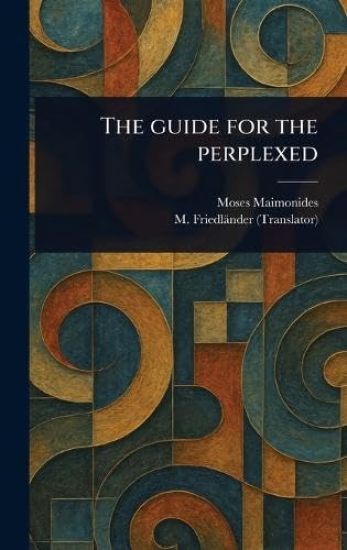
The Guide for the Perplexed
Moses Maimonides; M (Michael) Friedländer
Anson Street Press
2025
sidottu

The Guide for the Perplexed
Moses Maimonides; M (Michael) Friedländer
Anson Street Press
2025
pokkari
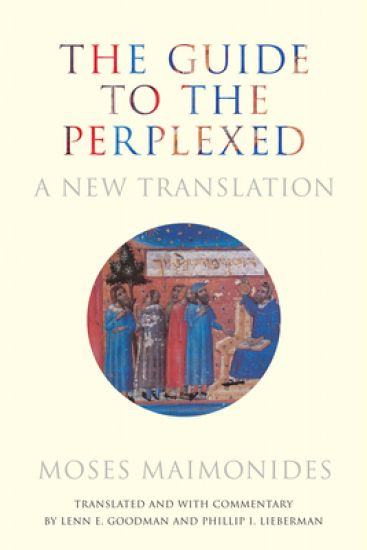
A landmark new translation of the most significant text in medieval Jewish thought. Written in Arabic and completed around 1190, the Guide to the Perplexed is among the most powerful and influential living texts in Jewish philosophy, a masterwork navigating the straits between religion and science, logic and revelation. The author, Rabbi Moses ben Maimon, commonly known as Maimonides or as Rambam, was a Sephardi Jewish philosopher, jurist, and physician. He wrote his Guide in the form of a letter to a disciple. But the perplexity it aimed to cure might strike anyone who sought to square logic, mathematics, and the sciences with biblical and rabbinic traditions. In this new translation by philosopher Lenn E. Goodman and historian Phillip I. Lieberman, Maimonides' warm, conversational voice and clear explanatory language come through as never before in English. Maimonides knew well the challenges facing serious inquirers at the confluence of the two great streams of thought and learning that Arabic writers labeled 'aql and naql, reason and tradition. The aim of the Guide, he wrote, is to probe the mysteries of physics and metaphysics. But mysteries, to Maimonides, were not conundrums to be celebrated for their obscurity. They were problems to be solved. Maimonides' methods and insights resonate throughout the work of later Jewish thinkers, rationalists, and mystics, and in the work of philosophers like Thomas Aquinas, Spinoza, Leibniz, and Newton. The Guide continues to inspire inquiry, discovery, and vigorous debate among philosophers, theologians, and lay readers today. Goodman and Lieberman's extensive and detailed commentary provides readers with historical context and philosophical enlightenment, giving generous access to the nuances, complexities, and profundities of what is widely agreed to be the most significant textual monument of medieval Jewish thought, a work that still offers a key to those who hope to harmonize religious commitments and scientific understanding.
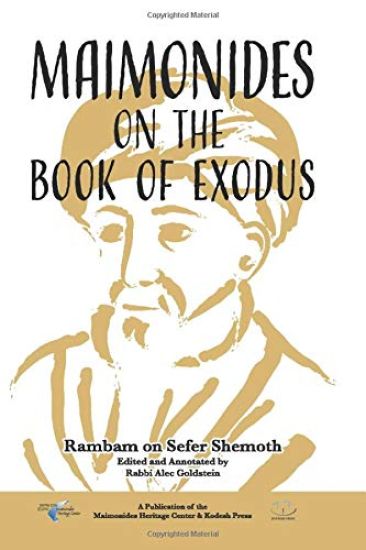
Unlocking the Wisdom of Maimonides on the Book of RedemptionRabbi Moses son of Maimon, known in Hebrew as Rambam and in English as Maimonides (1135-1204), is one of Judaism's most influential and enduring figures. His works have shaped Jewish thought for centuries, combining legal precision, philosophical brilliance, and profound spirituality. While Maimonides never authored a linear commentary on the Torah, his writings are replete with references to and interpretations of biblical verses. These insights offer a glimpse into his unique approach to understanding the narratives, commandments, and themes of the Torah.Maimonides on the Book of Exodus represents a monumental effort to compile, organize, and analyze every instance where Maimonides references the book of Exodus (Shemot). Each verse he cites is presented in the order it appears in the Torah, accompanied by his commentary from his major works, such as the Mishneh Torah, Guide for the Perplexed, Sefer ha-Mitzvot, and others. Rabbi Alec Goldstein further enriches this study by juxtaposing Maimonides' interpretations with those of other great commentators, including Rashi, Nahmanides, Kuzari, Sforno, and Ra'avad.This volume goes beyond simple explanation-it dives deeply into the debates and controversies surrounding Maimonides' views, providing readers with a thorough understanding of his interpretations and their lasting impact. Whether you are new to the study of Torah or a seasoned scholar, this work will expand your understanding of Exodus through the lens of one of Judaism's greatest minds.Key Questions Addressed in the Book: Faith and Belief: Are Jews commanded to believe in God, and how does Maimonides define faith as a mitzvah? How does belief serve as the foundation for observing the rest of the Torah's commandments?Free Will and Divine Justice: How is Pharaoh's loss of free will justified, and what does it teach about divine justice and human accountability? Does God's hardening of Pharaoh's heart conflict with the principles of free will?God's Essence and Revelation: What is the meaning of God's self-identification as "I am that I am" at the burning bush, and how does it reveal His nature? How does Maimonides interpret Moses' prophecy and its unique status among all prophets?Tests and Challenges: Why does God test the Jewish people, and what is the purpose of these challenges in their spiritual journey? How do these tests reflect divine wisdom and the development of faith?Passover and Redemption: What is the significance of the Passover offering, and how does it commemorate the Exodus? How does Maimonides understand the ritual symbolism of the lamb and matzah?The Tabernacle: What is the spiritual purpose of the Tabernacle, and how does it serve as a dwelling place for God's presence? How does Maimonides' interpretation of the Tabernacle differ from other commentators, such as Ramban and Sforno? Maimonides on the Book of Exodus is a journey into the mind of one of Judaism's greatest thinkers. By illuminating the Rambam's interpretations and placing them alongside those of other giants of Jewish thought, this book offers a new way to engage with the timeless wisdom of Exodus.

Written in the 12th century in Arabic by a faithful Jewish man, "The Guide for the Perplexed" is a work that explores the contradiction a very intelligent mind clearly saw between the tradition in which he was raised to believe and the growing philosophy of Arabian and Western culture. In Maimonides' time, there was an emerging disparity between the Law and a new level of philosophical sophistication, which he attempts to bridge in this work, primarily through the use of metaphor, though also acknowledging this method's limitations. "The Guide for the Perplexed" follows the form of a three-volume letter to a student, which was quickly translated to Hebrew and spread throughout the known world and carefully read by Jews and non-Jewish philosophers alike well through the Middle Ages. This work was so successful in its organization and arguments that it has long been a classic of the Jewish religion and of the secular world of philosophy. This edition is printed on premium acid-free paper and is translated with an introduction and analysis by M. Friedlander.

Das jüdische Traditionswesen.
Moses Maimonides; Raphael Jacob Fuerstenthal
Wentworth Press
2018
sidottu
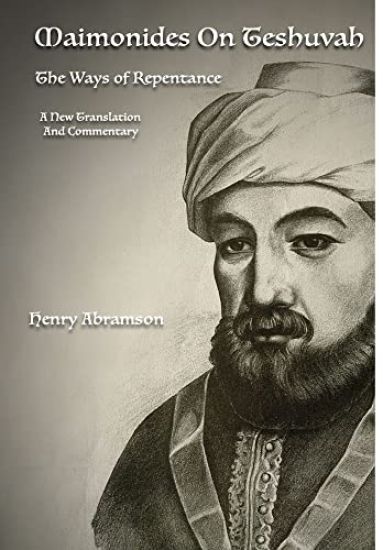
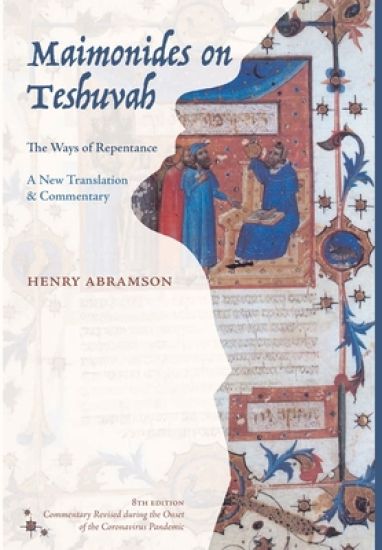
Maimonides on Teshuvah is a new translation and commentary on The Ways of Repentance, the first comprehensive study of Teshuvah in Jewish literary history. In this work, Maimonides surveys the philosophical, psychological, and practical aspects of repentance. Carefully weaving threads drawn from the rich tapestry of Jewish religious writings, Maimonides describes the theoretical foundations of teshuvah (free will vs. predeterminism, nature vs. nurture, and conceptions of the afterlife) and provides concrete recommendations for readers who yearn for the cleansing power of teshuvah. Dr. Henry Abramson, a specialist in Jewish history and thought, provides a refreshed 21st century translation of this classic work, along with a running contemporary commentary that combines traditional medieval Rabbinic commentary with his personal reflections.