Kirjojen hintavertailu. Mukana 12 595 353 kirjaa ja 12 kauppaa.

Kirjailija

Moshe Rosman

Kirjat ja teokset yhdessä paikassa: 7 kirjaa, julkaisuja vuosilta 1996-2022, suosituimpien joukossa How Jewish is Jewish History?. Vertaile teosten hintoja ja tarkista saatavuus suomalaisista kirjakaupoista.

7 kirjaa

Kirjojen julkaisuhaarukka 1996-2022.

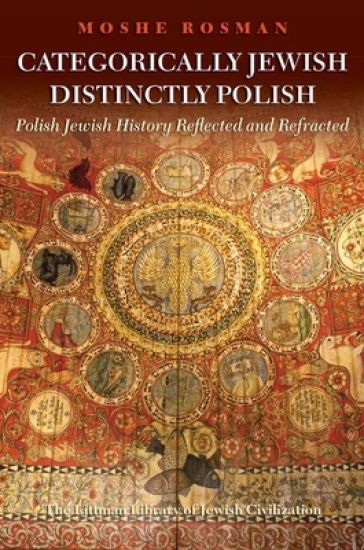
Categorically Jewish, Distinctly Polish

Categorically Jewish, Distinctly Polish

Moshe Rosman

The Littman Library of Jewish Civilization
2022
sidottu
Moshe Rosman's revolutionary approach has become a cornerstone of Polish Jewish historiography. Challenging conventions, he asserts that the 'marriage of convenience' between the Jews and the Polish--Lithuanian Commonwealth was a dynamic relationship that, though punctuated by crisis and persecution, developed into a saga of overall achievement and stability. With that fundamental message this book forges a thematic survey of Jewish history in early modern Poland. These essays, written by Rosman over the course of a distinguished career, have all been updated and enhanced with new detail and nuanced arguments, taking account not only of new archival material and research but also of the ongoing evolution of the author’s own knowledge and perspectives. Some appear here in English for the first time. The volume's structure highlights key topics for understanding the Polish Jewish past: relations between Jews and other Poles; Jewish communal life; Polish Jewish women; and hasidism. One section analyses how this past has been presented in both scholarly and popular modes. The essays are crafted to place them in dialogue with each other. Analytical introductions weigh their significance in the light of modern and postmodern Jewish and Polish historiography. An extensive general introduction sets the context of the history portrayed here, while a thoughtful conclusion elucidates the larger motifs that emerge.
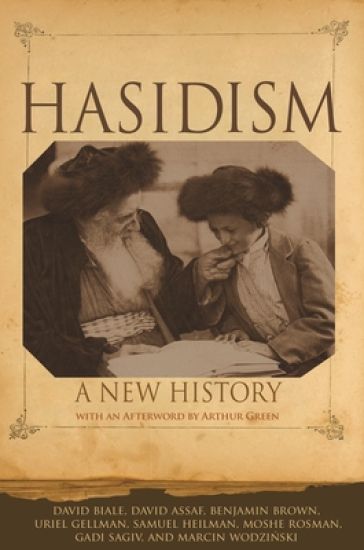
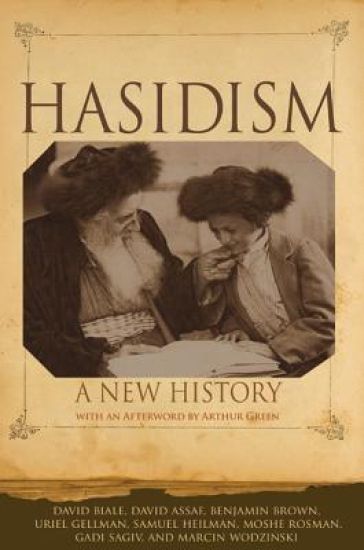
Hasidism

Hasidism

David Biale; David Assaf; Benjamin Brown; Uriel Gellman; Samuel Heilman; Moshe Rosman; Arthur Green; Gadi Sagiv; Marcin Wodzinski

Princeton University Press
2020
pokkari
A must-read book for understanding this vibrant and influential modern Jewish movementHasidism originated in southeastern Poland, in mystical circles centered on the figure of Israel Ba’al Shem Tov, but it was only after his death in 1760 that a movement began to spread. Today, Hasidism is witnessing a remarkable renaissance around the world. This book provides the first comprehensive history of the pietistic movement that shaped modern Judaism. Written by an international team of scholars, its unique blend of intellectual, religious, and social history demonstrates that, far from being a throwback to the Middle Ages, Hasidism is a product of modernity that forged its identity as a radical alternative to the secular world.
Hasidism

Hasidism

David Biale; David Assaf; Benjamin Brown; Uriel Gellman; Samuel Heilman; Moshe Rosman; Arthur Green; Gadi Sagiv; Marcin Wodzinski

PRINCETON UNIVERSITY PRESS
2017
sidottu
The first comprehensive history of the pietistic movement that shaped modern Judaism This is the first comprehensive history of the pietistic movement that shaped modern Judaism. The book's unique blend of intellectual, religious, and social history offers perspectives on the movement's leaders as well as its followers, and demonstrates that, far from being a throwback to the Middle Ages, Hasidism is a product of modernity that forged its identity as a radical alternative to the secular world. Hasidism originated in southeastern Poland, in mystical circles centered on the figure of Israel Baal Shem Tov, but it was only after his death in 1760 that a movement began to spread. Challenging the notion that Hasidism ceased to be a creative movement after the eighteenth century, this book argues that its first golden age was in the nineteenth century, when it conquered new territory, won a mass following, and became a mainstay of Jewish Orthodoxy. World War I, the Russian Revolution, and the Holocaust decimated eastern European Hasidism. But following World War II, the movement enjoyed a second golden age, growing exponentially. Today, it is witnessing a remarkable renaissance in Israel, the United States, and other countries around the world. Written by an international team of scholars, Hasidism is a must-read for anyone seeking to understand this vibrant and influential modern Jewish movement.
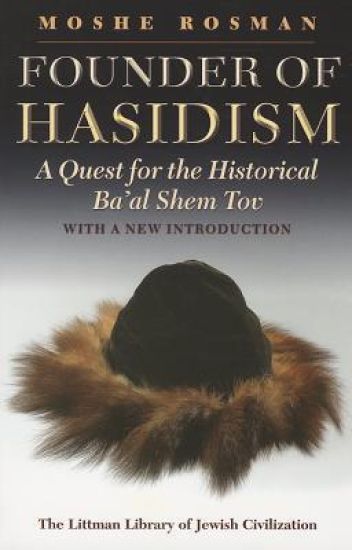
Founder of Hasidism

Founder of Hasidism

Moshe Rosman

The Littman Library of Jewish Civilization
2013
nidottu
The Ba'al Shem Tov is an elusive subject for historians because documentary evidence about his life is scanty and equivocal. Until now, much of what was known about him was based on stories compiled more than a generation after his death, many of which serve more to mythologize him than to describe him. The portrait Moshe Rosman provides is drawn from life instead of from myth. Based on innovative critical analysis of familiar and previously unexplored archival sources, and concentrating on accounts that can be attributed to the Besht or to contemporary eyewitnesses, this book goes further than any previous work in uncovering the historical Ba'al Shem Tov. Additionally, documents in Polish and Hebrew discovered by Professor Rosman during his research for the book enable him to give the first detailed description of the cultural, social, economic, and political context of the Besht's life. Founder of Hasidism supplies the history behind the legend. It presents the best, most convincing description that can be drawn from the existing documentary evidence, changing our understanding of the Besht and with it the master-narrative of hasidism.A substantial new introduction considers what has changed in the study of Hasidism since the influential first edition was published, these changes being in part due to the effect of the book. New approaches, new sources, and new interpretations have been introduced, and these are reviewed and critically assessed. Criticisms of the original edition are answered and key issues reconsidered, including the authenticity of the various versions of the Holy Epistle; the ways in which Jacob Joseph of Polonne's books can be utilized as historical sources; and the relationship to history of the stories about the Ba'al Shem Tov in the hagiographical collection Shivhei Ha-Besht.
Holy Dissent

Holy Dissent

Moshe Rosman

Wayne State University Press
2011
sidottu
BThe religious communities of early modern Eastern Europe--particularly those with a mystical bent--are typically studied in isolation. Yet the heavy Slavic imprint on Jewish popular mysticism and pervasive Judaizing tendencies among Christian dissenters call into question the presumed binary quality of Jewish-Christian interactions. In Holy Dissent: Jewish and Christian Mystics in Eastern Europe, editor Glenn Dynner presents twelve essays that chart contacts, parallels, and mutual influences between Jewish and Christian mystics. With cutting-edge research on folk healers, messianists, Hasidim, and Christian sectarians, this volume presents instances of rich cultural interchange and bold border transgression. Holy Dissent is divided into two sections: "Jewish Mystics in a Christian World" and "Christianizing Jews, Judaizing Christians." In these essays, readers learn that Jewish and Christian folk healers consulted each other and learned from common sources; that the founder of Hasidism, Rabbi Israel Ba'al Shem Tov, likely drew inspiration from Christian ascetics; that Christian peasants sought and obtained audience with Hasidic masters; that Jewish mystics openly Christianized; and that Christian mystics openly Judaized. In contrast to prevailing models that present Jewish and Christian cultures as either rigidly autonomous or ambiguously hybrid, Holy Dissent charts specific types of religio-cultural exchange and broadens our conception of how cultures interact. The scholarship in this volume is notably fresh and significant and makes an important contribution across disciplines. Jewish and Christian studies scholars as well as historians of Eastern Europe will benefit from the analysis of Holy Dissent.
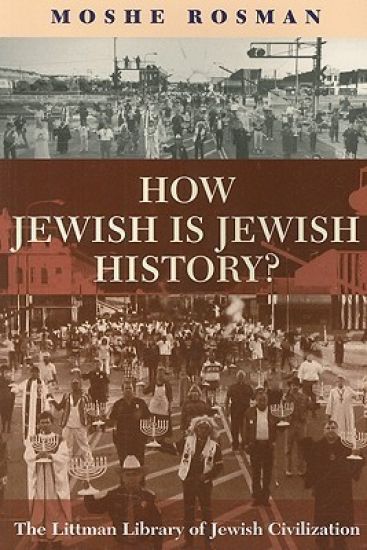
How Jewish is Jewish History?

How Jewish is Jewish History?

Moshe Rosman

The Littman Library of Jewish Civilization
2008
nidottu
With great vigour and from the vantage point of long experience of writing and teaching Jewish history, Moshe Rosman treats the key questions that postmodernism raises for the writing of Jewish history. What is the relationship between Jewish culture and history and those of the non-Jews among whom Jews live? Can we-in the light of postmodernist thought-speak of a continuous, coherent Jewish People, with a distinct culture and history? What in fact is Jewish cultural history, and how can it be written? How does gender transform the Jewish historical narrative? How does Jewish history fit into the multicultural paradigm? Has Jewish history entered a postmodern phase? How can Jewish history utilize the methodologies of other disciplines to accomplish its task? All these are questions that Jewish historians need to think about if their work is to be taken seriously by mainstream historians and intellectuals, or indeed by educated Jews interested in understanding their own cultural and historical past. While engaging with the questions raised by postmodernists, the author adopts a critical stance towards their work. His basic claim is that it is possible to incorporate, judiciously, postmodern innovations into historical scholarship that is still based on documentary research and critical analysis. The resulting endeavor might be termed 'a reformed positivism'. Rosman presents a concentrated, coherent, cogent argument as to what considerations must be brought to bear on the writing of Jewish history today. By highlighting in one book the issues raised by postmodernism, How Jewish is Jewish History? provides those in the field with a foundation from which to discuss how it should be practiced in light of this generation's challenges. It is a valuable resource for students of Jewish history and historiography and a handy tool for scholars who must confront the issues aired here in their own more narrowly focused scholarly works.
Founder of Hasidism

Founder of Hasidism

Moshe Rosman

University of California Press
1996
sidottu
This book goes farther than any previous work in uncovering the historical Israel ben Eliezer - known as the Ba'al Shem Tov, or the Besht - the eighteenth-century Polish-Jewish mystic who profoundly influenced the shape of modern Judaism. As the progenitor of Hasidism, the Ba'al Shem Tov is one of the key figures in Jewish history; to understand him is to understand an essential element of modern Jewish life and religion. Because evidence about his life is scanty and equivocal, the Besht has long eluded historians and biographers. Much of what is believed about him is based on stories compiled more than a generation after his death, many of which serve to mythologize rather than describe their subject. Rosman's study casts a bright new light on the traditional stories about the Besht, confirming and augmenting some, challenging others. By concentrating on accounts attributable directly to the Besht or to contemporary eyewitnesses, Rosman provides a portrait drawn from life rather than myth. In addition, documents in Polish and Hebrew discovered by Rosman during the research for this book enable him to give the first detailed description of the cultural, social, economic, and political context of the Ba'al Shem Tov's life.