Kirjojen hintavertailu. Mukana 12 562 330 kirjaa ja 12 kauppaa.

Kirjailija

Moti Nativ

Kirjat ja teokset yhdessä paikassa: 3 kirjaa, julkaisuja vuosilta 2010-2021, suosituimpien joukossa Jiu-Jitsu and Self Defense. Vertaile teosten hintoja ja tarkista saatavuus suomalaisista kirjakaupoista.

3 kirjaa

Kirjojen julkaisuhaarukka 2010-2021.

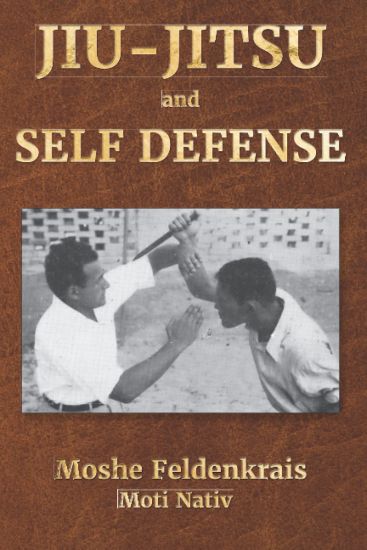
Jiu-Jitsu and Self Defense

Jiu-Jitsu and Self Defense

Moshe Feldenkrais; Moti Nativ

Genesis II Publishing, Inc.
2021
nidottu
Moshe Feldenkrais published Jiu-Jitsu and Self Defense as a training manual for Haganah recruits in 1930. The Haganah was a Jewish paramilitary organization, which sixteen-year-old Moshe Feldenkrais joined at its inception in 1920. Ten years later, this book describing his training method was published based on a decade of field experience.His years of hand-to-hand combat spurred Moshe to write this book that presents his unusual self-defense method. The book is based on all movements of defense, where the first movement is the natural reactive movement that a person does without thinking. He concluded that any effective self-defense system must be based on a person's automatic movements when attacked.Shortly after Jiu-Jitsu and Self Defense was published, Feldenkrais left Tel Aviv to continue his education in Paris, where he met Jigoro Kano, the founder of Judo. After reviewing Jiu-Jitsu and Self Defense, Kano engaged Feldenkrais to co-found the Jiu-Jitsu Club de France.Jiu-Jitsu and Self Defense is the first blossom of Moshe's genius. This book contains the seeds that germinated and, many decades later, grew into the Feldenkrais Method(R).

Thinking and Doing

Thinking and Doing

Moshe Feldenkrais; Moti Nativ

Genesis II Publishing, Inc.
2021
pokkari
In 1929, a young Moshe Feldenkrais published his Hebrew translation of the book, The Practice of Autosuggestion by the Method of mile Cou . Feldenkrais not only translated the book but composed and added his own observations in two additional chapters, which are presented here in this monograph. Feldenkrais noted that the work of Cou was primarily focused on resolving problems, and realized that these same ideas could be used proactively to improve one's abilities. Feldenkrais writes, "We will explore this issue and see if we can take it a step forward. Using examples from real life, we will demonstrate that by using autosuggestion we can achieve far superior results rather than merely being in a condition no worse than someone else's." Feldenkrais offers numerous examples of how autosuggestion can enhance abilities and improve performance and concludes that imagination and correct thinking are more effective than willpower. For many years, Autosuggestion was a reference point for Feldenkrais as he continued to develop his work. He mentioned Cou in various aspects of his later publications, including Body and Mature Behavior and Awareness Through Movement. Both of these books are considered milestones in the development of the Feldenkrais Method(R).
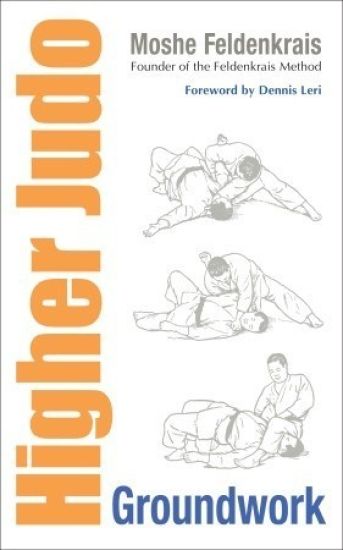
Higher Judo

Higher Judo

Moshe Feldenkrais; Dennis Leri; Michael Brousse; Moti Nativ

North Atlantic Books,U.S.
2010
pokkari
Dr. Moshe Feldenkrais is best known for pioneering the somatic therapy that bears his name. Less well known is that he was also one of the earliest European practitioners of the martial art of judo and wrote a number of influential texts on the subject. Primary among these is Higher Judo, first published in 1952 and now reprinted with a new foreword that offers useful context and elaborates on Feldenkrais' comprehensive--and still timely--approach to the martial art and to the body. Judo was a natural choice for Feldenkrais's fascination with body/mind exploration and how to promote optimal functioning through awareness. In Higher Judo, he presents judo as the art of using all parts of the body to promote general health, and as part of the "basic culture of the body." He reveals judo's potential for creating a sense of rhythm of movement and improving mental and physical coordination. Higher Judo covers specific movements and positions--the astride position, the six o'clock approach, falling techniques--in both the text and the clear line drawings. Even more importantly, it shows how such groundwork can help practitioners develop their mental and physical awareness to their full potential.