Kirjojen hintavertailu. Mukana 12 390 323 kirjaa ja 12 kauppaa.

Kirjailija

Mrinalini Goswami

Kirjat ja teokset yhdessä paikassa: 3 kirjaa, julkaisuja vuosilta 2021-2025, suosituimpien joukossa Determinants and Stratification of Household Carbon Footprint. Vertaile teosten hintoja ja tarkista saatavuus suomalaisista kirjakaupoista.

3 kirjaa

Kirjojen julkaisuhaarukka 2021-2025.

Determinants and Stratification of Household Carbon Footprint

Determinants and Stratification of Household Carbon Footprint

Sunil Nautiyal; Mrinalini Goswami; A Premkumar

Springer Nature Switzerland AG
2025
sidottu
This book provides comprehensive insights into the socioeconomic systems, carbon accounting, and consumption-expenditure frameworks influencing household carbon footprints (HCF) in a developing economy. It offers a unique perspective on the link between socioeconomic classes, agro-ecological zones, and carbon emissions, specifically in the Indian context. Household consumption patterns play a critical role in determining greenhouse gas emissions and are increasingly recognized as vital for shaping effective climate policies. Various socio-economic, demographic, and lifestyle factors—such as household size, income, food habits, mobility choices, waste management practices, home appliances, and education—significantly impact HCF. While the IPCC mitigation framework focuses extensively on direct emissions from energy and product production, this book emphasizes indirect emissions driven by lifestyle choices and end-use consumption. The book is based on a PAN-India study across 13 diverse locations within nine agro-ecological regions, examining the socioeconomic and geo-climatic determinants of household carbon emissions. It explores the income-consumption relationship, providing strategies to leverage these insights for targeted decarbonization and sustainable development. Additionally, the book addresses the behavioral aspects of carbon footprints and offers policy recommendations to promote a "carbon handprint"—advocating for carbon-friendly behaviors and solutions that are socially acceptable. By segregating emissions from production and consumption, it aims to guide the development of comprehensive emission reduction strategies for various consumables. This volume is an essential resource for students, researchers, and policymakers interested in sustainable consumption, climate mitigation, and the socio-economic dimensions of carbon emissions in developing countries.
Field Margin Vegetation and Socio-Ecological Environment

Field Margin Vegetation and Socio-Ecological Environment

Sunil Nautiyal; Mrinalini Goswami; Puneeth Shivakumar

Springer Nature Switzerland AG
2022
nidottu
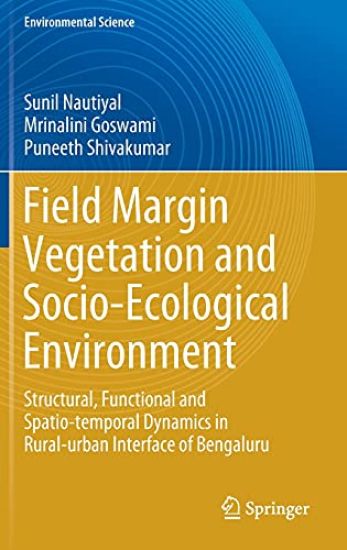
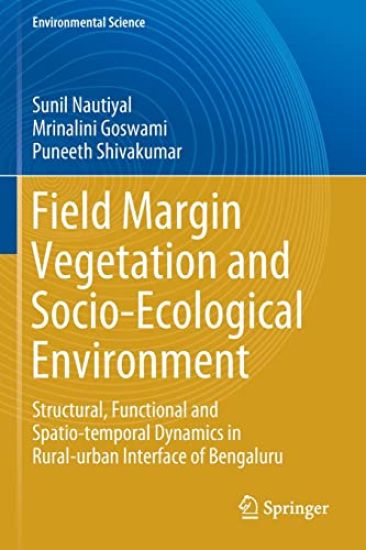
This book has been produced as a part of the project ‘Social-Ecological Systems at the Indian Rural-Urban Interface: Functions, Scales, and Dynamics of Transition’. It addresses transition processes in agriculture and society triggered by urbanization, focusing on Bengaluru as an example of a rapidly growing megacity in India. Adopting a holistic, multidisciplinary approach embedded within a social-ecological systems research framework, it explores how the physical and socio-economic landscapes have led to changes in economic priorities, which have overpowered ecological and traditional priorities with regard to ecosystem governance. Allowing readers to gain a deeper understanding of this unexplored dimension of socio-ecological systems, this book is a valuable resource for international researchers, scholars and master’s students in the field of environmental science, socio-ecology, forestry and agriculture.
Field Margin Vegetation and Socio-Ecological Environment

Field Margin Vegetation and Socio-Ecological Environment

Sunil Nautiyal; Mrinalini Goswami; Puneeth Shivakumar

Springer Nature Switzerland AG
2021
sidottu
This book has been produced as a part of the project ‘Social-Ecological Systems at the Indian Rural-Urban Interface: Functions, Scales, and Dynamics of Transition’. It addresses transition processes in agriculture and society triggered by urbanization, focusing on Bengaluru as an example of a rapidly growing megacity in India. Adopting a holistic, multidisciplinary approach embedded within a social-ecological systems research framework, it explores how the physical and socio-economic landscapes have led to changes in economic priorities, which have overpowered ecological and traditional priorities with regard to ecosystem governance. Allowing readers to gain a deeper understanding of this unexplored dimension of socio-ecological systems, this book is a valuable resource for international researchers, scholars and master’s students in the field of environmental science, socio-ecology, forestry and agriculture.