
Kirjailija
Muhammad Akram Khan
Kirjat ja teokset yhdessä paikassa: 6 kirjaa, julkaisuja vuosilta 2003-2025, suosituimpien joukossa An Introduction to Islamic Economics. Vertaile teosten hintoja ja tarkista saatavuus suomalaisista kirjakaupoista.
6 kirjaa
Kirjojen julkaisuhaarukka 2003-2025.
'I read with great interest the current state of Islamic economics and finance as examined by Muhammad Akram Khan, who has given a fresh outlook for the readers to find out its limitations and to search for its solutions. Khan has read widely in the subject matter, and presented his views with reference to literature and thoughtful and logical arguments. While many may not agree with his arguments or will have a better explanation, I find his arguments at least worthy of examination to strengthen the arguments of those who might oppose him. Although Khan is critical of the subject matter, he is very sympathetic to the greater objectives of Islamic economics and provides his own prescriptions to achieve those objectives.'- M. Kabir Hassan, University of New Orleans, USWhat is Wrong with Islamic Economics? takes an objective look at the state of the art in Islamic economics and finance. It analyses reasons for perceived stagnation and also suggests a way forward.As well as probing various myths, the book presents several innovative ideas and a methodology for developing the subject on new foundations. It also highlights weaknesses in the conventional position on prohibition of interest, which has led Islamic banks devise a series of legal tricks. The author notes how the original aim of devising a new brand of banking has become less prominent whilst Islamic banks now position themselves more closely to conventional banks. The book also offers insights into how certain traditional thinking has seemingly ignored the egalitarian spirit of the law of zakah and created a scenario where zakah is not able to help the billions of poor people around the globe.This detailed book will appeal to students, professors, researchers, Islamic banks and finance houses, consulting companies, accounting firms, and regulatory bodies. Professional economists, libraries in research and training organizations, as well as anyone with a general interest in the topic will find much to interest them.
'I read with great interest the current state of Islamic economics and finance as examined by Muhammad Akram Khan, who has given a fresh outlook for the readers to find out its limitations and to search for its solutions. Khan has read widely in the subject matter, and presented his views with reference to literature and thoughtful and logical arguments. While many may not agree with his arguments or will have a better explanation, I find his arguments at least worthy of examination to strengthen the arguments of those who might oppose him. Although Khan is critical of the subject matter, he is very sympathetic to the greater objectives of Islamic economics and provides his own prescriptions to achieve those objectives.'- M. Kabir Hassan, University of New Orleans, USWhat is Wrong with Islamic Economics? takes an objective look at the state of the art in Islamic economics and finance. It analyses reasons for perceived stagnation and also suggests a way forward.As well as probing various myths, the book presents several innovative ideas and a methodology for developing the subject on new foundations. It also highlights weaknesses in the conventional position on prohibition of interest, which has led Islamic banks devise a series of legal tricks. The author notes how the original aim of devising a new brand of banking has become less prominent whilst Islamic banks now position themselves more closely to conventional banks. The book also offers insights into how certain traditional thinking has seemingly ignored the egalitarian spirit of the law of zakah and created a scenario where zakah is not able to help the billions of poor people around the globe.This detailed book will appeal to students, professors, researchers, Islamic banks and finance houses, consulting companies, accounting firms, and regulatory bodies. Professional economists, libraries in research and training organizations, as well as anyone with a general interest in the topic will find much to interest them.

Islamic economics and finance have increased in importance over the last few decades, with new Islamic financial institutions opening up and a number of important books published on the topic. This glossary, fully updated and revised for the new edition, uses easy to understand language to introduce terms used by Muslim scholars, historians and legal experts. The book covers terms from Arabic, Urdu, Turkish, Malaysian and English sources whilst covering the Islamic side of such terms as taxation, banking, insurance, accounting, and auditing. The book's unassuming yet comprehensive nature will appeal to economists, bankers and accountants as well as students and researchers with an interest in economics and finance.
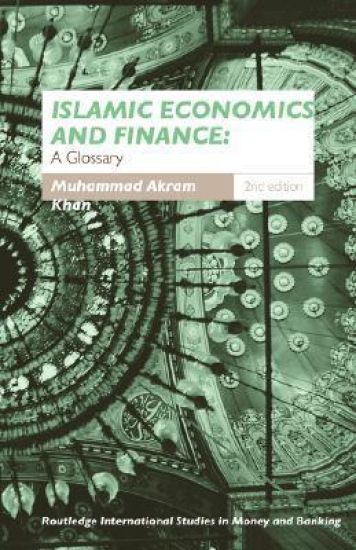
Islamic economics and finance have increased in importance over the last few decades, with new Islamic financial institutions opening up and a number of important books published on the topic. This glossary, fully updated and revised for the new edition, uses easy to understand language to introduce terms used by Muslim scholars, historians and legal experts. The book covers terms from Arabic, Urdu, Turkish, Malaysian and English sources whilst covering the Islamic side of such terms as taxation, banking, insurance, accounting, and auditing. The book's unassuming yet comprehensive nature will appeal to economists, bankers and accountants as well as students and researchers with an interest in economics and finance.