Kirjojen hintavertailu. Mukana 12 595 353 kirjaa ja 12 kauppaa.
Kirjailija
Muhammad Arshad
Kirjat ja teokset yhdessä paikassa: 14 kirjaa, julkaisuja vuosilta 2002-2025, suosituimpien joukossa Impacto do algodão transgénico Bt contra o complexo de pragas de insetos sugadores. Vertaile teosten hintoja ja tarkista saatavuus suomalaisista kirjakaupoista.
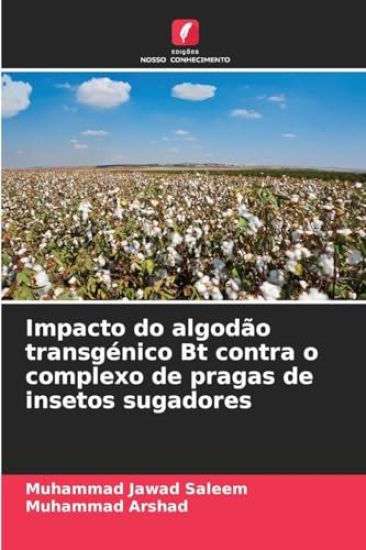
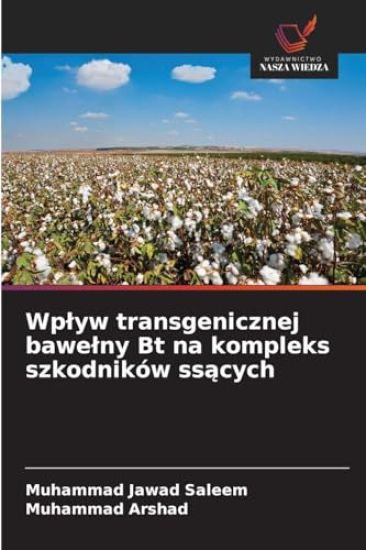
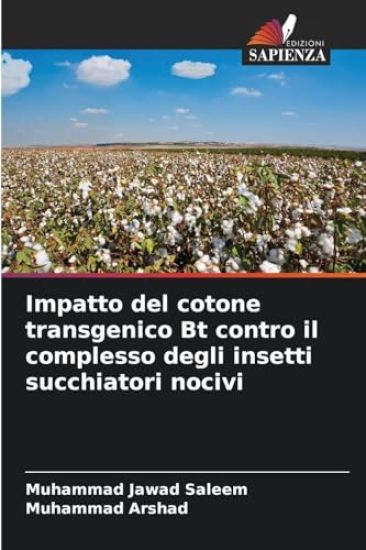
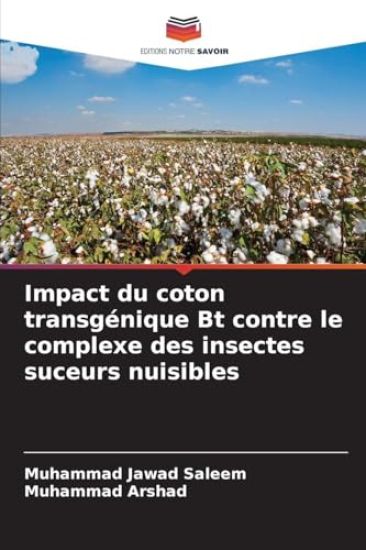
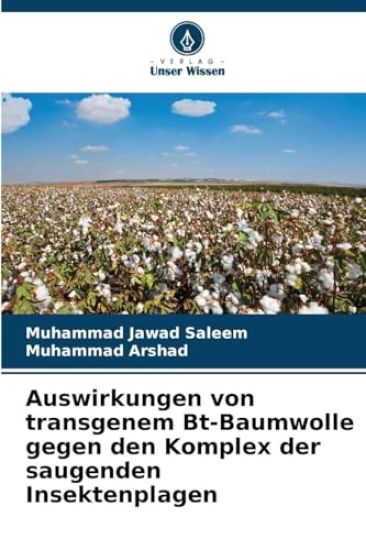
Baumwolle ist eine wichtige Cash Crop Pakistans, da sie eine zentrale Rolle in der Wirtschaft spielt. Die Baumwollpflanze wurde genetisch ver ndert, um das toxische Gen von Bacillus thuringiensis zu enthalten, das als transgene Bt-Baumwolle bekannt ist, und hat sich bei der Bek mpfung von Kapselw rmern als erfolgreich erwiesen. Allerdings zieht sie aufgrund der Reduzierung von Pestizidspritzungen in fr hen Stadien auch andere Sch dlinge an, insbesondere saugende Sch dlinge. Daher wurde die vorliegende Studie geplant, um die vergleichende Resistenz von sechs Bt-Baumwollsorten gegen wichtige saugende Sch dlinge (Wei e Fliege, Zikade und Thrips) zu messen. Die Ergebnisse des Experiments zeigten, dass die transgene Baumwollsorte Bt-802 vergleichsweise resistent war, da sie den gr ten Einfluss auf die Populationen der Wei en Fliege und der Zikade hatte, die 7,97 bzw. 1,83 pro Blatt betrugen. Die transgene Baumwollsorte Bt-806 hatte die gr te Wirkung auf die Thrips-Population, da sie die geringste Population (5,80 Thrips pro Blatt) aufwies. Die Population der saugenden Insekten stand in negativer Korrelation zur relativen Luftfeuchtigkeit und Niederschlagsmenge, w hrend die Temperatur in positiver Korrelation stand.
With an ever-increasing demand for more food supply, agricultural scientists will have to search for new ways and technologies to promote food production. In recent decades, plant growth regulators (PGRs) have made great strides in promoting plant growth and development. PGRs are organic compounds which have the ability to dramatically affect physiological plant processes when present in extremely low concentrations (in the range of micro-to picograms). Although all higher plants have the ability to synthesize PGRs endogenously, they do respond to the exogenous sources most likely due to not having the capacity to synthesize sufficient endogenous phytohormones for optimal growth and development under given climatic and environmental conditions. In recent years, PGRs have established their position as a new generation of agrochemicals after pesticides, insecticides and herbicides. Interest in the commercial use of PGRs for improving plant growth and crop yields is also increasing because of their non-polluting nature. The use of PGRs in the post-harvest technology is well established and many new breakthroughs have recently been revealed.
A plant nutrition requirement and management is becoming the most burning issue in agro-industry. soil hosts for different microbes which has the potential to convert the inorganic form of nutrients to plant usable organic form. Artifical induction of microbes helps the plants to combat different stresses. Wate materials contains clossal amount of organic and inorganic nutrients which can be used by plants after processing (compost). The objective of this research to combat water stress by using compost and ACC-Deaminase technology
With an ever-increasing demand for more food supply, agricultural scientists will have to search for new ways and technologies to promote food production. In recent decades, plant growth regulators (PGRs) have made great strides in promoting plant growth and development. PGRs are organic compounds which have the ability to dramatically affect physiological plant processes when present in extremely low concentrations (in the range of micro-to picograms). Although all higher plants have the ability to synthesize PGRs endogenously, they do respond to the exogenous sources most likely due to not having the capacity to synthesize sufficient endogenous phytohormones for optimal growth and development under given climatic and environmental conditions. In recent years, PGRs have established their position as a new generation of agrochemicals after pesticides, insecticides and herbicides. Interest in the commercial use of PGRs for improving plant growth and crop yields is also increasing because of their non-polluting nature. The use of PGRs in the post-harvest technology is well established and many new breakthroughs have recently been revealed.