Kirjojen hintavertailu. Mukana 12 595 353 kirjaa ja 12 kauppaa.

Kirjailija

Muhammad Imran Malik

Kirjat ja teokset yhdessä paikassa: 5 kirjaa, julkaisuja vuosilta 2014-2024, suosituimpien joukossa Advanced Separation Techniques for Polyolefins. Vertaile teosten hintoja ja tarkista saatavuus suomalaisista kirjakaupoista.

5 kirjaa

Kirjojen julkaisuhaarukka 2014-2024.

Liquid Chromatography of Synthetic Polymers

Liquid Chromatography of Synthetic Polymers

Muhammad Imran Malik; Dusan Berek

Springer International Publishing AG
2024
nidottu
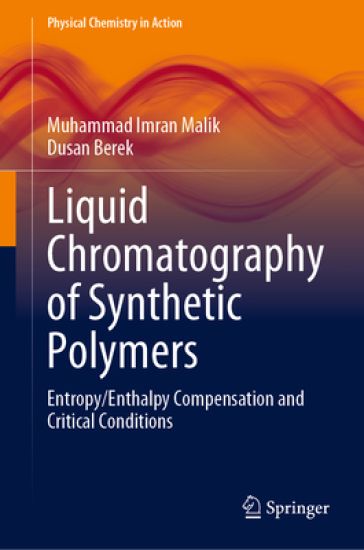
This book elucidates the peculiar phenomenon of entropy/enthalpy compensation that takes place in high performance liquid chromatography (HPLC) of polymers. Numerous publications, including some books, are devoted to molecular characterization of synthetic polymers, materials presently produced in large and steadily growing quantities, applying methods of HPLC. A knowledge of the molecular characteristics of polymers is indispensable, not only for their proper applications but also for their recycling and remediation. Polymer scientists generally focus on synthesis and potential applications of polymers while not giving due attention to an important central link, their comprehensive characterization in context of development of structure-property correlations. To fill this gap is one of the aims of the present book. The process of entropy/enthalpy compensation plays a decisive role in the advanced method of polymer characterization such as liquid chromatography at critical conditions, eluent gradient interaction chromatography, and temperature gradient interaction chromatography. All chemists working on any aspect of polymer science will find this book a valuable resource for the development of structure-property correlations.
Liquid Chromatography of Synthetic Polymers

Liquid Chromatography of Synthetic Polymers

Muhammad Imran Malik; Dusan Berek

Springer International Publishing AG
2023
sidottu
This book elucidates the peculiar phenomenon of entropy/enthalpy compensation that takes place in high performance liquid chromatography (HPLC) of polymers. Numerous publications, including some books, are devoted to molecular characterization of synthetic polymers, materials presently produced in large and steadily growing quantities, applying methods of HPLC. A knowledge of the molecular characteristics of polymers is indispensable, not only for their proper applications but also for their recycling and remediation. Polymer scientists generally focus on synthesis and potential applications of polymers while not giving due attention to an important central link, their comprehensive characterization in context of development of structure-property correlations. To fill this gap is one of the aims of the present book. The process of entropy/enthalpy compensation plays a decisive role in the advanced method of polymer characterization such as liquid chromatography at critical conditions, eluent gradient interaction chromatography, and temperature gradient interaction chromatography. All chemists working on any aspect of polymer science will find this book a valuable resource for the development of structure-property correlations.
Nanocarriers for Organ-Specific and Localized Drug Delivery

Nanocarriers for Organ-Specific and Localized Drug Delivery

Muhammad Raza Shah; Muhammad Imran Malik; Shafi Ullah

Elsevier Science Publishing Co Inc
2022
nidottu
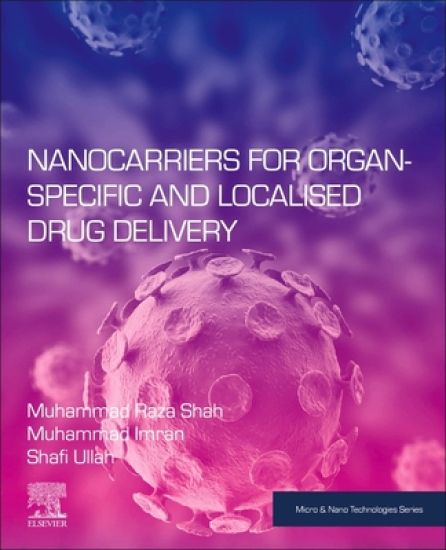
Organ-specific drug delivery is aimed at achieving increased concentration of therapeutic molecules at target sites with minimum side effects on other healthy tissues. Similarly, drug-specific delivery to some vital organs, such as the brain, lungs, heart and kidneys remains a challenging task for the formulation scientists. Oral delivery of most of the commercially available life-saving drugs has also been impeded by various physio-chemical and biological barriers. These advancements in nanotechnology have led to the development of various pharmaceutical nanocarriers. Nanocarriers for Organ-Specific and Localized Drug Delivery summarizes targeted drug delivery systems and approaches to the major organs of the body. The book shows how drugs can be specifically targeted to the pathological area within an organ in a viable way. Employing pharmaceutical nanocarriers for drug delivery targeted to specific organs of the body requires a comprehensive knowledge of the disease site’s pathophysiology as well as physical, chemical and pharmaceutical techniques for modification or functionalization of the nanocarriers. Combining theoretical principles and practical applications of various nanocarriers for organ-specific drug delivery, this is an important reference source for all those seeking to increase their understanding of how pharmaceutical nanocarriers are being used to create more efficient drug delivery systems.
Advanced Separation Techniques for Polyolefins

Advanced Separation Techniques for Polyolefins

Harald Pasch; Muhammad Imran Malik

Springer International Publishing AG
2016
nidottu
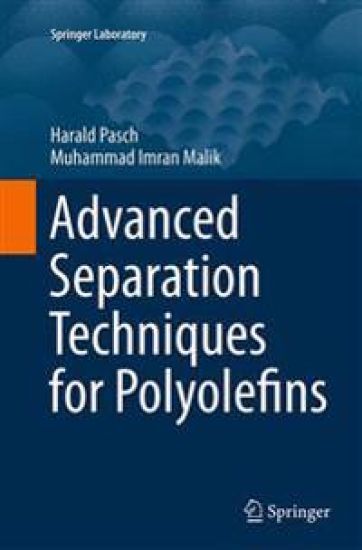
This Springer Laboratory volume introduces the reader to advanced techniques for the separation and fractionation of polyolefins. It includes detailed information on experimental protocols and procedures, addressing the experimental background of different polyolefin fractionation techniques in great detail. The book summarizes important applications in all major fractionation methods with emphasis on multidimensional analytical approaches. It comprises the most powerful modern techniques, such as high temperature size exclusion chromatography (HT-SEC) for molar mass analysis, temperature rising elution fractionation (TREF) and crystallization analysis fractionation (CRYSTAF) for the analysis of chemical composition and branching, high temperature two-dimensional liquid chromatography (HT-2D-LC), solvent and temperature gradient interaction chromatography (SGIC and TGIC) and crystallization elution fractionation (CEF). Beginners as well as experiencedchromatographers will benefit from this concise introduction to a great variety in instrumentation, separation procedures and applications. With detailed descriptions of experimental approaches for the analysis of complex polyolefins, the readers are offered a toolbox to solve simple as well as sophisticated separation tasks. The book starts with an introduction into the molecular complexity of polyolefins - the most widely used synthetic polymers with rapidly growing production capacities. It systematically discusses crystallization based fractionation techniques including TREF, CRYSTAF and CEF and column chromatographic techniques for molar mass, chemical composition and microstructure, as well as the combination of different fractionations in multidimensional experimental setups. This book also includes basic information on the application of high-temperature field-flow fractionation.
Advanced Separation Techniques for Polyolefins

Advanced Separation Techniques for Polyolefins

Harald Pasch; Muhammad Imran Malik

Springer International Publishing AG
2014
sidottu
This Springer Laboratory volume introduces the reader to advanced techniques for the separation and fractionation of polyolefins. It includes detailed information on experimental protocols and procedures, addressing the experimental background of different polyolefin fractionation techniques in great detail. The book summarizes important applications in all major fractionation methods with emphasis on multidimensional analytical approaches. It comprises the most powerful modern techniques, such as high temperature size exclusion chromatography (HT-SEC) for molar mass analysis, temperature rising elution fractionation (TREF) and crystallization analysis fractionation (CRYSTAF) for the analysis of chemical composition and branching, high temperature two-dimensional liquid chromatography (HT-2D-LC), solvent and temperature gradient interaction chromatography (SGIC and TGIC) and crystallization elution fractionation (CEF). Beginners as well as experiencedchromatographers will benefit from this concise introduction to a great variety in instrumentation, separation procedures and applications. With detailed descriptions of experimental approaches for the analysis of complex polyolefins, the readers are offered a toolbox to solve simple as well as sophisticated separation tasks. The book starts with an introduction into the molecular complexity of polyolefins - the most widely used synthetic polymers with rapidly growing production capacities. It systematically discusses crystallization based fractionation techniques including TREF, CRYSTAF and CEF and column chromatographic techniques for molar mass, chemical composition and microstructure, as well as the combination of different fractionations in multidimensional experimental setups. This book also includes basic information on the application of high-temperature field-flow fractionation.