Kirjojen hintavertailu. Mukana 12 595 353 kirjaa ja 12 kauppaa.

Kirjailija

Mukesh Doble

Kirjat ja teokset yhdessä paikassa: 7 kirjaa, julkaisuja vuosilta 2012-2023, suosituimpien joukossa Herb-Drug Combinations. Vertaile teosten hintoja ja tarkista saatavuus suomalaisista kirjakaupoista.

7 kirjaa

Kirjojen julkaisuhaarukka 2012-2023.

Herb-Drug Combinations

Herb-Drug Combinations

Shanmugam Hemaiswarya; Pranav Kumar Prabhakar; Mukesh Doble

SPRINGER VERLAG, SINGAPORE
2023
nidottu
Plant extracts or their pure natural constituents have been used traditionally for thousands of years for treating diseases with considerable success in India and other Asian countries. In addition, they have also been used as complements or supplements with conventional medicine. This book discusses the latest research in the application of combination therapy, namely herbs and drugs, in the treatment of a range of communicable and non-communicable diseases to achieve a synergistic effect. This synergy may help in reducing the amount of drug, its toxicity, side effects, and development of resistance as well as improve its efficacy. The book also discusses the pharmacodynamic and pharmacokinetic parameters, experimental tools to determine the impact of combination, computational approaches to identify synergy, statistical analysis of data, and clinical and regulatory issues. The book is useful for researchers in the fields of pharmacology, pharmacy and medicinal chemistry andthose working in pharmaceutical and nutraceutical industries. This book could open up new strategies to focus on multiple targets to combat complex diseases unlike the single targeted drugs that are being currently marketed by the pharmaceuticals industries.

Herb-Drug Combinations

Herb-Drug Combinations

Shanmugam Hemaiswarya; Pranav Kumar Prabhakar; Mukesh Doble

SPRINGER VERLAG, SINGAPORE
2022
sidottu
Plant extracts or their pure natural constituents have been used traditionally for thousands of years for treating diseases with considerable success in India and other Asian countries. In addition, they have also been used as complements or supplements with conventional medicine. This book discusses the latest research in the application of combination therapy, namely herbs and drugs, in the treatment of a range of communicable and non-communicable diseases to achieve a synergistic effect. This synergy may help in reducing the amount of drug, its toxicity, side effects, and development of resistance as well as improve its efficacy. The book also discusses the pharmacodynamic and pharmacokinetic parameters, experimental tools to determine the impact of combination, computational approaches to identify synergy, statistical analysis of data, and clinical and regulatory issues. The book is useful for researchers in the fields of pharmacology, pharmacy and medicinal chemistry andthose working in pharmaceutical and nutraceutical industries. This book could open up new strategies to focus on multiple targets to combat complex diseases unlike the single targeted drugs that are being currently marketed by the pharmaceuticals industries.

Role of Phenolic Phytochemicals in Diabetes Management

Role of Phenolic Phytochemicals in Diabetes Management

Muddasarul Hoda; Shanmugam Hemaiswarya; Mukesh Doble

Springer Verlag, Singapore
2020
nidottu
This book summarizes the latest research trends in phytophenolic therapy for the management of diabetes. It discusses the various mechanisms of action of phytophenolics present in food, fruits and plants that can be used to control/reverse diabetic conditions. Further, it addresses the synergistic interactions of phytophenolics with anti-diabetic drugs, as understanding them can yield valuable insights for complementary and alternative medicine. In closing, it discusses the important aspects of nanotechnology-based targeted delivery and improving the bioavailability of phenolic phytochemicals, two major areas of research in phytotherapy of diabetes.
Role of Phenolic Phytochemicals in Diabetes Management

Role of Phenolic Phytochemicals in Diabetes Management

Muddasarul Hoda; Shanmugam Hemaiswarya; Mukesh Doble

Springer Verlag, Singapore
2019
sidottu
This book summarizes the latest research trends in phytophenolic therapy for the management of diabetes. It discusses the various mechanisms of action of phytophenolics present in food, fruits and plants that can be used to control/reverse diabetic conditions. Further, it addresses the synergistic interactions of phytophenolics with anti-diabetic drugs, as understanding them can yield valuable insights for complementary and alternative medicine. In closing, it discusses the important aspects of nanotechnology-based targeted delivery and improving the bioavailability of phenolic phytochemicals, two major areas of research in phytotherapy of diabetes.
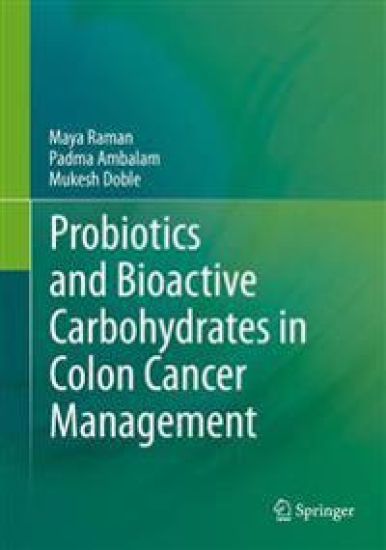
Probiotics and Bioactive Carbohydrates in Colon Cancer Management

Probiotics and Bioactive Carbohydrates in Colon Cancer Management

Maya Raman; Padma Ambalam; Mukesh Doble

Springer, India, Private Ltd
2016
nidottu
This book describes the dietary habits (such as use of probiotics, synbiotics, prebiotics and dietary fiber) that could modify and reduce the risk of developing colorectal cancer (CRC). The book will be of practical and scientific use to academicians, research scholars, students, health professionals, nutritionists, etc. and could support the cause of preventing CRC by adopting smarter food habits. CRC is the third leading cause of death, in terms of both incidence and mortality, among men and women. Excess consumption of red and processed meat, roasted coffee, etc. have shown an increase in CRC, indicating that compounds formed in food containing free amino acids and sugars interact at elevated temperatures to form mutagens or carcinogens. Standard treatment options for CRC include invasive surgery and chemotherapy or radiation. Several lifestyle and dietary factors could prevent this ailment. Probiotics, prebiotics and synbiotics that are found in functional foods, health supplements and nutraceuticals and short chain fatty acids that are formed in the colon as a result of microbial fermentation of undigested bioactive carbohydrates by Bifidobacterium and Lactobacillus inhibit colonic epithelial cells and minimize inflammation, thereby exhibiting immunomodulatory effects. This book tries to address the novel unexplored benefits and mechanism of action of these functional foods.
Probiotics and Bioactive Carbohydrates in Colon Cancer Management

Probiotics and Bioactive Carbohydrates in Colon Cancer Management

Maya Raman; Padma Ambalam; Mukesh Doble

Springer, India, Private Ltd
2015
sidottu
This book describes the dietary habits (such as use of probiotics, synbiotics, prebiotics and dietary fiber) that could modify and reduce the risk of developing colorectal cancer (CRC). The book will be of practical and scientific use to academicians, research scholars, students, health professionals, nutritionists, etc. and could support the cause of preventing CRC by adopting smarter food habits. CRC is the third leading cause of death, in terms of both incidence and mortality, among men and women. Excess consumption of red and processed meat, roasted coffee, etc. have shown an increase in CRC, indicating that compounds formed in food containing free amino acids and sugars interact at elevated temperatures to form mutagens or carcinogens. Standard treatment options for CRC include invasive surgery and chemotherapy or radiation. Several lifestyle and dietary factors could prevent this ailment. Probiotics, prebiotics and synbiotics that are found in functional foods, health supplements and nutraceuticals and short chain fatty acids that are formed in the colon as a result of microbial fermentation of undigested bioactive carbohydrates by Bifidobacterium and Lactobacillus inhibit colonic epithelial cells and minimize inflammation, thereby exhibiting immunomodulatory effects. This book tries to address the novel unexplored benefits and mechanism of action of these functional foods.
Cyclic ß-Glucans from Microorganisms

Cyclic ß-Glucans from Microorganisms

Geetha Venkatachalam; Sathyanarayana Gummadi; Mukesh Doble

Springer-Verlag Berlin and Heidelberg GmbH Co. K
2012
nidottu
to Cyclic glucans are polysaccharides that are predominantly produced by Agrobacterium, Bradyrhizobium and Rhizobium sp. and widely used in the pharmaceutical and food industries. In this book, the applications, properties, analytical tools, production and genes of four main cyclic ß-glucans from microorganisms are highlighted and critically evaluated. As biocompatible and biodegradable renewable resources, they have an immense potential for future applications, which has not yet been fully exploited. This concise review will help to bridge this gap.