
Kirjailija
Murray J Harris
Kirjat ja teokset yhdessä paikassa: 20 kirjaa, julkaisuja vuosilta 1999-2025, suosituimpien joukossa 3 Preguntas Clave Sobre Jesús. Vertaile teosten hintoja ja tarkista saatavuus suomalaisista kirjakaupoista.
Mukana myös kirjoitusasut: Murray J. Harris
20 kirjaa
Kirjojen julkaisuhaarukka 1999-2025.
A guide for reading and understanding difficult New Testament versesDoes Matthew 5:34 say that oath-taking is wrong?What does 1 Corinthians 10:23 mean by "everything is permissible"?Who were the angels that "abandoned their role" in Jude 6?What are the thousand years of Revelation 20:4?While the core message of the New Testament is clear, we often encounter puzzling, alarming, or confusing sections when we get into the details. In this second volume of Navigating Tough Texts, Murray J. Harris concisely considers more than eighty tricky passages in the New Testament. He shows how these texts offer insights with implications for theology, apologetics, mission, and the Christian life.Navigating Tough Texts, Volume 2 is a sure guide for pastors, students, and curious Christians who want to be better readers of the tough passages in the Bible.
What strange event was it in 1955 in Portland, Oregon, that prompted the creation of a translation of the Bible into modern English that eclipsed the well-known and much-loved King James Version (KJV) as the most widely read copy of the Bible? And what was the unique process, involving more than a hundred scholars from a wide variety of Christian denominations, that led to the publishing of the New International Version in 1978 that has now sold over five hundred million copies? In this book you will find the fascinating testimony of one of the original NIV translators that affords an insight into the toils and triumphs of those scholars. It will give you a fresh appreciation of the estimated two hundred thousand man-hours that went into the production of this influential version of Holy Scripture.

What strange event was it in 1955 in Portland, Oregon, that prompted the creation of a translation of the Bible into modern English that eclipsed the well-known and much-loved King James Version (KJV) as the most widely read copy of the Bible? And what was the unique process, involving more than a hundred scholars from a wide variety of Christian denominations, that led to the publishing of the New International Version in 1978 that has now sold over five hundred million copies? In this book you will find the fascinating testimony of one of the original NIV translators that affords an insight into the toils and triumphs of those scholars. It will give you a fresh appreciation of the estimated two hundred thousand man-hours that went into the production of this influential version of Holy Scripture.
Students of all ages appreciate a comprehensive overview of any topic they are studying. Here you have just such a convenient summary of the life, letters, and teaching of Paul of Tarsus, one of the key figures in early Christianity. The book first sketches Paul's Jewish pedigree, his sterling rabbinic training under Gamaliel the Elder, and his enthusiastic persecution of Jewish infidels known as the followers of Yeshua of Nazareth. After tracing the circumstances that gave rise to his thirteen extant letters written to infant Christian churches, the book ends with an investigation of Paul's relationship with the Jewish Law, the nation of Israel, and the historical Jesus. Other topics of timeless interest include his teaching on death, resurrection, and immortality, his view of baptism and the Lord's Supper, and his advice about ideal family relationships. And many readers will be startled to read about the four low points in Paul's career.
Students of all ages appreciate a comprehensive overview of any topic they are studying. Here you have just such a convenient summary of the life, letters, and teaching of Paul of Tarsus, one of the key figures in early Christianity. The book first sketches Paul's Jewish pedigree, his sterling rabbinic training under Gamaliel the Elder, and his enthusiastic persecution of Jewish infidels known as the followers of Yeshua of Nazareth. After tracing the circumstances that gave rise to his thirteen extant letters written to infant Christian churches, the book ends with an investigation of Paul's relationship with the Jewish Law, the nation of Israel, and the historical Jesus. Other topics of timeless interest include his teaching on death, resurrection, and immortality, his view of baptism and the Lord's Supper, and his advice about ideal family relationships. And many readers will be startled to read about the four low points in Paul's career.
Here is the inside story of the only New Testament church we know about in detail during both the 50s and the 90s of the first century AD. What did the church of Corinth look like forty years after it was founded by the apostle Paul? Did his positive influence in this church continue after he left Corinth--or did some of the earlier problems still haunt the church? And are there some timeless lessons we can learn from this church's early history? All those questions are answered here in a fascinating detective investigation that includes thirteen captivating archaeological photos.
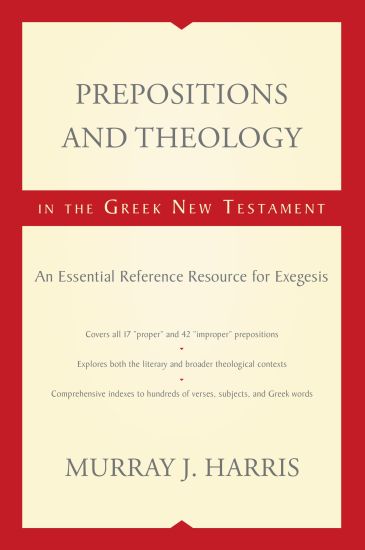
Prepositions and Theology in the Greek New Testament
Murray J. Harris
Zondervan Academic
2021
nidottu
Prepositions are important in the exegesis of the Greek New Testament, but they are at the same time very slippery words because they can have so many nuances. While Prepositions and Theology in the Greek New Testament rejects the idea of a “theology of the prepositions,” it is a study of the numerous places in the Greek New Testament where prepositions contribute to the theological meaning of the text.Offered in the hope that it might encourage close study of the Greek text of the New Testament, its many features include the following:Coverage of all 17 “proper” and 42 “improper” prepositionsExplores both literary and broader theological contextsGreek font—not transliteration—used throughoutComprehensive indexes to hundreds of verses, subjects, and Greek wordsDiscussion of key repeated phrases that use a particular preposition
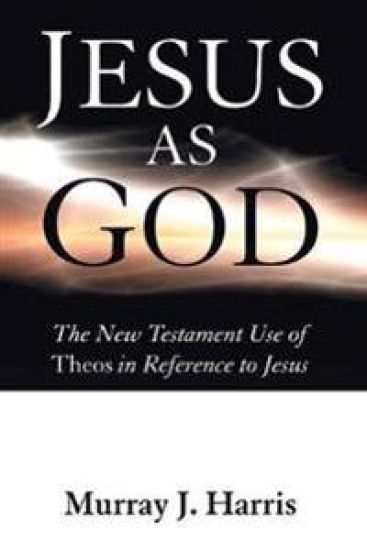
Jesus as God stands as one of the significant exegetical-theological contributions of the century. With linguistic and exegetical skill befitting his ranking as a leading international scholar, Murray J. Harris discusses the New Testament us of the Greek term theos (""God"") as a christological title. ""It is difficult to imagine a more careful, comprehensive, or detailed discussion of this controversial aspect of Christology than Dr. Harris has provided. The issues are largely syntactical, and this is a field in which he has already shown his mastery. With the publication of this book, a neglected topic has at last received the attention it deserves. This is a major work of scholarship from an outstanding able scholar."" - I. Howard Marshall ""I have read Jesus as God with very great admiration. The author has shown a logical and judicious mind, a most impressive mastery of the biblical language, an exhaustive knowledge of the relevant secondary literature, as well as theological perceptiveness. I regard this as a really important contribution to New Testament scholarship, which no one who is seriously concerned with Christology can afford to ignore."" - C. E. B. Cranfield ""Well researched and highly informed and will be an important reference for New Testament studies on this topic."" - E. Earle Ellis ""Learned, thorough, and provoking. It treats a neglected subject in a largely convincing way. Especially important is the intensive exegesis of the discussed texts."" - Martin F. Hengel ""An exceptionally thorough study. The author has given exhaustive attention to various explanations, however artificial, by which the testimony of these texts of Christ's deity was weakened or even eluded. His bibliography of more than 850 titles bears evidence of the thoroughness of his research."" - Roger Nicole Murray J. Harris is professor emeritus of New Testament Exegesis and Theology at Trinity Evangelical Divinity School in Deerfield, Illinois.
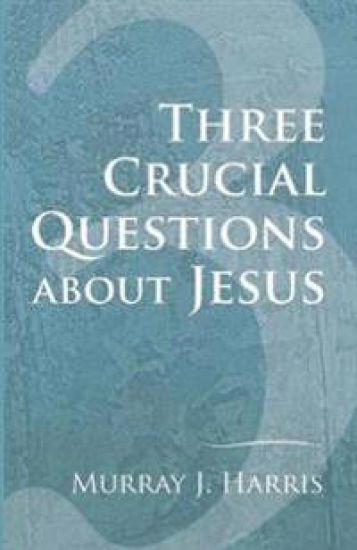
Murray J. Harris's Three Crucial Questions about Jesus deals with three pillars of the Christian faith in creatively different ways. Harris so frames these christological studies that they serve as model apologetic approaches for defending the validity of Christianity. - Did Jesus exist? Harris first addresses Jesus' historical existence, surveying four early classical writers for evidence that a person named Jesus of Nazareth lived in Israel in the first century. - Did Jesus rise from the dead? In debate format, Harris counters the most convincing arguments that Jesus did not return from the dead. The debaters discuss, among other issues, the so-called swoon theory, alternative explanations for the empty tomb, psychological explanations for the recorded appearances, and the Shroud of Turin - Is Jesus God? Finally, Harris amasses the New Testament evidence that teaches that Jesus is God, thereby countering those who believe that Jesus' godhood has been read into the Bible by overzealous believers. Harris discusses the divine status claimed by or accorded to Jesus, the divine functions exercised by Jesus, and the divine title God used of Jesus. Murray J. Harris is professor emeritus of New Testament Exegesis and Theology at Trinity Evangelical Divinity School in Deerfield, Illinois.
The New Testament finds many ways to depict the relationship of Christians and their Lord. They are his disciples, sons, daughters and friends. But it is perhaps too little recognized that they are also his slaves.In this New Studies in Biblical Theology volume, Murray J. Harris sets out to uncover what it means to be a slave of Christ. He begins by assessing the nature of actual slavery in the Greco-Roman world and the New Testament's attitude towards it. Drawing insights from this, he goes on to unfold the metaphor of slavery to Christ. Among the topics discussed are slavery and spiritual freedom, lordship, ownership, and privilege.Slave of Christ is a model of good biblical theology, providing insights both for future study of the Bible and for practical application.Addressing key issues in biblical theology, the works comprising New Studies in Biblical Theology are creative attempts to help Christians better understand their Bibles. The NSBT series is edited by D. A. Carson, aiming to simultaneously instruct and to edify, to interact with current scholarship and to point the way ahead.
The New Testament finds many ways to depict Christians' relationships to their Lord. They are his disciples, sons, daughters, friends. But it is perhaps too little recognised that they are also his slaves. This study sets out to uncover what it means to be a slave of Christ. Harris begins by assessing the nature of actual slavery in the Greco-Roman world and the New Testament's attitude towards it. Drawing insights from this, he goes on to unfold the metaphor of slavery to Christ. Among the topics discussed are slavery and spiritual freedom, lordship, ownership and privilege.