Kirjojen hintavertailu. Mukana 12 595 353 kirjaa ja 12 kauppaa.

Kirjailija

Myra J. Hird

Kirjat ja teokset yhdessä paikassa: 12 kirjaa, julkaisuja vuosilta 2002-2025, suosituimpien joukossa Waste: The Basics. Vertaile teosten hintoja ja tarkista saatavuus suomalaisista kirjakaupoista.

12 kirjaa

Kirjojen julkaisuhaarukka 2002-2025.

Waste: The Basics

Waste: The Basics

Myra J. Hird

TAYLOR FRANCIS LTD
2025
sidottu
Waste: The Basics answers the questions: why are we facing a global waste crisis, and how can we effectively solve it? The book identifies the most common types of waste, its major producers, how we manage waste locally, regionally and globally, and why this management is leading to more waste.Written in a highly accessible style, the book begins with our own everyday mundane experiences of creating waste (those objects or materials we toss in the garbage or recycling bin) and shows how these practices are connected to a global system that manages waste ineffectively. Drawing on a wealth of historical documents and empirical research, Hird unpacks the complex relationship that waste has with global structures of capitalism, neoliberalism, international trade, poverty, racialized and gendered relations, and social injustice. Armed with the basic facts about our ‘waste-maker’ global society, the author concludes that only by understanding waste as a byproduct of how society is organized around extraction, production, and consumption may we solve our increasing waste crisis through refusal, reduction, reuse, and re-orienting our lives to fit planetary sustainability boundaries.Waste is written for students and general readers interested in waste as a human health and environmental issue. It is for anyone curious about where objects really go once we put it in the trash or recycling bin.
Waste: The Basics

Waste: The Basics

Myra J. Hird

TAYLOR FRANCIS LTD
2025
nidottu
Waste: The Basics answers the questions: why are we facing a global waste crisis, and how can we effectively solve it? The book identifies the most common types of waste, its major producers, how we manage waste locally, regionally and globally, and why this management is leading to more waste.Written in a highly accessible style, the book begins with our own everyday mundane experiences of creating waste (those objects or materials we toss in the garbage or recycling bin) and shows how these practices are connected to a global system that manages waste ineffectively. Drawing on a wealth of historical documents and empirical research, Hird unpacks the complex relationship that waste has with global structures of capitalism, neoliberalism, international trade, poverty, racialized and gendered relations, and social injustice. Armed with the basic facts about our ‘waste-maker’ global society, the author concludes that only by understanding waste as a byproduct of how society is organized around extraction, production, and consumption may we solve our increasing waste crisis through refusal, reduction, reuse, and re-orienting our lives to fit planetary sustainability boundaries.Waste is written for students and general readers interested in waste as a human health and environmental issue. It is for anyone curious about where objects really go once we put it in the trash or recycling bin.
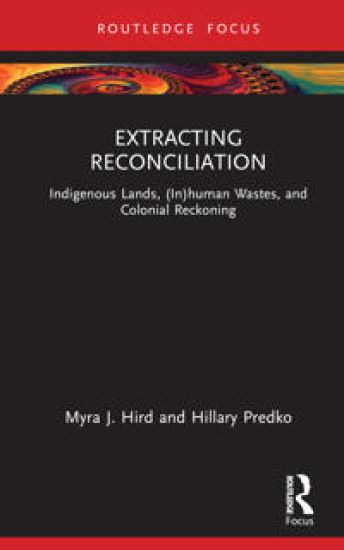
Extracting Reconciliation

Extracting Reconciliation

Myra J. Hird; Hillary Predko

TAYLOR FRANCIS LTD
2024
nidottu
Extracting Reconciliation argues that reconciliation constitutes a critical contemporary mechanism through which colonialism is seeking to ensure continuing access to Indigenous lands and resources.Making use of two historical case studies concerned with the intersection of resource extraction, Crown/Inuit relations, and waste legacies in Nunavut, Canada, the authors illuminate the mechanisms of colonial and neoliberal governance globally that promise reconciliation while delivering the status quo. Through Indigenous and non-Indigenous anticolonial and posthuman concepts and theories, the book engages with the inhuman politics of settler colonial extractivism and explores the socio-ethical social justice dimensions, political possibilities, and environmental implications of a much more challenging and accountable reckoning between (settler) colonialism and Indigenous land rights.This book is of interest to students and scholars in gender studies, postcolonial studies, environmental studies, Indigenous studies, and politics.
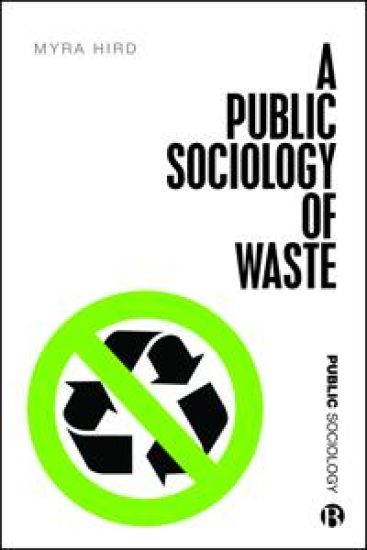
A Public Sociology of Waste

A Public Sociology of Waste

Myra J. Hird

Bristol University Press
2023
nidottu
Is it possible for individuals to tackle waste by recycling, reusing and reducing alone? This provocative book critically analyses the widespread assumption that individuals and households have created our global waste crisis. Sociologist and waste expert Myra J. Hird reveals neoliberal capitalism’s fallacy of infinite growth as the real culprit, and demonstrates how industry and local governments work in tandem to deflect our attention away from the real causes of our global waste problem. Hird offers crucial insights into the relations between waste and wider societal issues including ongoing (settler) colonialism, poverty, racism and sexism, and showcases how sociology may provide solutions through a ‘pubic imagination’ of waste.
Extracting Reconciliation

Extracting Reconciliation

Myra J. Hird; Hillary Predko

TAYLOR FRANCIS LTD
2023
sidottu
Extracting Reconciliation argues that reconciliation constitutes a critical contemporary mechanism through which colonialism is seeking to ensure continuing access to Indigenous lands and resources.Making use of two historical case studies concerned with the intersection of resource extraction, Crown/Inuit relations, and waste legacies in Nunavut, Canada, the authors illuminate the mechanisms of colonial and neoliberal governance globally that promise reconciliation while delivering the status quo. Through Indigenous and non-Indigenous anticolonial and posthuman concepts and theories, the book engages with the inhuman politics of settler colonial extractivism and explores the socio-ethical social justice dimensions, political possibilities, and environmental implications of a much more challenging and accountable reckoning between (settler) colonialism and Indigenous land rights.This book is of interest to students and scholars in gender studies, postcolonial studies, environmental studies, Indigenous studies, and politics.
A Public Sociology of Waste

A Public Sociology of Waste

Myra J. Hird

Bristol University Press
2022
sidottu
Is it possible for individuals to tackle waste by recycling, reusing and reducing alone? This provocative book critically analyses the widespread assumption that individuals and households have created our global waste crisis. Sociologist and waste expert Myra J. Hird reveals neoliberal capitalism’s fallacy of infinite growth as the real culprit, and demonstrates how industry and local governments work in tandem to deflect our attention away from the real causes of our global waste problem. Hird offers crucial insights into the relations between waste and wider societal issues including ongoing (settler) colonialism, poverty, racism and sexism, and showcases how sociology may provide solutions through a ‘pubic imagination’ of waste.
Canada's Waste Flows

Canada's Waste Flows

Myra J. Hird

McGill-Queen's University Press
2021
sidottu
From shipments of Canadian waste rotting in developing countries to overflowing landfills and ineffective recycling programs, Canada is facing a waste crisis. Canadians are becoming increasingly aware that waste is an acute environmental and human health issue – and a complex one, the solutions to which are often contradictory.Canada's Waste Flows is an honest look at the production and movement of Canadian waste, from region to region and across the globe, and its consequences. Through a series of timely empirical case studies, the book reveals waste as less of a technological problem and more of a material, economic, political, historical, and cultural concern. Canada's Waste Flows demonstrates that Canadians are misdirecting their attention to post-consumer waste and their responsibility for minimizing it through recycling; waste must be understood as a social justice issue, and in particular as a symptom of ongoing settler colonialism. Through a comparative study of waste management in southern and northern Canadian communities, Myra Hird argues that we will only resolve our waste crisis through democratic engagement.A critical and compelling book that will generate conversation and incite change, Canada's Waste Flows uncovers how Canada's role as a global leader in waste production and export is key to changing Canada's waste future.
Engendering Violence

Engendering Violence

Myra J. Hird

Routledge
2017
nidottu
Bringing together unique international research from the United States, United Kingdom, Canada, Australia and Europe, this book presents a detailed examination of the violence perpetrated by males and females within the context of childhood, adolescence and adulthood. Based on illuminating empirical studies it accurately locates the societal implications of violence against males and females as well as the legal, social and public responses to violence. Combining feminism and a related analysis of power, the book provides an introduction to the study of violence in general, and violence against males and females who know each other in particular. It outlines the major evolutionary, psychological, and sociological theories proposed to explain this social problem and the traditional methods of studying this topic. The book also examines child violence - in the playground, the classroom and the home; adolescent dating violence and adult violence, both male and female, within cohabiting and marital relationships and violence occurring between strangers.
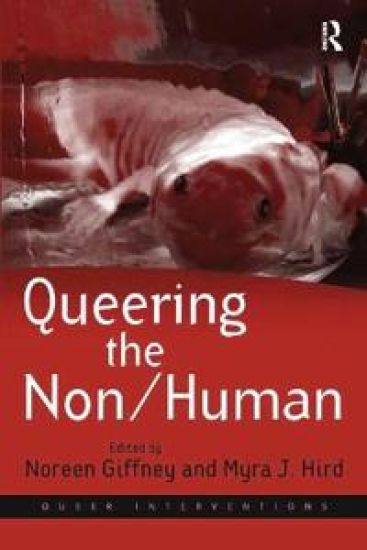
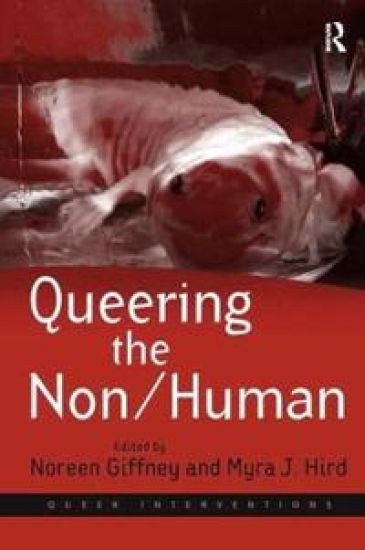
Queering the Non/Human

Queering the Non/Human

Myra J. Hird

Routledge
2016
nidottu
What might it mean to queer the Human? By extension, how is the Human employed within queer theory? These questions invite a reconsideration of the way we think about queer theory, the category of the Human and the act of queering itself. This interdisciplinary volume of essays gathers together essays by international pioneering scholars in queer theory, critical theory, cultural studies and science studies who have written on topics as diverse as Christ, the Antichrist, dogs, starfish, werewolves, vampires, murderous dolls, cartoons, corpses, bacteria, nanoengineering, biomesis, the incest taboo, the death drive and the 'queer' in queer theory. Contributors include Robert Azzarello, Karen Barad, Phillip A. Bernhardt-House, Jeffrey Jerome Cohen, Claire Colebrook, Noreen Giffney, Judith Halberstam, Donna J. Haraway, Eva Hayward, Myra J. Hird, Karalyn Kendall, Vicki Kirby, Alice Kuzniar, Patricia MacCormack, Robert Mills, Luciana Parisi and Erin Runions.
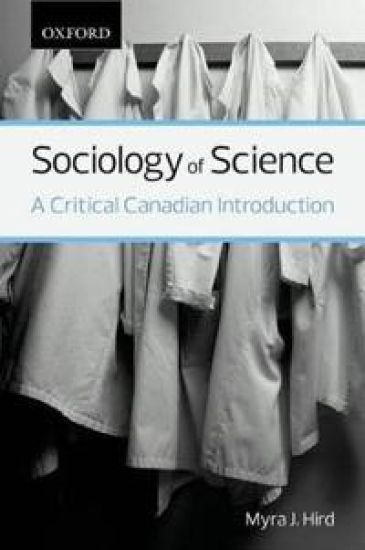
Sociology of Science

Sociology of Science

Myra J. Hird

Oxford University Press, Canada
2011
nidottu
Sociology of Science: A Critical Canadian Introduction provides an overview of how sociology approaches science and, to a lesser extent, technology. It examines how science developed as a set of theories about both what we know and how we know. The book provides a succinct critical examination of the current state of science studies with a particular emphasis on research conducted by Canadian scholars. Hird illustrates that science studies offers useful perspectives on current and ongoing sociological debates, such as the strengths and limitations of social constructionism, as well as popular public debates, such as the ethics of stem-cell research. Using examples from throughout history and with a focus on the Canadian context, the book provides students with an examination of influential science studies concepts, theories, and debates and situates these theories and debates within contemporary field of sociology.
Queering the Non/Human

Queering the Non/Human

Myra J. Hird

Ashgate Publishing Limited
2008
sidottu
What might it mean to queer the Human? By extension, how is the Human employed within queer theory? These questions invite a reconsideration of the way we think about queer theory, the category of the Human and the act of queering itself. This interdisciplinary volume of essays gathers together essays by international pioneering scholars in queer theory, critical theory, cultural studies and science studies who have written on topics as diverse as Christ, the Antichrist, dogs, starfish, werewolves, vampires, murderous dolls, cartoons, corpses, bacteria, nanoengineering, biomesis, the incest taboo, the death drive and the 'queer' in queer theory. Contributors include Robert Azzarello, Karen Barad, Phillip A. Bernhardt-House, Jeffrey Jerome Cohen, Claire Colebrook, Noreen Giffney, Judith Halberstam, Donna J. Haraway, Eva Hayward, Myra J. Hird, Karalyn Kendall, Vicki Kirby, Alice Kuzniar, Patricia MacCormack, Robert Mills, Luciana Parisi and Erin Runions.
Engendering Violence

Engendering Violence

Myra J. Hird

Ashgate Publishing Limited
2002
sidottu
Bringing together unique international research from the United States, United Kingdom, Canada, Australia and Europe, this book presents a detailed examination of the violence perpetrated by males and females within the context of childhood, adolescence and adulthood. Based on illuminating empirical studies it accurately locates the societal implications of violence against males and females as well as the legal, social and public responses to violence. Combining feminism and a related analysis of power, the book provides an introduction to the study of violence in general, and violence against males and females who know each other in particular. It outlines the major evolutionary, psychological, and sociological theories proposed to explain this social problem and the traditional methods of studying this topic. The book also examines child violence - in the playground, the classroom and the home; adolescent dating violence and adult violence, both male and female, within cohabiting and marital relationships and violence occurring between strangers.