Kirjojen hintavertailu. Mukana 12 595 353 kirjaa ja 12 kauppaa.
Kirjailija
N. Katherine Hayles
Kirjat ja teokset yhdessä paikassa: 18 kirjaa, julkaisuja vuosilta 1999-2025, suosituimpien joukossa SHIFT. KI und eine zukünftige Gemeinschaft. Vertaile teosten hintoja ja tarkista saatavuus suomalaisista kirjakaupoista.
A new theory of mind that includes nonhuman and artificial intelligences. The much-lauded superiority of human intelligence has not prevented us from driving the planet into ecological disaster. For N. Katherine Hayles, the climate crisis demands that we rethink basic assumptions about human and nonhuman intelligences. In Bacteria to AI, Hayles develops a new theory of mind—what she calls an integrated cognitive framework (ICF)—that includes the meaning-making practices of lifeforms from bacteria to plants, animals, humans, and some forms of artificial intelligence. Through a sweeping survey of evolutionary biology, computer science, and contemporary literature, Hayles insists that another way of life, with ICF at its core, is not only possible but necessary to safeguard our planet’s future
A new theory of mind that includes nonhuman and artificial intelligences. The much-lauded superiority of human intelligence has not prevented us from driving the planet into ecological disaster. For N. Katherine Hayles, the climate crisis demands that we rethink basic assumptions about human and nonhuman intelligences. In Bacteria to AI, Hayles develops a new theory of mind—what she calls an integrated cognitive framework (ICF)—that includes the meaning-making practices of lifeforms from bacteria to plants, animals, humans, and some forms of artificial intelligence. Through a sweeping survey of evolutionary biology, computer science, and contemporary literature, Hayles insists that another way of life, with ICF at its core, is not only possible but necessary to safeguard our planet’s future
In what N. Katherine Hayles describes as "this enormously ambitious posthumous volume," renowned scholar George Slusser offers a definitive version of the argument about the history of science fiction that he developed throughout his career: that several important ideas and texts, routinely overlooked in other critical studies, made significant contributions to the creation of modern science fiction as it developed into a truly global literature. He explores how key thinkers like René Descartes, Benjamin Constant, Thomas DeQuincey, Guy du Maupassant, J.D. Bernal, and Ralph Waldo Emerson influenced and are reflected in twentieth-century science fiction stories from the United States, Great Britain, France, Germany, Poland, and Russia. The conclusion begins with Slusser’s overview of global science fiction in the twenty-first century and discusses recent developments in countries like China, Romania, and Israel. Hayles’s foreword provides a useful summation of the book’s contents, while science fiction writer Gregory Benford contributes an afterword providing a personal perspective on the life and thoughts of his longtime friend. The book was edited by Slusser’s former colleague Gary Westfahl, a distinguished scholar in his own right.
In what N. Katherine Hayles describes as "this enormously ambitious posthumous volume," renowned scholar George Slusser offers a definitive version of the argument about the history of science fiction that he developed throughout his career: that several important ideas and texts, routinely overlooked in other critical studies, made significant contributions to the creation of modern science fiction as it developed into a truly global literature. He explores how key thinkers like René Descartes, Benjamin Constant, Thomas DeQuincey, Guy du Maupassant, J.D. Bernal, and Ralph Waldo Emerson influenced and are reflected in twentieth-century science fiction stories from the United States, Great Britain, France, Germany, Poland, and Russia. The conclusion begins with Slusser’s overview of global science fiction in the twenty-first century and discusses recent developments in countries like China, Romania, and Israel. Hayles’s foreword provides a useful summation of the book’s contents, while science fiction writer Gregory Benford contributes an afterword providing a personal perspective on the life and thoughts of his longtime friend. The book was edited by Slusser’s former colleague Gary Westfahl, a distinguished scholar in his own right.
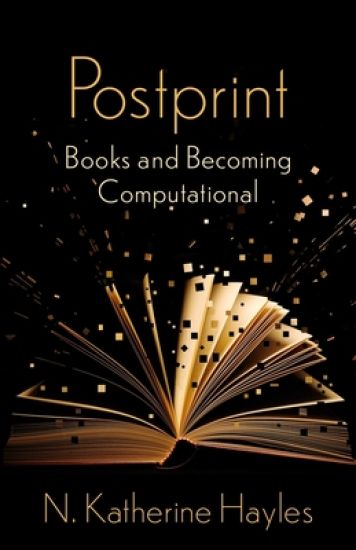
Since Gutenberg’s time, every aspect of print has gradually changed. But the advent of computational media has exponentially increased the pace, transforming how books are composed, designed, edited, typeset, distributed, sold, and read. N. Katherine Hayles traces the emergence of what she identifies as the postprint condition, exploring how the interweaving of print and digital technologies has changed not only books but also language, authorship, and what it means to be human.Hayles considers the ways in which print has been enmeshed in literate societies and how these are changing as some of the cognitive tasks once performed exclusively by humans are now carried out by computational media. Interpretations and meaning-making practices circulate through transindividual collectivities created by interconnections between humans and computational media, which Hayles calls cognitive assemblages. Her theoretical framework conceptualizes innovations in print technology as redistributions of cognitive capabilities between humans and machines. Humanity is becoming computational, just as computational systems are edging toward processes once thought of as distinctively human. Books in all their diversity are also in the process of becoming computational, representing a crucial site of ongoing cognitive transformations.Hayles details the consequences for the humanities through interviews with scholars and university press professionals and considers the cultural implications in readings of two novels, The Silent History and The Word Exchange, that explore the postprint condition. Spanning fields including book studies, cultural theory, and media archeology, Postprint is a strikingly original consideration of the role of computational media in the ongoing evolution of humanity.
Since Gutenberg’s time, every aspect of print has gradually changed. But the advent of computational media has exponentially increased the pace, transforming how books are composed, designed, edited, typeset, distributed, sold, and read. N. Katherine Hayles traces the emergence of what she identifies as the postprint condition, exploring how the interweaving of print and digital technologies has changed not only books but also language, authorship, and what it means to be human.Hayles considers the ways in which print has been enmeshed in literate societies and how these are changing as some of the cognitive tasks once performed exclusively by humans are now carried out by computational media. Interpretations and meaning-making practices circulate through transindividual collectivities created by interconnections between humans and computational media, which Hayles calls cognitive assemblages. Her theoretical framework conceptualizes innovations in print technology as redistributions of cognitive capabilities between humans and machines. Humanity is becoming computational, just as computational systems are edging toward processes once thought of as distinctively human. Books in all their diversity are also in the process of becoming computational, representing a crucial site of ongoing cognitive transformations.Hayles details the consequences for the humanities through interviews with scholars and university press professionals and considers the cultural implications in readings of two novels, The Silent History and The Word Exchange, that explore the postprint condition. Spanning fields including book studies, cultural theory, and media archeology, Postprint is a strikingly original consideration of the role of computational media in the ongoing evolution of humanity.
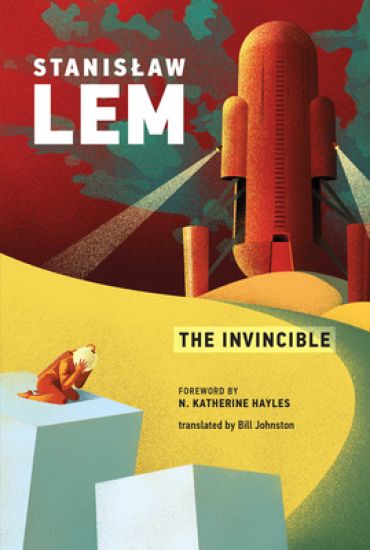
A space cruiser, in search of its sister ship, encounters beings descended from self-replicating machines.In the grand tradition of H. G. Wells and Jules Verne, Stanislaw Lem's The Invincible tells the story of a space cruiser sent to an obscure planet to determine the fate of a sister spaceship whose communication with Earth has abruptly ceased. Landing on the planet Regis III, navigator Rohan and his crew discover a form of life that has apparently evolved from autonomous, self-replicating machines—perhaps the survivors of a “robot war.” Rohan and his men are forced to confront the classic quandary: what course of action can humanity take once it has reached the limits of its knowledge? In The Invincible, Lem has his characters confront the inexplicable and the bizarre: the problem that lies just beyond analytical reach.
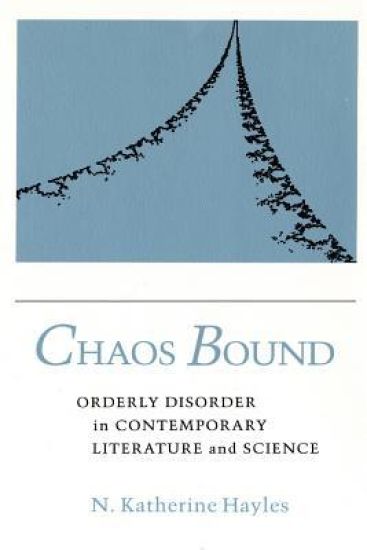
Hayles’s point is that the almost simultaneous appearance of interest in complex systems across many disciplinesâ•physics, mathematics, biology, information theory, literature, literary theoryâ•signals a profound paradigm and epistemological shift. She calls the new paradigm ‘orderly disorder.’ This is a timely, informative, and enormously thought-provoking book. — Nancy Craig Simmons â• American Literature N. Katherine Hayles here investigates parallels between contemporary literature and critical theory and the science of chaos. She finds in both scientific and literary discourse new interpretations of chaos, which is seen no longer as disorder but as a locus of maximum information and complexity. She examines structures and themes of disorder in The Education of Henry Adams, Doris Lessing’s Golden Notebook, and works by Stanislaw Lem. Hayles shows how the writings of poststructuralist theorists including Barthes, Lyotard, Derrida, Serres, and de Man incorporate central features of chaos theory.
From the central concept of the field—which depicts the world as a mutually interactive whole, with each part connected to every other part by an underlying field— have come models as diverse as quantum mathematics and Saussure's theory of language. In The Cosmic Web, N. Katherine Hayles seeks to establish the scope of the field concept and to assess its importance for contemporary thought. She then explores the literary strategies that are attributable directly or indirectly to the new paradigm; among the texts at which she looks closely are Robert Pirsig's Zen and the Art of Motorcycle Maintenance, Nabokov's Ada, D. H. Lawrence's early novels and essays, Borges's fiction, and Thomas Pynchon's Gravity's Rainbow.
N. Katherine Hayles is known for breaking new ground at the intersection of the sciences and the humanities. In Unthought, she once again bridges disciplines by revealing how we think without thinking how we use cognitive processes that are inaccessible to consciousness yet necessary for it to function. Marshalling fresh insights from neuroscience, cognitive science, cognitive biology, and literature, Hayles expands our understanding of cognition and demonstrates that it involves more than consciousness alone. Cognition, as Hayles defines it, is applicable not only to nonconscious processes in humans but to all forms of life, including unicellular organisms and plants. Startlingly, she also shows that cognition operates in the sophisticated information-processing abilities of technical systems: when humans and cognitive technical systems interact, they form "cognitive assemblages" as found in urban traffic control, drones, and the trading algorithms of finance capital, for instance and these assemblages are transforming life on earth. The result is what Hayles calls a "planetary cognitive ecology," which includes both human and technical actors and which poses urgent questions to humanists and social scientists alike. At a time when scientific and technological advances are bringing far-reaching aspects of cognition into the public eye, Unthought reflects deeply on our contemporary situation and moves us toward a more sustainable and flourishing environment for all beings.
N. Katherine Hayles is known for breaking new ground at the intersection of the sciences and the humanities. In Unthought, she once again bridges disciplines by revealing how we think without thinking how we use cognitive processes that are inaccessible to consciousness yet necessary for it to function. Marshalling fresh insights from neuroscience, cognitive science, cognitive biology, and literature, Hayles expands our understanding of cognition and demonstrates that it involves more than consciousness alone. Cognition, as Hayles defines it, is applicable not only to nonconscious processes in humans but to all forms of life, including unicellular organisms and plants. Startlingly, she also shows that cognition operates in the sophisticated information-processing abilities of technical systems: when humans and cognitive technical systems interact, they form "cognitive assemblages" as found in urban traffic control, drones, and the trading algorithms of finance capital, for instance and these assemblages are transforming life on earth. The result is what Hayles calls a "planetary cognitive ecology," which includes both human and technical actors and which poses urgent questions to humanists and social scientists alike. At a time when scientific and technological advances are bringing far-reaching aspects of cognition into the public eye, Unthought reflects deeply on our contemporary situation and moves us toward a more sustainable and flourishing environment for all beings.
How do we think? N. Katherine Hayles poses this question at the beginning of this bracing exploration of the idea that we think through, with, and alongside media. As the age of print passes and new technologies appear every day, this proposition has become far more complicated, particularly for the traditionally print-based disciplines in the humanities and qualitative social sciences. With a rift growing between digital scholarship and its print-based counterpart, Hayles argues for contemporary technogenesis-the belief that humans and technics are coevolving-and advocates for what she calls comparative media studies, a new approach to locating digital work within print traditions and vice versa. mines the evolution of the field from the traditional humanities and how the digital humanities are changing academic scholarship, research, teaching, and publication. She goes on to depict the neurological consequences of working in digital media, where skimming and scanning, or "hyper reading," and analysis through machine algorithms are forms of reading as valid as close reading once was. Hayles contends that we must recognize all three types of reading and understand the limitations and possibilities of each. In addition to illustrating what a comparative media perspective entails, Hayles explores the technogenesis spiral in its full complexity. She considers the effects of early databases such as telegraph code books and confronts our changing perceptions of time and space in the digital age, illustrating this through three innovative digital productions - Steve Tomasula's electronic novel, "TOC"; Steven Hall's "The Raw Shark Texts"; and Mark Z. Danielewski's "Only Revolutions". Deepening our understanding of the extraordinary transformative powers digital technologies have placed in the hands of humanists, "How We Think" presents a cogent rationale for tackling the challenges facing the humanities today.
A visible presence for some two decades, electronic literature has already produced many works that deserve the rigorous scrutiny critics have long practiced with print literature. Only now, however, with Electronic Literature by N. Katherine Hayles, do we have the first systematic survey of the field and an analysis of its importance, breadth, and wide-ranging implications for literary study. Hayles's book is designed to help electronic literature move into the classroom. Her systematic survey of the field addresses its major genres, the challenges it poses to traditional literary theory, and the complex and compelling issues at stake. She develops a theoretical framework for understanding how electronic literature both draws on the print tradition and requires new reading and interpretive strategies. Grounding her approach in the evolutionary dynamic between humans and technology, Hayles argues that neither the body nor the machine should be given absolute theoretical priority. Rather, she focuses on the interconnections between embodied writers and users and the intelligent machines that perform electronic texts. Through close readings of important works, Hayles demonstrates that a new mode of narration is emerging that differs significantly from previous models. Key to her argument is the observation that almost all contemporary literature has its genesis as electronic files, so that print becomes a specific mode for electronic text rather than an entirely different medium. Hayles illustrates the implications of this condition with three contemporary novels that bear the mark of the digital. Included with the book is a companion website (https://newhorizons.eliterature.org/index.php) and an online resource, The Electronic Literature Collection, Volume 1 (https://collection.eliterature.org/1/). The companion website offers resources for teachers and students, including sample syllabi, original essays, author biographies, and useful links. The ELC contains sixty new and recent works of electronic literature with keyword index, authors' notes, and editorial headnotes. Representing multiple modalities of electronic writing—hypertext fiction, kinetic poetry, generative and combinatory forms, network writing, codework, 3D, narrative animations, installation pieces, and Flash poetry—the collection encompasses comparatively low-tech work alongside heavily coded pieces. Together, the book, companion website, and collection provide an exceptional pedagogical opportunity.
A visible presence for some two decades, electronic literature has already produced many works that deserve the rigorous scrutiny critics have long practiced with print literature. Only now, however, with Electronic Literature by N. Katherine Hayles, do we have the first systematic survey of the field and an analysis of its importance, breadth, and wide-ranging implications for literary study. Hayles's book is designed to help electronic literature move into the classroom. Her systematic survey of the field addresses its major genres, the challenges it poses to traditional literary theory, and the complex and compelling issues at stake. She develops a theoretical framework for understanding how electronic literature both draws on the print tradition and requires new reading and interpretive strategies. Grounding her approach in the evolutionary dynamic between humans and technology, Hayles argues that neither the body nor the machine should be given absolute theoretical priority. Rather, she focuses on the interconnections between embodied writers and users and the intelligent machines that perform electronic texts. Through close readings of important works, Hayles demonstrates that a new mode of narration is emerging that differs significantly from previous models. Key to her argument is the observation that almost all contemporary literature has its genesis as electronic files, so that print becomes a specific mode for electronic text rather than an entirely different medium. Hayles illustrates the implications of this condition with three contemporary novels that bear the mark of the digital. Included with the book is a companion website (https://newhorizons.eliterature.org/index.php) and an online resource, The Electronic Literature Collection, Volume 1 (https://collection.eliterature.org/1/). The companion website offers resources for teachers and students, including sample syllabi, original essays, author biographies, and useful links. The ELC contains sixty new and recent works of electronic literature with keyword index, authors' notes, and editorial headnotes. Representing multiple modalities of electronic writing—hypertext fiction, kinetic poetry, generative and combinatory forms, network writing, codework, 3D, narrative animations, installation pieces, and Flash poetry—the collection encompasses comparatively low-tech work alongside heavily coded pieces. Together, the book, companion website, and collection provide an exceptional pedagogical opportunity.
We live in a world, according to N Katherine Hayles, where new languages are constantly emerging, proliferating, and fading into obsolescence. These are languages of our own making: the programming languages written in code for the intelligent machines we call computers. Hayles' latest exploration provides an exciting new way of understanding the relations between code and language and considers how their interactions have affected creative, technological, and artistic practices. "My Mother Was a Computer" explores how the impact of code on everyday life has become comparable to that of speech and writing: as language and code have grown more entangled, the lines that once separated humans from machines, analog from digital, and old technologies from new ones have become blurred. "My Mother Was a Computer" gives us the tools necessary to make sense of these complex relationships. Hayles argues that we live in an age of intermediation that challenges our ideas about language, subjectivity, literary objects, and textuality. This process of intermediation takes place where digital media interact with cultural practices associated with older media, and here Hayles sharply portrays such interactions: how code differs from speech; how electronic text differs from print; the effects of digital media on the idea of the self; the effects of digitality on printed books; our conceptions of computers as living beings; the possibility that human consciousness itself might be computational; and the subjective cosmology wherein humans see the universe through the lens of their own digital age. We are the children of computers in more than one sense, and no critic has done more than N Katherine Hayles to explain how these technologies define our culture and us. Heady and provocative, "My Mother Was a Computer" will be judged as her best work yet.
We live in a world, according to N Katherine Hayles, where new languages are constantly emerging, proliferating, and fading into obsolescence. These are languages of our own making: the programming languages written in code for the intelligent machines we call computers. Hayles' latest exploration provides an exciting new way of understanding the relations between code and language and considers how their interactions have affected creative, technological, and artistic practices. "My Mother Was a Computer" explores how the impact of code on everyday life has become comparable to that of speech and writing: as language and code have grown more entangled, the lines that once separated humans from machines, analog from digital, and old technologies from new ones have become blurred. "My Mother Was a Computer" gives us the tools necessary to make sense of these complex relationships. Hayles argues that we live in an age of intermediation that challenges our ideas about language, subjectivity, literary objects, and textuality. This process of intermediation takes place where digital media interact with cultural practices associated with older media, and here Hayles sharply portrays such interactions: how code differs from speech; how electronic text differs from print; the effects of digital media on the idea of the self; the effects of digitality on printed books; our conceptions of computers as living beings; the possibility that human consciousness itself might be computational; and the subjective cosmology wherein humans see the universe through the lens of their own digital age. We are the children of computers in more than one sense, and no critic has done more than N Katherine Hayles to explain how these technologies define our culture and us. Heady and provocative, "My Mother Was a Computer" will be judged as her best work yet.
Separating hype from fact, this text investigates the fate of embodiment in the information age. It relates three interwoven stories: how information lost its body, that is, how it came to be conceptualized as an entity separate from the material forms that carry it; the cultural and technological constuction of the cyborg; and the dismantling of the humanist "subject" in cybernetic discourse, along with the emergence of the "posthuman". Ranging across the history of technology, cultural studies and literary criticism, the text shows what had erased, forgotten, and elided to conceive of information as a disembodied entity. The author moves from the post-World War II Macy Conferences on cybernetics to the 1952 novel "Limbo" by Bernard Wolfe; from the concept of self-making to Philip K. Dick's literary explorations of hallucination and reality; and from artificial life to postmodern novels exploring the implications of seeing humans as cybernetic systems.