Kirjojen hintavertailu. Mukana 12 657 676 kirjaa ja 12 kauppaa.

Kirjailija

Nachman Ben-Yehuda

Kirjat ja teokset yhdessä paikassa: 9 kirjaa, julkaisuja vuosilta 1996-2019, suosituimpien joukossa Masada Myth. Vertaile teosten hintoja ja tarkista saatavuus suomalaisista kirjakaupoista.

9 kirjaa

Kirjojen julkaisuhaarukka 1996-2019.

Betrayals And Treason

Betrayals And Treason

Nachman Ben-yehuda

Routledge
2019
sidottu
Betrayal and Treason examines betrayals as violations of both trust and loyalty. It offers a typology based on membership in or out of collectives within the contexts of secrecy/non-secrecy. The book shows that betrayals include such categories as espionage, whistle-blowing, infidelity, political turncoating, conversions, collaboration with occupying forces, informers, mutinies, defections, strike-breakers, professional, intellectual, and international betrayals, human rights violations, surveillance, assassinations, and state sponsored terror. Each one of the categories is presented with enticing, stimulating, and appropriate real-life illustrations and narratives.The book focuses on treason, examines diverse cultures (European countries, Israel, Canada, the United States) and such periods as World War II, the conquest of Mexico, and looks at such figures as Benedict Arnold, Ezra Pound, Edward VIII, Malinche, Vindkun Quisling, Lord Haw Haw, Tokyo Rose, and a host of others. Since World War II is an excellent period through which one can examine issues of treason, and since there has been such an increased interest in World War II, this book places a particular emphasis on that period and war. Betrayal and Treason is original in its conceptual framework, and in its breadth and depth of coverage. Yet judging by the amount of books published on similar topics in the past, there can hardly be a doubt that there has always been a genuine demand and "hunger" for an inclusive and integrative book such as this one. By offering a new and interpretive framework for betrayals, this book can serve both scholars and lay people alike in gaining a much better understanding of such a complex and fascinating behavior as betrayal.

Fraud and Misconduct in Research

Fraud and Misconduct in Research

Nachman Ben-Yehuda; Amalya Oliver-Lumerman

The University of Michigan Press
2017
sidottu
In Fraud and Misconduct in Research, Nachman Ben-Yehuda and Amalya Oliver-Lumerman introduce the main characteristics of research misconduct, portray how the characteristics are distributed, and identify the elements of the organizational context and the practice of scientific research which enable or deter misconduct. Of the nearly 750 known cases between 1880 and 2010 which the authors examine, the overwhelming majority took place in funded research projects and involved falsification and fabrication, followed by misrepresentation and plagiarism. The incidents were often reported by the perpetrator’s colleagues or collaborators. If the accusations were confirmed, the organization usually punished the offender with temporary exclusion from academic activities and institutions launched organizational reforms, including new rules, the establishment of offices to deal with misconduct, and the creation of re-training and education programs for academic staff. Ben-Yehuda and Oliver-Lumerman suggest ways in which efforts to expose and prevent misconduct can further change the work of scientists, universities, and scientific research.
Atrocity, Deviance, and Submarine Warfare

Atrocity, Deviance, and Submarine Warfare

Nachman Ben-Yehuda

The University of Michigan Press
2013
sidottu
In the early 20th century, the diesel-electric submarine made possible a new type of unrestricted naval warfare. Such brutal practices as targeting passenger, cargo, and hospital ships not only violated previous international agreements; they were targeted explicitly at civilians. A deviant form of warfare quickly became the norm.In Atrocity, Deviance, and Submarine Warfare, Nachman Ben-Yehuda recounts the evolution of submarine warfare, explains the nature of its deviance, documents its atrocities, and places these developments in the context of changing national identities and definitions of the ethical, at both social and individual levels. Introducing the concept of cultural cores, he traces the changes in cultural myths, collective memory, and the understanding of unconventionality and deviance prior to the outbreak of World War I. Significant changes in cultural cores, Ben-Yehuda concludes, permitted the rise of wartime atrocities at sea.
Theocratic Democracy

Theocratic Democracy

Nachman Ben-Yehuda

Oxford University Press Inc
2011
sidottu
The state of Israel was established in 1948 as a Jewish democracy without a legal separation between religion and the state. This state-religion tension has been a central political, social, and moral issue in Israel, resulting in a theocracy-democracy cultural conflict between secular Jews and the fundamentalist ultra-orthodox-Haredi-counter-cultural community in Israel. And one of the major arenas where such conflicts are played out is the media. An expert on the construction of social and moral problems, Nachman Ben-Yehuda examines more than 50 years of media-reported unconventional and deviant behavior by the Haredi community. He finds that not only have they increased over the years, but their most salient feature is violence. This violence is not random or precipitated by some situational emotional rage-it is planned and aims to achieve political goals. Using verbal and non-verbal violence in the forms of curses, intimidations, threats, setting fires, throwing stones, beatings, staging mass violations and more, Haredi activists try to drive Israel towards a more theocratic society. Most of the struggle is focused on feuds around the state-religion status quo and the public arena. Driven by a theological notion that stipulates that all Jews are mutually responsible and accountable to the Almighty, these activists believe that the sins of the few are paid by the many. Making Israel a theocracy will, they believe, reduce the risk of transcendental penalties. Like other democracies, Israel has had to face significant theocratic and secular pressures. The political structure that accommodates these contradicting pressures is effectively a theocratic democracy. Characterized by chronic negotiations, tensions, and accommodations, it is by nature an unstable structure. However, it allows citizens with different worldviews to live under one umbrella of a nation state without tearing the social fabric apart.
Moral Panics

Moral Panics

Erich Goode; Nachman Ben-Yehuda

Wiley-Blackwell (an imprint of John Wiley Sons Ltd)
2009
nidottu
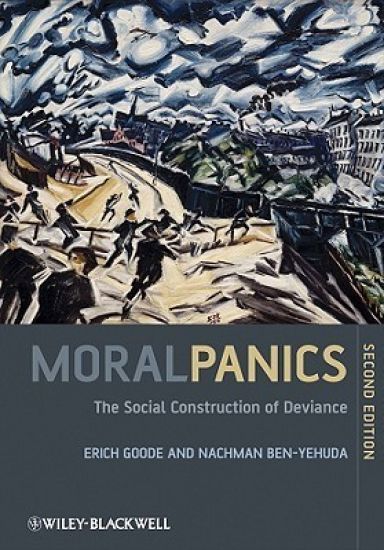
Packed with new examples and material, this second edition provides a fully up-to-date exploration of the genesis, dynamics, and demise of moral panics and their impacts on the societies in which they take place. Packed with updated and recent examples including terrorism, the 9/11 attack on the World Trade Towers, school shootings, flag burning, and the early-2000s resurgence of the “sex slave” scareIncludes a new chapter on the media, currently regarded as a major component of the moral panicDevotes a chapter to addressing criticisms of the first edition as well as the moral panics concept itselfWritten by long-established experts in the fieldDesigned to fit both self-contained courses on moral panics and wider courses on deviance
Moral Panics

Moral Panics

Erich Goode; Nachman Ben-Yehuda

Wiley-Blackwell (an imprint of John Wiley Sons Ltd)
2009
sidottu
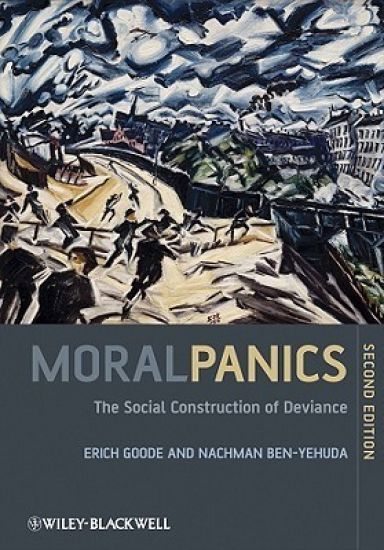
Packed with new examples and material, this second edition provides a fully up-to-date exploration of the genesis, dynamics, and demise of moral panics and their impacts on the societies in which they take place. Packed with updated and recent examples including terrorism, the 9/11 attack on the World Trade Towers, school shootings, flag burning, and the early-2000s resurgence of the “sex slave” scareIncludes a new chapter on the media, currently regarded as a major component of the moral panicDevotes a chapter to addressing criticisms of the first edition as well as the moral panics concept itselfWritten by long-established experts in the fieldDesigned to fit both self-contained courses on moral panics and wider courses on deviance
Betrayals And Treason

Betrayals And Treason

Nachman Ben-yehuda

Westview Press Inc
2001
nidottu
In Betrayals and Treason Nachman Ben-Yehuda identifies the universal structure of betrayals as the violation of trust and loyalty and charts the different manifestations and constructions of these violations, all within numerous cases across time, place, and cultures. Betrayals do not just lie in the eyes of the beholder, completely relative. While the very idea of betrayals is a social construct, underlying it is a universal structure of violations of both trust and loyalty. Whenever this structure materializes, the label "betrayal" is invoked and applied.
The Masada Myth

The Masada Myth

Nachman Ben-Yehuda

University of Wisconsin Press
1996
nidottu
In 73AD, legend has it, 960 Jewish rebels under siege in the ancient desert fortress of Masada committed suicide rather than surrender to a Roman legion. Recorded in only one historical source, the story of Masada was obscure for centuries. In ""The Masada Myth"", Israeli sociologist Nachman Ben-Yehuda tracks the process by which Masada became an ideological symbol for the State of Israel, the dramatic subject of movies and ministeries, a shrine venerated by generations of Zionists and Israeli soldiers, and the most profitable tourist attraction in modern Israel. Ben-Yehuda describes how, after nearly 1800 years, the long, complex and unsubstantiated narrative of Josephus Flavius was edited and augmented in the 20th century to form a simple and powerful myth of heroism. He looks at the ways this new mythical narrative of Masada was created, promoted and maintained by pre-state Jewish underground organisations, the Israeli army, archaeological teams, mass media, youth movements, textbooks, the tourist industry, and the arts. He discusses the various organisations and movements that created ""the Masada experience"" (usually a ritual trek through the Judean desert followed by a climb to the fortress and a dramatic reading of the Masada story), and how it changed over decades from a Zionist pilgrimage to a tourist destination. Placing the story in a larger historical, sociological and psychological context, Ben-Yehuda draws upon theories of collective memory and mythmaking to analyse Masada's crucial role in the nation-building process of modern Israel and the formation of a new Jewish identity. An expert on deviance and social control, Ben-Yehuda looks in particular at how and why a military failure and an enigmatic, troubling case of mass suicide (in conflict with Judaism's teachings) were reconstructed and fabricated as a heroic tale.
Masada Myth

Masada Myth

Nachman Ben-Yehuda

University of Wisconsin Press
1996
sidottu
In 73AD, legend has it, 960 Jewish rebels under siege in the ancient desert fortress of Masada committed suicide rather than surrender to a Roman legion. Recorded in only one historical source, the story of Masada was obscure for centuries. In "The Masada Myth", Israeli sociologist Nachman Ben-Yehuda tracks the process by which Masada became an ideological symbol for the State of Israel, the dramatic subject of movies and ministeries, a shrine venerated by generations of Zionists and Israeli soldiers, and the most profitable tourist attraction in modern Israel. Ben-Yehuda describes how, after nearly 1800 years, the long, complex and unsubstantiated narrative of Josephus Flavius was edited and augmented in the 20th century to form a simple and powerful myth of heroism. He looks at the ways this new mythical narrative of Masada was created, promoted and maintained by pre-state Jewish underground organisations, the Israeli army, archaeological teams, mass media, youth movements, textbooks, the tourist industry, and the arts. He discusses the various organisations and movements that created "the Masada experience" (usually a ritual trek through the Judean desert followed by a climb to the fortress and a dramatic reading of the Masada story), and how it changed over decades from a Zionist pilgrimage to a tourist destination. Placing the story in a larger historical, sociological and psychological context, Ben-Yehuda draws upon theories of collective memory and mythmaking to analyse Masada's crucial role in the nation-building process of modern Israel and the formation of a new Jewish identity. An expert on deviance and social control, Ben-Yehuda looks in particular at how and why a military failure and an enigmatic, troubling case of mass suicide (in conflict with Judaism's teachings) were reconstructed and fabricated as a heroic tale.