

Kirjailija
Nadine Gordimer
Kirjat ja teokset yhdessä paikassa: 39 kirjaa, julkaisuja vuosilta 1997-2018, suosituimpien joukossa The Late Bourgeois World. Vertaile teosten hintoja ja tarkista saatavuus suomalaisista kirjakaupoista.
39 kirjaa
Kirjojen julkaisuhaarukka 1997-2018.

Rosa Burger är en 17-årig, vit sydafrikanska som oväntat mister sina föräldrar. Nu måste hon skapa sig en egen tillvaro, hitta en egen identitet. Hon skaffar sig ett pass och reser till Europa. På ett tillfälligt besök i London träffar hon en barndomsvän, en ung svart man som är militant i den antirasistiska frihetskampen. I en ursinnig attack konfronterar han henne med den sydafrikanska verkligheten och med hennes eget politiska arv. Och Rosa Burger ställs inför ett avgörande val."Burgers dotter" är en av fjorton utgåvor i serien ”Kvinnliga Nobelpristagare i litteratur”.




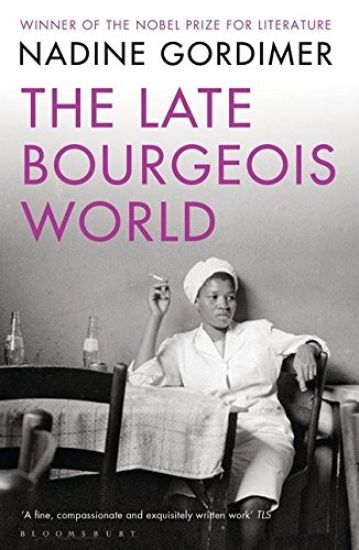
Liz Van Den Sandt's ex-husband, Max, an ineffectual rebel, has drowned himself. In prison for a failed act of violence against the government, he had betrayed his colleagues.Now Liz has been asked to perform a direct service for the Black Nationalist movement, at considerable danger to herself. Can she take such a risk in the face of Max's example of the uselessness of such actions? Yet ... how can she not?
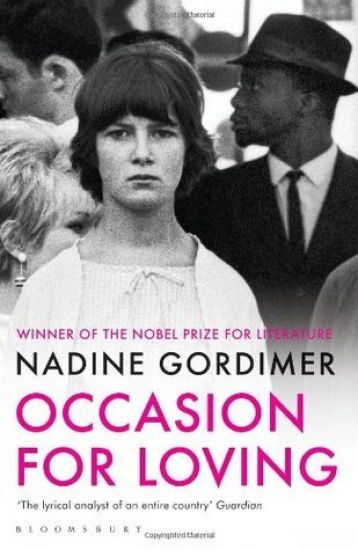
Jessie and Tom Stilwell keep open house. Their code is one of people determined to maintain the integrity of personal relations against the distortions of law and society.The impact on their home of Boaz Davis and his wife Ann, arrived from England, and Gideon Shibalo, the Stilwells' black friend, with whom Ann starts a love affair as her adventure with Africa, is dramatically concurrent with events involving Jessie's strange relationship with her mother and stepfather and her son from a previous marriage. Telling their story against the background of South Africa in the sixties, Nadine Gordimer speaks with unsurpassed subtlety and poignancy of individuals and the society in which they live.
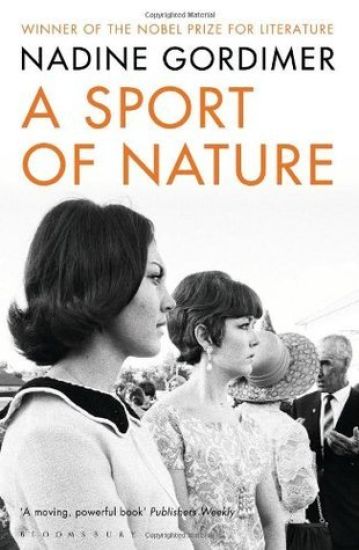
A bold, sweeping story of one girl’s rise from obscurity to an unpredictable kind of political powerAbandoned by her mother, Hillela is left to be raised by her two aunts in South Africa. At Olga's she might have acquired a taste for antiques and a style of dress to please a suitable husband. At Pauline's she might have developed a social conscience. But Hillela's betrayal of her position as a surrogate daughter so shocks both families that at seventeen she is cast adrift.Swiftly and perilously, her life opens out. She lives as a footloose girl among political exiles on a beach in East Africa, drifting between jobs and lovers, and finally becomes the wife of a black revolutionary. Personal tragedy is ultimately the catalyst for her political development, leading her into a heroic role in the overthrow of apartheid.
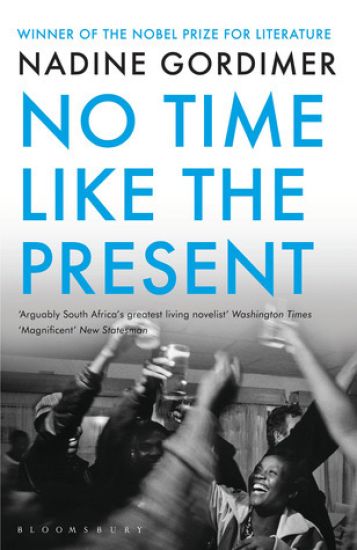
Nadine Gordimer is one of our most telling contemporary writers. With each new work, she attacks - with a clear-eyed lack of sentimentality, and an understanding of the darkest depths of the human soul - the inextricable link between personal life and political, communal history. The revelation of this theme in each new work, not only in her homeland South Africa, but the twenty-first century world, is evidence of her literary genius: in the sharpness of her psychological insights, the stark beauty of her language, the complexity of her characters and the difficult choices with which they are faced. In No Time Like the Present, Gordimer brings the reader into the lives of Steven Reed and Jabulile Gumede, a 'mixed' couple, both of whom have been combatants in the struggle for freedom against apartheid. Once clandestine lovers under racist law forbidding sexual relations between white and black, they are now in the new South Africa. The place and time where freedom - the 'better life for all' that was fought for and promised - is being created but also challenged by political and racial tensions, while the hangover of moral ambiguities and the vast and growing gap between affluence and mass poverty, continue to haunt the present. No freedom from personal involvement in these or in the personal intimacy of love.The subject is contemporary, but Gordimer's treatment is timeless. In No Time Like the Present, she shows herself once again a master novelist, at the height of her prodigious powers.

A New York Times Notable BookWinner of the Commonwealth Writers' Prize for Africa "Ranks as one of Gordimer's best novels...It transcends politics and aims at a meaning higher than human striving."---The Philadelphia Inquirer When Julie Summers's car breaks down on a street in Cape Town, a young Arab mechanic comes to her aid. Their attraction to each other is immediate. Julia, the daughter of a powerful businessman, is trying to escape a privileged background she despises. Abdu, an educated but poor illegal immigrant, is desperate to evade deportation. The consequences of this chance meeting are unpredictable and intense, as each person's notions of the other are overturned. Set in the social mix of post-apartheid South Africa and an unnamed Arab country, Nadine Gordimer's The Pickup "is a masterpiece of creative empathy...a gripping tale of contemporary anguish and unexpected desire, and it also opens the Arab world to unusually nuanced perception" (Edward W. Said).
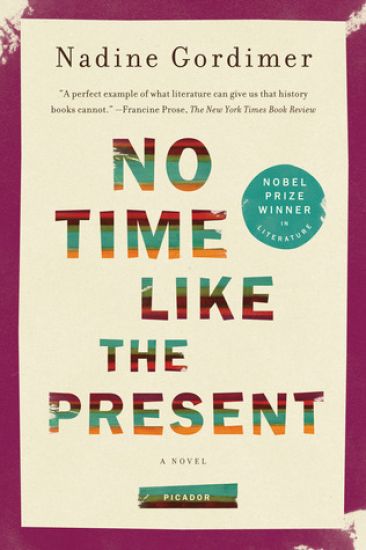
Det är många som vill läsa Nadine Gordimers böcker just nu, och denna bok har därför redan tagit slut hos leverantören. Här hittar du fler böcker av Nadine Gordimer >> "A perfect example of what literature can give us that history books cannot."--Francine Prose, "The New York Times Book Review" A "New York Times Book Review" Editors' Choice Steve and Jabulile, once clandestine lovers under a racist law forbidding sexual relations between black and white, are living in a newly free South Africa. Both were combatants in the struggle against apartheid, and now, he, a university lecturer, and she, a lawyer, are parents of children born in freedom. But as the ideals of this "better life for all" are challenged by the realities of the world around them, Steve and Jabulile consider leaving the country they so vehemently fought to free.The subject in "No Time Like the Present "is contemporary, but Nadine Gordimer's treatment is, as ever, timeless. In the telling of this conflicted couple, she captures the fragmented essence of a nation.

"With the scaffolding of a courtroom drama and the moral underpinnings of the state's responsibility, the novel infuses an isolated crime of passion with the atmospheric pressure of a country reeling from its own past." --The Boston Sunday Globe A house gun, like a house cat: a fact of ordinary daily life. How else can you defend yourself against intruders and thieves in post-apartheid South Africa? The respected executive director of an insurance company, Harald, and his doctor wife, Claudia, are faced with something that could never happen to them: Their son, Duncan, has murdered a man. In this powerful and disturbing anatomy of a murder, Nadine Gordimer examines the effect of violence on the complicated web of love that holds together parents and children, friends and lovers.
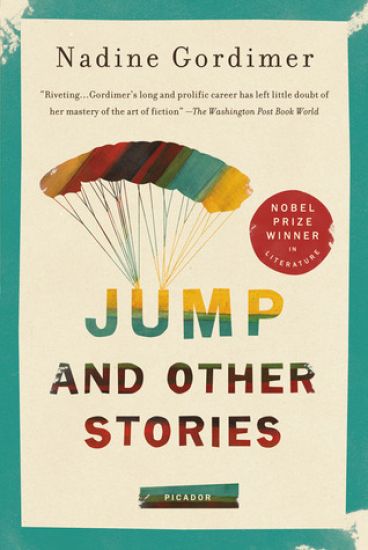
Jump and Other Stories collects fifteen thematically and geographically wide-ranging tales from political activist and Nobel Prize-winning author Nadine Gordimer, with settings ranging from suburban London to Mozambique. With unflinching depictions of how South Africa's apartheid policies drove racial inequality, wartime atrocities, marital strife, and family struggles, Gordimer's stories feature characters coping with morality in unjust socieites--uncovering both the beauty and tragedy found in human interactions with each other and with the natural world.
Throughout her career the internationally renowned South African writer Nadine Gordimer has built a literary reputation with her incisive short stories as much as with her acclaimed novels. Together with her essays, this highly imaginative and committed body of work won her the Nobel Prize for Literature in 1991. In the opinion of the Academy: ‘Through her magnificent epic writing she has - in the words of Alfred Nobel - been of very great benefit to humanity.'Gordimer has said that while novelists take the reader by the hand developing ‘a consistency of relationship that does not and cannot convey the quality of human life, where contact is more like the flash of fireflies, in and out, now here, now there, in darkness. Short-story writers see by the light of the flash; theirs is the only thing one can be sure of - the present moment.'Now, for the first time, the best of her stories are published in one volume.
"Superb...a series of masterly drawn glimpses into the storymaking art of one of Africa's great modern literary geniuses." -Alan Cheuse, NPR A selection of short stories written to date by Nobel Laureate Nadine Gordimer, Life Times reveals her acute understanding of human nature and paints a fascinatingly original portrait of South Africa. Whether focusing on politics, sexuality, race, love, or loss, Gordimer maps out the terrain of human relationships with razor-sharp psychological insight and a stunning lack of sentimentality. Complex and multifaceted, her stories challenge us, time and again, to examine the conflict between our actions and our unspoken desires. This powerful collection, which includes two new stories, is a testament to Gordimer's literary genius and the ongoing power and relevance of her vision.
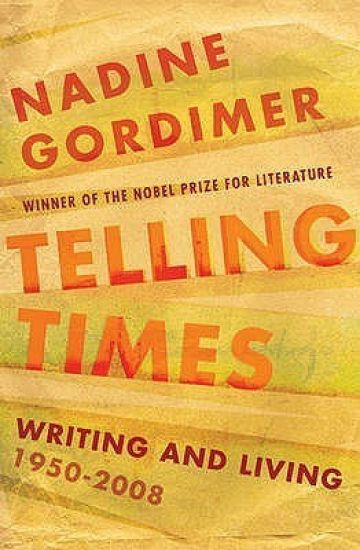
Nadine Gordimer's life reflects the true spirit of the writer as moral activist, political visionary and literary icon. Telling Times collects together all her non-fiction for the first time, spanning more than half a century, from the twilight of colonial rule in South Africa, to the long, brutal fight to overthrow South Africa's apartheid regime and to her leadership role over the last 20 years in confronting the dangers of AIDS, globalisation, and ethnic violence. The range of this book is staggering, from Gordimer's first piece in The New Yorker in 1954, in which she autobiographically traces her emergence as a brilliant, young writer in a racist country, to her pioneering role in recognising the greatest African and European writers of her generation, to her truly, courageous stance in supporting Nelson Mandela and other members of the ANC during their years of imprisonment. Given that Gordimer will never write an autobiography, Telling Times is an important document of twentieth-century social and political history, told through the voice of one of its greatest literary figures.

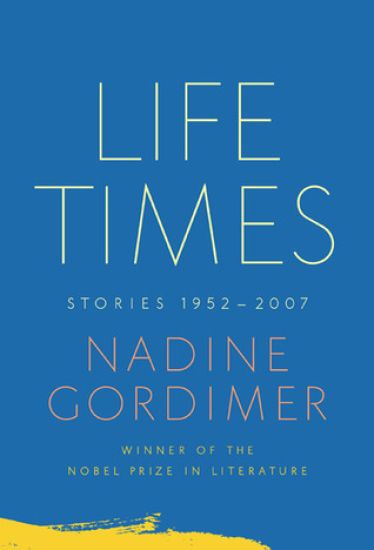
A stunning selection of the best short fiction from the recipient of the Nobel Prize in Literature This collection of Nadine Gordimer's short fiction demonstrates her rich use of language and her unsparing vision of politics, sexuality, and race. Whether writing about lovers, parents and children, or married couples, Gordimer maps out the terrain of human relationships with razor-sharp psychological insight and a stunning lack of sentimentality. The selection, which spans the course of Gordimer's career to date, presents the range of her storytelling abilities and her brilliant insight into human nature. From such epics as "Friday's Footprint" and "Something Out There" to her shorter, more experimental stories, Gordimer's work is unfailingly nuanced and complex. Time and again, it forces us to examine how our stated intentions come into conflict with our unspoken desires. This definitive volume, which includes four new stories from the Nobel laureate, is a testament to the power, force, and ongoing relevance of Gordimer's vision.
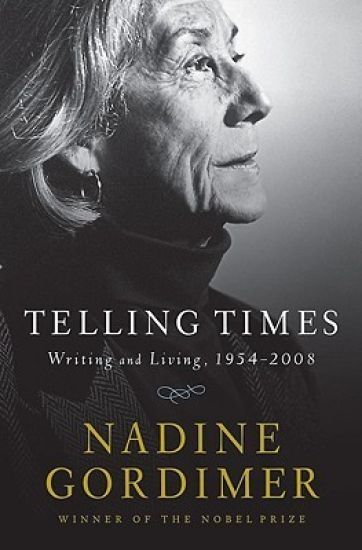
Never before has Gordimer, awarded the Nobel Prize for Literature in 1991, published such a comprehensive collection of her nonfiction. Telling Times represents the full span of her works in that field from the twilight of white rule in South Africa to the fight to overthrow the apartheid regime, and most recently, her role over the past seven years in confronting the contemporary phenomena of violence and the dangers of HIV. The range of this book is staggering, and the work in totality celebrates the lively perseverance of the life-loving individual in the face of political tumult, then the onslaught of a globalized world. The abiding passionate spirit that informs A South African Childhood, a youthful autobiographical piece published in The New Yorker in 1954, can be found in each of the book s ninety-one pieces that span a period of fifty-five years. Returning to a lifetime of nonfiction work has become an extraordinary experience for Gordimer. She takes from one of her revered great writers, Albert Camus, the conviction that the writer is a responsible human being attuned not alone to dedication to the creation of fiction but to the political vortex that inevitably encompasses twentieth- and twenty-first-century life. Born in 1923, Gordimer, who as a child was ambitious to become a ballet dancer, was recognized at fifteen as a writing prodigy. Her sensibility was as much shaped by wide reading as it was to eye-opening sight, passing on her way to school the grim labor compounds where black gold miners lived. These twin decisives literature and politics infuse the book, which includes historic accounts of the political atmosphere, firsthand, after the Sharpeville Massacre of 1960 and the Soweto uprising of 1976, as well as incisive close-up portraits of Nelson Mandela and Desmond Tutu, among others. Gordimer revisits the eternally relevant legacies of Tolstoy, Proust, and Flaubert, and engages vigorously with contemporaries like Susan Sontag, Octavio Paz, and Edward Said. But some of her most sensuous writing comes in her travelogues, where the politics of Africa blend seamlessly with its awe-inspiring nature including spectacular recollections of childhood holidays beside South Africa s coast of the Indian Ocean and a riveting account of her journey the length of the Congo River in the wake of Conrad. Gordimer s body of work is an extraordinary vision of the world that harks back to the sensibilities political, moral, and social of Dickens and Tolstoy, but with a decidedly vivid contemporary consciousness. Telling Times becomes both a literary exploration and extraordinary document of social and political history in our times."