

Kirjailija
Nadine Olonetzky
Kirjat ja teokset yhdessä paikassa: 12 kirjaa, julkaisuja vuosilta 2006-2024, suosituimpien joukossa C¿cile Wick. Colored Waters. Vertaile teosten hintoja ja tarkista saatavuus suomalaisista kirjakaupoista.
12 kirjaa
Kirjojen julkaisuhaarukka 2006-2024.

Margrit & Ernst Baumann. Die Welt Sehen
Markus Schürpf; Nadine Olonetzky
Scheidegger und Spiess AG, Verlag
2022
sidottu

Oder Das Tal Aufgeben
Köbi Gantenbein; Stefan Hotz; Nadine Olonetzky
Scheidegger und Spiess AG, Verlag
2022
sidottu
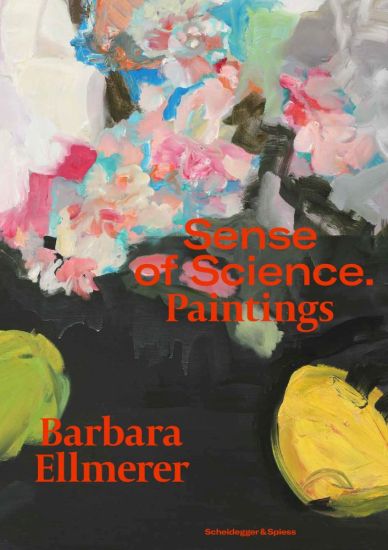
Barbara Ellmerer. Sense of Science
Laura Corman; Nadine Olonetzky
Scheidegger und Spiess AG, Verlag
2021
sidottu
When an apple falls to the ground, we see the effect of gravity. Yet not all laws of nature are as apparent. Swiss artist Barbara Ellmerer uses invisible principles of physics, biology, and cosmology as her starting point and translates them into paintings. She sends us into the realm of colours and shapes in which forces, movements, and processes from nature are synonymously realised and palpable. Ellmerer thereby also captures something inexplicable, which reminds us of how steeped in wonder the world still is. Barbara Ellmerer - Sense of Science presents a selection of oil paintings and works on paper created by the artist between 2010 and 2020. Ellmerer’s sometimes large-format pictures are shown both in full as well as in enlarged details to show the intricacies of her brush stroke, colour qualities, surfaces, depths, movements, and emphases. This combination also makes productive use of the migration of media - from painting to photography - and its reproduction in the book. In an accompanying essay, Laura Corman, a quantum physicist, explains how Ellmerer’s art relates to natural science. A contribution by Nadine Olonetzky, culture journalist and photo expert, describes art’s capabilities of rendering invisible processes comprehensible. Text in English and German.
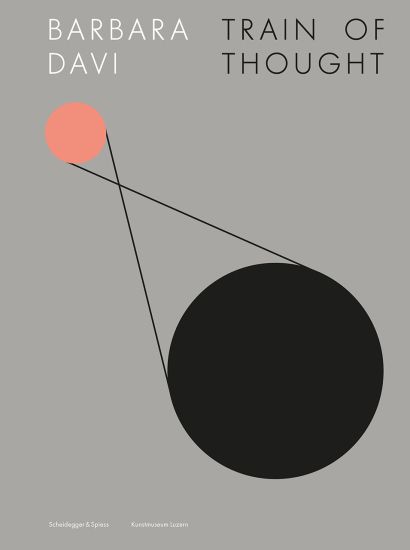
Barbara Davi - Train of Thought
Nadine Olonetzky; Eveline Suter
Scheidegger und Spiess AG, Verlag
2018
sidottu
Swiss artist Barbara Davi, born 1971, primarily works with the medias of installation and photo-collage. Following her artistic education at Zurich's School of Art and Design (today Zurich University of the Arts ZHdK) and Lucerne School of Art, Davi has developed her original style, working in three-dimensional space as well as on two-dimensional surfaces, using architectural and geometric shapes and elements. Using wooden slats or a table, lines or a circular shape, light beams or a shadow, Davi creates quasi-drawings in space and photo-collages of a magical, almost three-dimensional depth. Her motifs emerge from a sequence of deliberations, from her 'train of thought'. This first monograph on Barbara Davi features her striking work from the past ten years. Around 100 plates in colour and black and white are complemented by essays on Davi's way of working in her preferred media.
Jeder Garten ist ein imaginiertes Paradies – ein Gartenparadies, das die Persönlichkeit desjenigen Menschen, der es angelegt hat, in sich trägt, aber auch die lange Geschichte der Gartenkultur. Das Buch erzählt die Geschichte der Gärten von ihrem mutmaßlichen Beginn in Mesopotamien bis heute: in chronologisch geordneten und mit Stichworten versehenen Abschnitten stellt es die bedeutendsten Stile und Menschen vor, welche die Entwicklung in Europa geprägt haben. Auch wenn die berühmten und stilbildenden Gärten oft nur durch großen Reichtum möglich wurden, so sind Gärten nicht für die Privilegierten dieser Welt entworfen. Ob Schrebergarten, Landschaftspark, Friedhof oder Stadtpark – kleine und große Gärten durchwirken die gebaute Landschaft und sind inspirierender Teil von unser aller Leben.
Every garden is an imagined paradise – a garden paradise that incorporates the personality of the individual who created it, but also the long history of horticulture. The book recounts the history of gardens from their likely origins in Mesopotamia to today; in chronological order and in sections with keywords, it introduces the most important styles as well as the people that have influenced developments in Europe. Although the famous and influential gardens often needed extensive funds for their creation, gardens are not designed for the privileged of this world. Whether it is an allotment, a landscape park, a cemetery, or a city park – small and large gardens interweave with the built landscape and are an inspiration for all of us.
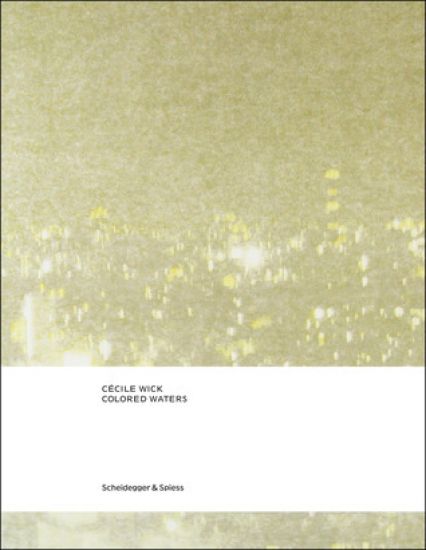
C¿cile Wick. Colored Waters
Nadine Olonetzky; Martin Jaeggi
Scheidegger und Spiess AG, Verlag
2017
sidottu
Cecile Wick's work- oscillating between photography, painting and drawing- ranks among the most important oeuvres in contemporary Swiss art. Amending photography by drawing or watercolour painting appears to be a logical continuation of her earlier work of prints and etchings. 'Cecile Wick. Colored Waters' shows for the first time her recent watercolours, ink drawings, inkjet prints and photographs. The works are presented in series, putting media and motifs in a dialogue. Around 160 colour illustrations are complemented by a number of short essays by Nadine Olonetzky on aspects such as colour and light, traces, signs, bodies and buildings, nature, figures and nature, or rhythm, and by an introductory essay by Martin Jaeggi.

Jules Spinatsch. Vienna MMIX-10008/7000
Nadine Olonetzky; David Company
Scheidegger und Spiess AG, Verlag
2017
sidottu
Jules Spinatsch ranks among the foremost contemporary Swiss photographic artists. Many of his projects, although controversial are thought-provoking and internationallly recognised. Since 2003, he has been working on his Surveillance Panorama Projects; shot with network cameras, these works create awareness for social habits and show the sometimes striking discrepancy between illusion and reality. In Vienna MMIX, he focused on the famous Vienna Opera Ball; from the opening of the doors at 20:32hrs, until the end of the dance at 05:17hrs, using 2 cameras to complete duel rotations, capturing an image every few seconds, an incredible 17,352 in total. Jules Spinatsch. Vienna MMIX-10008/7000 presents this fascinating social study in two volumes. Volume 1 shows 10,008 images, combined into a single chronological sequence; panoramic views that recreat the entire space, yet show only fragments of events. Volume 2 presents a selection of 70 images, documenting single moments of great intensity or intimacy, in fascinating close-up detail. It is a striking collection, documenting a range of human behaviour in a public space, over a relatively short period of time, in a very specific arena.

Swiss photographer Roland Iselin, born 1958, graduated from the famous photography class at the School of Design in Zurich (today Zurich University of the Arts ZHdK) and also completed a Master's degree at New York's School of Visual Arts. Prior to his artistic education, he completed his studies in socio-cultural animation at Zurich-based Institute of Applied Psychology. Unguided Road Trip is Iselin's latest long-term project. Since 2011, he has been travelling his native Switzerland and his adopted second home country, the US, documenting how in either place the landscape is 'furnished' with all sorts of structures and objects. Bus stops, public toilets, gas stations. We recognise such things and make use of the convenience they offer, yet we forget about them again immediately. In small and densely populated Switzerland, the landscape is cluttered with objects that serve a specific purpose: phone and letterboxes, benches, signposts, wayside crosses. But equally, the vast and scarcely inhabited open landscapes in the US are cut-across by roads lined by mass-produced objects.Iselin has found many motifs common in both countries: memorials for victims of road accidents, cattle gates, rifle ranges with their pavilions, rest stops. A landscape's 'furniture' does not accumulate accidentally. Rather, each object is placed intentionally, and they testify, in a way, to a society's state. Iselin's images demonstrate values and ideals, showing how the design of these objects guides our behaviour. This new book brings together some 140 photographs from Iselin's Unguided Road Trip, for the first time. The images are complemented with texts by writer and photography critic Nadine Olonetzky.
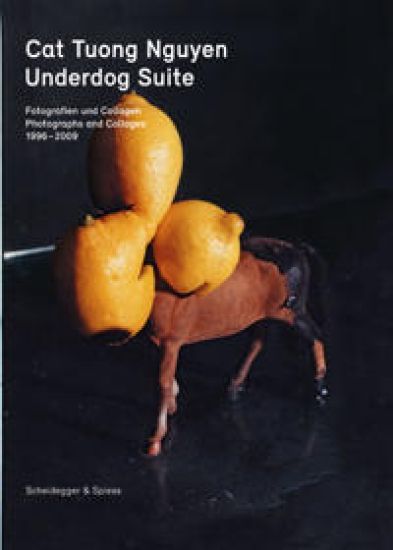
Underdog Suite
Cat Tuong Nguyen; Nadine Olonetzky; Burkhard Meltzer
Scheidegger und Spiess AG, Verlag
2009
sidottu
Cat Tuong Nguyen has over the past ten years gained significant recognition for a highly individual, intelligent and poetic work. Photographs, collages, painted-over pictures from magazines form together a cosmos of images of great visual and substantial power. Nguyen confronts the viewer with strange, humourous and mysterious things and investigates our everyday reality. He takes-up political and social aspects and events, and he investigates the emotional world of the individual searching for its way in everyday reality. Nguyen's images, playful as they seem to be in some cases, are based on fundamental experiences, such as emigration, integration in a new world and the outsider's view of an alien culture and society. "Underdog Suite" is the first large book on Nguyen's art. It comprises nearly the complete oeuvre of this extraordinary young artist, his own selection of images arranged in an unconventional, highly original manner. It is not a mere monographic overview, it is rather the artist's self-portrait in the shape of a book. Two essays investigate Nguyen's ideas, concepts and artistic method. This title includes text in English and German.
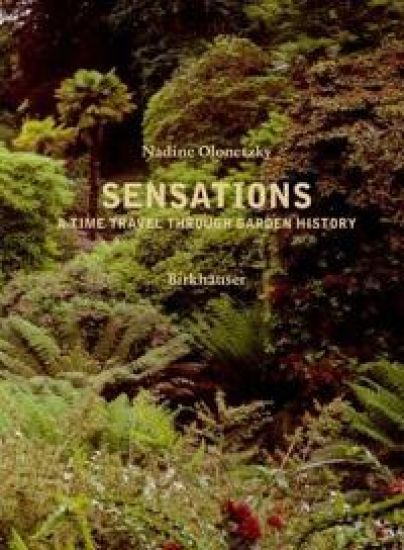
The history of European landscape design has its beginnings in the early cultures of the Mediterranean. Again and again, especially during the Renaissance, ancient parks and gardens have been imitated as archetypes. The park is still a site of design activity today: human beings use living material to create an artificial landscape, a paradise. This book not only recounts the history of the garden—it conjures it up before the reader’s eyes, from the Garden of Eden and the Hanging Gardens of Nebuchadnezzar to the first book on botany and the gardens of the Renaissance, from the invention of the lawnmower to the land art movement in the United States, Hängende Gärten II (Hanging Gardens II) at the Hanover Expo by the Dutch architectural firm MVRDV, and the Gazebo-Berg (Gazebo Mountain) of the Swiss artist couple Studer/van den Berg at the 2005 world’s fair in Japan. Every single "station" of this journey through gardens and time is illustrated by an entire double page, with pointedly written texts and an abundance of historical and contemporary images.